🌱 Areca Palm (Dypsis lutescens)
🧾 Quick Facts
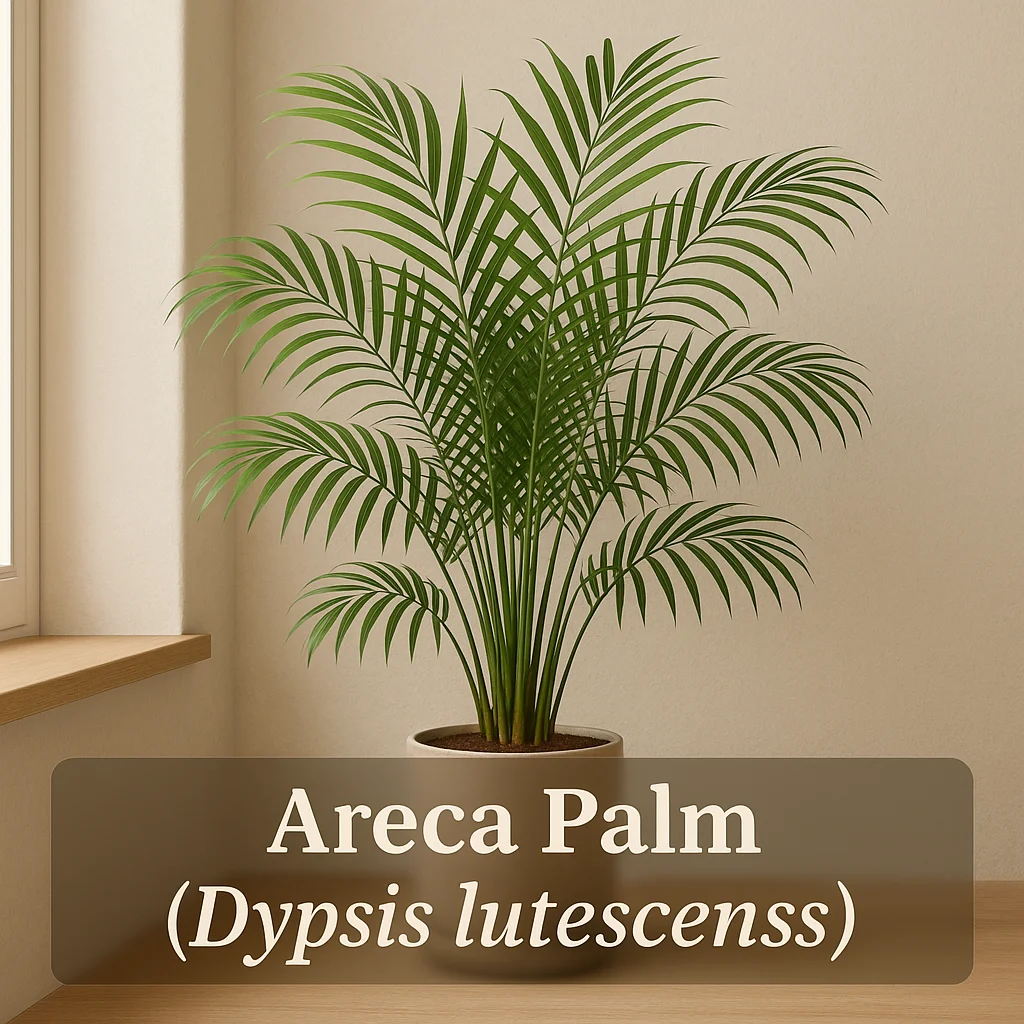
The Areca Palm, scientifically known as Dypsis lutescens, is a popular houseplant celebrated for its feather-like fronds and elegant appearance. It's an excellent choice for those looking to bring a touch of the tropics into their living space.
- Common Names: Butterfly Palm, Golden Cane Palm, Yellow Palm
- Scientific Name: Dypsis lutescens
- Plant Type: Palm
- Growth Habit: Upright
- Typical Indoor Size Range: 6 to 10 feet in height
- Growth Speed: Moderate to Fast
- Lifespan: Can live many years with care
- Origin: Madagascar; Tropical forest understory
- Light Preference: Bright indirect light; can tolerate some direct sun
- Water Needs: Moderate; prefers to dry slightly between waterings
- Temperature & Humidity Preference: Prefers warm temperatures and high humidity
- Pet Safety: Generally considered pet-friendlier
- Difficulty: Medium
🔍 Identification & Look-Alikes
The Areca Palm is easily identifiable by its arching fronds and clustered growth habit. Its leaves are pinnate, meaning they are feather-like, with narrow leaflets arranged along each frond. The stems of the palm are yellowish and can develop a cane-like appearance as they mature. The overall color is a rich green, though the stems can have a golden hue, especially with adequate sunlight. The Areca Palm is mainly grown for its striking foliage, as it rarely flowers indoors.
Common look-alikes include the Kentia Palm (Howea forsteriana) and the Bamboo Palm (Chamaedorea seifrizii), both of which share similar frond structures. The Kentia Palm typically has darker, broader fronds, while the Bamboo Palm features thinner, more numerous fronds.
- Feather-like fronds with narrow leaflets
- Stems with a golden or yellowish hue
- Clustered cane-like stems
- Rich green foliage under bright indirect light
- Typically does not flower indoors
- Look-alikes: Kentia Palm and Bamboo Palm
🌍 Origin & Natural Habitat
The Areca Palm is native to Madagascar, where it grows in the dense tropical rainforest understory. It thrives in warm, humid environments typical of tropical climates. The natural habitat provides constant filtered light and consistent moisture, conditions that can be mimicked indoors for optimal growth. Knowledge of its native environment helps in recreating similar conditions at home, ensuring the plant receives adequate humidity and indirect light.
☀️ Light Requirements
Indoors, the Areca Palm prefers bright, indirect light. A position near an east or west-facing window is ideal, though it can adapt to slightly lower light conditions. Exposure to direct sunlight may cause the fronds to scorch, resulting in brown tips or patches. Conversely, too little light may result in slow growth and thin, leggy stems.
- Place near east or west-facing window
- Bright indirect light is ideal
- Avoid harsh midday sun to prevent leaf burn
- Watch for leggy growth as a sign of low light
- Leaf color may fade in insufficient light
- Rotate plant periodically for even growth
💧 Watering & Humidity
The Areca Palm prefers a "soak-and-drain" watering method, meaning water thoroughly until excess flows from drainage holes, then allow the top inch of soil to dry out before watering again. Be mindful of changes in watering needs due to season, pot size, and environmental conditions. High humidity levels are beneficial, which can be maintained with a humidifier or by placing the plant on a pebble tray.
- Water thoroughly, allow top inch of soil to dry
- Adjust watering frequency with season changes
- High humidity preferred; use a humidifier or pebble tray
- Signs of overwatering: yellowing leaves
- Signs of underwatering: dry tips and wilting
- Avoid letting the plant stand in water
🐛 Soil, Pot & Repotting
The Areca Palm requires a well-draining soil mix. A mixture of peat, pine bark, and perlite or sand can provide the aeration it needs. When choosing a pot, ensure it has drainage holes to prevent waterlogging. Repotting is typically required every two to three years when you notice roots growing out of the drainage holes or stunted growth. Choose a pot one size larger to avoid overwhelming the plant with excess soil.
- Use well-draining soil mix
- Choose pots with drainage holes
- Repot every two to three years
- Look for roots protruding from pot's bottom
- Select a pot one size larger when repotting
- Avoid overpacking soil during repotting
🌡️ Temperature, Airflow & Seasonal Care
The Areca Palm thrives in temperatures between 65°F and 75°F (18°C to 24°C). It should be kept away from cold drafts, air conditioners, and heating vents, which can cause stress. In winter, growth may slow, so reduce watering accordingly to prevent root rot.
- Preferred temperature range: 65°F - 75°F
- Avoid cold drafts and sudden temperature changes
- Reduce watering in winter
- Keep away from direct airflow from vents
- Not frost-tolerant; protect from freezing temperatures
🌸 Flowers, Fruit & Growth Cycle
While the Areca Palm can produce tiny, lightly fragrant flowers, indoor blooming is rare. Instead, these palms are appreciated for their foliage. The plant exhibits a clumping growth pattern, with new fronds emerging from the base. Occasionally, dead fronds may need to be pruned to maintain its appearance. Pruning should be hygienic and non-invasive, using clean tools to prevent disease.
🧬 Propagation & Reproduction
The most common method of propagation for the Areca Palm is by division. This involves separating clumps during the repotting process. Propagating from seeds is possible but not practical for most home growers due to the slow germination rate. No leaf or stem cuttings methods are known for effective propagation of this palm.
- Best propagated by division during repotting
- Separate clumps carefully, ensuring roots are intact
- Avoid seed propagation, as germination is slow
- No effective leaf or stem cutting propagation methods
🌿 Common Problems, Pests & Prevention
The Areca Palm can face several issues, such as yellowing leaves, brown tips, or drooping. Common pests include spider mites, mealybugs, and scale. Prevention includes regular cleaning of the leaves, maintaining consistent care, and ensuring good airflow around the plant.
- Monitor for yellow or browning leaves
- Check for signs of spider mites, mealybugs, and scale
- Clean leaves regularly to prevent dust buildup
- Ensure stable care routines
- Maintain good airflow around the plant
- Avoid overwatering to prevent root rot
🐾 Pet & Home Safety Notes
The Areca Palm is generally considered non-toxic to pets and humans, making it a safer choice for homes with curious animals and children. However, ingestion of any plant material can cause mild irritation, so it's best to keep the plant out of reach. If ingestion is suspected, it's advisable to contact professionals or local poison control resources.
🏡 Styling Ideas & Best Room Placement
The Areca Palm can make a beautiful, dramatic statement in any room. Ideal locations include living rooms or offices where there is ample light. It thrives in areas with high humidity, such as bathrooms or kitchens. The plant can be displayed in floor pots for its elegant height or as a centerpiece in large plant arrangements. Mixing with other tropical plants can create an indoor oasis.
📌 Summary
- Feather-like fronds; highly decorative
- Native to Madagascar's tropical forests
- Thrives in bright indirect light; avoid harsh sun
- Moderate water needs; prefer drying out slightly between waterings
- Well-draining soil; repot every two to three years
- Prefers temperatures between 65°F and 75°F
- Propagation primarily by division
- Monitor for pests: spider mites, mealybugs
- Generally considered safe for pets
- Styling in high-light and high-humidity areas; pairs well with other tropicals