🌱 Bird’s Nest Fern (Asplenium nidus)
The Bird’s Nest Fern, scientifically known as Asplenium nidus, is a popular choice among indoor plant enthusiasts for its lush, vibrant foliage and low-maintenance care requirements. Native to tropical regions, this fern thrives in warm, humid conditions. Its distinct rosette of arching fronds makes it an attractive addition to any home, providing a touch of greenery and a hint of exotic charm.
🧾 Quick Facts
- Common Names: Bird's Nest Fern, Nest Fern
- Scientific Name: Asplenium nidus
- Plant Type: Fern
- Growth Habit: Rosette
- Typical Indoor Size Range: 1 to 3 feet tall and wide
- Growth Speed: Moderate
- Lifespan: Can live many years with proper care
- Origin: Southeast Asia, Australia, Eastern Africa
- Light Preference: Medium to bright indirect light
- Water Needs: Moderate to high; prefers consistent moisture
- Temperature & Humidity: Warm (60-80°F) and high humidity
- Pet Safety: Generally considered pet-friendlier
- Difficulty: Medium
🔍 Identification & Look-Alikes
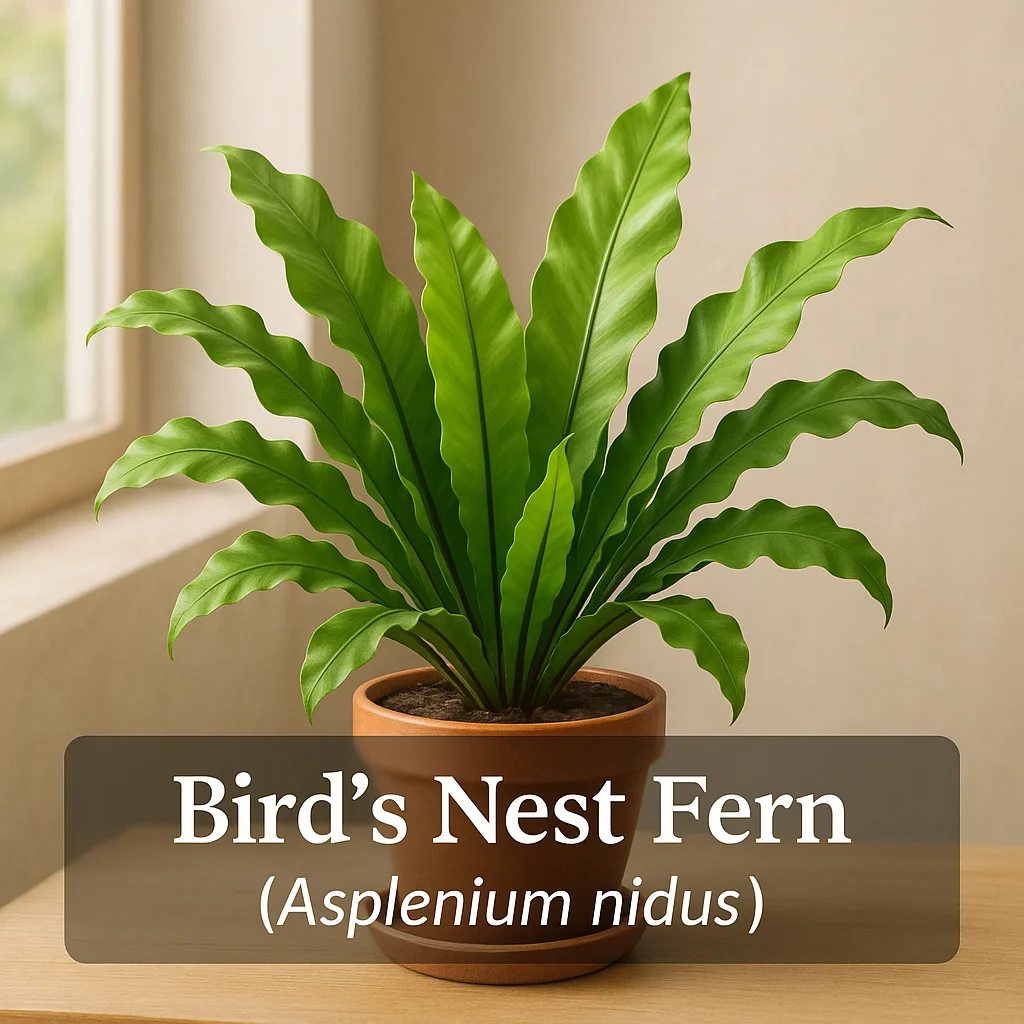
Recognizing the Bird’s Nest Fern is a matter of identifying its characteristic fronds and growth pattern. The fronds are deeply veined, smooth-edged, and often a rich, vibrant green. Growing in a radial pattern from a central rosette, these fronds can arch elegantly over the sides of its pot. Unlike other ferns, it lacks a complex stem structure, instead forming a crown-like base from which all fronds emerge.
Though grown mainly for its foliage, its appearance might be confused with staghorn ferns and other epiphytic species. One key difference is the absence of the branching, antler-like fronds seen in staghorn ferns.
- Top ID Tips:
- Fronds are long, strap-like, and arching
- Vibrant green color without variegation
- Central rosette growth habit
- Grows from a compact "nest" base
- Lack of prominent stem or stems
- Smooth, entire frond edges (no teeth or divisions)
- Glossy surface on healthy fronds
- No flowers; grown for foliage
🌍 Origin & Natural Habitat
The Bird’s Nest Fern hails from the warm, humid forests of Southeast Asia, Australia, and parts of East Africa. In the wild, they often grow as epiphytes or lithophytes, nestled in tree branches or rocky outcroppings. This natural habitat provides consistent humidity and dappled light, simulating understory forest conditions.
Understanding its native environment helps in replicating similar conditions at home, ensuring that this fern remains lush and healthy. Mimicking these conditions including ample humidity and avoiding direct light will help maintain its vibrant growth indoors.
☀️ Light Requirements
Bird’s Nest Ferns prefer medium to bright indirect light. They thrive when placed near a window facing north or east, where they can receive filtered sunlight. Though adaptable to lower light conditions, growth can be stunted and the plant may lose its vibrant green hue over time. Avoid direct sunlight, which can scorch its delicate fronds.
Signs of insufficient light include yellowing fronds and slow growth, while too much light results in scorched, crispy edges. Adjust placement to find the right balance for optimal growth.
- Light Checklist:
- Bright indirect light preferred
- Provide filtered light; avoid direct sun
- Supplement with artificial light if needed
- Rotate plant periodically for even growth
- Watch for yellowing or scorched fronds
- East or north-facing windows ideal
- Adjust distance from light source based on frond response
- Monitor and adjust as seasons change
💧 Watering & Humidity
Maintaining consistent moisture is key to the health of a Bird’s Nest Fern. Water thoroughly when the top inch of soil feels dry, ensuring the pot drains completely to prevent waterlogging. Reduce watering frequency in cooler months when growth slows. Ensure your pot has proper drainage to avoid root rot.
High humidity is essential, so consider placing a humidifier nearby or grouping with other plants. Misting can help, but avoid excessive wetting as this may lead to mold or fungal issues. Look for fronds turning crispy as a sign of low humidity, while yellowing indicates potential overwatering.
- Watering Tips:
- Water when top soil is dry to the touch
- Allow complete drainage; empty saucers
- Use room-temperature water
- Increase humidity with trays, pebbles, or misters
- Monitor for signs of over/under-watering
- Avoid wetting the fern's central rosette
- Group plants for a higher humidity micro-environment
- Adjust watering with seasonal and environmental changes
🐛 Soil, Pot & Repotting
An ideal soil mix for Bird’s Nest Ferns should be airy and well-draining. A mix of peat, pine bark, and perlite works well to retain some moisture while allowing excess to drain away. Avoid heavy soils which can suffocate the roots.
Choose a pot with good drainage holes; plastic pots retain moisture while terracotta would dry out faster. Repot every two to three years or when the plant becomes rootbound, showing slowed growth or difficulty in retaining water. When repotting, gently remove old soil, loosen the root ball, and place in a slightly larger pot.
- Repotting Checklist:
- Use peat-based or orchid mix for airiness
- Avoid dense, compacted soils
- Choose pots with adequate drainage
- Repot every 2-3 years or if rootbound
- Transplant gently to avoid root stress
- Upsize pots incrementally
- Check roots for health during repotting
- Maintain consistency in pot material for water retention
🌡️ Temperature, Airflow & Seasonal Care
Bird’s Nest Ferns prefer temperatures between 60-80°F. They thrive in stable temperatures without sudden changes or exposure to drafts, air conditioners, or heater vents. During winter months, reduce watering as growth will naturally slow down. Avoid exposing the plant to temperatures below 50°F to prevent cold damage.
Allow for moderate airflow to reduce pest issues but avoid strong drafts. Keep foliage clean and dust-free, encouraging healthy respiration.
- Seasonal Notes:
- 60-80°F temperature range is optimal
- Avoid cold drafts and sudden temperature changes
- Ensure moderate airflow, avoid direct fans
- Reduce watering frequency in winter
- Monitor for cold damage in winter months
- Keep foliage clean of dust
- Armor against temperature spikes in summer
- Adjust care based on seasonal light exposure
🌸 Flowers, Fruit & Growth Cycle
The Bird’s Nest Fern is primarily grown for its striking fronds rather than flowers, as ferns do not produce flowers or fruits in the way flowering plants do. Instead, their growth is marked by unfurling new fronds which emerge tightly coiled and gradually open.
Pruning is seldom required, but removing dead or damaged fronds will improve aesthetic appearance and plant health, always using clean tools to avoid disease spread.
🧬 Propagation & Reproduction
Propagation of Bird’s Nest Ferns is typically challenging for the home gardener since they do not propagate through division easily and spore collection and growth require specific conditions. If needed, propagation is best done through spores, collected from mature fronds and grown in controlled environments, though success varies and appears daunting for most indoor settings.
- Propagation Tips:
- Generally difficult to propagate at home
- Mature spores can be collected and grown
- Requires sterile, controlled conditions for spores
- Not suitable for beginners
- Seek spores from specialized growers
🌿 Common Problems, Pests & Prevention
Common issues with Bird’s Nest Ferns include yellow leaves from overwatering, browning tips from low humidity, and leaf drop if conditions are drastically altered. The presence of pests such as spider mites and fungus gnats indicates inadequate humidity or airflow.
Regularly check the undersides of fronds for pests, maintain stable care, and quarantine new plants to prevent infestations. Dust leaves to prevent mite colonies and ensure proper drainage to avoid gnat infestations.
- Prevention Basics:
- Maintain stable environmental conditions
- Check and clean leaves regularly
- Quarantine new additions
- Avoid waterlogging soil
- Improve humidity to deter mites
- Careful monitoring for yellow leaves
- Use well-draining soil to prevent pests
- Maintain cleanliness to reduce pest attraction
🐾 Pet & Home Safety Notes
Bird’s Nest Ferns are generally considered non-toxic to pets and children, making them a safer choice for households with furry or young members. However, ingestion can cause mild irritation, and care should be taken to place the plant out of reach to prevent any accidental nibbling.
If ingestion is suspected, it is advisable to contact a professional or local poison control resources. Providing barriers or training for pets and children will further mitigate the risk of plant damage or consumption.
🏡 Styling Ideas & Best Room Placement
The Bird’s Nest Fern is an excellent addition to humid areas of the home, such as bathrooms or kitchens, where its thirst for humidity is naturally quenched. In living rooms or offices, it can thrive in a well-lit corner or near a window. Its elegant arching fronds add height and texture, making it ideal for diverse settings from tabletops to floor displays in larger pots.
Pair with plants that share similar light and humidity preferences, such as the spider plant or peace lily, to create a lush, tropical tableau.
📌 Summary
- ID via rosette of arching, green fronds
- Native to humid, tropical forests
- Thrives in medium to bright indirect light
- Consistent moisture; doesn't dry out completely
- Prefers airy, well-draining soil mixtures
- Stable warmth and humidity prevent issues
- Propagation via spores; not easy for amateurs
- Avoids pests with careful watering and humidity
- Generally pet-friendly
- Place in moisture-rich rooms for best results