🌱 Croton (Codiaeum variegatum)
🧾 Quick Facts
Croton, known for its vibrant foliage, is a popular choice for houseplant enthusiasts due to its striking and diverse leaf colors. Suitable for a variety of indoor environments, these plants can transform any space with their bright appearance.
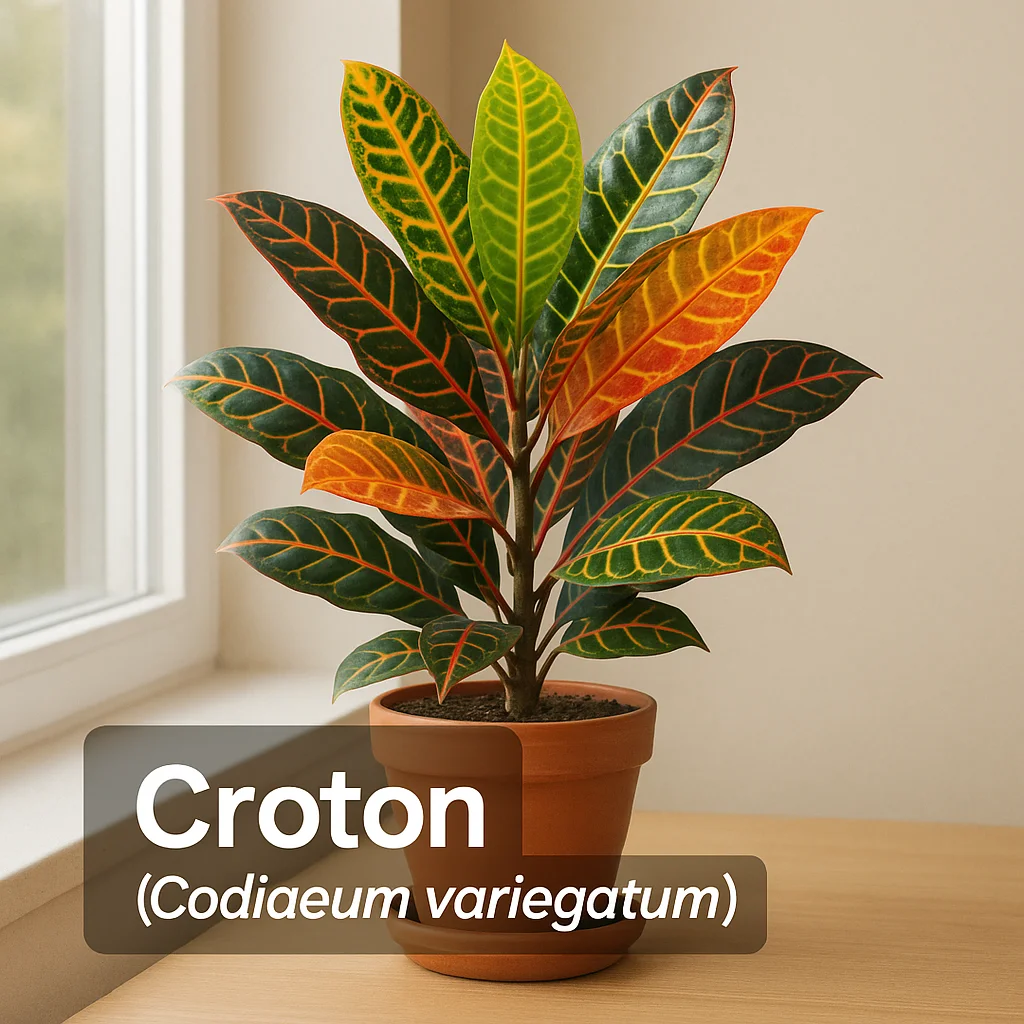
- Common names: Croton, Variegated Croton
- Scientific name: Codiaeum variegatum
- Plant type: Foliage
- Growth habit: Shrub-like
- Typical indoor size range: 2 to 4 feet high and 1 to 3 feet spread
- Growth speed: Moderate
- Lifespan: Can live many years with care
- Origin: Southeast Asia, including Malaysia and Indonesia
- Light preference: Bright indirect light; tolerates some direct sunlight
- Water needs: Moderate; prefers to dry out slightly between waterings
- Temperature & humidity preference: Warm and humid conditions preferred
- Pet safety: May be irritating/toxic to pets
- Difficulty: Medium
🔍 Identification & Look-Alikes
Crotons are recognized by their broad, leathery leaves with a shiny finish, often exhibiting a range of colors including green, yellow, red, orange, and black. Variations in leaf shapes are common, with some being long and narrow while others are oval or lobed. Traditionally, crotons are grown for their foliage rather than flowers, as indoor flowering is rare and inconspicuous. Some plants that might be mistaken for crotons include certain cultivars of Philodendron or Dieffenbachia, but these typically lack Croton's vibrant color patterns.
- Top ID Tips:
- Look for glossy, multicolored foliage with bold contrasts.
- Notice the firm and leathery texture of the leaves.
- Observe diverse leaf forms, from narrow to broad.
- Check for a shrub-like growth habit.
- Expect primarily foliage-based attraction, not flowers.
- Identify variegated patterns that change with light exposure.
🌍 Origin & Natural Habitat
Native to Southeast Asia, including Malaysia, Indonesia, and parts of the Pacific islands, Crotons thrive in warm and humid environments. In the wild, these plants are found in tropical forests where they benefit from filtered light through the canopy and consistent moisture from the humid air. Understanding their natural preference for bright but indirect light helps guide indoor placement, ensuring vibrant coloration and healthy growth.
☀️ Light Requirements
Crotons thrive best in bright, indirect sunlight, although they can tolerate some direct sun, especially in the morning. Place them near east or south-facing windows where they can enjoy prolonged light exposure. Intense midday sun might scorch the leaves, whereas too little light can lead to faded colors and leggy growth. Monitor for changes in leaf pigmentation to judge light adequacy.
- Light Checklist:
- Position near east or south-facing windows.
- Avoid prolonged harsh midday sun.
- Watch for leaf color dulling (too little light).
- Watch for leaf scorching (too much light).
- Use sheer curtains to diffuse direct sun.
- Rotate plant occasionally for even growth.
💧 Watering & Humidity
A regular watering routine is key for Crotons: water thoroughly when the top inch of soil feels dry, allowing excess to drain away. During winter, reduce watering frequency as the plant's growth slows. Crotons are humidity-loving; maintain room humidity between 40-60% for optimal health. Overwatering can cause root rot, while under-watering may lead to wilting or leaf drop.
- Watering Tips:
- Water when the top inch of soil is dry.
- Ensure the pot has appropriate drainage.
- Reduce watering in winter months.
- Mist occasionally to increase humidity.
- A pebble tray can help raise humidity levels.
- Adjust watering based on light and temperature changes.
🐛 Soil, Pot & Repotting
Crotons prefer well-draining, nutrient-rich potting soil, such as a mix of equal parts peat, pine bark, and perlite. Use pots with drainage holes to prevent waterlogging. Consider repotting every 2-3 years or if growth slows notably, indicating root-bound conditions. Choose a pot only slightly larger than the current one to encourage root expansion without overwhelming the plant.
- Repotting Checklist:
- Use a well-draining potting mix.
- Repot when roots appear crowded or growth stalls.
- Choose a pot with adequate drainage holes.
- Repot during spring for optimal recovery.
- Size up the pot gradually.
- Handle roots gently to minimize damage.
🌡️ Temperature, Airflow & Seasonal Care
Crotons flourish in temperatures between 60-75°F (16-24°C), and sudden temperature changes should be avoided. Keep these plants away from cold drafts or hot, dry air sources like heaters. During winter, Crotons may experience slower growth, requiring less watering and feeding. Ensuring good airflow helps prevent pest issues and fungal diseases.
- Seasonal Notes:
- Maintain temperatures above 60°F (16°C).
- Avoid placing near cold drafts and heat sources.
- Adjust watering frequency in winter.
- Increase humidity during dry winter months.
- Ensure good air circulation year-round.
🌸 Flowers, Fruit & Growth Cycle
Crotons are primarily appreciated for their foliage, as indoor flowering is rare. If flowering does occur, it tends to be inconspicuous, with small white or yellowish blooms. Growth primarily involves new leaves emerging at the stem tips. Pruning is generally unnecessary but can help shape the plant or remove damaged leaves, promoting a tidy appearance.
🧬 Propagation & Reproduction
Propagation of Crotons is typically done through stem cuttings, taken in spring or early summer when the plant is actively growing. Cuttings should have at least one leaf and be placed in water or moist soil until roots develop. While propagation can be challenging due to the plant's sap, perseverance often yields successful new plants.
- Propagation Tips:
- Use clean, sharp tools for cutting.
- Choose healthy stems with at least one leaf.
- Root cuttings in water or soil.
- Keep cuttings warm and humid to encourage rooting.
- Be patient, as rooting can take several weeks.
🌿 Common Problems, Pests & Prevention
Common issues with Crotons include leaf yellowing or browning, often due to inconsistent watering or inadequate light. Pests such as spider mites and mealybugs can become problematic if not addressed promptly. Keeping the plant clean, maintaining humidity, and avoiding overwatering are good preventive measures.
- Prevention Basics:
- Monitor for pests regularly and act early.
- Wipe leaves to keep them dust-free.
- Address watering issues promptly.
- Improve airflow to deter pests.
- Avoid over-fertilizing, which can burn roots.
🐾 Pet & Home Safety Notes
Crotons contain compounds that can be irritating if ingested by pets or children. While severe poisoning is rare, it's essential to keep these plants out of reach from curious pets and young children. In the event of ingestion, contact a professional or local poison control resources promptly for advice.
🏡 Styling Ideas & Best Room Placement
Crotons add bright splashes of color to indoor spaces and are particularly suited for rooms with ample natural light, like living rooms or sunrooms. They thrive in decorative pots on the floor or set as the centerpiece on sturdy shelves. Complement them with other tropical plants with contrasting foliage shapes for an engaging display.
📌 Summary
- Crotons feature diverse, colorful leaves in various shapes.
- Native to Southeast Asia, prefer bright indirect light.
- Consistent watering is key, allowing soil to dry between sessions.
- Use well-draining pots; repot when rootbound.
- Maintain warm temperatures and high humidity.
- Propagation via stem cuttings, although challenging, is possible.
- Watch for pests like spider mites and practice regular plant hygiene.
- Crotons may irritate pets/children, so keep them out of reach.
- Best styled in well-lit rooms; pair with other rainforest plants.