🌱 Dwarf Date Palm (Phoenix roebelenii)
🧾 Quick Facts
The Dwarf Date Palm, known scientifically as Phoenix roebelenii, is a popular indoor plant cherished for its elegant fronds and manageable size. Originating from tropical regions, it brings a tropical touch to home interiors. Here are some quick facts:
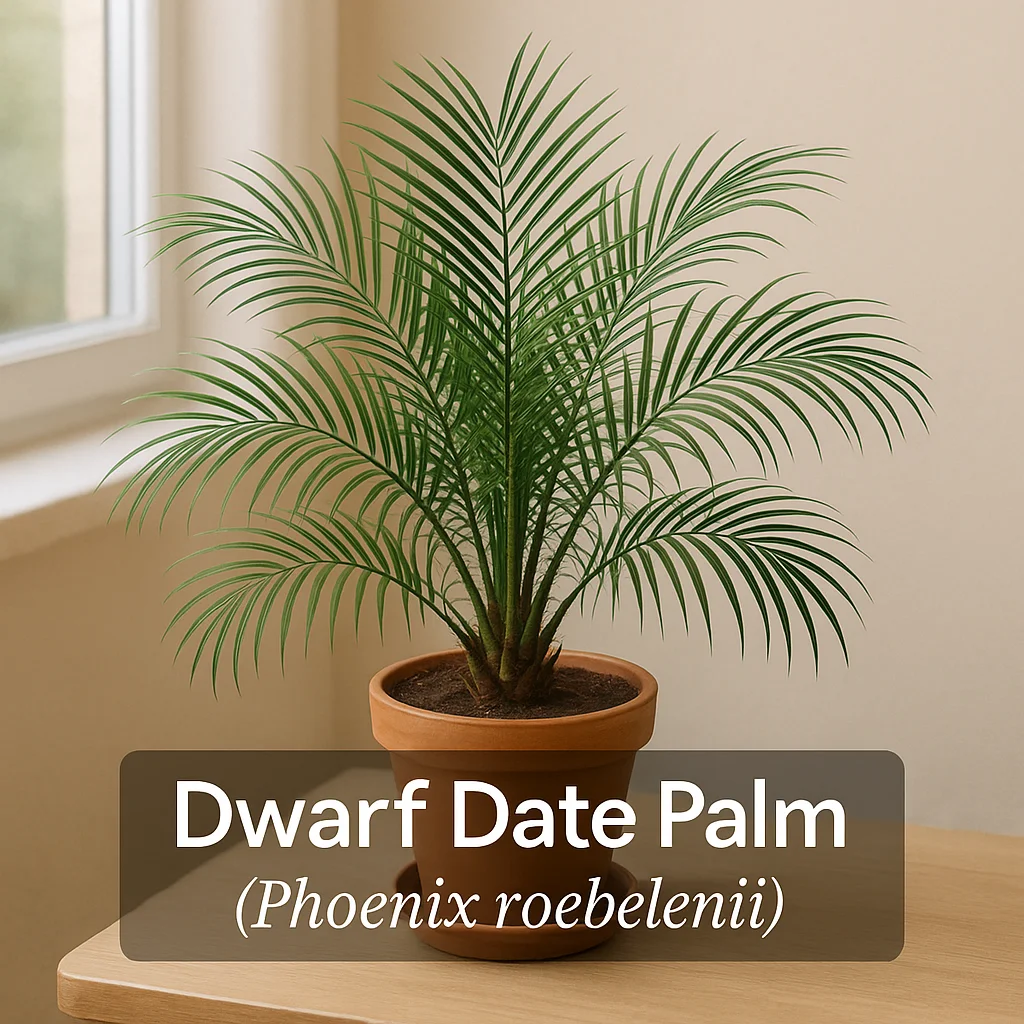
- Common names: Dwarf Date Palm, Pygmy Date Palm
- Scientific name: Phoenix roebelenii
- Plant type: Palm
- Growth habit: Upright, clumping
- Typical indoor size range: 3 to 6 feet tall, up to 3 feet wide
- Growth speed: Slow
- Lifespan: Can live many years with proper care
- Origin: Southeast Asia, particularly Laos and Vietnam
- Light preference: Bright indirect light; some direct sun tolerance
- Water needs: Moderate; prefers drying slightly between watering
- Temperature & humidity preference: Prefers warmer temperatures and higher humidity
- Pet safety: May be irritating to pets
- Difficulty: Medium
🔍 Identification & Look-Alikes
The Dwarf Date Palm is recognized by its graceful, feathery fronds consisting of numerous narrow leaflets that are slightly arching. The stem, which can develop a rough, fibrous texture over time, is generally single, although clumping occurs with multiple shoots arising from the base in mature specimens. Its dark green color contributes to its pleasing aesthetic, and its light requirements can affect the shade of green, with lower light leading to a darker green foliage.
This palm is primarily grown for its foliage, as it seldom blooms indoors. Common look-alikes include other members of the Phoenix genus such as the larger Canary Island Date Palm. Differentiating them can be done by size and leaf arrangement, as the Dwarf Date Palm maintains a more petite stature and a finer, denser frond.
- Top ID Tips:
- Slender, feathery fronds with fine leaflets
- Single or clumping growth habit
- Dark green foliage, varying with light exposure
- Fibrous, rough-textured stem
- Frond arch creates elegant cascading effect
- Lacks prominence of flowers when indoors
- Distinctively smaller than other date palms
- Dense, bushy appearance in mature plants
🌍 Origin & Natural Habitat
Native to the lush tropical environments of Southeast Asia, including Laos and Vietnam, the Dwarf Date Palm flourishes in areas characterized by warm temperatures and high humidity. It naturally grows in forest understories, benefiting from bright, filtered light and protection from harsh direct sunlight. Understanding this habitat helps in replicating similar conditions indoors to keep the plant thriving by ensuring adequate humidity and indirect light exposure.
☀️ Light Requirements
For indoor growing, Dwarf Date Palms prefer bright indirect light, which you can achieve by placing them near north or east-facing windows. Bright indirect light can be described as the sunlight that is filtered through sheer curtains or dappled light through nearby trees. They can tolerate some direct morning sun but should be shielded from intense afternoon sunlight, which can scorch the leaves.
Signs of insufficient light include leggy growth and a lack of vigor, while too much light may result in scorched leaf tips and browning.
- Light Checklist:
- Position near north or east-facing windows
- Bright but filtered light is optimal
- Avoid direct midday sunlight
- Look for signs of inadequate or excessive light exposure
- Adjust surroundings for sufficient light filtering
- Use sheer curtains if light needs adjustment
- Consider artificial grow lights in dim rooms
- Rotate plant regularly for even growth
💧 Watering & Humidity
Dwarf Date Palms enjoy a moderate watering rhythm that consists of thoroughly soaking the soil and allowing it to dry slightly between watering sessions. The top inch of soil should feel dry to the touch before adding more water. Note that pot size and environmental factors such as light and temperature will impact the watering frequency, increasing in summer and decreasing in winter.
This palm prefers higher humidity, a common trait of its native habitat, and maintaining this humidity indoors can be achieved through the use of a humidifier or by placing the pot on a pebble tray with water.
Signs of overwatering include yellowed leaves and root rot, while signs of underwatering appear as browning leaf tips and edges.
- Watering Tips:
- Allow the top inch of soil to dry before watering
- Reduce watering in cooler months
- Use room-temperature water for watering
- Ensure pot has drainage holes to prevent waterlogging
- Consider humidity trays or humidifiers for dryness
- Monitor for signs of over- or underwatering
- Adjust water volume based on plant growth cycle
- Increase frequency during active growth in spring/summer
🐛 Soil, Pot & Repotting
The ideal soil mix for a Dwarf Date Palm is one that is well-draining yet capable of retaining enough moisture, often a mix designed for palms or houseplants, incorporating materials such as peat and perlite. Choose a pot with good drainage holes to prevent waterlogging, and terracotta pots can help in avoiding excess moisture retention due to their breathability.
Repotting should generally occur every 2-3 years or when visible signs such as rootbound growth appear near the container's surface or when water runs straight through the pot's drainage.
During repotting, gently remove the plant from its container, ease away old soil from roots, and place it into a pot one size larger with fresh potting mix.
- Repotting Checklist:
- Use high-quality, well-draining potting soil
- Choose pots with sufficient drainage
- Consider terracotta for reducing water retention
- Repot when roots are bound or growth stabilizes
- Gently loosen root-bound roots when repotting
- Consolidate pruning of damaged or dead roots
- Avoid over-packing soil when repotting
- Remember to water thoroughly after repotting
🌡️ Temperature, Airflow & Seasonal Care
As a tropical plant, the Dwarf Date Palm thrives in temperatures ranging from 60°F to 80°F. It does not do well when subjected to cold drafts or abrupt temperature changes typically associated with air conditioning or heating vents.
In the winter, growth slows as the plant enters a sort of dormancy typical in lower light and cooler months, necessitating reduced watering frequency to prevent overwatering. Improved airflow is beneficial year-round, aiding in reducing pest susceptibility.
- Seasonal Notes:
- Keep temperature consistent, avoiding drafts
- Monitor for cold damage in winter
- Adjust water and light for seasonal growth cycles
- Provide sufficient airflow, avoiding vents or drafts
- Consider supplemental lighting in dim winter months
- Check regularly for signs of temperature stress
- Slow down fertilizing during dormant periods
🌸 Flowers, Fruit & Growth Cycle
Indoors, the Dwarf Date Palm rarely flowers due to light and environment constraints, and fruit production is even less common. Its primary growth cycle is focused on foliage development, with new fronds emerging regularly. Pruning is generally reserved for removing dead or damaged fronds, maintaining it for aesthetic appearance and plant health.
Pruning should be done using clean tools to prevent disease introduction, and care should be taken not to cut fronds that are still green as they continue to provide food through photosynthesis.
🧬 Propagation & Reproduction
Dwarf Date Palms are notoriously challenging to propagate as houseplants because their natural propagation through seeds requires specific conditions to germinate that are difficult to replicate indoors. The easiest method, if available, is through division of offsets, but this opportunity occurs rarely and typically only with older, well-established plants.
- Propagation Tips:
- Propagate mainly through seed or division
- Look for offsets in mature clumping plants
- Ensure seeds are fresh for improved germination rates
- Patience is crucial, as seed germination is slow
- Avoid disturbing roots unless necessary
🌿 Common Problems, Pests & Prevention
While generally easy to care for, Dwarf Date Palms can suffer from several common houseplant afflictions. Yellowing leaves often indicate overwatering, while brown tips may signal underwatering or low humidity. Pests such as spider mites and scale are prevalent, necessitating regular inspections and cleaning of the foliage.
Preventative measures include maintaining consistent care routines, ensuring proper light and humidity, and keeping the plant clean to minimize pest attraction.
- Prevention Basics:
- Check regularly for pests and manage promptly
- Monitor watering and adjust based on season
- Maintain higher relative humidity to prevent leaf browning
- Use a gentle spray to clean leaves and remove dust
- Quarantine new plants before introducing them to the collection
- Avoid over-fertilization to prevent root burn
- Conduct routine checks for signs of disease
- Rotate periodically for even light distribution
🐾 Pet & Home Safety Notes
Caution should be exercised when placing the Dwarf Date Palm around pets, as some sources list it as irritating if consumed. For safety, consider placing the palm in locations out of reach, such as elevated planters or guided by barriers, to prevent curiosity-induced testing by pets. If ingestion is suspected, contact a professional or local poison control resources to seek appropriate guidance.
🏡 Styling Ideas & Best Room Placement
The Dwarf Date Palm fits well in a variety of indoor settings. Its fondness for humidity makes it an excellent choice for bathrooms or kitchens, where it can receive indirect light and stable temperatures. Large floor pots in living rooms provide an exotic centerpiece, and pairing it with other tropical plants can enhance a cohesive design. It can also be a stylish addition to an office or home workspace, where its green fronds can offer a calming visual break.
📌 Summary
- 🎋 Identifiable by slender, arching fronds and a compact size
- 🌍 Native to the humid tropical regions of Southeast Asia
- ☀️ Best kept in bright, indirect light; avoid harsh sun
- 💧 Moderate water needs; prefers slight drying between waterings
- 🐛 Use well-draining soil and repot every 2-3 years
- 🌡️ Favorable temperature range between 60°F to 80°F
- 🧬 Difficult to propagate, seed and offsets are options
- 🌿 Vigilantly watch for pests like spider mites and scale
- 🐾 May be irritating to pets, so positioning is important
- 📦 Medium difficulty; suitable for those with some plant care experience