🌱 Florist’s Chrysanthemum (Chrysanthemum morifolium)
🧾 Quick Facts
Florist’s Chrysanthemum, commonly known as Chrysanthemum morifolium, is a beloved flowering plant, frequently cultivated for its vibrant displays of blooms. Though widely appreciated for its aesthetic appeal, caring for this plant requires some understanding of its needs.
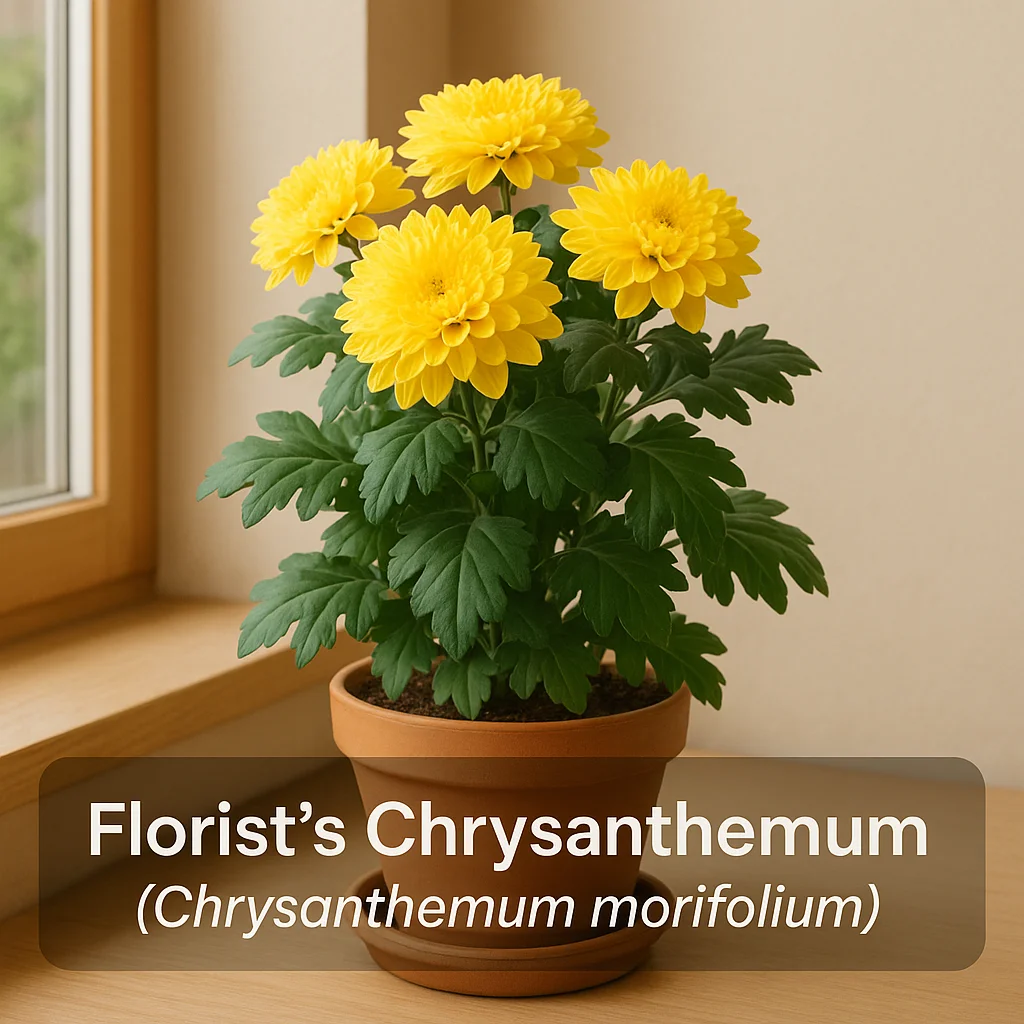
- Common names: Florist’s mum, Hardy mum, Garden mum
- Scientific name: Chrysanthemum morifolium
- Plant type: Flowering
- Growth habit: Shrub-like
- Typical indoor size range: 12–24 inches in height and width
- Growth speed: Moderate
- Lifespan: Often treated as annual indoors
- Origin: Asian regions
- Light preference: Bright indirect light
- Water needs: Moderate; prefers to dry slightly between watering
- Temperature & humidity preference: Moderate temperatures; average to high humidity
- Pet safety: May be irritating/toxic to pets
- Difficulty: Medium
🔍 Identification & Look-Alikes
The Chrysanthemum morifolium is easily recognized by its lush and dense foliage, accompanied by vibrant and often large blooms. The leaves are typically deeply lobed, with a slightly serrated edge and a deep green hue.
- Leaf shape and texture: Deep lobed with serrated edges
- Stem structure: Upright and woody
- Typical color and variegation: Predominantly green leaves with vibrant flower variations
- Flower traits: Available in a range of colors such as yellow, white, pink, and red; known for their large, full blooms
- Common look-alikes: Shasta daisy (Leucanthemum × superbum), which has similar daisy-like flowers
- Top ID Tips:
- Look for dense clusters of blooms
- Check for deeply lobed leaves
- Notice the upright, woody stems
- Observe the variety of flower colors
- Compare leaf texture to Shasta daisies
🌍 Origin & Natural Habitat
Native to Asia, particularly China and Japan, Chrysanthemum morifolium flourishes in regions with temperate climates. In the wild, they often grow in open, sunny environments that provide ample drainage and airflow.
Understanding its native habitat can assist in recreating its preferred conditions indoors. Its seasonal flowering in autumn can suggest shifting care practices throughout the year.
☀️ Light Requirements
Chrysanthemum morifolium thrives in bright indirect light, benefiting from exposure to east or south-facing windows. It's essential to maintain a balance, ensuring the plant receives enough light to promote blooming but avoiding harsh direct sunlight.
- Place near east or south-facing windows
- Bright indirect light is ideal
- Avoid prolonged exposure to direct afternoon sun
- Rotate the plant for even growth
- Watch for leggy growth as a sign of insufficient light
- Look out for bleached leaves due to excessive sun
💧 Watering & Humidity
Maintain moderate watering, allowing the soil to dry slightly between water sessions. Overwatering can lead to root rot, while underwatering may cause wilting. Adjust watering frequency according to pot size, location, and the season.
Chrysanthemum morifolium appreciates average to high humidity levels. Increase humidity with a pebble tray or a humidifier during dry winters.
- Water thoroughly, then let the topsoil dry out
- Adjust watering frequency based on environmental conditions
- Avoid standing water in the pot
- Consider using a humidity tray
- Watch for wilting as a sign of underwatering
- Look for yellowing leaves due to overwatering
🐛 Soil, Pot & Repotting
Chrysanthemum morifolium prefers well-draining soil, ideally a mix suited for flowering plants. Choose a pot with sufficient drainage holes to prevent waterlogging.
Repotting is generally needed when the plant becomes rootbound, usually in early spring when new growth commences. Be gentle, choosing a slightly larger pot to avoid water retention issues.
- Use well-draining soil mixes
- Ensure pot has good drainage holes
- Repot every 1–2 years or when rootbound
- Increase pot size gradually
- Carefully loosen roots during repotting
- Do not bury the stem deeper than before
🌡️ Temperature, Airflow & Seasonal Care
Maintain indoor temperatures between 60–75°F for optimal growth. Protect from drafts and ensure good airflow to prevent fungal issues. In winter, reduce watering as growth slows.
Understanding seasonal cycles helps manage watering and sunlight exposure, ensuring longevity and health.
- Ideal temperature range: 60–75°F
- Avoid placing near AC or heating vents
- Provide consistent airflow
- Reduce watering during winter dormancy
- Move to a brighter spot in winter
- Monitor for draft-induced wilting
🌸 Flowers, Fruit & Growth Cycle
Indoors, Chrysanthemum morifolium can bloom in late autumn if conditions are ideal, showcasing large and vivid flowers. Regular pruning of spent blooms encourages further flowering. They have a shrubby growth pattern with new stems arising from the base.
Prune carefully to maintain shape and hygiene without invasive cuts.
🧬 Propagation & Reproduction
Propagation of Chrysanthemum morifolium is commonly achieved through stem cuttings. While growing from seed is possible, it is less common indoors due to space and resource constraints. Division of clumps during repotting can also be effective.
- Take 3-4 inch stem cuttings for propagation
- Use a rooting hormone for faster development
- Try dividing during spring repotting
- Avoid propagation in peak winter
🌿 Common Problems, Pests & Prevention
Chrysanthemum morifolium may encounter yellow leaves, leaf drop, or leggy growth due to environmental stressors. Common pests include spider mites, mealybugs, and aphids. Maintaining regular cleaning and ensuring proper watering can help prevent issues.
- Clean leaves regularly to remove dust
- Isolate new or affected plants to prevent spreading of pests
- Avoid overcrowding to encourage good airflow
- Monitor for pests and address early
- Balance light exposure and watering
🐾 Pet & Home Safety Notes
Some sources list Chrysanthemum morifolium as irritating if ingested by pets or children. It is advisable to place it out of reach or use barriers. If ingestion is suspected, promptly contact a professional or local poison control resources.
🏡 Styling Ideas & Best Room Placement
Thanks to its bright blooms, Chrysanthemum morifolium can enliven spaces such as living rooms and offices. Pair it with decorative pots on windowsills for maximum visual impact, or group it with foliage plants to contrast colors.
📌 Summary
- Large, vibrant blooms available in various colors
- Originates from Asia, favors temperate climates
- Thrives in bright indirect light; avoid direct sun
- Requires balanced watering; moderate humidity
- Prefers well-draining soil and gradual pot upsize
- Comfortable at 60–75°F; avoid drafts
- Propagate through stem cuttings or division
- Watch for pests like spider mites and aphids
- Medium difficulty; care needed for flowering success
- Exercise caution with pets and children