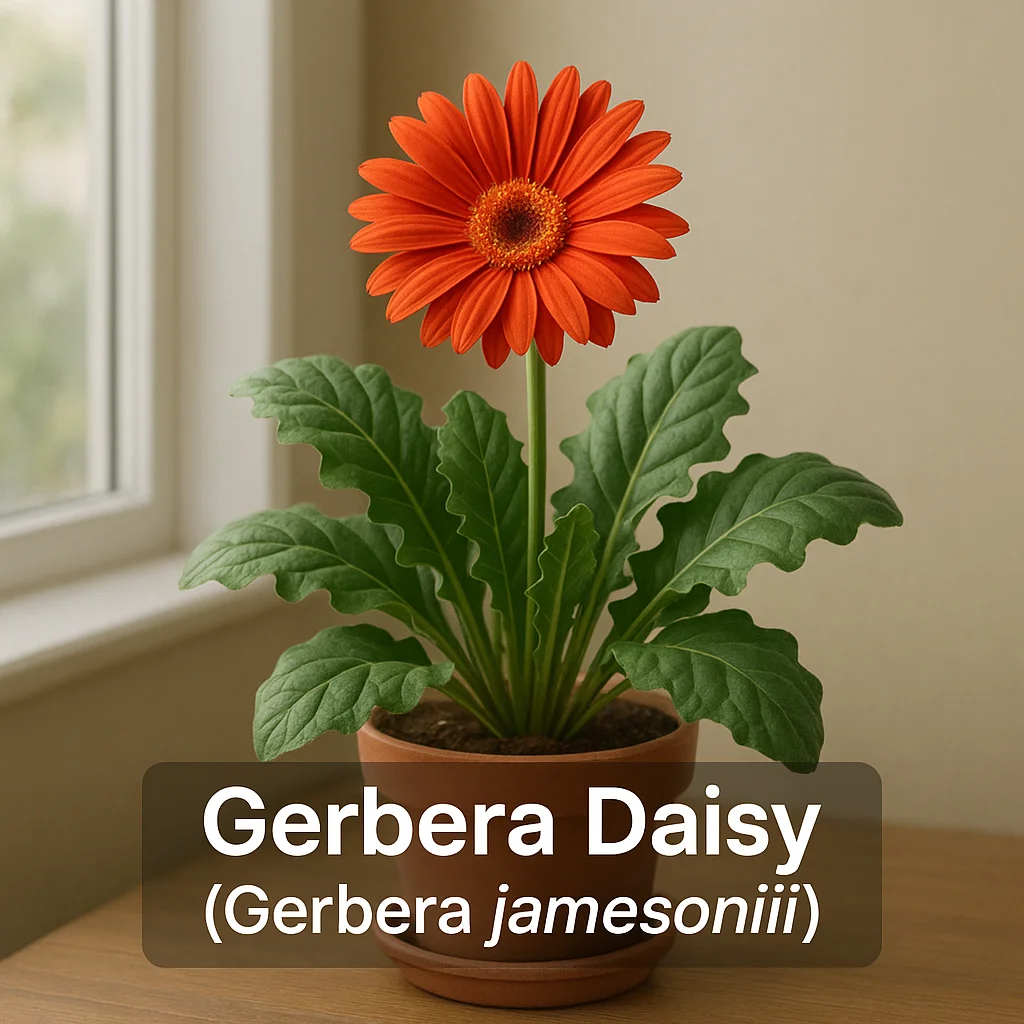
🌱 Gerbera Daisy (Gerbera jamesonii)
🧾 Quick Facts
The Gerbera Daisy, known scientifically as Gerbera jamesonii, is a bright and cheerful flowering plant commonly kept indoors for its spectacular blooms. This plant is popular for its vivid colors and relatively easy maintenance, making it a favorite among houseplant enthusiasts.
- Common names: Gerbera Daisy, Barberton Daisy
- Scientific name: Gerbera jamesonii
- Plant type: Flowering
- Growth habit: Rosette-forming
- Typical indoor size: 10-18 inches in height
- Growth speed: Moderate
- Lifespan: With proper care, can live several years
- Origin: South Africa
- Light preference: Bright indirect light; limited direct sun
- Water needs: Moderate; prefers soil to slightly dry out between watering
- Temperature & humidity preference: Prefers warm temperatures and moderate humidity
- Pet safety: Some may find it mildly irritating; exercise caution
- Difficulty: Medium
🔍 Identification & Look-Alikes
The Gerbera Daisy is characterized by its large, vibrant flowers that sit atop long, slender stems. The leaves are dark green, elongated, and form a rosette at the plant’s base. The flowers come in a range of colors, including red, pink, yellow, orange, and white, often with a contrasting center.
Common look-alikes include the African Daisy and some Chrysanthemums. Look for the Gerbera’s distinct rosette of leaves and solitary flower stems to accurately identify it.
- Top ID Tips:
- Large, bright flowers on individual slender stems
- Rosette arrangement of elongated, dark green leaves
- Flowers in various bright colors
- Thick, leafless flower stems
- Flowers with a distinct central disc surrounded by petals
- Absence of a woody stem
- Frequently confused with African Daisy but larger flowers
- Flowers tend to face towards light sources
- Non-succulent, non-fleshy leaves
🌍 Origin & Natural Habitat
The Gerbera Daisy originates from South Africa, particularly from regions with a subtropical climate. It naturally grows in a variety of habitats including grasslands and rocky slopes. Understanding its native environment helps in replicating similar indoor conditions to ensure healthy growth, such as providing bright light and well-drained soil.
While the plant does not undergo a significant dormancy period, its growth may slow during cooler seasons, reflecting its adaptation to the subtropical climates of its homeland.
☀️ Light Requirements
Gerbera Daisies thrive in bright, indirect light. Too little light can result in reduced flowering, while too much direct sunlight can scorch the leaves. Ideal placement is near an east or west-facing window where it can receive morning or afternoon light without the harshness of midday sun.
Bright indirect light is optimal, which can be simulated with sheer curtains or placement slightly away from direct window exposure. Signs of insufficient light include leggy growth and lack of flowering.
- Light Checklist:
- East or west-facing window recommended
- Avoid midday direct sunlight to prevent leaf burn
- Rotate plant weekly for even light exposure
- Use sheer curtains to filter intense light
- Monitor for signs of inadequate light (e.g., leggy growth)
- Consider supplemental lighting in low-light environments
- Avoid north-facing windows where light is too low
- Watch for sun bleaching, a sign of excessive direct light
💧 Watering & Humidity
Water Gerbera Daisies when the top inch of soil feels dry. Use a soak-and-drain method to ensure thorough watering and allow excess water to escape freely. Adjust watering frequency based on season, pot size, and light exposure. During the warmer months, the plant may require more frequent watering compared to the colder months.
Gerbera Daisies benefit from moderate humidity. Artificial means to raise humidity include the use of a humidity tray or group plantings. Overwatering can lead to root rot, while underwatering may cause wilting and browning leaf tips.
- Watering Tips:
- Water when top inch of soil is dry
- Ensure pot has adequate drainage
- Avoid allowing plant to sit in water
- Consider humidity trays in dry environments
- Reduce watering during cooler months
- Consistent underwatering leads to wilted leaves
- Trim browning leaf tips indicating dryness
- Monitor for root rot as a sign of overwatering
- Avoid misting foliage to reduce fungal issues
🐛 Soil, Pot & Repotting
A well-draining, loamy soil mix is ideal for Gerbera Daisies. This might include a blend of peat moss, perlite, and compost. A pot with drainage holes is essential to prevent waterlogging, and choosing between terracotta and plastic can depend on the local humidity and watering habits. Repotting should be done every 1-2 years or when roots are visibly outgrowing the pot.
Repotting is best done in early spring to rejuvenate growth, using a new pot just one size larger to encourage steady development without overwhelming the root system.
- Repotting Checklist:
- Use a loamy, well-draining soil mix
- Ensure pot has proper drainage
- Repot every 1-2 years or when rootbound
- Select pots slightly larger than the current size
- Gently loosen roots during repotting
- Discard any rotting or damaged roots
- Water thoroughly after repotting
- Avoid shaking the plant vigorously
- Opt for terracotta pots in humid areas
🌡️ Temperature, Airflow & Seasonal Care
Gerbera Daisies prefer warm temperatures, typically between 65-75°F, and should be protected from drafts, particularly cold and dry air from heating vents. During winter, growth may slow, necessitating adjustments in watering and light exposure to accommodate seasonal changes.
Regular airflow helps prevent fungal issues, so consider keeping the plant near a fan or in a well-ventilated area without cold drafts.
- Seasonal Notes:
- Maintain temperatures between 65-75°F
- Avoid exposure near cold drafts
- Adjust watering based on seasonal growth changes
- Reduce watering frequency in the winter months
- Use a fan to ensure gentle airflow
- Watch for winter leaf droop due to low temperatures
- Consider moving away from windows during cold snaps
- Position away from direct heating vents
🌸 Flowers, Fruit & Growth Cycle
Gerbera Daisies flower indoors, typically during the spring and summer months. They produce large, showy blooms that are the main attraction, but they do not bear fruit sustainably indoors. The growth cycle involves primarily the production of new leaves and flower stems.
Pruning involves cutting off spent blooms and any yellowing leaves to encourage further flowering and tidy growth.
🧬 Propagation & Reproduction
Propagation is generally accomplished through division since seeds can be challenging and unreliable in home environments. Dividing the plant during the repotting process ensures both parent and new plants remain healthy and robust.
- Propagation Tips:
- Best propagated through division
- Divide when repotting and new growth is visible
- Ensure sufficient roots on each division
- Use clean tools to prevent infection
- Avoid seed propagation due to variability
- Water new divisions minimally until stable
🌿 Common Problems, Pests & Prevention
Common issues with Gerbera Daisies include yellowing leaves, brown tips, and drooping from nutrient imbalances or improper watering. Pests such as spider mites and fungus gnats might also be problematic. Regular plant maintenance, good airflow, and cleaning are preventative measures.
- Prevention Basics:
- Inspect new plants for pests before introducing
- Clean leaves to deter pests
- Ensure consistent watering without over-saturation
- Monitor plant environment for humidity
- Check for drafts that may stress the plant
- Regularly rotate plant to ensure even growth
- Remove debris and dead leaves promptly
- Keep tools sterilized to prevent disease spread
- Quarantine affected plants until treated
🐾 Pet & Home Safety Notes
While Gerbera Daisies are generally not considered highly toxic, they may cause mild irritation for pets and children if ingested. It is recommended to place these plants out of reach to minimize risk. If ingestion is suspected, contact a professional or local poison control resources for guidance.
🏡 Styling Ideas & Best Room Placement
Gerbera Daisies add a splash of color to any room with good light, such as living rooms or offices. They can be placed on tables as a centerpiece or on windowsills where they receive bright, indirect light. These plants pair well with other flowering plants like orchids or foliage plants like ferns and peace lilies.
📌 Summary
- Recognizable by large, brightly colored flowers and dark green rosette leaves
- Native to South African grasslands, ideal in bright indirect light
- Requires moderate watering and appreciates well-drained loamy soil
- Warm temperatures between 65-75°F are ideal for growth
- Propagates best through division, rather than seeds
- Pests like spider mites can be a concern; preventive care is key
- Not highly toxic but exercise caution with pets and children
- Medium difficulty, rewarding with proper care