🌱 Lady Palm (Rhapis excelsa)
🧾 Quick Facts
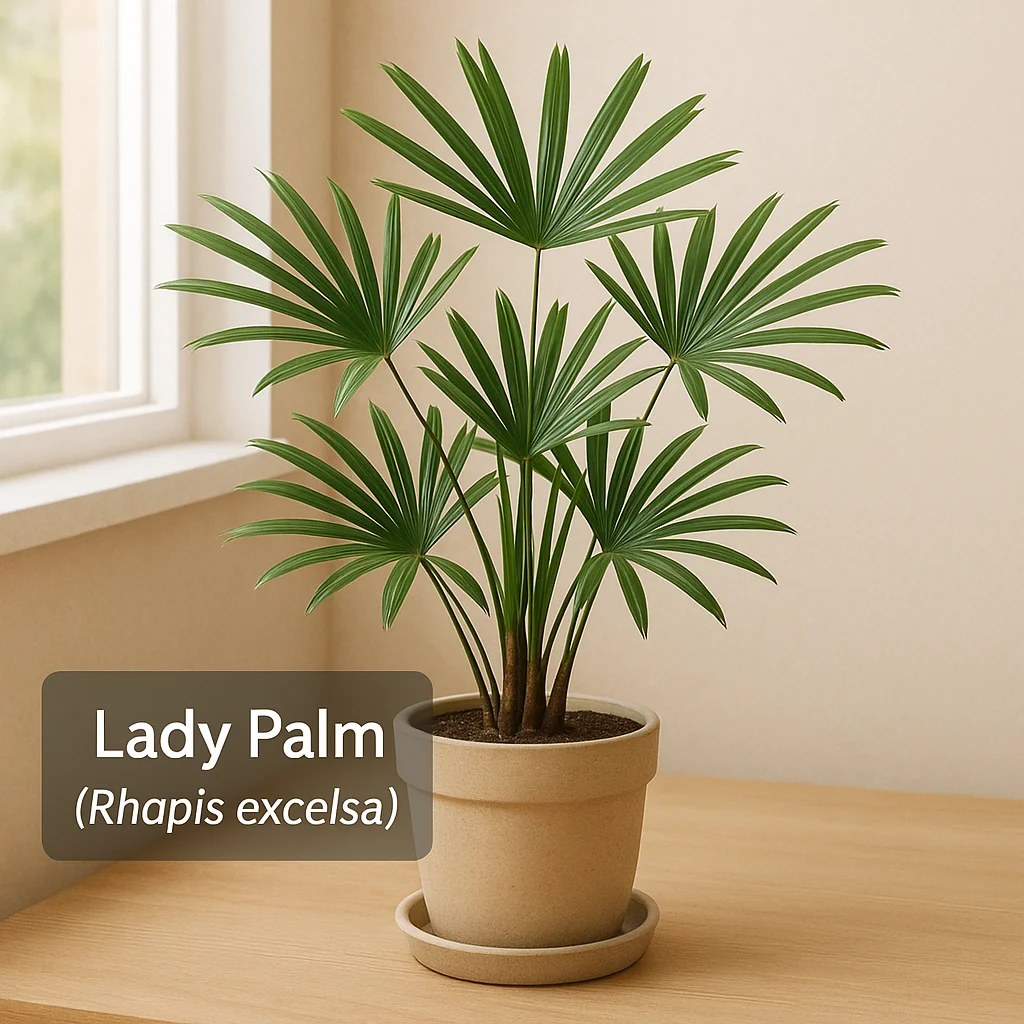
The Lady Palm, scientifically known as Rhapis excelsa, is a popular choice for indoor plant enthusiasts due to its elegant, fan-shaped leaves and ability to thrive in low-light environments. Here are some quick facts to help you understand this charming palm better:
- Common Names: Lady Palm, Bamboo Palm
- Scientific Name: Rhapis excelsa
- Plant Type: Palm
- Growth Habit: Upright, bushy
- Typical Indoor Size Range: 3 to 6 feet tall
- Growth Speed: Slow
- Lifespan: Can live many years with proper care
- Origin: Native to Southern China and Taiwan
- Light Preference: Medium to low light; avoid direct sun
- Water Needs: Moderate; allow top inch of soil to dry
- Temperature & Humidity Preference: Prefers warm, humid conditions
- Pet Safety: Generally considered pet-friendlier
- Difficulty: Easy to medium
🔍 Identification & Look-Alikes
The Lady Palm is easily identified by its slender, upright stems that give rise to lush, green, fan-shaped leaves. The leaves are typically divided into four to ten leaflets with serrated edges. The stems, often mistaken for bamboo, create a bushy appearance when fully grown. This plant is mainly grown for its foliage, as it rarely flowers indoors.
Common look-alikes include the Parlor Palm and Bamboo Palm, but you can differentiate the Lady Palm by its distinct leaf texture and arrangement.
- Top ID Tips:
- Fan-shaped leaves with serrated edges
- Slender, bamboo-like stems
- Bushy, upright growth habit
- Deep green coloration
- Prefers low to medium light environments
- Rarely blooms indoors; focus on foliage
🌍 Origin & Natural Habitat
The Lady Palm is native to the subtropical regions of Southern China and Taiwan, where it grows in the understory of forests. These regions have warm and humid climates, making the plant well-adapted to moderate indoor lighting and humidity. Understanding its natural habitat helps in recreating similar conditions indoors, ensuring optimal growth.
In the wild, the Lady Palm thrives in shaded areas, benefiting from the filtered light of the forest canopy. It experiences seasonal changes but remains evergreen with no pronounced dormancy period.
☀️ Light Requirements
Lady Palms prefer low to medium indirect light, making them suitable for rooms without direct sunlight. Ideal placement includes areas near north or east-facing windows where they receive filtered light. Bright indirect light is akin to being in the bright shadow of a tree or next to a north-facing window. Direct sunlight can scorch the leaves and should be avoided.
If the plant receives too little light, its growth will slow, and the leaves may become droopy and lose their vibrant color. Overexposure to light can cause leaf tip browning.
- Light Checklist:
- Place near north or east-facing windows
- Avoid direct sunlight exposure
- Adjust position if leaves appear bleached
- Watch for leggy growth as a sign of low light
- Yellowing leaves could indicate too much light
- Rotate plant occasionally for even growth
💧 Watering & Humidity
Rhapis excelsa has moderate water needs. Allow the top inch of soil to dry out between waterings, following the soak-and-drain method to prevent waterlogging. During warmer months, water more frequently, while in cooler months, reduce watering.
This plant appreciates higher humidity, which can be enhanced by placing a humidity tray filled with pebbles underneath or using a room humidifier. Misting the leaves occasionally can also help. Signs of overwatering include yellowing leaves and root rot, while underwatering can lead to drooping leaves and dry tips.
- Watering Tips:
- Allow the top inch of soil to dry before watering
- Increase frequency during the growing season
- Provide humidity using trays or humidifiers
- Check for drainage to avoid root rot
- Watch for drooping as a sign of underwatering
- Mist leaves to increase humidity
🐛 Soil, Pot & Repotting
Lady Palms thrive in well-draining potting soil with good aeration. A standard potting mix with added perlite or sand is ideal to ensure good drainage. Choose pots with drainage holes to prevent water accumulation.
Repotting should be done every two to three years or when the plant becomes root-bound. Signs that it's time to repot include slowed growth and roots appearing at the soil surface or pot drainage holes. When repotting, gently loosen the roots and select a pot slightly larger than the current one to avoid excessive root space.
- Repotting Checklist:
- Use well-draining potting mix with perlite
- Choose pots with adequate drainage
- Look for root-bound cues to decide timing
- Repot every 2-3 years
- Refresh soil to boost nutrients
- Select slightly larger pots for repotting
🌡️ Temperature, Airflow & Seasonal Care
The Lady Palm prefers temperatures ranging from 60°F to 80°F (15°C to 27°C) and can tolerate short-term drops, although it's not frost-hardy. Keep the plant away from drafty windows or sudden temperature changes, such as direct AC or heater vents. During winter, growth may slow, requiring less frequent watering.
- Seasonal Notes:
- Maintain temperature between 60°F and 80°F
- Avoid placing near drafty areas
- Reduce watering in winter
- Keep away from direct heater or AC vent airflow
- Use fans for room airflow without blowing directly on the plant
🌸 Flowers, Fruit & Growth Cycle
Lady Palms are primarily grown for their foliage, as flowering indoors is uncommon. When they do bloom, tiny, petal-less flowers may appear, though they often go unnoticed. The plant grows by producing new shoots from the base, gradually developing into lush, bushy clumps. Pruning isn’t necessary except to remove dead or damaged leaves.
🧬 Propagation & Reproduction
Propagation of the Lady Palm is mostly achieved through division. This method involves separating the plant into smaller sections with their own root systems, ideally during repotting. This can be somewhat challenging as the roots are fibrous and interconnected.
- Propagation Tips:
- Use division during repotting for propagation
- Ensure each division has a strong root ball
- Handle roots gently to prevent damage
- Propagation is best done during the growing season
- Consider professional help for large divisions
🌿 Common Problems, Pests & Prevention
Common issues with Lady Palms include leaf yellowing, brown tips, and droopiness, often caused by water imbalance. Pests such as spider mites, mealybugs, and scale can occur but are manageable with regular monitoring and cleaning. Prevention includes maintaining good hygiene, avoiding overwatering, and ensuring proper airflow.
- Prevention Basics:
- Inspect new plants before introduction
- Quarantine new additions for a week
- Wipe leaves regularly using a damp cloth
- Adjust watering to prevent yellowing
- Ensure good airflow to avoid mold
- Keep plant items away from humid areas to prevent fungal issues
🐾 Pet & Home Safety Notes
The Lady Palm is generally considered non-toxic to pets and children. However, some sources suggest that chewing on the leaves might cause mild stomach upset. To ensure safety, place plants out of reach or use barriers if needed. If ingestion is suspected, contact a professional or local poison control resources for guidance.
🏡 Styling Ideas & Best Room Placement
Lady Palms bring a touch of elegance and greenery to indoor spaces. They are well-suited for living rooms, offices, and shaded corners where their upright growth habit can be displayed. They pair beautifully with other low-light indoor plants like Peace Lilies or Snake Plants to create diverse plant collections.
For room placement, consider the following:
Living areas core:
- Place in living rooms for a lush accent
- Enhance office spaces with their air-purifying qualities
- Ideal for shaded corners or large bedrooms
- Can be paired with larger floor pots for full impact
📌 Summary
- Identified by fan-shaped leaves and bamboo-like stems
- Native to subtropical regions of China and Taiwan
- Prefers medium to low indirect light; avoid direct sun
- Water moderately; allow top inch of soil to dry
- Thrives in well-draining soil; repot every 2-3 years
- Optimal temperature is 60°F to 80°F; avoid drafts
- Propagation mainly through division
- Watch for pests like spider mites and mealybugs
- Generally safe for pets but place out of reach
- Decorative in living rooms, offices, shaded corners