🌱 Weeping Fig (Ficus benjamina)
🧾 Quick Facts
The Weeping Fig, known scientifically as Ficus benjamina, is a popular houseplant admired for its graceful, arching branches and glossy, oval leaves. It can bring an elegant touch to any indoor space.
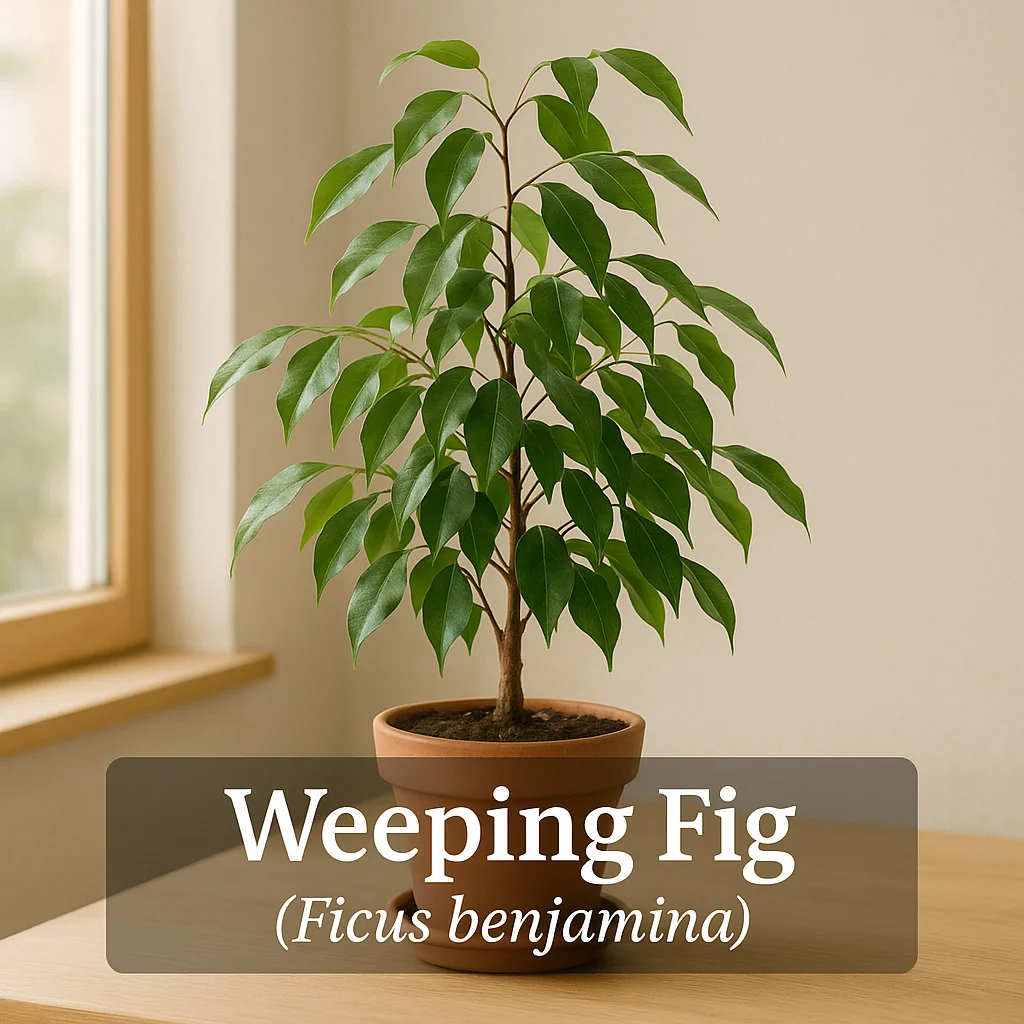
- Common names: Weeping Fig, Benjamin Fig, Ficus Tree
- Scientific name: Ficus benjamina
- Plant type: Foliage
- Growth habit: Upright, shrub-like
- Typical indoor size range: 3-8 feet tall, 2-4 feet wide
- Growth speed: Moderate
- Lifespan: Can live many years with care
- Origin: Southeast Asia, India, and Australia; tropical forests
- Light preference: Bright indirect light
- Water needs: Moderate, prefers to dry slightly between waterings
- Temperature & humidity preference: Prefers warm, humid conditions
- Pet safety: May be irritating/toxic to pets
- Difficulty: Medium
🔍 Identification & Look-Alikes
The Weeping Fig is recognized by its slender, wiry branches and glossy, dark green leaves. Its leaves are elliptical and taper to a distinct point. The branches grow in an elegant drooping manner, giving the plant its "weeping" appearance.
The Weeping Fig is grown mainly for its attractive foliage and rarely flowers indoors. Its leaves may vary in color from light green to variegated patterns depending on the cultivar and light conditions. Common look-alikes include the Rubber Plant (Ficus elastica) and the Indian Laurel Fig (Ficus microcarpa); however, the Weeping Fig's drooping branches and smaller leaves are distinguishing features.
- Top ID Tips:
- Glossy, elliptical leaves with pointed tips
- Arching, drooping branches
- Often forms an upright tree shape indoors
- Dark green foliage, occasionally variegated
- Smooth, sleek bark
- Rarely flowers indoors
- Prefers brighter light conditions compared to some look-alikes
🌍 Origin & Natural Habitat
The Weeping Fig originates from Southeast Asia, India, and parts of Australia, where it is often found in tropical forests and moist lowland areas. Typically growing as a forest understory tree, it benefits from filtered light in its natural habitat.
Understanding its natural environment helps in replicating optimal indoor conditions. The plant thrives when provided with high humidity and bright, indirect light similar to a forest edge or canopy.
☀️ Light Requirements
Place your Weeping Fig in a location with bright, indirect light to maintain its lush foliage. East or north-facing windows are generally ideal. Direct sunlight may scorch its leaves, while low light can cause leaf drop and leggy growth.
Avoid placing it in deep shade. If the plant’s growth is slow or leaves are small and sparse, it may need more light. Yellowing leaves can be a sign of too much direct sunlight.
- Light Checklist:
- Prefers bright, indirect light
- Avoid prolonged direct sunlight
- Can tolerate some shade with slower growth
- Watch for leaf drop in low or insufficient light
- Consider supplemental grow lights if needed
- Rotate plant occasionally for even growth
💧 Watering & Humidity
The Weeping Fig prefers a soak-and-dry watering method. Water thoroughly, allowing the excess to drain, and let the top inch of soil dry out between waterings. Frequency will vary with pot size, season, and light; less frequent in winter.
This plant appreciates a humid environment, which can be enhanced with pebble trays or misting. Signs of overwatering include yellowing leaves, while underwatering might cause brown leaf tips.
- Watering Tips:
- Allow topsoil to dry between waterings
- Use room temperature water
- Adapt watering schedule based on light and season
- Avoid waterlogging the soil
- Increase humidity with a humidifier or pebble tray
- Mist leaves to enhance humidity
🐛 Soil, Pot & Repotting
The ideal soil for a Weeping Fig is a well-draining peat-based mix. A pot with drainage holes is essential to prevent waterlogged roots. Terracotta pots are a good choice due to their breathable nature, helping to moderate moisture.
Repot this plant every 2-3 years or when roots start to become crowded. Choose a pot slightly larger than the current one. Repot gently, carefully loosening compacted roots and refreshing the soil.
- Repotting Checklist:
- Repot in spring for best results
- Use a pot one size larger when repotting
- Look for roots growing out of drainage holes
- Use a well-draining peat-based soil mix
- Ensure the pot has drainage holes
- Handle roots delicately during repotting
🌡️ Temperature, Airflow & Seasonal Care
The optimal temperature range for a Weeping Fig is 65-75°F (18-24°C). It does not tolerate cold drafts or abrupt temperature changes well, which can trigger leaf drop.
During the slower growth period in winter, reduce watering and avoid sudden moves. Ensure steady airflow without placing it directly in line with AC or heaters.
- Seasonal Notes:
- Avoid placing near drafts or heat sources
- Reduce watering in winter
- Provide stable temperatures
- Move to brighter spots in low light seasons
- Expect slower growth during cooler months
🌸 Flowers, Fruit & Growth Cycle
Indoors, the Weeping Fig rarely blooms or develops fruit. Its primary value lies in its verdant leaves and graceful form. It typically forms new leaves during the spring and summer growth periods.
Regular pruning can help shape and maintain its size. Always prune with clean tools to avoid spreading disease. Remove dead or yellowing leaves to encourage fresh growth.
🧬 Propagation & Reproduction
Propagation of the Weeping Fig is commonly done through stem cuttings. Take 4-6 inch cuttings with at least two leaf nodes, strip the lower leaves, and place in water or moist soil until roots develop.
This plant can also propagate through air-layering, though more complex. Seed propagation is not typical for most indoor growers due to difficulty.
- Propagation Tips:
- Use healthy, disease-free stems
- Ensure cuttings are 4–6 inches long
- Root cuttings in water or soil
- Maintain high humidity around new cuttings
- Avoid direct sunlight on cuttings
🌿 Common Problems, Pests & Prevention
Common issues with Weeping Figs include yellow leaves due to overwatering or drafts, and brown leaf tips from low humidity. Leaf drop is often a response to changes in environment.
Pests like spider mites, mealybugs, and scale are potential challenges. Regularly inspect and keep the plant clean to prevent infestations. Encourage airflow and maintain steady care routines.
- Prevention Basics:
- Quarantine new plants before integrating
- Wipe leaves to remove dust and pests
- Maintain consistent care routines
- Inspect regularly for pest signs
- Balance environmental factors to avoid stress
- Avoid over-fertilizing, which can attract pests
🐾 Pet & Home Safety Notes
The sap of the Weeping Fig may cause irritation to pets and children if ingested. All parts of the plant, including leaves and stems, contain compounds that might be mildly toxic.
Place the plant where it cannot be easily reached by curious hands or paws, perhaps using barriers or stands. If ingestion is suspected, it is advisable to consult a professional or local poison control resources.
🏡 Styling Ideas & Best Room Placement
The Weeping Fig adds elegance to any room with its graceful drooping branches. It thrives in bright, humid spots like bathrooms, kitchens, or living rooms. Its upright form is perfect for floors or larger spaces.
Pair it with shade-tolerant plants such as Peace Lilies or Snake Plants to enhance its aesthetic charm. Moss poles or stakes can provide additional support for more structured growth.
📌 Summary
- Recognizable by its drooping branches and glossy leaves
- Originates from tropical forests of Southeast Asia
- Thrives in bright, indirect light
- Prefers moderate watering and high humidity
- Best in well-draining soil, terracotta pots recommended
- Moderate care level; keep away from pets
- Propagatable through stem cuttings
- Susceptible to leaf drop from drafts or overwatering
- Use safety precautions to avoid ingestion issues
- Ideal placement in living rooms or offices with bright, indirect light