🌱 Alocasia baginda ‘Silver Dragon’
🧾 Quick Facts
The Alocasia baginda ‘Silver Dragon’ is a striking houseplant known for its unique foliage. This tropical plant makes an eye-catching addition to any indoor plant collection due to its bold patterns and texture.
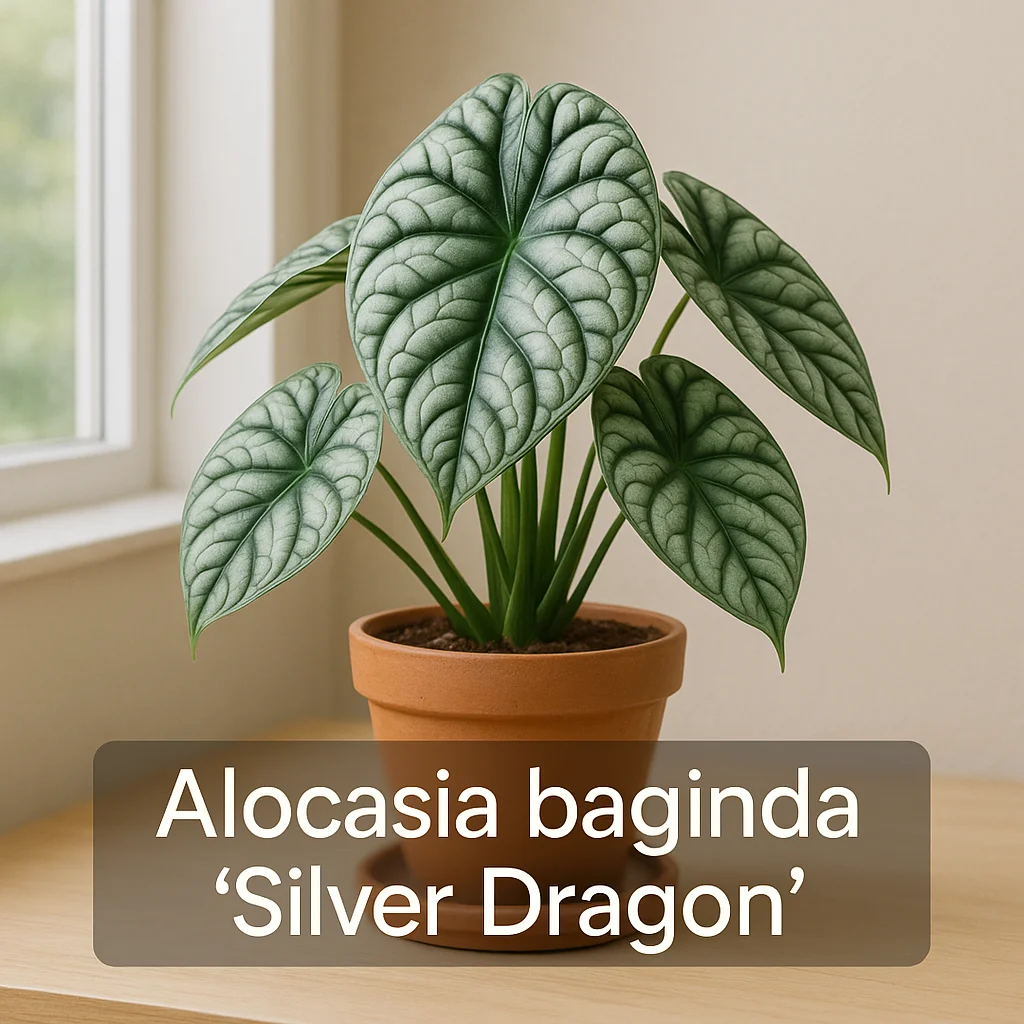
- Common names: Silver Dragon Alocasia
- Scientific name: Alocasia baginda 'Silver Dragon'
- Plant type: Foliage
- Growth habit: Upright
- Typical indoor size: 1 to 3 feet tall, 1 to 2 feet wide
- Growth speed: Moderate
- Lifespan: Can live many years with care
- Origin: Southeast Asia; forest understory
- Light preference: Bright indirect light
- Water needs: Moderate; prefers moist soil
- Temperature & humidity preference: Warm and humid environments
- Pet safety: May be irritating/toxic to pets if ingested
- Difficulty: Medium
🔍 Identification & Look-Alikes
The Alocasia baginda ‘Silver Dragon’ is easily recognized by its arrow-shaped leaves, which are silvery with prominent dark green veining, resembling the scales of a dragon. The leaves are thick and textured, adding to its dramatic appearance. It grows from a central stem, and while it rarely blooms indoors, it is primarily cultivated for its foliage.
Common look-alikes include other Alocasia varieties. Look for the distinct dragon scale pattern and silver tone to accurately identify the Silver Dragon.
- Top ID Tips:
- Arrow-shaped leaves with a silvery base color
- Prominent, dark green veins resembling dragon scales
- Thick, textured foliage
- Central stem growth
- Upright growth habit
- Typically grown for foliage, not flowers
- Distinct from other Alocasia by its unique leaf pattern
🌍 Origin & Natural Habitat
Alocasia baginda ‘Silver Dragon’ originates from Southeast Asia, where it is found in the forest understory. It thrives in warm, humid environments with dappled sunlight, mimicking its natural habitat conditions. Understanding these origins helps in providing the right indoor care, such as ensuring adequate humidity and controlling light exposure.
☀️ Light Requirements
For optimal growth, place the Alocasia baginda ‘Silver Dragon’ in bright indirect light. This can be achieved by positioning it near an east or north-facing window. Direct sunlight may scorch its leaves, while too little light can cause stunted growth. You’ll notice a healthy, vibrant plant when the light conditions are just right.
- Light Checklist:
- Bright indirect light is best
- Avoid direct, harsh sunlight
- North or east-facing windows are ideal
- Light levels affect variegation intensity
- Too much light: scorched leaves
- Too little light: slow growth, leggy stems
- Rotate plant occasionally for even growth
💧 Watering & Humidity
The Silver Dragon prefers a balanced watering routine with a soak-and-drain approach. Allow the top inch of soil to dry out between watering. Smaller pots and lower light conditions require less water, whereas larger pots or brighter areas will need more. This plant appreciates high humidity levels, which can be achieved with a pebble tray or humidifier.
- Watering Tips:
- Water when top inch of soil is dry
- Ensure pots have drainage holes
- Avoid letting the plant sit in water
- High humidity benefits the plant
- Use pebble trays or humidifiers to increase moisture
- Look out for overwatering: yellow leaves
- Signs of underwatering: droopy leaves
🐛 Soil, Pot & Repotting
Choose a well-draining, airy potting mix for your Alocasia baginda ‘Silver Dragon’. A mix of peat, perlite, and orchid bark will support its needs. Use pots with drainage holes to prevent root rot. Repot every 1-2 years or when growth slows and roots fill the pot, ideally in spring.
- Repotting Checklist:
- Light, well-draining soil mix
- Incorporate perlite or orchid bark
- Repot when rootbound or growth slows
- Use a pot one size larger
- Avoid compacting soil around roots
- Handle roots gently during repotting
- Repotting best done in spring
🌡️ Temperature, Airflow & Seasonal Care
Keep Silver Dragon in temperatures between 65°F and 80°F. It dislikes cold drafts, so avoid placing it near windows or doors in the winter. In cooler weather, its growth may slow, requiring less water. Maintain good airflow without exposing it to direct drafts to ensure health.
- Seasonal Notes:
- Keep stable temperatures, 65-80°F
- Avoid cold drafts and temperature swings
- Growth slows in cooler months
- Watering may need reducing in winter
- Provide consistent humidity year-round
- Watch for dry air in heated rooms
🌸 Flowers, Fruit & Growth Cycle
The Alocasia baginda ‘Silver Dragon’ rarely blooms indoors; it's grown mostly for its foliage. It generally follows a pattern of producing new leaves rather than flowers. Regular pruning of dead or damaged leaves helps maintain its appearance and encourages healthy new growth.
🧬 Propagation & Reproduction
Propagating the Alocasia baginda ‘Silver Dragon’ is typically done by division during repotting. Gently separate parts of the root ball and replant them in new pots. This method is favored over seed propagation, which is uncommon and not practical for most home growers.
- Propagation Tips:
- Propagate by division
- Best done during repotting
- Ensure each division has roots and stems
- Use a suitable potting mix for each division
- Avoid seed propagation; uncommon indoors
- Allow divisions to acclimate to new pots
🌿 Common Problems, Pests & Prevention
Alocasia baginda ‘Silver Dragon’ can suffer from yellow leaves, brown tips, and drooping when faced with incorrect care. Pests like spider mites and mealybugs can also be an issue. Regular checking and cleaning of leaves, along with proper watering and airflow, will help prevent these problems.
- Prevention Basics:
- Keep leaves clean and dust-free
- Check regularly for spider mites or mealybugs
- Quarantine new plants before adding them to collection
- Ensure consistent humidity
- Avoid overwatering and waterlogging
- Maintain stable care routine
- Provide adequate light and airflow
🐾 Pet & Home Safety Notes
All parts of the Alocasia baginda ‘Silver Dragon’ may be irritating if ingested. It’s wise to place the plant out of reach of pets and children. If ingestion occurs, contact a professional or local poison control resources for advice.
🏡 Styling Ideas & Best Room Placement
The Silver Dragon's exotic appearance makes it a popular choice for creating a focal point in living rooms or offices. It pairs well with other tropical plants such as Monsteras or Philodendrons, adding diversity in texture. Since it thrives in humidity, bathrooms and kitchens can be ideal placements if the light conditions are suitable.
📌 Summary
- Arrow-shaped, silver-toned leaves with dark veins
- Native to Southeast Asian understory environments
- Prefers bright indirect light for healthy growth
- Moderate watering; likes soil to dry slightly between waterings
- Well-draining, airy soil mix required
- No tolerance for cold drafts; prefers warmth and humidity
- Propagation mainly by division during repotting
- Vigilant against pests like spider mites and mealybugs
- Medium difficulty; requires attentive care
- Keep away from pets and children due to irritant risk