🌱 Alocasia x amazonica ‘Polly’
🧾 Quick Facts
The Alocasia x amazonica ‘Polly’, a striking tropical hybrid, is a popular choice for indoor plant enthusiasts worldwide. Its bold foliage and unique appearance make it an appealing option for those seeking to add a touch of the exotic to their home.
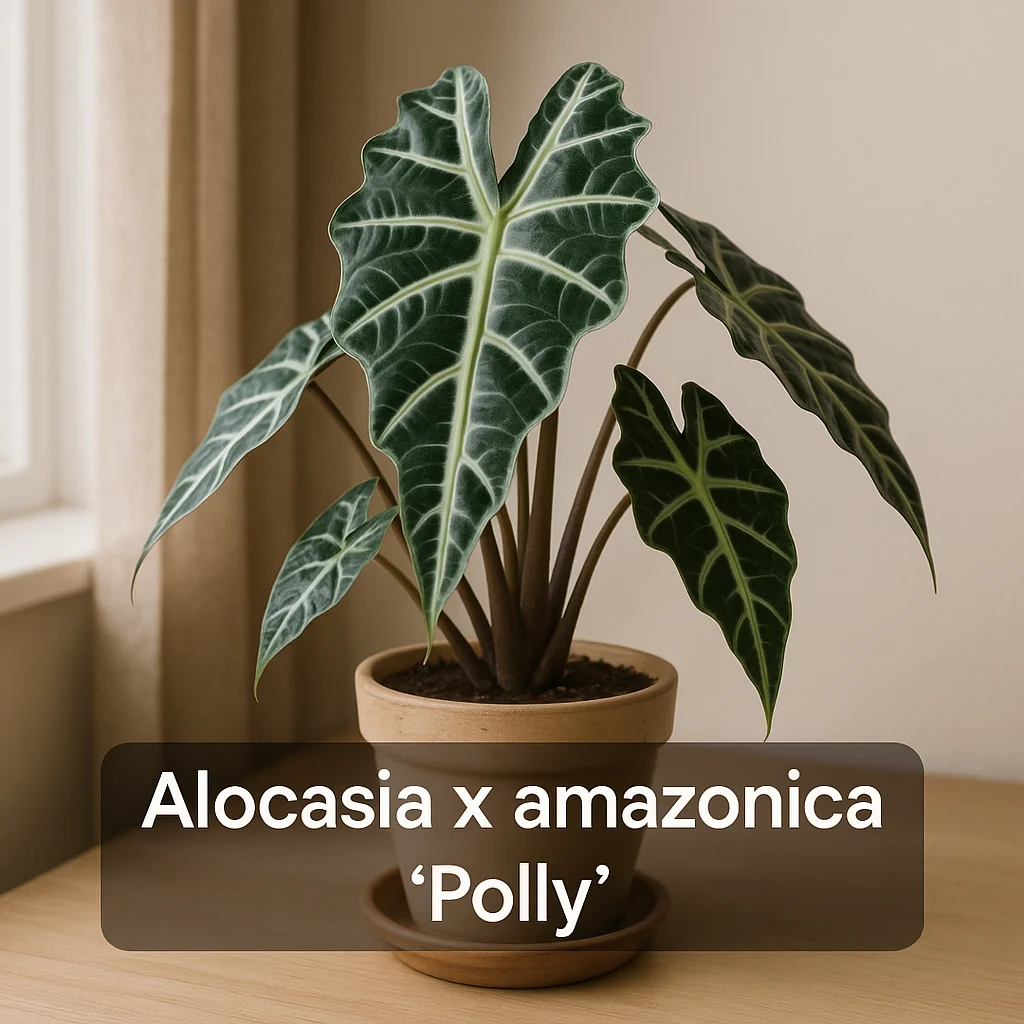
- Common names: African Mask Plant, Elephant Ear, Alocasia Polly
- Scientific name: Commonly sold as Alocasia x amazonica ‘Polly’
- Plant type: Foliage
- Growth habit: Upright
- Typical indoor size range: 1 to 2 feet tall and wide
- Growth speed: Moderate
- Lifespan: Can live many years with care
- Origin: Hybrid, often associated with tropical Southeast Asia
- Light preference: Bright indirect light
- Water needs: Moderate, prefers partial drying-out
- Temperature & humidity preference: Warm temperatures, high humidity
- Pet safety: May be irritating/toxic to pets
- Difficulty: Medium
🔍 Identification & Look-Alikes
The Alocasia x amazonica ‘Polly’ is instantly recognizable by its glossy, deep green leaves that are shaped like elongated hearts. The leaves have striking white or light green veining that brings out the distinct arrow or mask-like appearance. The stems are short, giving the leaves an upright, bold display. While grown mainly for its stunning foliage, this plant may produce inconspicuous, small flowers if conditions are optimal.
Common look-alikes include other Alocasia varieties and the Anthurium clarinervium, known for similar veined foliage but distinguished by its thicker, leathery leaves.
- Arrowhead-shaped leaves with bold veining
- Glossy, dark green leaf surface
- Short, sturdy stems
- Compact, upright growth habit
- White or light-colored veins
- Typically displays leaves rather than blooms
🌍 Origin & Natural Habitat
Alocasia x amazonica ‘Polly’ does not occur naturally but is a cultivated hybrid. Its parentage is linked to Alocasia sanderiana and Alocasia longiloba, native to the lush, humid forests of Southeast Asia. These regions are characterized by high humidity, warm temperatures, and dappled sunlight, simulating the understory of a rainforest canopy.
Understanding the habitat of its parent species helps inform care, as these plants thrive in environments that can replicate warmth and humidity with access to indirect light, much like their natural forest floors.
☀️ Light Requirements
For optimal growth, the Alocasia x amazonica ‘Polly’ prefers bright, indirect light. Positioning near an east or north-facing window can provide the ideal lighting conditions. If grown in a room with south or west-facing windows, ensure the plant is shielded from direct sun, which can scorch its delicate leaves.
Consistent lighting helps maintain vibrant leaf color and health. However, too little light may cause slower growth and paler leaves, while too much direct light can result in sunburned foliage.
- Place by an east or north-facing window
- Avoid direct sunlight
- Bright, indirect light keeps leaves vibrant
- Watch for pale or scorched leaves (lighting issues)
- Ensure consistent lighting year-round
- Supplement with artificial light if necessary
💧 Watering & Humidity
Alocasia x amazonica ‘Polly’ requires a careful watering schedule. It prefers the soil to dry out slightly between waterings, following a soak-and-drain method. This allows excess water to escape, preventing root rot. Adjust the frequency based on the pot size, light, and season, watering more during active growth periods (spring/summer) and less in dormancy (fall/winter).
High humidity is crucial for the health of Alocasia ‘Polly’. Using a humidifier or placing the plant on a pebble tray filled with water can help achieve this environment. Cultivating consistent humidity helps prevent leaf browning and curling, which are signs of low humidity stress.
- Let soil dry a bit between waterings
- Use a soak-and-drain watering technique
- Increase frequency in spring/summer, reduce in fall/winter
- Maintain high humidity with a humidifier or pebble tray
- Avoid letting plant sit in waterlogged soil
- Look for signs of stress (wilting or brown tips)
🐛 Soil, Pot & Repotting
Choose a well-draining, aerated soil mix to prevent root rot. A suitable mix often includes peat, perlite, and orchid bark to ensure both moisture retention and drainage. Pots with drainage holes are essential, and terracotta can assist in aeration while plastic retains moisture for longer periods.
Repotting is typically needed when growth slows, or roots appear from the pot's drainage holes. Repot during spring, opting for a pot only slightly larger than the current one to prevent overwatering. Gentle handling of roots during transplanting minimizes stress.
- Use a well-draining soil mix
- Ensure pot has drainage holes
- Choose terracotta or plastic pots
- Repot when roots are visible or growth slows
- Repot in spring for best results
- Increase pot size gradually
🌡️ Temperature, Airflow & Seasonal Care
Alocasia x amazonica ‘Polly’ thrives in temperatures between 65–85°F (18–29°C). Avoid placing the plant near cold drafts, heaters, or air conditioning vents to prevent stress from sudden temperature changes.
During winter, growth naturally slows, so reduce watering while maintaining humidity levels. Providing stable airflow, without drafts, helps deter pests and encourages healthy growth.
- Ideal temperature: 65–85°F (18–29°C)
- Avoid cold drafts and sudden temperature changes
- Reduce watering in winter
- Stable airflow prevents pests
- Maintain humidity levels year-round
- Be mindful of changing seasons
🌸 Flowers, Fruit & Growth Cycle
While flowering indoors is rare, Alocasia x amazonica ‘Polly’ may occasionally produce a spathe and spadix, typical of its species. The plant is mostly appreciated for its ornamental foliage, rather than blooms.
During active growing seasons, expect new leaves to emerge. Older leaves may yellow and die off naturally, signaling the plant's continuous growth and renewal cycle. Light pruning of dead or damaged leaves is all that's needed to keep it tidy.
🧬 Propagation & Reproduction
Propagation of Alocasia x amazonica ‘Polly’ is commonly achieved through division. This involves separating offsets or young plants that grow from the base of the mother plant. Handle gently to avoid damaging fragile roots.
Propagation by seed is relatively uncommon for home growers due to difficulties in germination and extended time to maturity.
- Propagate by division in spring
- Gently separate young offsets from parent plant
- Ensure each division has roots
- Plant divisions in similar soil mix
- Avoid seed propagation unless experienced
🌿 Common Problems, Pests & Prevention
Common issues with Alocasia x amazonica ‘Polly’ include yellowing leaves, brown leaf edges, and drooping. These often stem from improperly balanced watering or insufficient humidity. Alocasias are susceptible to spider mites, aphids, and mealybugs. Maintaining high humidity, proper watering, and regular plant inspections can help prevent infestations.
If pest problems arise, try rinsing the plant or using regular gentle leaf cleaning to mitigate. For more persistent issues, consulting a professional can provide further control measures.
- Check for yellowing or drooping leaves
- Monitor for pest signs regularly
- Keep humidity high to deter pests
- Use gentle leaf cleaning techniques
- Ensure good plant hygiene
- Seek professional advice for severe issues
🐾 Pet & Home Safety Notes
Alocasia x amazonica ‘Polly’ contains calcium oxalate crystals, which can be irritating if ingested by pets or children. To ensure safety, place out of reach, use barriers, or train pets to avoid eating houseplants.
If ingestion occurs, rinse with water, and contact a professional or local poison control resources as needed for guidance.
🏡 Styling Ideas & Best Room Placement
The Alocasia x amazonica ‘Polly’ is an adaptable accent piece suitable for various rooms, including living rooms, kitchens, or bathrooms where humidity levels are naturally higher. Its dramatic foliage fits well in floor pots near bright windows or on shelves where indirect light illuminates its veined leaves.
This plant pairs elegantly with other tropical houseplants like ferns and bromeliads to create lush indoor landscapes.
📌 Summary
- Arrow-shaped leaves with vivid veining
- Grown for eye-catching foliage, not blooms
- Bright indirect light ideal; avoid direct sun
- Moderate watering; let soil dry partially
- High humidity crucial for leaf health
- Avoid drafts, maintain warmth and airflow
- Propagate primarily by offset division
- Common pests include spider mites, mealybugs
- Careful placement to protect children/pets
- Medium difficulty; rewarding with right conditions