🌱 Alocasia zebrina
🧾 Quick Facts
The Alocasia zebrina, also known as the 'Tiger Alocasia', is a striking houseplant cherished for its unique appearance and moderate care needs. Native to the tropical rainforests, it is a popular choice for adding a touch of the exotic indoors.
- Common Names: Tiger Alocasia, Zebra Alocasia
- Scientific Name: Alocasia zebrina
- Plant Type: Foliage
- Growth Habit: Upright
- Typical Indoor Size Range: 2-4 feet tall
- Growth Speed: Moderate
- Lifespan: Can live many years with care
- Origin: Southeast Asia; tropical rainforest
- Light Preference: Bright indirect light
- Water Needs: Moderate; prefers to dry slightly between waterings
- Temperature & Humidity Preference: Prefers warm (65-85°F) and humid conditions
- Pet Safety: May be irritating/toxic to pets
- Difficulty: Medium
🔍 Identification & Look-Alikes
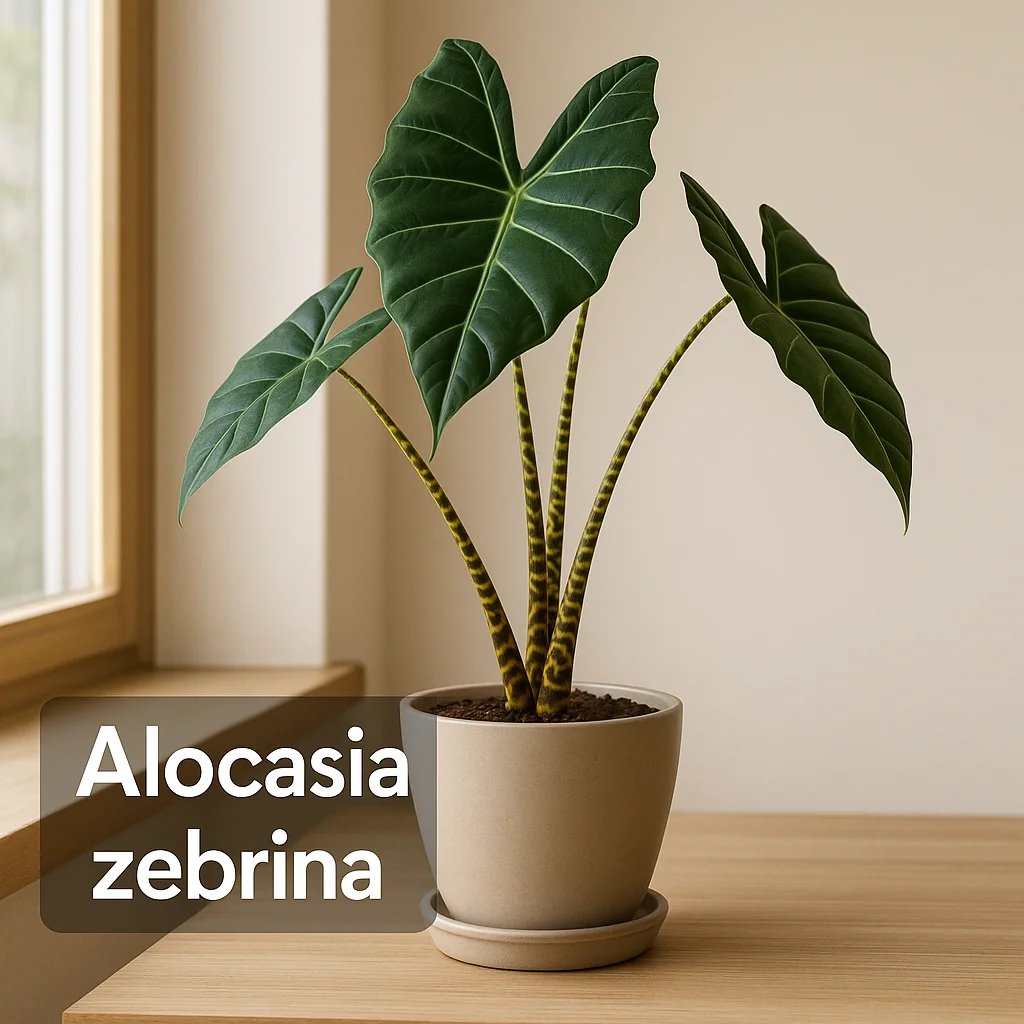
Recognizable by its elongated, spear-shaped leaves and strikingly patterned stems, the Alocasia zebrina makes a bold statement in any room. Its leaves are smooth with a glossy finish, a deep green hue, and typically exhibit no variegation. The stems feature zebra-like stripes, adding to its distinctive appearance. Although it can flower, Alocasia zebrina is primarily grown for its foliage. Common look-alikes include other Alocasias, but the unique stem pattern sets it apart.
- Glossy, spear-shaped leaves
- Zebra-striped stems
- Primarily foliage, not known for flowering indoors
- Deep green leaves with no variegation
- Juvenile leaves may appear slightly different
- Unique leaf-stem contrast in pattern and color
- Often mistaken for other Alocasias like Alocasia 'Polly'
🌍 Origin & Natural Habitat
Alocasia zebrina is native to the tropical rainforests of Southeast Asia. It thrives in the understory of dense forests, where it enjoys high humidity and dappled sunlight. This environment shows that the plant prefers warm, humid conditions and consistent moisture, although it is accustomed to periods of slight drying due to its forest-floor habitat. Understanding its natural habitat guides us to provide similar indoor conditions for optimal growth.
☀️ Light Requirements
For indoor care, place Alocasia zebrina in an area with bright, indirect light. East or north-facing windows are ideal. Direct sunlight can scorch the leaves, while insufficient light may result in stunted growth and faded colors. Signs of too much light include leaf browning, while too little results in slow growth and loss of vibrant appearance.
- Position near east/north-facing windows
- Avoid direct midday sun
- Provide sheer curtains if necessary
- Adjust location seasonally
- Monitor for uneven light effects
- Rotate pot for uniform growth
- Consider artificial grow lights in low-light rooms
💧 Watering & Humidity
Alocasia zebrina should be watered consistently, allowing the top inch of soil to dry between waterings. Overwatering can lead to root rot, while underwatering may cause leaf drop. Pot size, season, and room temperature will influence how often to water. This plant thrives with high humidity, which can be increased using a pebble tray or humidifier. Watch for droopy or curled leaves as signs of improper moisture levels.
- Water when topsoil is dry
- Avoid letting plant sit in water
- Water less frequently in winter
- Use distilled or rain water to prevent mineral build-up
- Consider pot size in watering frequency
- Boost humidity with pebble trays or humidifiers
- Mist leaves occasionally
- Respond to wilting promptly
🐛 Soil, Pot & Repotting
Use a well-draining potting mix with some moisture-retaining capabilities. A blend of peat, perlite, and pine bark works well. Ensure pots have drainage holes to prevent water accumulation. Alocasia zebrina usually requires repotting every one to two years, or when roots become visible through drainage holes. Choose a pot slightly larger than the current one to avoid overwhelming the plant.
- Select well-draining mix
- Contain drainage holes
- Repot every 1-2 years
- Transplant during spring if possible
- Handle roots gently
- Consider aerated, loose soils
- Trim damaged roots during repotting
- Ensure pot proportionate to size
🌡️ Temperature, Airflow & Seasonal Care
Alocasia zebrina prefers temperatures between 65°F and 85°F. Avoid placing it near drafts, AC vents, or heating elements, as it doesn't like swift temperature changes. During cooler months, growth will slow, and less frequent watering is needed. Even though this plant doesn't undergo dormancy, expect reduced activity in winter, and adjust care routines accordingly.
- Maintain stable temperature
- Avoid exposure to drafts
- Protect from extreme temperature shifts
- Decrease watering in winter months
- Monitor for pest activity in colder periods
- Ensure consistent humidity all year
- Adapt care based on growth rates
- Check for signs of cold damage like blackened leaves
🌸 Flowers, Fruit & Growth Cycle
While Alocasia zebrina can flower, it rarely does so indoors. Its blooms, insignificant compared to its foliage, appear as creamy-white spathes. Instead, admire the plant's impressive leaf production. New leaves generally emerge more frequently in spring and summer, with growth rates negatively impacted by too little light. Prune any damaged or yellowing leaves to encourage healthy growth.
🧬 Propagation & Reproduction
Alocasia zebrina propagation commonly involves dividing the rhizomes during repotting. Ensure each division has a bud or a portion of the stem. It is not typically propagated from stem cuttings or seeds since these methods are less effective for home growers. Exercise care when handling to avoid damage to the delicate root system.
- Best propagated through division
- Each division should have a growing point
- Ideal during spring repotting
- Avoid leaf or stem cutting methods
- Handle roots with care
- Keep new divisions in high humidity
- Provide stable environment post-division
- Patience is key; slow root development
🌿 Common Problems, Pests & Prevention
Common issues in Alocasia zebrina include yellowing leaves, brown tips, and leaf drop, often due to improper watering or humidity levels. Pests such as spider mites, mealybugs, and scale can be a nuisance. Prevent these by keeping the plant clean and ensuring good airflow. Avoid chemical treatments and lean toward prevention through consistent care practices and regular checks.
- Ensure balanced watering
- Regularly clean leaves
- Check for spider mite activity
- Maintain humidity to deter pests
- Inspect new plants before introduction
- Prune affected areas promptly
- Quarantine new additions initially
- Increase airflow with fans
🐾 Pet & Home Safety Notes
Alocasia zebrina may be toxic if ingested by pets or children, potentially irritating the mouth and digestive tract. Place it out of reach, on elevated platforms or behind protective barriers. If accidental ingestion is suspected, contact a professional or local poison control resources for guidance.
🏡 Styling Ideas & Best Room Placement
The striking Alocasia zebrina enhances any room with indirect lighting, such as living rooms and dining areas. It fits well in larger pots on the floor or elevated plant stands. Pairing with other humidity-loving plants like ferns can create a lush corner. In smaller spaces, consider keeping it in a well-lit bathroom where steam can satisfy its humidity needs.
📌 Summary
- Distinct zebra-striped stems and glossy leaves
- Native to Southeast Asian rainforests
- Thrives in bright indirect light, moderate water needs
- Best in a well-draining, moisture-retentive soil mix
- Prefers temperatures between 65°F to 85°F
- Repot every 1-2 years; propagate via division
- Common issues include yellowing leaves and pests like spider mites
- Medium difficulty; can be toxic to pets/children
- Adapt to seasons; adjust care for temperature and light shifts
- Great for adding an exotic touch to living spaces