🌱 Anthurium clarinervium
🧾 Quick Facts
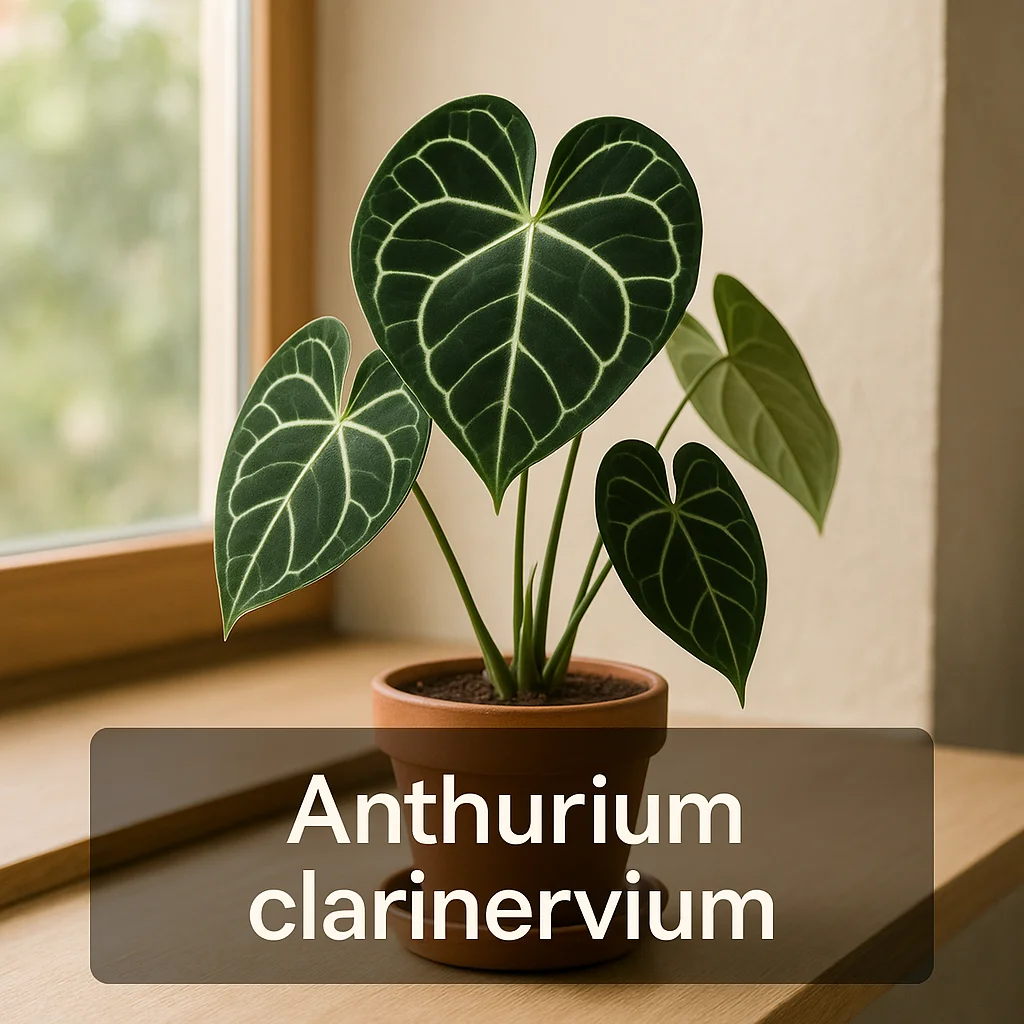
Anthurium clarinervium, commonly referred to as the Velvet Cardboard Anthurium, is an exquisite houseplant recognized for its striking foliage. Originating from tropical Mexico, it is cherished for its ornamental leaves rather than flowers.
- Common names: Velvet Cardboard Anthurium
- Scientific name: Anthurium clarinervium
- Plant type: Foliage
- Growth habit: Upright with rosette formation
- Typical indoor size: 1 to 2 feet tall and wide
- Growth speed: Moderate
- Lifespan: Can live many years with proper care
- Origin: Mexican rainforests
- Light preference: Bright indirect light
- Water needs: Moderate, prefers slightly drying out between waterings
- Temperature & humidity preference: Warm, high humidity
- Pet safety: May be irritating/toxic to pets
- Difficulty: Medium
🔍 Identification & Look-Alikes
Anthurium clarinervium is distinguished by its heart-shaped, leathery leaves marked with contrasting white veins. The leaves are velvety to the touch, displaying a dark green color that may appear nearly black in lower light conditions. Its petioles are short and sturdy, supporting the leaf's rigid structure. Flowers are rare indoors and mostly insignificant, making it primarily grown for its foliage.
Common look-alikes include other Anthuriums, such as Anthurium crystallinum, which shares the velvety texture but differs in vein pattern intensity and leaf size. Compared to the clarinervium, the crystallinum often has larger and more elongated leaves.
- Distinctive heart-shaped leaves
- Velvety leaf texture with prominent white veins
- Dark green foliage
- Short, sturdy petioles
- Rarely flowers indoors; grown for foliage
- Confused with Anthurium crystallinum
🌍 Origin & Natural Habitat
Anthurium clarinervium is native to the tropical rainforests of Mexico, where it thrives under the canopy of larger trees. It grows in warm, humid environments with dappled sunlight that filters through the forest canopy. The natural habitat provides ample humidity and consistent moisture, which influences its care needs as an indoor plant. By mimicking these conditions indoors, one can ensure healthier growth and more vibrant foliage.
Understanding its natural habitat sheds light on why bright indirect light and high humidity are crucial. The plant is accustomed to moderate temperatures and benefits from controlled indoor settings that prevent extremes.
☀️ Light Requirements
Anthurium clarinervium prospers in bright indirect light. East or north-facing windows are ideal, providing gentle morning or consistent filtered light without direct exposure, which can scorch leaves. "Bright indirect" implies placement where light is diffused, like through a sheer curtain or at a distance from direct sunlight.
Leaf color intensity and growth are directly impacted by light levels. Variegation is enhanced in optimal lighting, with pale veins contrasting sharply against dark foliage. Underlit conditions may lead to dull, elongated leaves, while overexposure causes leaf burn.
- Place near east or north-facing windows
- Avoid direct midday sun
- Monitor leaf color for lighting adequacy
- Use sheer curtains to diffuse harsh light
- Rotate pot periodically for even growth
- Watch for scorching signs on leaves
💧 Watering & Humidity
Anthurium clarinervium thrives when its soil is consistently moist but not waterlogged. Use the soak-and-drain method, allowing the top few inches of soil to dry between waterings. Pot size and seasonal changes influence the watering frequency; smaller pots and warmer weather typically necessitate more frequent watering.
High humidity is vital, mirroring its rainforest origins. Employ pebble trays or humidifiers, especially during drier months. Overwatering results in root rot, while underwatering causes leaf droop and yellowing.
- Allow top inches of soil to dry before re-watering
- Use well-draining soil to prevent waterlogging
- Increase humidity with pebble trays or humidifiers
- Adjust watering based on seasonal shifts
- Observe leaves for watering clues
- Avoid letting the plant sit in standing water
🐛 Soil, Pot & Repotting
Use a well-draining, airy soil mix that retains moisture yet ensures roots don’t suffocate. A blend of orchid bark, perlite, and peat moss is ideal. Select pots with drainage holes to prevent excess water retention.
Repot every 1-2 years or when root-bound, indicated by slowed growth or roots emerging from drainage holes. Choose a pot slightly larger than the current; handle roots gently during the process, and avoid excessive disturbance.
- Use a mix of orchid bark, perlite, and peat moss
- Ensure pots have ample drainage holes
- Repot when roots show or growth stagnates
- Opt for a pot 1-2 inches larger
- Reduce root handling during repotting
- Water gently after repotting
🌡️ Temperature, Airflow & Seasonal Care
Anthurium clarinervium prefers temperatures between 65-80°F. Avoid placing it near drafts, AC vents, or heaters that may cause temperature fluctuations. Winter typically slows growth, necessitating reduced watering.
Good airflow aids in preventing pests and disease. Avoid overcrowding plants and ensure spacing allows for adequate air movement.
- Maintain a stable temperature range
- Avoid drafts and extreme conditions
- Monitor growth slowdown in winter
- Adjust watering to seasonal needs
- Adequate spacing prevents stagnant air
- Regulate exposure to direct fan or vent air
🌸 Flowers, Fruit & Growth Cycle
Although Anthurium clarinervium can flower, it's primarily appreciated indoors for its foliage. Blooms are sporadic and not a main attraction. The plant produces new leaves steadily under right conditions, revealing its vibrant veining over weeks.
Pruning involves removing dead or damaged leaves to maintain health. Shaping is generally unnecessary, given its natural aesthetic.
🧬 Propagation & Reproduction
Propagation is typically conducted through division or seed, although seeding is complex for most casual growers. Dividing larger, mature plants is the most effective method. Carefully separate sections of the root structure, ensuring each has ample foliage and roots to support itself.
- Best propagated via division
- Ensure each division has roots and leaves
- Avoid seeding due to complexity
- Conduct propagation during active growing season
- Handle roots with care to minimize shock
🌿 Common Problems, Pests & Prevention
Common issues include yellow leaves from overwatering, brown tips from low humidity, and leggy growth indicative of inadequate light. Pests such as spider mites, mealybugs, and scale can arise, with regular leaf cleaning and stable care minimizing risk.
Prevention focuses on maintaining consistent care practices and monitoring plant health for early signs of issues.
- Watch for yellowing as an overwatering indicator
- Increase humidity to prevent browning tips
- Ensure adequate lighting for strong growth
- Regularly inspect for pest activity
- Isolate new plants to prevent infestations
- Keep foliage clean to discourage pests
🐾 Pet & Home Safety Notes
Parts of Anthurium clarinervium are considered irritating or toxic when ingested by pets or children. It is advised to place the plant out of reach or employ barriers. If ingestion occurs, contact a professional or local poison control resources for advice.
Use common sense placement in active homes, considering potential exposure risks.
🏡 Styling Ideas & Best Room Placement
Anthurium clarinervium complements bathrooms and kitchens where humidity is naturally higher. Consider placing it on shelves or floor pots in living areas with bright indirect light. Pairing with plants such as ferns or peace lilies can enhance an indoor tropical aesthetic. Moss poles support vertical growth and add visual interest.
📌 Summary
- Recognizable by heart-shaped, velvety leaves with white veins
- Native to Mexican tropical rainforests
- Requires bright indirect light for optimal growth
- Prefers moderate watering, allowing topsoil to dry
- Use well-draining soil and repot when rootbound
- Maintain temperatures between 65-80°F
- Propagation primarily via division of mature plants
- Watch for typical pests and adjust care for seasonal changes
- Medium care difficulty, attentive to light, humidity, and watering
- Exercise caution regarding pet and child safety