🌱 Anthurium crystallinum
🧾 Quick Facts
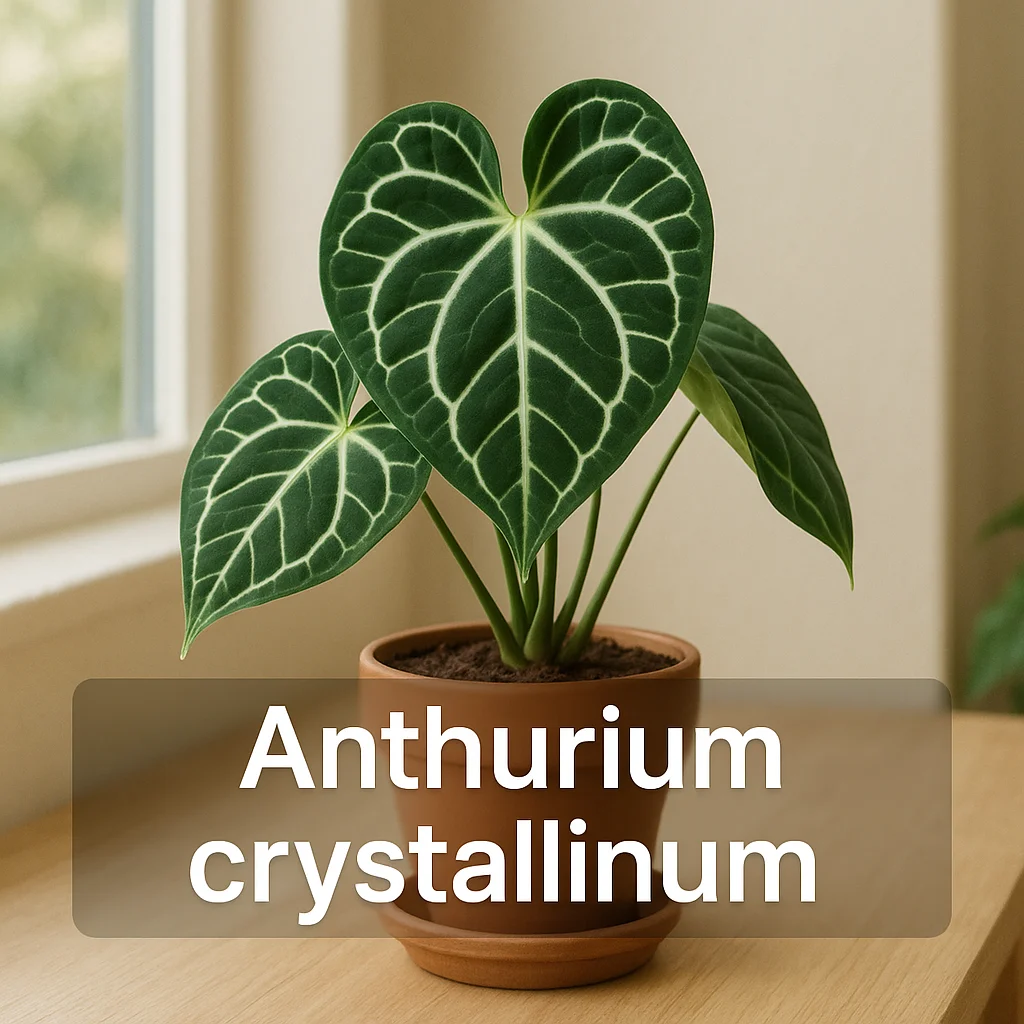
Anthurium crystallinum is a striking tropical plant known for its large, velvety leaves and a prominent silvery vein pattern. This plant is a favorite among houseplant enthusiasts for its decorative appearance and moderate care requirements.
- Common names: Crystal Anthurium, Velvet Cardboard Anthurium
- Scientific name: Anthurium crystallinum
- Plant type: Foliage
- Growth habit: Upright, clumping
- Typical indoor size range: 12–24 inches in height and 12-18 inches in spread
- Growth speed: Moderate
- Lifespan: Can live many years with proper care
- Origin: Central and South America; typically found in tropical rainforest habitats
- Light preference: Bright indirect light; does not tolerate direct sunlight well
- Water needs: Moderate; prefers to dry out slightly between waterings
- Temperature & humidity preference: Warm temperatures and high humidity
- Pet safety: May be irritating/toxic to pets if ingested
- Difficulty: Medium
🔍 Identification & Look-Alikes
Anthurium crystallinum is best recognized by its large heart-shaped leaves, which can grow over 12 inches long. The leaves have a rich green color with a velvety texture, accented by striking silvery-white veins. The stems are relatively short, supporting a compact and clumping growth habit.
While Anthurium crystallinum is primarily grown for its foliage, it can occasionally produce inconspicuous flowers. These flowers are typical of anthuriums, consisting of a spathe and spadix but are not the main attraction.
Common look-alikes include other members of the Anthurium genus, such as Anthurium clarinervium and Anthurium regale, which feature similar leaf patterns but differ in size, vein pattern intensity, and overall growth habit. Careful observation of leaf texture and vein contrast can help differentiate them.
- Heart-shaped, velvety leaves with silvery veins
- Compact, upright growth habit
- Short stems and clumping form
- Rich green coloration with prominent vein contrast
- Non-prominent flowers, typical of anthuriums
- Compare with closely related Anthurium species for specific differences
🌍 Origin & Natural Habitat
Anthurium crystallinum is native to rainforests in Central and South America, specifically Panama and Colombia. These regions offer warm, humid conditions and plenty of shade, as the plant often grows under the forest canopy. It thrives in the understory where it benefits from filtered sunlight, high humidity, and consistent moisture.
Understanding its natural habitat can guide proper indoor care. Mimicking these conditions by providing bright indirect light, high humidity, and careful watering will help this plant thrive inside your home.
☀️ Light Requirements
Anthurium crystallinum prefers bright indirect light similar to what it would receive under a forest canopy. Place this plant near east or north-facing windows where it will receive plenty of light without direct sun exposure, which can scorch its leaves or cause color fading.
Avoid placing it in low light, as it may result in slower growth and poorer leaf quality. If the leaves become pale or leggy, the plant is likely receiving too little light. Conversely, browning or curling of leaves may indicate too much light exposure.
- Position near bright, indirect light sources
- Avoid direct sun to prevent burning leaves
- Ideal for east or north-facing windows
- Pale leaves suggest insufficient light
- Scorched leaves indicate too much direct sunlight
- Adjust placement based on seasonal light changes
💧 Watering & Humidity
Anthurium crystallinum should be watered thoroughly, allowing excess water to drain completely, then allowed to dry slightly before the next watering. The top inch of soil should feel dry to the touch between waterings. The frequency of watering depends on pot size, light conditions, and seasonal changes.
This plant enjoys high humidity, replicating its tropical origins. Employing a humidifier, pebble trays, or regular misting can assist in maintaining higher humidity levels. Monitor for signs of overwatering, such as yellowing leaves or root rot, and underwatering, indicated by drooping leaves or crispy edges.
- Water thoroughly and allow to drain
- Let the top inch of soil dry out before rewatering
- Increase frequency with higher temperatures
- Maintain high humidity with aids like humidifiers
- Watch for yellow leaves (overwatering) and drooping (drying)
- Adjust watering schedule seasonally
🐛 Soil, Pot & Repotting
Anthurium crystallinum thrives in a loose, well-draining potting mix rich in organic matter. A mix designed for aroids or a combination of orchid bark, perlite, and peat moss emulates its natural habitat. A pot with sufficient drainage holes is essential to prevent waterlogging.
Repotting is needed every 1-2 years or when the plant becomes root-bound. Signs include roots growing out of drainage holes or reduced growth. Choose a pot only slightly larger to prevent excessive moisture retention. Repot gently to avoid damaging the roots, and refresh the soil completely.
- Use a well-draining, organic-rich potting mix
- Ensure pot has ample drainage holes
- Repot every 1-2 years or when root-bound
- Choose a pot size incrementally larger
- Handle roots gently during repotting
- Refresh soil entirely when repotting
🌡️ Temperature, Airflow & Seasonal Care
Anthurium crystallinum prefers temperatures between 65°F and 80°F, consistent with its tropical origins. Avoid exposing the plant to cold drafts or rapid temperature fluctuations. During winter, the growth may slow, requiring less water and adjusted placement away from cold windows or drafty areas.
Ensure good airflow around the plant to prevent fungal issues, but avoid placing it directly in front of air conditioning or heating vents, which may cause stress from uneven temperature and humidity levels.
- Maintain temperatures between 65°F and 80°F
- Avoid direct drafts and rapid temperature changes
- Reduce watering frequency during slower winter growth
- Ensure adequate but gentle airflow
- Keep away from heating and cooling vents
🌸 Flowers, Fruit & Growth Cycle
Indoors, Anthurium crystallinum may rarely flower. If it does, the flowers will resemble typical anthurium blooms with a spathe and spadix, but they are often outshined by the foliage. Indoor fruiting is uncommon and not a primary attraction.
The plant displays continuous growth with new leaves emerging in the active growing months typically Spring through Summer. Regular hygiene pruning of yellow or damaged leaves helps maintain plant health and appearance.
🧬 Propagation & Reproduction
Propagation of Anthurium crystallinum is most effectively achieved through division or seed propagation. Division can be done when repotting; separate the offsets carefully to ensure each has sufficient roots to sustain growth. Seed propagation is less common but can be done if seeds are sourced, noting that they require patience and the right conditions to germinate and grow.
- Best propagated through division
- Ensure each division has ample roots
- Consider seed propagation with patience
- Repot divisions in similar soil conditions as the parent
- Use sharp, clean tools for division
- Monitor new plants closely post-division
🌿 Common Problems, Pests & Prevention
Anthurium crystallinum, like many indoor plants, can suffer from various common issues. Yellowing leaves may indicate overwatering, while brown tips can suggest underwatering or humidity problems. Watch for pests such as spider mites, mealybugs, or scale, as they may attack the plant if conditions are suboptimal.
Prevention involves careful monitoring of plant conditions, maintaining stable care regimes, and regular cleaning of the leaves. Quarantining new plants before introducing them to existing collections can reduce the risk of infestations.
- Check regularly for pest presence
- Prevent yellow leaves by avoiding overwatering
- Increase humidity to prevent brown tips
- Maintain stable light, water, and temperature conditions
- Clean leaves to prevent dust and pests
- Quarantine new plants before adding them in
🐾 Pet & Home Safety Notes
Some sources list Anthurium crystallinum as potentially irritating or toxic to pets and children if ingested, particularly the sap. It's advisable to keep this plant out of reach or in areas less accessible to curious pets or children. Providing training or barriers can help maintain a safe environment.
If ingestion is suspected, contact a professional or local poison control resources for guidance. Keep a calm approach and act promptly for safety.
🏡 Styling Ideas & Best Room Placement
Anthurium crystallinum fits well into various home spaces, benefiting from warm and humid conditions. Bathrooms or kitchens can offer the right environment for high humidity and lower likelihood of direct sunlight exposure. It can also be stylishly placed on plant stands in living rooms or offices with adequate indirect light.
Design choices can include planting it in decorative pots that complement its foliage. Pairing with other tropical plants like peace lilies or ferns can create an appealing ensemble. Consider using moss poles to support its growth upward and display its leaves prominently.
📌 Summary
- Identify by rich green, heart-shaped leaves with silvery veins
- Native to tropical Central and South American regions
- Requires bright, indirect light; avoid direct sun
- Moderate watering with high humidity needs
- Prefers airy, well-draining soil; repot when root-bound
- Comfortable in temperatures between 65°F-80°F
- Propagation through division; seeds require patience
- Common problems include yellow leaves, pests
- Medium care difficulty; potentially toxic to pets/children