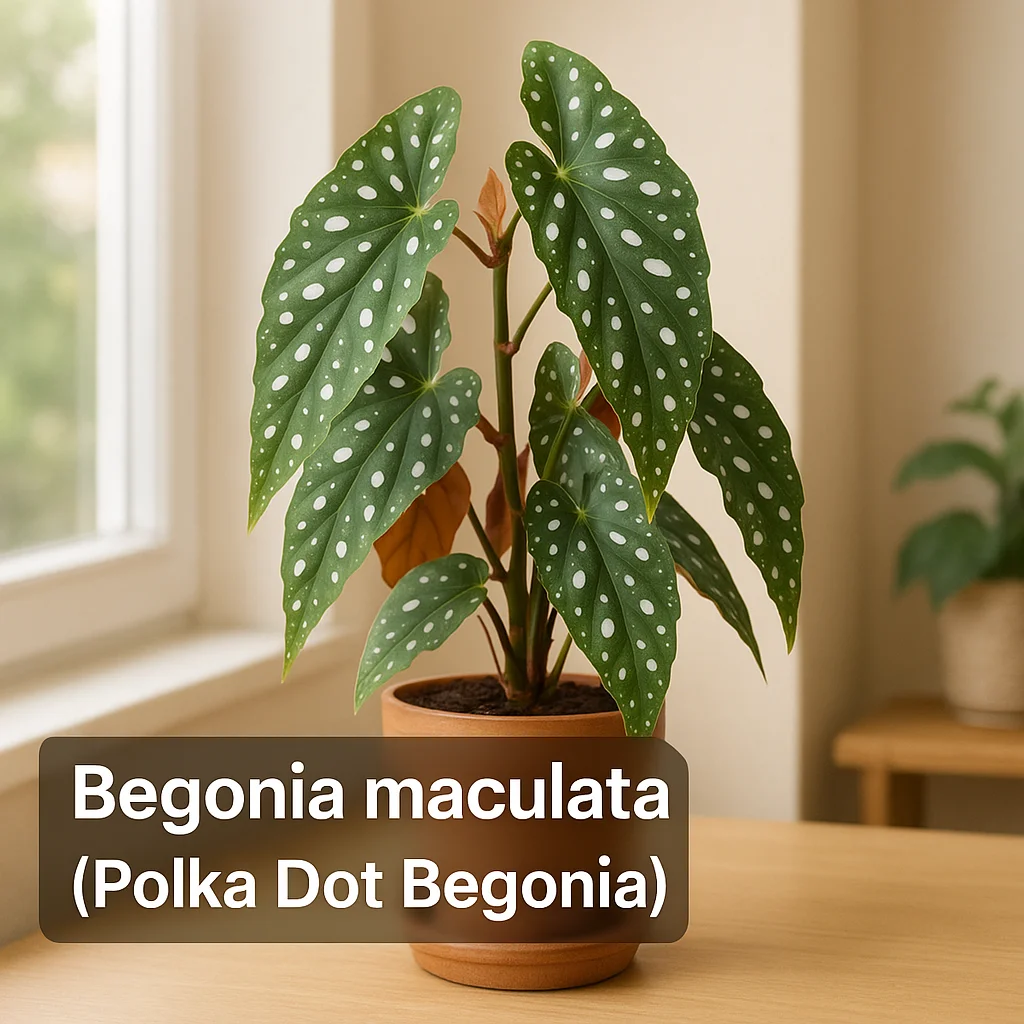
🌱 Begonia maculata (Polka Dot Begonia)
🧾 Quick Facts
The Begonia maculata, commonly known as the Polka Dot Begonia, is a striking indoor plant adored for its unique foliage and charming appearance. It's noted for its ability to bring a lively ambiance to indoor spaces, owing to its dramatic polka-dotted leaves and ease of care.
- Common names: Polka Dot Begonia, Angel Wing Begonia
- Scientific name: Begonia maculata
- Plant type: Foliage
- Growth habit: Upright and bushy
- Typical indoor size range: 12 to 20 inches in height, with a spread of 10–18 inches
- Growth speed: Moderate
- Lifespan: Can live many years with proper care
- Origin: Brazil, primarily found in tropical and subtropical climates
- Light preference: Bright indirect light
- Water needs: Moderate; prefers to dry slightly between waterings
- Temperature & humidity preference: Prefers warm temperatures with high humidity
- Pet safety: May be irritating/toxic to pets
- Difficulty: Medium
🔍 Identification & Look-Alikes
The Polka Dot Begonia is easily identified by its large, asymmetrical leaves dotted with silver-white spots, reminiscent of polka dots. The leaves are olive-green on top and reddish-purple underneath, giving it a bicolored appeal. Stems are cane-like, adding structural interest to its upright habit. This plant may produce clusters of small white flowers, although it is primarily grown for its stunning foliage.
Begonia maculata can be mistaken for other cane-like begonias and sometimes for the Rex Begonia, although the silver spots and distinctive leaf shape set it apart.
- Large asymmetrical leaves
- Silver-white polka dot pattern
- Reddish-purple underside of the leaves
- Cane-like upright stem structure
- Possible small white flower clusters
- Distinct bicolored foliage appearance
- Similar to other Begonia species but with unique spot pattern
- Spot and leaf shape helps distinguish from look-alikes
🌍 Origin & Natural Habitat
Begonia maculata is native to the tropical and subtropical regions of Brazil, thriving in environments where humidity is high, and temperatures are consistently warm. In its natural habitat, it can often be found in the forest understory, where dappled sunlight filters through the canopy. Understanding this helps guide your indoor care approach, emphasizing the importance of providing bright, indirect light and maintaining adequate humidity.
Its natural setting inspires the optimal conditions needed for healthy growth indoors, showing a preference for environments that mimic its tropical origin.
☀️ Light Requirements
Begonia maculata thrives in bright, indirect light. This can be achieved by placing the plant near windows with filtered sunlight, such as east or west-facing locations. Bright indirect light can be described as the sort of light where the sun’s rays do not directly hit the plant; for example, light filtered through sheer curtains. Too much direct sunlight can result in scorching of leaves, whereas too little light may fade the distinctive polka dots and lead to leggy growth.
- Place near east or west-facing windows
- Filter direct sunlight with sheer curtains
- Ensure consistent light levels to maintain variegation
- Monitor for fading polka dots as low light indicator
- Prevent leaf scorch by shielding from harsh sun
- Balance is key: not too much light, not too little
- Supplement with artificial light if needed
- Rotate regularly to ensure even growth
💧 Watering & Humidity
The Polka Dot Begonia requires moderate watering with a soak-and-drain approach, allowing the soil to dry slightly between waterings. The potting mix should be kept moist but never soggy. Pot size, season, and light exposure can affect how fast the soil dries out, so adjust watering frequency accordingly. During the growing season, typically spring and summer, the plant will require more frequent watering than in the dormant or slower-growing winter stage.
High humidity is ideal for this begonia, though it can adapt to average indoor levels. Consider increasing humidity through safe methods such as grouping plants together or using a pebble tray with water.
- Allow top layer of soil to dry between waterings
- Water more frequently in growth season
- Reduce watering in winter
- Maintain soil moisture without waterlogging
- Check pot size and material for drying speed
- Use pebble trays for added humidity
- Be cautious of overwatering signs like yellow leaves
- Address low humidity with plant grouping strategies
🐛 Soil, Pot & Repotting
Begonia maculata prefers a well-draining potting mix, such as one formulated for African violets or aroid mixes. A blend that retains moisture yet allows excess to escape is vital. Choose pots with drainage holes to further facilitate healthy watering practices. Terracotta pots can help wick away excess moisture and offer breathability to the roots.
Repot every 1–2 years or when you notice slowed growth or roots appearing at pot holes. Gently upgrade to a pot slightly larger than the existing one, taking care not to disturb roots excessively. Ensure fresh soil surrounds the root ball to encourage new growth.
- Use African violet or aroid potting mix
- Ensure pots have adequate drainage holes
- Select terracotta for better aeration
- Repot when roots are root-bound or growth slows
- Incremental pot sizing to avoid stress
- Repotting typically every 1–2 years
- Avoid overwatering with well-draining medium
- Check water retention to adjust soil mix as needed
🌡️ Temperature, Airflow & Seasonal Care
Maintaining a warm indoor temperature of 65–75°F (18–24°C) suits the Polka Dot Begonia best. Protect it from cold drafts, air conditioner breezes, and sudden temperature shifts that could stress the plant. During winter, growth slows, and watering needs decrease; avoid overwatering during this dormancy-like phase.
Keep the plant away from frosty windows and ensure there's sufficient airflow without creating drying drafts. Seasonal shifts require minor adjustments in care, aligning with the plant's natural response to its environment.
- Maintain 65–75°F (18–24°C) indoors
- Avoid cold drafts and drastic temperature changes
- Reduce watering and fertilization in winter
- Monitor for dry heater air impacting humidity
- Promote airflow without windy conditions
- Keep away from frosty windows during winter months
- Adopt to seasonal care modifications as needed
🌸 Flowers, Fruit & Growth Cycle
The Polka Dot Begonia can flower indoors, typically producing white blooms in favorable conditions. These appear in clusters and provide an added decorative element, though many growers prize the plant more for its foliage. Begonia maculata does not fruit, emphasizing leafy growth patterns throughout its life cycle.
Regular pruning encourages bushy growth and helps maintain the plant’s shape. Using clean tools to trim dead or overgrown stems is crucial to avoid plant stress and potential disease introduction.
🧬 Propagation & Reproduction
Begonia maculata is easily propagated by stem cuttings. Cut a healthy stem with several nodes, ensuring you're using sterilized tools. Place the cutting in a glass of water until roots develop, then transfer to soil. Alternatively, propagate directly into soil if preferred, maintaining high humidity around the cutting until it roots.
Leaf propagation is less common but possible with care. The plant does not often propagate through seeds in a home setting due to the complexity and time required.
- Use stem cuttings for reliable propagation
- Ensure cuttings have multiple nodes
- Root in water first or directly in soil
- Maintain high humidity around new cuttings
- Leaf propagation is challenging but feasible
- Seeds less common for practical home propagation
- Monitor cuttings for healthy root development
🌿 Common Problems, Pests & Prevention
Begonia maculata might encounter issues such as yellowing leaves, brown tips, or leaf drop. These can result from inadequate watering practices, incorrect humidity levels, or lighting issues. Leggy growth typically indicates too little light.
Common pests include spider mites, mealybugs, and scale. Prevention strategies include quarantining new plants, regularly cleaning leaves, ensuring stable environmental conditions, and maintaining good airflow.
- Monitor yellow leaves as overwatering signs
- Avoid brown tips with proper humidity levels
- Check light placement for correct growth habits
- Regularly clean leaves to prevent pest infestations
- Quarantine new introductions to prevent spread
- Observe stable care routines for health maintenance
- Ensure consistent watering to prevent stress
- Identify issues early to address promptly
🐾 Pet & Home Safety Notes
Parts of the Polka Dot Begonia may cause irritation or be toxic if ingested. It is essential to keep the plant out of reach of pets and curious children to prevent accidental ingestion. Use elevated plant stands, or place in rooms where pets have less access. Training pets to avoid certain areas can also be effective.
If ingestion occurs, contacting a professional or local poison control resources is advisable to ensure safety.
🏡 Styling Ideas & Best Room Placement
With its love for humidity, the Polka Dot Begonia thrives in rooms like bathrooms and kitchens, where moisture levels are naturally higher. It can be placed in living rooms or offices as well, where it benefits from indirect light. The plant can grace hanging baskets, moss poles, or occupy space on shelves and floor pots for an artistic display. Pair it with other humidity-loving plants such as ferns and peperomias for a lush indoor garden feel.
Choose spaces that allow for good airflow but are not drafty. Combining with plants of various heights can create a balanced and engaging arrangement.
📌 Summary
- Recognized by its polka-dotted leaves and bicolored foliage
- Native to Brazil, enjoys bright indirect light
- Moderate watering with occasional drying out periods
- Well-draining, moisture-retentive soil recommended
- Warm temperatures and high humidity preferred
- Propagates easily via stem cuttings
- Watch for common pests and adjust care as needed
- Begonia maculata can be mildly toxic to pets if ingested
- Best placed in humidity-friendly spots like bathrooms or kitchens
- Medium care level with unique styling potential