🌱 Calathea orbifolia (Goeppertia orbifolia)
🧾 Quick Facts
Calathea orbifolia, commonly known for its stunning foliage, is a popular choice among indoor plant enthusiasts. Known for its large, round leaves with striking silver-green stripes, it adds a touch of exotic elegance to any indoor environment.
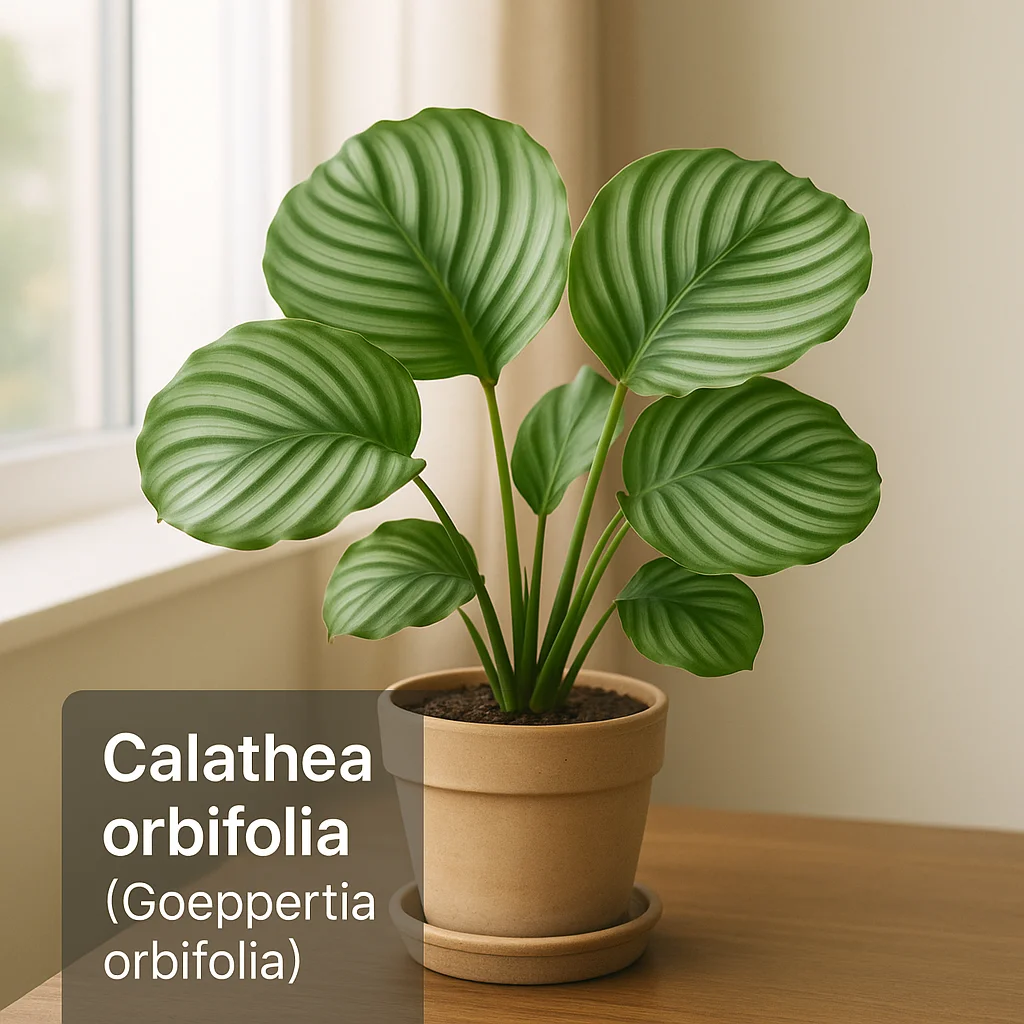
- Common names: Calathea orbifolia, Prayer Plant
- Scientific name: Goeppertia orbifolia (commonly sold as Calathea orbifolia)
- Plant type: Foliage
- Growth habit: Upright
- Typical indoor size: 1 to 3 feet tall and wide
- Growth speed: Moderate
- Lifespan: Can live many years with care
- Origin: South America, tropical forests
- Light preference: Low to medium indirect light
- Water needs: Moderate, prefers consistent moisture
- Temperature & humidity preference: Warm temperatures, high humidity
- Pet safety: Some sources list it as irritating/toxic to pets
- Difficulty: Medium
🔍 Identification & Look-Alikes
Calathea orbifolia is easily identified by its large, almost circular leaves with subtle silver and green striping that runs parallel to the veins. The leaves emerge on short stems growing from a central rhizome, creating a bushy appearance. The plant seldom flowers indoors, and it is primarily appreciated for its decorative foliage.
- Leaf shape: Round with a broad form
- Leaf texture: Smooth with a subtle gloss
- Leaf arrangement: Alternating, whorled around the stem
- Stem structure: Short and clumping
- Color: Light green with silvery stripes
- Common look-alikes: Calathea picturata, Ctenanthe, Maranta
- Check for round leaf shape
- Look for silvery striping effect
- Verify short, upright stems
- No pronounced variegations on undersides
- Leaves fold up at night (prayer plant behavior)
- No significant bloom indoors
🌍 Origin & Natural Habitat
Calathea orbifolia is native to the warm, humid rainforests of South America. This tropical habitat features consistent moisture, dappled sunlight from the forest canopy, and high humidity. Understanding its natural environment helps in replicating these conditions indoors, ensuring the plant thrives.
In its natural habitat, Calathea orbifolia grows in the forest understory, thriving in the rich, organic soil and benefiting from the consistent humidity. These conditions are best replicated indoors by providing steady moisture and avoiding direct sunlight, which can scorch its delicate leaves.
☀️ Light Requirements
Indirect light is ideal for Calathea orbifolia. A north or east-facing window offers the perfect conditions where it receives filtered sunlight without exposure to harsh direct rays. Bright, indirect light keeps the foliage vibrant and reduces the risk of leaf scorch. Insufficient light may result in slower growth and less vivid coloration.
- Avoid direct sunlight; prefers dappled light
- Ideal location: Near north or east-facing windows
- Monitor leaf color for light stress indicators
- Different lighting alters leaf variegation intensity
- Watch for leaf curl from excessive light or direct exposure
- Rotate plant periodically for even growth
💧 Watering & Humidity
Calathea orbifolia thrives in consistently moist but not waterlogged soil. Allow the top inch of the soil to dry out slightly between waterings as a general guide. In dry weather conditions, particularly during winter months when indoor air is less humid, increase humidity using pebble trays or humidifiers without overwatering the soil.
- Keep soil consistently damp but not soaking
- Adjust frequency based on season and pot size
- High humidity preference
- Use pebble trays or plant humidifiers
- Look for droopy or curling leaves as water cues
- Avoid wet feet: ensure proper drainage
- Guide watering routine with seasonal changes
- Watch humidity closely in winter or dry locations
- Check soil moisture levels regularly
🐛 Soil, Pot & Repotting
Calathea orbifolia prefers a light, well-draining potting mix that retains some moisture. A peat-based mix with perlite or orchid bark provides the right balance. Ensure the pot has proper drainage holes to prevent root rot. Repotting is advised when the plant becomes rootbound, typically every two to three years. Choose a pot one size larger, gently loosen the roots, and refresh the soil.
- Use a peat and perlite-based potting mix
- Ensure pot has drainage holes
- Repot when roots outgrow container space
- Avoid large pot upsizing
- Inspect roots during repot for health
- Water thoroughly post-repotting
- Refresh soil with quality mix during transitions
- Loose soil coverage for better airflow
🌡️ Temperature, Airflow & Seasonal Care
Calathea orbifolia prefers stable temperatures between 65°F to 75°F (18°C to 24°C). It is sensitive to drafts, cold air, and sudden temperature changes. Place away from air conditioning or heating vents. During winter, growth slows, requiring less frequent watering. Ensure the plant remains in a stable environment all year.
- Maintain stable temperatures year-round
- Avoid drafts, heater, and direct fan exposure
- Anticipate slower growth during cold months
- Adjust watering in relation to temperature
- Provide stable, warm conditions for thriving
- Don’t expose to temperatures below 60°F (15°C)
🌸 Flowers, Fruit & Growth Cycle
Although Calathea orbifolia rarely flowers indoors, its primary attraction is its dramatic foliage. Growth occurs primarily in warmer months, with new leaves unfurling from the plant's base in a gentle spiral pattern. Pruning is generally unnecessary, although removing any discolored or damaged leaves will help maintain its overall health.
🧬 Propagation & Reproduction
Calathea orbifolia can be propagated primarily through division. This method is best carried out during repotting. Gently separate the root clumps into smaller sections, ensuring each division has both roots and foliage. Stem cuttings and seed propagation are not common due to their complexity and slower success rates.
- Separate divisions gently during repotting
- Ensure each division includes at least one growth point
- Use sharp, sanitized tools
- Replant divisions in fresh, appropriate soil mix
- Minimize handling stress during propagation
🌿 Common Problems, Pests & Prevention
Calathea orbifolia may face issues such as yellowing leaves, brown edges, and wilting, often due to improper watering or humidity. Monitor for pests like spider mites, mealybugs, and scale. Regularly clean leaves with water to deter pests and promote health. Stable environmental conditions help prevent issues related to care fluctuations.
- Check for consistent watering to avoid over/under-watering
- Watch leaves for sign of stress
- Inspect routinely for common pests
- Clean leaves to maintain healthy plant surface
- Ensure good airflow around plant environment
- Quarantine new plants until pest-free
- Maintain humidity to avoid leaf desiccation
🐾 Pet & Home Safety Notes
Some sources list Calathea orbifolia as having the potential to irritate pets if ingested. Place the plant in locations less accessible to pets or young children, such as elevated shelves or hanging baskets. In case of ingestion, it is advised to contact a veterinary professional or local poison control resources for guidance.
🏡 Styling Ideas & Best Room Placement
Calathea orbifolia makes a striking centerpiece for humid areas such as bathrooms or kitchens, thanks to its lush foliage and humidity preferences. It can also grace living rooms and offices when paired with other tropical plants like Fiddle Leaf Fig and Peace Lily. Pair with containers that complement its exotic leaves for a cohesive look.
📌 Summary
- Easily identified by large, round, striped leaves
- Native to South America’s humid forests
- Prefers low to moderate indirect light
- Keep soil damp, ensure high humidity
- Plant in a well-draining peat-perlite mix
- Sensitive to temperature fluctuations and drafts
- Division is the preferred propagation method
- Common issues include pests, browning, yellowing
- Care-related difficulty: Medium
- Potential irritant, keep out of reach of pets