🌱 Fiddle Leaf Fig (Ficus lyrata)
🧾 Quick Facts
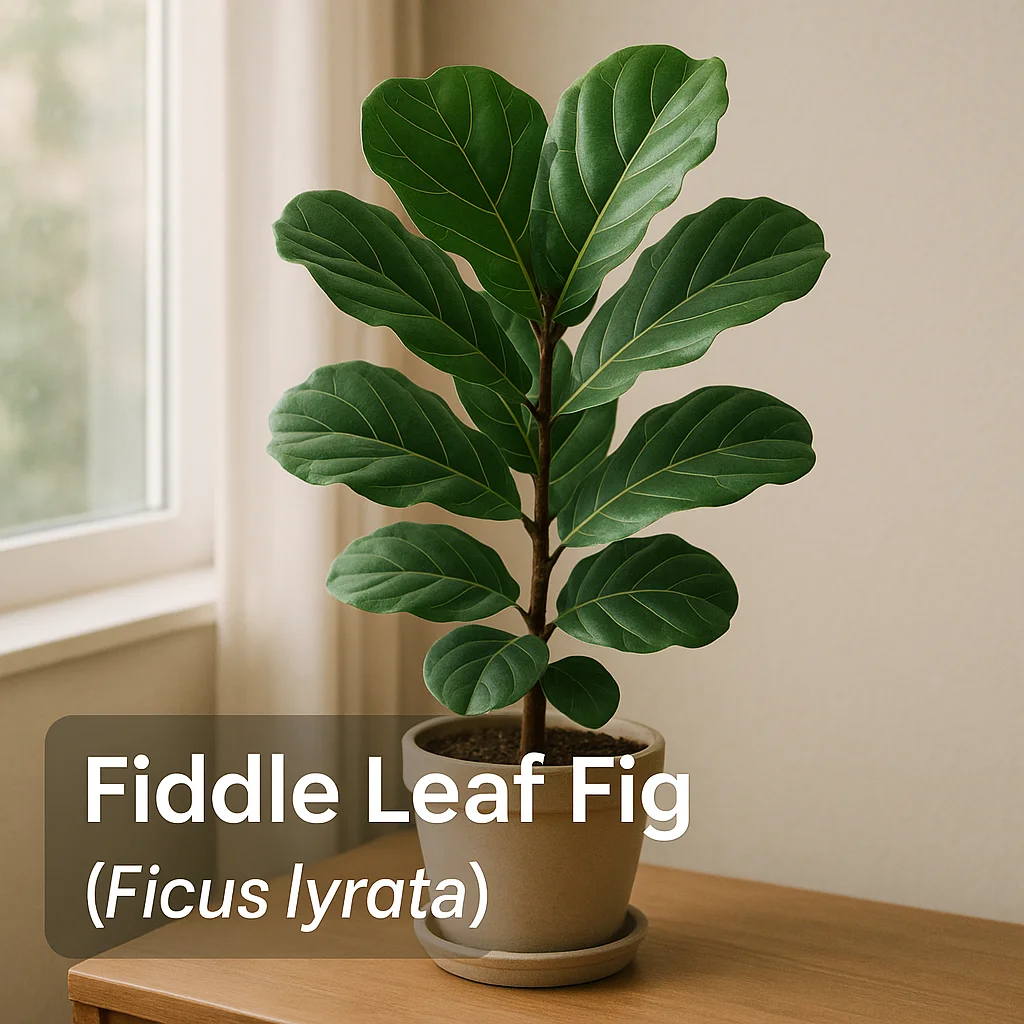
The Fiddle Leaf Fig, scientifically known as Ficus lyrata, is a highly popular houseplant prized for its large, violin-shaped leaves. As a decorative element, it adds a touch of modern elegance to any indoor space.
- Common names: Fiddle Leaf Fig
- Scientific name: Ficus lyrata
- Plant type: Foliage
- Growth habit: Upright
- Typical indoor size: 3 to 10 feet tall
- Growth speed: Moderate to fast
- Lifespan: Can live many years with proper care
- Origin: Western Africa; tropical rainforest
- Light preference: Bright indirect light
- Water needs: Moderate; prefers drying out slightly between waterings
- Temperature & humidity preference: 60–75°F; prefers moderate to high humidity
- Pet safety: May be irritating/toxic to pets
- Difficulty: Medium
🔍 Identification & Look-Alikes
The Fiddle Leaf Fig is identifiable by its large, glossy, lyre-shaped leaves. These leaves are broad with pronounced veins and can grow over a foot in length. The plant has an upright growth habit with a woody stem that can develop a tree-like look as it matures.
The color of the leaves is a deep green, though they can have a leathery texture and a slightly wavy edge. The Fiddle Leaf Fig is mainly grown for its foliage as it rarely blooms indoors.
Common look-alikes include rubber plants (Ficus elastica) and certain types of philodendrons, but these can be differentiated based on leaf shape and texture.
- Large, violin-shaped leaves
- Glossy leaf surface
- Upright woody stems
- Leaves with pronounced veins
- Rarely flowers indoors
- Broad and heavy leaves cause downward leaf drop
- Generally larger than most houseplants
- Tree-like mature structure
🌍 Origin & Natural Habitat
Native to the tropical rainforests of western Africa, the Fiddle Leaf Fig thrives in warm, humid environments. It typically grows as an understory plant in forest regions where it receives filtered sunlight through the canopy.
Understanding its native habitat can aid in recreating similar conditions indoors. The emphasis should be placed on providing indirect sunlight, warm consistent temperatures, and higher humidity levels.
☀️ Light Requirements
The Fiddle Leaf Fig thrives in bright, indirect light. Ideally, it should be placed near an east or south-facing window where it can receive plenty of ambient light without direct exposure, which can scorch its leaves.
Light affects both growth and leaf variegation; inadequate light often leads to slowed growth and leaf drop. Conversely, too much light can result in browning of the leaves.
- Position near a bright window without direct sun
- Avoid direct midday sun to prevent leaf burn
- Rotate the plant periodically for even growth
- Watch for leggy growth as a sign of too little light
- Brown spots may indicate excessive direct sunlight
- Filtered curtains can diffuse intense light
- Supplement with grow lights in dim spaces
- Monitor leaf health to assess light adequacy
💧 Watering & Humidity
The Fiddle Leaf Fig requires a consistent watering routine and benefits from a soak-and-drain method where the soil is thoroughly watered and then allowed to dry out slightly before the next watering. It's crucial to avoid letting the plant sit in waterlogged soil, which can lead to root rot.
Factors such as pot size, seasonal changes, and exposure to light can influence watering needs. Increasing humidity can be beneficial, and practical methods include using a humidity tray or misting.
Signs of overwatering include yellowing leaves and a soggy feel to the soil, while underwatering is indicated by crispy leaf edges and drooping.
- Thoroughly water, allowing soil to dry between sessions
- Avoid letting plant sit in water-logged soil
- Use well-draining potting mixtures
- Adjust watering frequency based on pot size and light levels
- Ensure proper drainage with pots that have holes
- Use a humidity tray to increase ambient moisture
- Monitor for yellowing leaves as a sign of overwatering
- Misting can help raise humidity, but isn’t essential
- Underwatered plants may have crispy leaf tips
🐛 Soil, Pot & Repotting
Fiddle Leaf Figs prefer a well-draining soil mix that can retain some moisture without becoming waterlogged. A general-purpose indoor plant soil with added perlite or pumice provides suitable aeration and drainage.
Pot choice is important; a container with drainage holes is essential. Repotting generally occurs every 1-2 years or when the plant shows signs of being rootbound, such as slowed growth or water running straight through the pot.
When repotting, gently loosen the roots and choose a pot only slightly larger than the current one to prevent excessive soil moisture retention.
- Use a well-draining, aerated soil mix
- Choose pots with drainage holes
- Repot when rootbound or biennially
- Increase pot size conservatively by an inch or two in diameter
- Loosen roots gently during repotting
- Refresh soil during repotting to maintain soil health
- Signs of slowing growth may indicate need for repotting
🌡️ Temperature, Airflow & Seasonal Care
The ideal temperature range for a Fiddle Leaf Fig is between 60–75°F. Avoid exposing the plant to sudden temperature changes or placing it near drafts, vents, or heating elements.
During winter months, growth may slow and watering needs will decrease. It is important to adjust care routines to accommodate these changes, minimizing water to prevent root issues.
- Maintain a constant temperature range of 60–75°F
- Avoid cold drafts and heat sources that cause temperature swings
- Reduce watering during dormant winter months
- Check airflow for healthy gas exchange; don’t obstruct with dense foliage
- Protect from air conditioner and heating vents
- Seasonal changes may naturally alter leaf growth rate
- Observing conditions can help mitigate leaf drop during season transitions
🌸 Flowers, Fruit & Growth Cycle
While in its natural environment, the Fiddle Leaf Fig may produce small, insignificant flowers, indoor flowering is uncommon. As such, the plant is mainly valued for its striking leaves.
The growth pattern involves the development of new leaves from the top of the plant. Pruning can help control growth size and shape, as well as encourage more compact growth. Always use clean, sharp tools to prevent disease spread.
🧬 Propagation & Reproduction
Propagating Fiddle Leaf Fig is typically done through stem cuttings, though this can be challenging for amateur growers due to the plant's sensitivity. Cuttings should be taken from healthy stems and rooted in water or soil.
Propagation by seeds is not commonly pursued due to the complexities involved with indoor flowering and fruiting.
- Use stem cuttings for propagation
- Choose healthy, pest-free stems for cuttings
- Root cuttings in soil or water for best results
- Propagation can be tricky; patience and care are key
🌿 Common Problems, Pests & Prevention
Common issues with Fiddle Leaf Figs include yellow leaves, brown edges, and leaf drop, often resulting from improper watering or light conditions. Pest issues can include spider mites, mealybugs, and scale.
Preventive measures include quarantining new plants, regularly cleaning leaves to prevent dust accumulation, and ensuring stable care conditions.
- Monitor watering and light to prevent leaf drop and yellowing
- Fight pests by regularly inspecting and cleaning leaves
- Preventative care includes stable consistent environmental conditions
- Quarantining new additions is vital
- Regular inspections help early detection of pests
🐾 Pet & Home Safety Notes
The Fiddle Leaf Fig may be irritating or toxic to pets if ingested. All parts of the plant contain a sap that can cause mild irritation. It's advisable to place the plant out of reach of pets and children.
If ingestion is suspected, contact a professional or local poison control resources for advice.
🏡 Styling Ideas & Best Room Placement
The Fiddle Leaf Fig is ideal for spaces like living rooms, dining areas, or large offices where it can become a focal point. It blends well with modern décor styles.
Ensure proper placement in well-lit areas, using floor pots or elevated stands to make the most of its height. Pairing it with other indoor plants that thrive in similar conditions can create appealing arrangements.
📌 Summary
- Recognized for large, glossy, violin-shaped leaves
- Native to the rainforests of western Africa
- Prefers bright, indirect light for optimal growth
- Moderate water needs with adjustments for light and season
- Requires well-draining potting mix and appropriate pot size
- Thrives in consistent temperatures and higher humidity
- Propagation best attempted through stem cuttings
- Prone to yellowing leaves from light or water imbalance
- Mid-level care difficulty; adjust conditions for plant health
- May be toxic to pets; placement strategy is key