🌱 Stromanthe ‘Triostar’ (Stromanthe sanguinea ‘Triostar’)
🧾 Quick Facts
The Stromanthe ‘Triostar’, known for its vibrant foliage, is a favorite among houseplant enthusiasts for its aesthetic appeal. Here's a quick overview to get acquainted with this stunning plant:
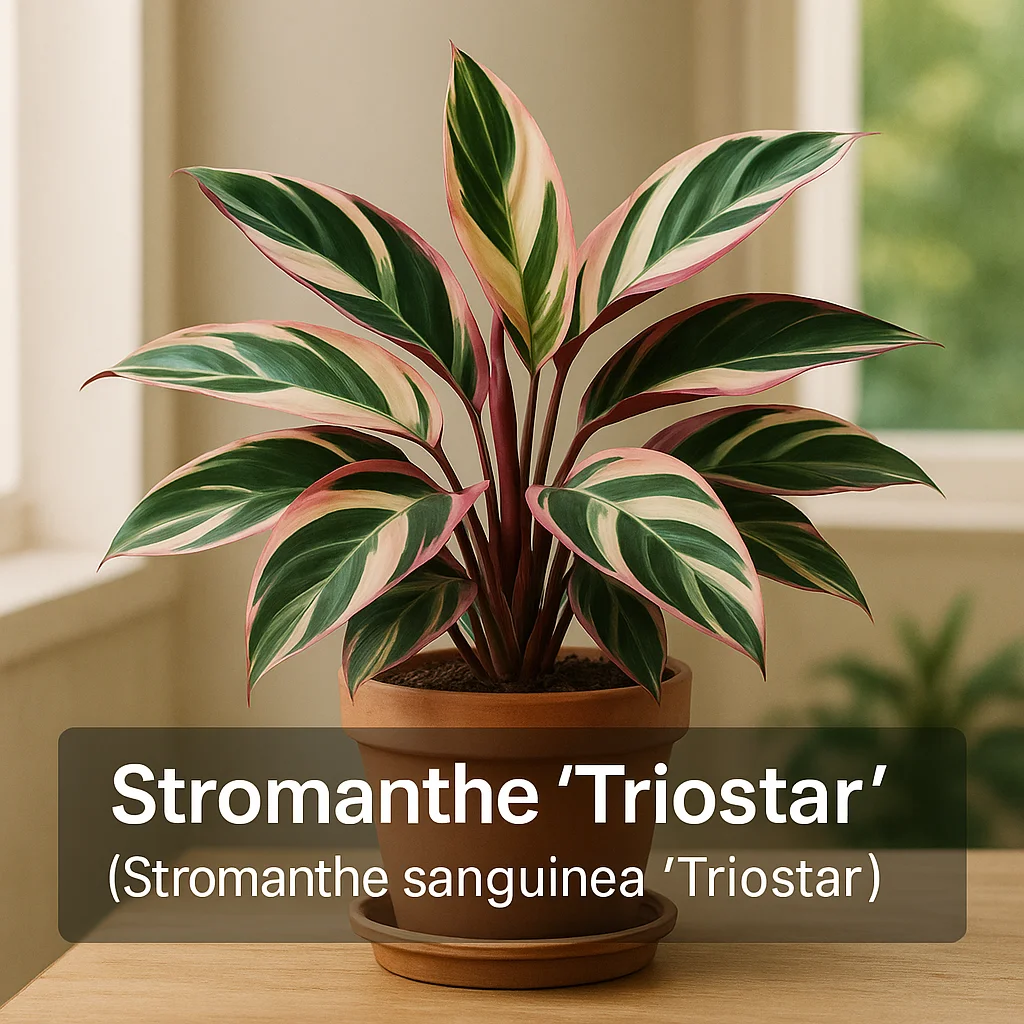
- Common names: Tricolor Prayer Plant, Calathea 'Triostar'
- Scientific name: Stromanthe sanguinea ‘Triostar’
- Plant type: Foliage
- Growth habit: Upright
- Typical indoor size range: 2-3 feet tall
- Growth speed: Moderate
- Lifespan: Can live many years with proper care
- Origin: Native to the rainforests of South America
- Light preference: Bright indirect light
- Water needs: Moderate; allow topsoil to dry slightly
- Temperature & humidity preference: Prefers warm temperatures and high humidity
- Pet safety: May be irritating/toxic to pets
- Difficulty: Medium
🔍 Identification & Look-Alikes
The Stromanthe ‘Triostar’ is easily recognizable by its long, lance-shaped leaves with a unique tri-color pattern of cream, green, and pink or red. Each leaf grows from a central stem in an alternating pattern, creating a lush and full appearance. This plant is primarily appreciated for its striking foliage, and it does not frequently flower indoors.
While often confused with similar plants such as Calathea or Ctenanthe for their variegation and growth style, distinguishing them involves noting the exact leaf color patterns unique to Stromanthe ‘Triostar’.
- Top ID Tips:
- Lance-shaped leaves with cream, green, and pink hues
- Upright growth from a central stem
- Leaf undersides often have a deep red or pink tinge
- Requires bright indirect light for vibrancy
- Does not typically flower indoors
- Look-alikes: Calathea, Ctenanthe
- Variegation fades in low light conditions
- Leaves close upwards at night, a trait shared with prayer plants
🌍 Origin & Natural Habitat
Stromanthe ‘Triostar’ hails from the understory of South American rainforests, particularly in Brazil. In its native habitat, it thrives in the dappled light of a humid forest environment where it enjoys consistent moisture and warmth.
This understanding aids indoor care, emphasizing the importance of providing ample humidity and avoiding direct sunlight, which can scorch the leaves. The evergreen nature of its habitat informs its need for stable conditions without seasonal dormancy.
☀️ Light Requirements
When caring for a Stromanthe ‘Triostar’ indoors, place it in a location where it receives bright, indirect light. An east or north-facing window with filtered sunlight is ideal, while direct sunlight is too harsh and can damage the foliage.
Variegation is most pronounced under consistent bright light levels. If the plant receives too little light, its variegation may diminish, leading to more uniform green leaves. Conversely, too much direct light can lead to leaf burn.
- Light Checklist:
- Place near east or north-facing windows
- Avoid direct sunlight; use sheer curtains if needed
- Monitor for leaf fading or scorching as light indicators
- Rotate plant periodically for even light exposure
- Can adapt to lower light, but with less vibrant colors
- Bright indirect light maintains best color
💧 Watering & Humidity
Water the Stromanthe ‘Triostar’ when the top inch of soil feels dry. Use the soak-and-drain method to ensure thorough hydration while allowing excess water to drain out. In winter months, reduce watering frequency as growth slows.
High humidity is essential for this plant, which can be facilitated by using a humidifier, grouping plants, or placing a water-filled tray nearby. Watch for signs of overwatering (root rot symptoms) and underwatering (leaf curling).
- Watering Tips:
- Allow the top inch of soil to dry out before watering
- Adjust watering frequency with seasonal changes
- Use room-temperature water
- Maintain humidity through misting or a humidifier
- Check for root rot indicators in overwatered soil
- Leaves curling signal underwatering
🐛 Soil, Pot & Repotting
A rich, well-draining potting mix is best for Stromanthe ‘Triostar’. Consider a blend designed for houseplants, which will provide the necessary nutrients while preventing waterlogging. Ensure the pot has drainage holes to avoid stagnant water, with terracotta pots offering better moisture regulation.
Repotting should occur every two years or when you notice roots emerging from the drainage holes or surface. Choose the next pot size up to accommodate growth without overwhelming the plant.
- Repotting Checklist:
- Use a well-draining houseplant mix
- Ensure pots have proper drainage
- Repot every 2 years or when rootbound
- Choose one size larger pot for repotting
- Be gentle when handling roots during repotting
- Water thoroughly post-repotting
🌡️ Temperature, Airflow & Seasonal Care
Maintain a comfortable indoor temperature for Stromanthe ‘Triostar’ between 65°F and 80°F (18°C-27°C). Avoid drafts, air conditioner vents, and sudden temperature changes which can stress the plant. During winter, growth slows, necessitating adjusted care such as reduced watering.
- Seasonal Notes:
- Keep temperatures consistent
- Avoid cold drafts and warm air vents
- Expect slower growth and less watering in winter
- Maintain even humidity year-round
- Check plant regularly for environmental stress signals
🌸 Flowers, Fruit & Growth Cycle
Indoors, Stromanthe ‘Triostar’ is rarely grown for its flowers, which are small, non-showy, and white to light pink. Instead, the focus is on its beautiful foliage. New leaves unfurl from the center of the plant, maintaining a bushy and upright form.
Regular pruning is not necessary. However, removing dead or damaged leaves can maintain a tidy appearance and promote better airflow.
🧬 Propagation & Reproduction
Propagation of Stromanthe ‘Triostar’ can be challenging. The most successful method is division during repotting. Gently separate clumps into smaller plants, ensuring each retains enough roots.
- Propagation Tips:
- Divide during spring or when repotting
- Ensure each division has roots attached
- Avoid propagation through stem/leaf cuttings
- Replant in fresh soil mix immediately
- Water newly divided plants thoroughly
🌿 Common Problems, Pests & Prevention
Common issues include yellowing leaves from overwatering, brown leaf tips due to low humidity, and pest attacks from spider mites or mealybugs. Ensuring stable care conditions often prevents most issues.
Look for early signs of leaf discoloration or pest presence to address problems promptly.
- Prevention Basics:
- Keep leaves dust-free for better photosynthesis
- Isolate new plants to prevent pest introductions
- Ensure consistent watering routine
- Regularly check for pests or stress indicators
- Provide sufficient humidity to prevent brown tips
- Remove affected leaves to prevent disease spread
🐾 Pet & Home Safety Notes
Some sources note Stromanthe species as mildly irritating if ingested by pets or children, though reports vary. It's advised to position this plant out of reach and train pets to avoid it. If ingestion is suspected, contact a professional or local poison control resources for advice.
🏡 Styling Ideas & Best Room Placement
The bold foliage of a Stromanthe ‘Triostar’ makes it a striking addition to any room. It thrives in bright kitchens or living rooms where humidity is moderate. Avoid placement near heating vents or draughty areas.
Pair with other humidity-loving plants like ferns or prayer plants for a cohesive look.
📌 Summary
- ID Highlights: Tricolor leaves, red/pink undersides, upright form
- Originates from South American rainforests
- Thrives in bright, indirect light conditions
- Soil should be well-draining; water when top inches dry
- Maintain warm temperatures and high humidity levels
- Propagation is best through division
- Common issues include leaf browning and pest invasions
- Considered medium in care difficulty
- May irritate pets; place safely out of reach