🌱 Astrophytum asterias (Star Cactus)
🧾 Quick Facts
The Astrophytum asterias, commonly known as the Star Cactus, is a small, stunning species beloved by cactus enthusiasts for its unique appearance. Here's a brief overview:
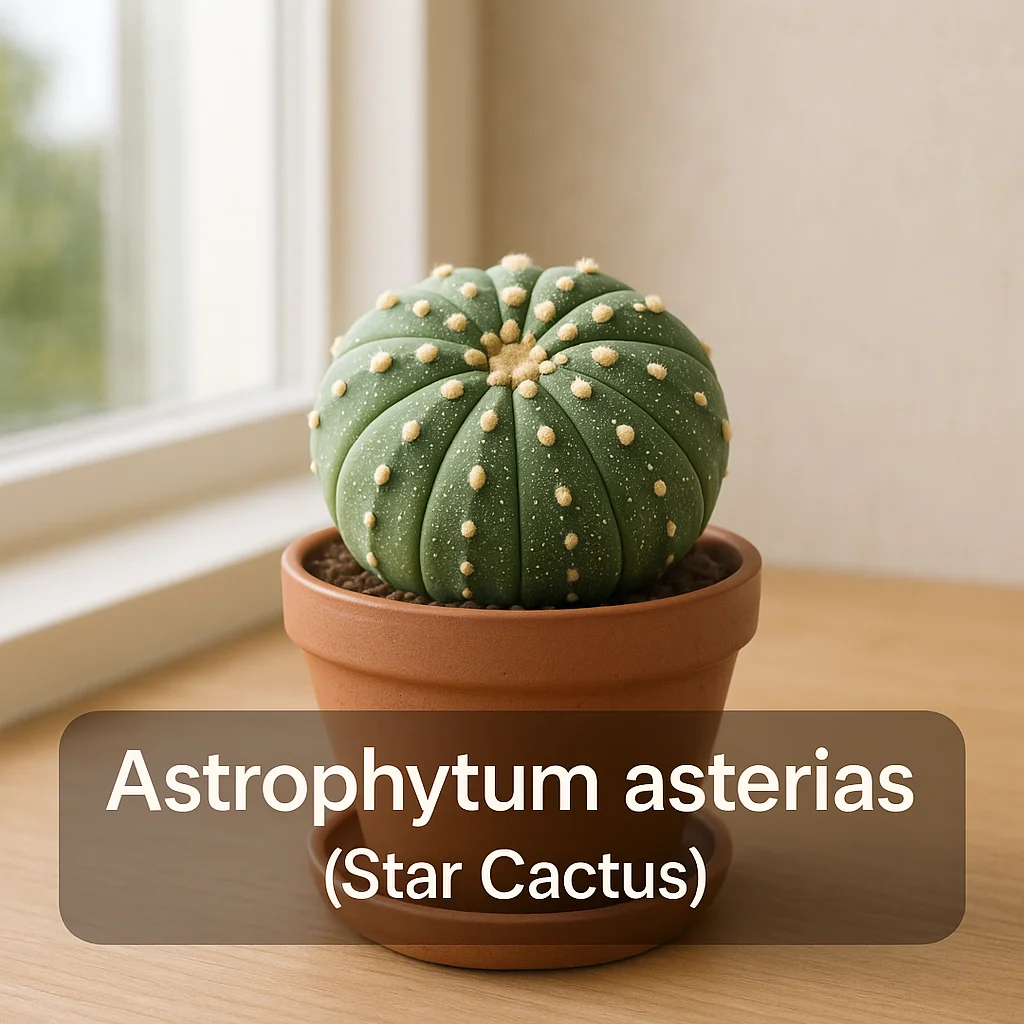
- Common names: Star Cactus, Sand Dollar Cactus
- Scientific name: Astrophytum asterias
- Plant type: Cactus
- Growth habit: Stemless, flat, spherical
- Typical indoor size range: 1-2 inches tall, 3-6 inches wide
- Growth speed: Slow
- Lifespan: Can live many years with proper care
- Origin: Texas (USA) and Northeastern Mexico, semiarid regions
- Light preference: Bright indirect light; can tolerate some direct sun
- Water needs: Low; prefers to dry out completely between waterings
- Temperature & humidity preference: Prefers warmth; low humidity
- Pet safety: Generally considered non-toxic but spines can cause injury
- Difficulty: Medium
🔍 Identification & Look-Alikes
The Star Cactus is distinct with its hemispherical, flattened body usually lacking spines but sporting a pattern of white dots or small tufts of downy fuzz. It is deeply ribbed with usually 8 sections, making it resemble a sand dollar in shape. The top of the cactus often blooms dainty, yellow flowers with an orange center, but it is primarily grown for its striking appearance rather than flowers.
Look-alikes include other Astrophytum species and cacti like the Bishop's Cap. However, the Star Cactus is discernible by its typically fuzz-free body and more pronounced ribs.
- Round, flattened body with 8 ribs
- Small tufts or white spots pattern the surface
- Yellow flowers with orange centers may appear
- Fewer spines compared to many cacti
- Similar in shape to a sand dollar
- Grows low and close to the soil surface
🌍 Origin & Natural Habitat
The Star Cactus is native to the semiarid regions of Texas and Northeastern Mexico, typically inhabiting desert scrubland. It thrives in sandy and well-drained soils, often blending into the ground due to its earthy coloration and low, cushion-like growth.
Understanding its natural habitat helps inform its indoor care: mimicking its arid environment by ensuring well-draining soil and infrequent watering supports healthy growth. Seasonal rains in its natural range encourage dormancy and active growth periods, which can guide watering schedules at home.
☀️ Light Requirements
Astrophytum asterias prefers bright indirect light conditions. Placing it near an east or west-facing window works well, as it enjoys morning or late afternoon light. While it can tolerate direct sunlight, prolonged exposure, especially under intense afternoon sun, may cause scorching. Adequate light is crucial for maintaining its color and compact form.
Under insufficient light, the cactus may become etiolated, growing taller as it stretches towards the light source.
- Position near east or west-facing windows
- Avoid long periods of intense direct sun
- Monitor for signs of stretching, indicate low light
- Rotate plant to ensure even light exposure
- Protect from afternoon sun to prevent scorching
- Bright indirect light maintains healthy growth
- Natural light boosts flower formation in season
💧 Watering & Humidity
The Star Cactus thrives on a soak-and-dry watering method. Water thoroughly, allowing excess to drain away, then let the soil dry completely before watering again. Frequency typically decreases in winter, aligning with its natural dormancy period. Plant size, pot material, and light affect drying times: larger plants in terracotta may dry faster than small ones in plastic.
Despite tolerating low indoor humidity, introducing airflow and avoiding wet conditions helps to prevent fungal issues.
- Allow soil to dry out entirely between waterings
- Adjust watering frequency based on season
- Ensure pots have drainage holes
- Reduce watering during colder months
- Check soil moisture at depth, not just surface
- Maintain low humidity to mimic native habitat
- Signs of overwatering: root rot, yellowing
🐛 Soil, Pot & Repotting
Astrophytum asterias needs an airy, well-draining soil mix—commercial cactus or succulent soil is ideal. Pots should have drainage holes; terracotta encourages better moisture evaporation. Repotting every 2-3 years is common when the roots outgrow the container or water runs through immediately.
Repotting is best done in spring; gently remove the plant, check for pests or rot, and transfer to a slightly larger pot only as needed.
- Use a cactus-specific, well-draining mix
- Choose pots with drainage holes
- Repot in spring for best results
- Avoid dramatically increasing pot size
- Inspect roots for rot or pests during repotting
- Soil should dry and drain quickly
- Terracotta pots can help with evaporation
🌡️ Temperature, Airflow & Seasonal Care
The Star Cactus appreciates temperatures similar to a typical warm home environment, ideally between 70°F to 90°F (21°C to 32°C). It can tolerate cooler temps briefly, but protect it from drafts or sudden temperature changes from AC units or heaters.
In winter, when the plant becomes semi-dormant, keep it drier and slightly cooler, around 50°F to 60°F (10°C to 16°C). Encourage airflow without chilling the plant by using fans or opening windows.
- Maintain temperatures of 70°F to 90°F (21°C to 32°C)
- Avoid cold drafts from windows or doors
- Use fans for gentle airflow to deter pests
- Reduce watering in cooler months
- Position away from direct heat sources
- Watch for signs of stress during temperature shifts
🌸 Flowers, Fruit & Growth Cycle
The Star Cactus may occasionally bloom indoors under optimal light and care conditions, typically producing bright yellow flowers with orange centers. These blooms often arise in spring or summer after dormancy has ended.
Growth is slow, remaining compact, with any new growth primarily expanding the size of its existing structure. Pruning isn't necessary, but gentle cleaning of the cactus can prevent dust accumulation.
🧬 Propagation & Reproduction
Propagation of Astrophytum asterias is most commonly achieved through seeds, though this can be slow and requires patience. The plant seldom produces viable offsets, making seed propagation the primary method.
- Sowing seeds in a well-draining mix
- Maintain warm and somewhat elevated humidity for germination
- Slow germination period, requiring patience
- Propagating from seed provides larger numbers of plants
- Difficult to propagate via cuttings or offsets
🌿 Common Problems, Pests & Prevention
The Star Cactus can face common plant issues such as yellowing from overwatering or brown spots due to sunburn. Pests like spider mites and mealybugs may occasionally pose a threat, particularly in dry interiors.
Preventive measures include quarantining new plants, regular inspections, and maintaining consistent care. Proper airflow and avoiding overwatering also support health.
- Inspect regularly for pests under leaves
- Quarantine new plants to prevent pest spread
- Adjust watering to avoid root rot
- Ensure adequate light to prevent legginess
- Gently clean off any dust buildup
- Avoid water accumulation on the plant itself
🐾 Pet & Home Safety Notes
While the Star Cactus is generally non-toxic, its spines can pose a risk of physical injury if touched or ingested. Place it out of reach of pets and children, and use barriers or strategic placement on shelves if necessary.
If ingestion or contact with spines causes concern, seek advice from a professional or local poison control resources.
🏡 Styling Ideas & Best Room Placement
The Star Cactus is a striking decorative element in bright rooms, including living rooms and sunny kitchens. Its compact size makes it ideal for small pots on desks or shelves.
Pairing with other cacti or succulents can create a delightful desert-themed arrangement. Ensure it remains in an area with sufficient light, away from high-traffic paths to prevent accidental bumps.
📌 Summary
- Recognizable by its flat, spherical body and ribbing
- Native to semiarid regions of Texas and Mexico
- Prefers bright, indirect light and can tolerate some direct sun
- Low watering needs, prefers to dry out completely
- Use well-draining cactus soil and pots with drainage
- Thrives in warm environments; avoid temperature fluctuations
- Propagation mainly by seed; slower process
- Watch for pests and avoid overwatering to prevent common issues
- Generally non-toxic, but be cautious with spines around pets
- Best placed in sunny rooms; stunning in small displays