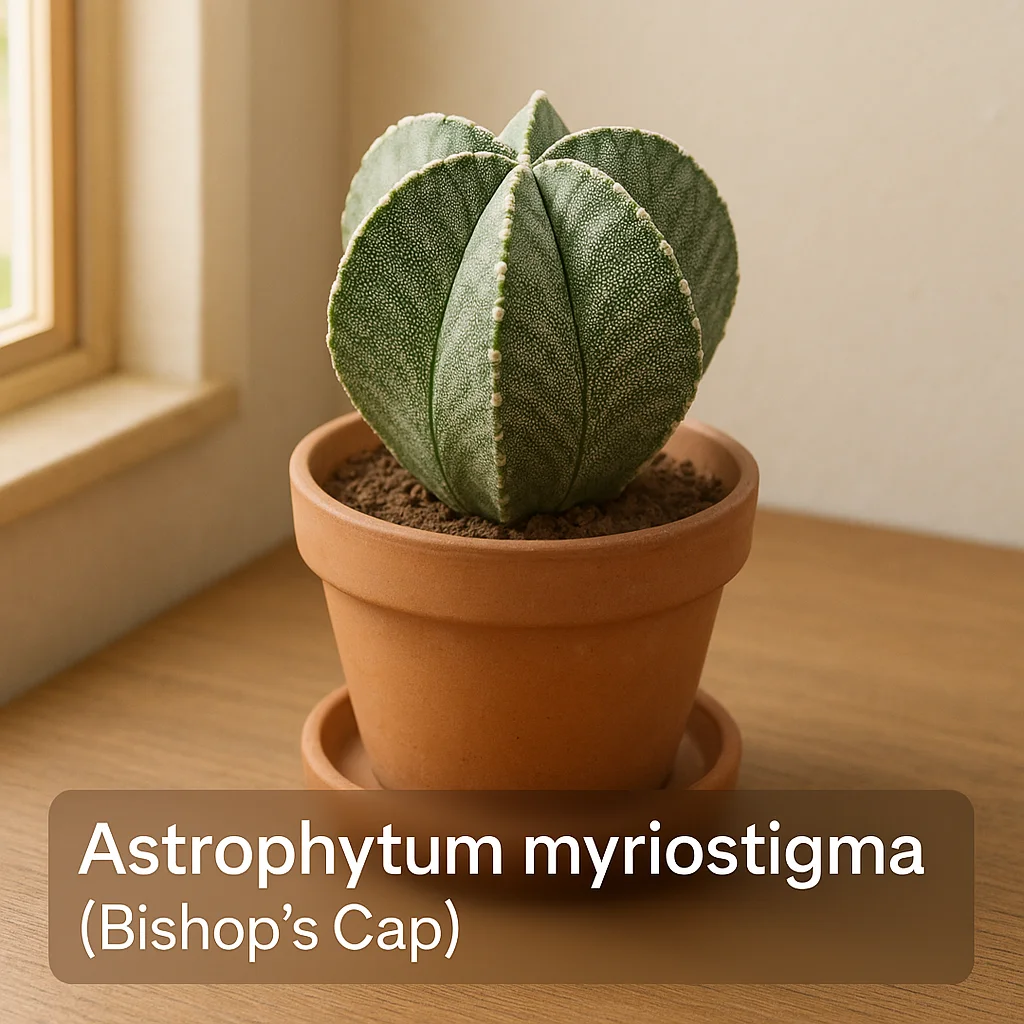
🌱 Astrophytum myriostigma (Bishop’s Cap)
🧾 Quick Facts
Astrophytum myriostigma, known commonly as Bishop's Cap, is a charming cactus species cherished for its unique shape and ease of care. It exhibits a distinct star shape when viewed from above, and its lack of spines makes it a favorite among indoor plant enthusiasts. Discover some essential quick facts about this intriguing species below:
- Common Names: Bishop’s Cap, Bishop’s Hat
- Scientific Name: Astrophytum myriostigma
- Plant Type: Cactus, succulent
- Growth Habit: Upright, star-shaped
- Typical Indoor Size: 6–24 inches tall and wide
- Growth Speed: Slow
- Lifespan: Can live many years with proper care
- Origin: Central and northern Mexico
- Light Preference: Bright, indirect light; tolerates some direct sun
- Water Needs: Low; prefers to dry out between waterings
- Temperature & Humidity Preference: Prefers warm, dry conditions
- Pet Safety: Generally considered pet-friendlier
- Difficulty: Easy
🔍 Identification & Look-Alikes
Bishop's Cap is easily identifiable by its star-shaped appearance, with typically three to five pronounced ribs. The cactus is spineless, covered in a fine, silvery wooly texture that adds a soft, felt-like character. The body is often a green-gray color, which may turn brownish with age or intense light. It occasionally produces small, bright yellow flowers at the top during the warmer months, adding to its allure.
While Bishop's Cap is unique, it can sometimes be confused with Euphorbias or other Astrophytum species that may have more ribs or variances in color and size. The lack of spines and the distinct shape are reliable identifiers.
- Look for 3–5 prominent ribs
- Spineless cactus with woolly speckled texture
- Green-gray body color, turning brownish under strong light
- Small yellow flowers in warmer weather
- Star shape visible when viewed from above
- Commonly confused with other cacti but differentiated by rib count and absence of spines
🌍 Origin & Natural Habitat
Astrophytum myriostigma originates from the central and northern regions of Mexico, where it can be found growing in semi-desert areas. Its natural habitat consists of rocky terrain and slopes where it enjoys abundant sunlight and excellent drainage. Knowledge of its natural environment helps with cultivating it indoors by mimicking bright light conditions and ensuring well-draining soil.
In the wild, it may experience both wet and dry seasons, with the ability to endure periods of drought. This adaptation informs the watering practices for indoor care.
☀️ Light Requirements
Bishop's Cap thrives in bright, indirect light, ideal for placement near south or east-facing windows. While it tolerates some direct sunlight, intense midday sun may cause scorching or discoloration. Bright indirect light means placing the plant where it receives filtered sunlight, such as through sheer curtains. Adequate light maintains its vibrant color and encourages flowering. If the plant receives too little light, it will become elongated and pale, while too much light may scorch or brown its body.
- Place near a south or east-facing window for best results
- Use sheer curtains to filter harsh sunlight
- Watch for elongation as a sign of insufficient light
- Monitor for browning as an indicator of excessive sun
- Rotate the plant periodically for even growth
- Artificial grow lights can supplement lack of natural sunlight
💧 Watering & Humidity
Astrophytum myriostigma prefers a soak-and-dry method of watering. Allow the soil to dry out completely between waterings, preventing root rot which is common in cacti if overwatered. The need for water varies with pot size, light intensity, and seasonal changes—less in winter due to slower growth. As a desert plant, Bishop's Cap does not demand high humidity, making it suitable for most indoor environments.
Signs of overwatering include mushy, discolored tissue, while underwatering may lead to shriveling. Correct watering habits are essential for a healthy plant.
- Use the soak-and-dry method; let soil dry out between waterings
- Reduce watering frequency in winter
- Adjust watering schedule based on pot size and light exposure
- Look for shriveling as a sign of underwatering
- Avoid watering if the topsoil feels damp
- Maintain proper drainage to prevent waterlogging
🐛 Soil, Pot & Repotting
A well-draining, sandy cactus mix is ideal for Bishop’s Cap. Pots with drainage holes are crucial to allow excess water to escape. While terracotta pots enhance breathability, any container with proper drainage suffices. Repotting is infrequent, usually needed every few years. Signs for repotting include roots poking through drainage holes or slowed growth due to pot constraints. During repotting, choose a pot only slightly larger to maintain proper root-to-soil ratio and prevent overwatering.
- Opt for a well-draining, sandy cactus mix
- Ensure pots have drainage holes
- Select terracotta pots for faster soil drying
- Repot every few years, observing root-bound signs
- Increase pot size gradually
- Handle with care to avoid damaging roots
🌡️ Temperature, Airflow & Seasonal Care
Indoor temperatures that mimic its natural desert habitat—between 65°F to 85°F (18°C to 29°C)—are ideal for Bishop's Cap. It does not appreciate cold drafts or temperatures below 50°F (10°C). Maintaining good airflow is also important but avoid placing it directly under air conditioners or heaters, which can cause temperature fluctuations.
During winter, expect slowed growth, necessitating less watering. Dormancy in cooler months is natural and requires an adjustment in care.
- Keep in a warm environment, ideally 65°F–85°F (18°C–29°C)
- Avoid cold drafts and temperatures below 50°F (10°C)
- Provide sufficient airflow but avoid direct paths of AC/heaters
- Diminish watering during winter dormancy
- Expect slower growth in cooler seasons
🌸 Flowers, Fruit & Growth Cycle
Bishop's Cap can flower indoors given enough light and warmth. It produces small, attractive, yellow flowers mostly in spring or summer but varies by conditions. While cacti fruits are possible, indoor fruiting is rare. Growth occurs primarily from the top, expanding outward, keeping its unique star shape. Pruning is unnecessary, as it naturally maintains its form; however, keep tools sanitized if pruning for aesthetic reasons.
🧬 Propagation & Reproduction
Astrophytum myriostigma is most commonly propagated by seeds, though this is a slow process not often practiced by home growers due to the cactus’s slow germination and growth rate. Cuttings are not a feasible method, and offsets, if present, are rare. For those pursuing seed propagation, patience is key, with optimal results occurring under controlled light and temperature.
- Propagation is usually done via seeds
- Expect slow germination and growth from seeds
- Offsets are rare, not a common propagation method
- Optimal under stable temperature and light
🌿 Common Problems, Pests & Prevention
Common issues for Bishop's Cap include yellowing due to overwatering, brown spots from sunburn, and a stunted growth rate from inadequate lighting. Pests such as spider mites and mealybugs, though less common in cacti, can occasionally appear and should be addressed with plant-safe solutions. Prevention includes regular cleaning, ensuring stable care, and avoiding crowded conditions that limit airflow.
- Prevent overwatering to avoid yellowing and root rot
- Manage lighting to prevent sunburn and leggy growth
- Maintain cleanliness to reduce pest attraction
- Quarantine new plants to prevent pest spread
- Check for pests regularly, especially under new growth
- Avoid high humidity environments to minimize pest risks
🐾 Pet & Home Safety Notes
Though Bishop's Cap is considered pet-friendlier due to its lack of spines, ingestion can still cause gastrointestinal distress in pets. It is advisable to keep it out of reach to prevent accidental nibbling, and ensure children understand not to handle plants without supervision. If ingestion is suspected, contact a veterinarian or poison control center for advice.
🏡 Styling Ideas & Best Room Placement
Given its low water and humidity requirements, Bishop's Cap can be a delightful addition to bright rooms, such as living rooms or office spaces. It's also well-suited for modern minimalist designs with its geometric shape. To complement its star form, pair it with taller, more varied foliage plants, like snake plants or ponytail palms, on shelves or study desks. Ensure it’s placed where light conditions are optimal to maintain its health and appearance.
📌 Summary
- Astrophytum myriostigma is renowned for its star-like form
- Native to Mexico's semi-desert regions
- Thrives in bright, indirect light; some direct light tolerance
- Prefers dry soil; allows it to dry fully between waterings
- Use well-draining cactus soil and pots with drainage
- Maintain warm indoor temperatures; avoid cold and drafts
- Propagation is primarily through seeds; slow growth expected
- Common issues include overwatering effects and occasional pests
- Generally pet-friendly, but ingestion may still irritate
- Ideal for styling in bright, dry locations with complementary greenery