🌱 Cereus repandus (Peruvian Apple Cactus)
🧾 Quick Facts
The Cereus repandus, commonly known as the Peruvian Apple Cactus, is a striking and robust cactus species prized for its architectural stature and ease of care. It makes an intriguing addition to indoor plant collections, defined by its columnar growth and occasional fruit-bearing capabilities.
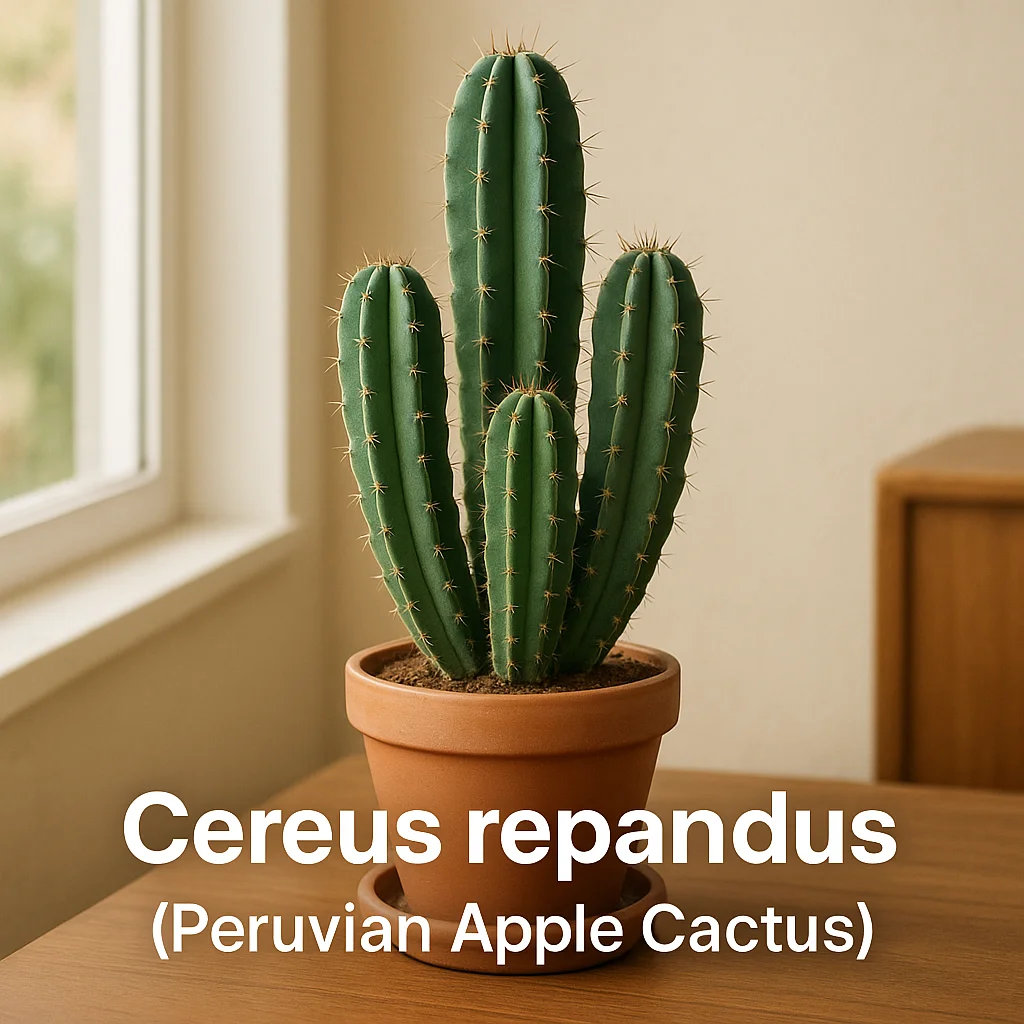
- Common Names: Peruvian Apple Cactus, Queen of the Night
- Scientific Name: Cereus repandus
- Plant Type: Cactus
- Growth Habit: Upright, columnar
- Typical Indoor Size: 6–10 feet in height, 2–4 feet in spread
- Growth Speed: Moderate to fast
- Lifespan: Can live many years with proper care
- Origin: South America; rocky, arid regions
- Light Preference: Bright indirect to some direct sunlight
- Water Needs: Low; prefers to dry out between waterings
- Temperature & Humidity Preference: Prefers warm temperatures; low humidity
- Pet Safety: May be irritating to pets; seek professional advice if severe
- Difficulty: Easy to medium
🔍 Identification & Look-Alikes
The Peruvian Apple Cactus is characterized by its tall, thick columnar stems that often branch from the base. The stems are ribbed, with each rib lined by clusters of short, whitish spines. Its overall color varies from blue-green to gray-green, which may change with light exposure. Although it can produce large, nocturnal white flowers with a sweet scent, it is primarily grown for its stately foliage indoors.
Common look-alikes include other columnar cacti such as the San Pedro Cactus. The Peruvian Apple Cactus can be distinguished by its distinctive ribbed stems and lighter spine clusters.
- Tall, columnar growth habit
- Ribs lined with small clusters of spines
- Blue-green to gray-green stem coloration
- Capable of producing large, night-blooming white flowers
- Fleshy, round fruit following flowering
- Occasional basal branching
- Distinct from San Pedro by spine color and arrangement
- Can tolerate some direct sunlight
- Lighter spines and more elongated ribs than similar species
🌍 Origin & Natural Habitat
Native to the arid regions of South America, the Cereus repandus thrives in rocky outcrops and deserts of countries like Argentina, Brazil, and Uruguay. In its natural habitat, this cactus experiences marked seasonal changes with wet summers and dry winters, adapting well to the fluctuating conditions.
Understanding its natural preference for high light and dry conditions helps inform its care indoors, as it mimics the cactus's original environment where it thrives in full sunlight and well-drained soils.
☀️ Light Requirements
For optimal growth indoors, place your Peruvian Apple Cactus in a bright location with plenty of indirect light. A south or west-facing window is typically ideal, though it can endure some direct sunlight, especially during the morning or late afternoon when the rays are less intense. Too little light may result in slower growth and a leggy appearance.
Signs of too little light include elongated, pale growth, while excessive bright direct sun may cause sunburn spots on the plant.
- Position in the brightest spot available
- Avoid prolonged harsh midday sun
- Watch for signs of stress: fading color or elongation
- Rotate periodically for even growth
- Adapt gradually to increasing light intensity
- South or west-facing windows are preferable
- Supplement with grow lights if necessary
- Ensure consistent lighting year-round
- Use sheer curtains to diffuse harsh sunlight
- Adjust location seasonally for best light
💧 Watering & Humidity
Watering this cactus follows a “soak and dry” method. Thoroughly water the plant, allowing the excess to drain completely, and wait for the soil to dry out before watering again. The frequency varies with light levels and season, being more frequent during warm growing months and less so during the cooler, dormant period.
While humidity is less of a concern, avoid placing the cactus in an environment that's too dry or drafty to prevent stress.
Overwatering is a more common problem than underwatering, evidenced by root rot and a mushy texture.
- Allow soil to dry out between watering
- Decrease frequency during the winter months
- Ensure pot has drainage holes
- Check soil moisture level before watering
- Adjust watering based on light and room temperature
- Watch for yellowing as a sign of overwatering
- Inspect the root health if unsure of watering needs
- Low humidity environments are sufficiently comfortable
- Mist lightly only if air is particularly dry
- Avoid waterlogging the soil
🐛 Soil, Pot & Repotting
Use a well-draining cactus or succulent potting mix for the Peruvian Apple Cactus. The pot should have drainage holes to prevent water accumulation, with terracotta pots being a popular choice for their ability to wick moisture.
Repotting should occur every two to three years or when the plant becomes rootbound, slowing growth noticeably. Opt for gentle upsizing, choosing a pot only slightly larger than its current one.
To repot, loosen the roots, gently remove excess old soil, and place in the new pot, filling in with fresh soil mix.
- Use a commercial cactus mix or make your own
- Ensure a well-draining pot with ample drainage holes
- Repot when roots bound or stunted growth is apparent
- Choose a pot one size larger at most
- Handle root ball carefully during repotting
- Soak the soil after repotting – allow to dry thereafter
- Avoid damaging the roots during transfer
- Inspect roots regularly for health signs
- Replenish nutrients with fresh soil mix
- Refresh top layer of soil annually if not repotting
🌡️ Temperature, Airflow & Seasonal Care
The Peruvian Apple Cactus prefers warm environments with temperatures ranging from 65°F to 85°F (18°C to 29°C). While it tolerates some variation, avoid cold drafts and abrupt temperature changes. During the winter, the cactus enters a slower growth phase, requiring reduced watering.
Ample fresh air circulation is beneficial, as it simulates natural airy conditions. Placement near air-conditioning or heaters should be avoided to prevent desiccation or heat stress.
- Keep within comfortable indoor temperature range
- Provide protection from cold weather
- Lower watering frequency during winter dormancy
- Avoid placement near drafty windows
- Prevent exposure to hot air from heating units
- Ensure sufficient air movement around the plant
- Anticipate slower growth in cooler months
- Acclimate gradually to temperature changes
- Understand seasonal light and water adjustments
🌸 Flowers, Fruit & Growth Cycle
While indoor flowering is uncommon, given the right conditions, the Peruvian Apple Cactus can produce stunning, large white flowers that bloom at night, typically in summer. It may also bear edible fruit, though this requires ideal conditions often challenging to replicate indoors.
The plant grows in distinctive vertical columns, adding new segments during the active growing season. Pruning is not usually necessary, but if shaping is required, use sterilized tools to prevent infection.
- Indoor blooming is rare but possible
- Flowers are large, white, and nocturnal
- Possible fruiting with indoor conditions
- Growth adds new vertical segments
- Minimal pruning needed; shape with care
- Healthy growth involves balanced nutrition
- Promote robust growth by following care tips
🧬 Propagation & Reproduction
Cereus repandus can be propagated through cuttings and seeds, though cuttings are preferred for ease and efficiency. Use a clean, sharp knife to take cuttings, allowing the base to callous over before planting in soil. Seed propagation is more complex, requiring specific conditions for germination and greater patience.
Propagation success is increased by providing warmth and bright, indirect light during rooting.
- Take cuttings from mature, healthy segments
- Allow cuttings to callous over before planting
- Use cactus soil mix for planting cuttings
- Rooting succeeds best with warm temperatures
- Monitor for new growth indicating rooting
- Seeds need controlled conditions to germinate
- Protect new cuttings from direct sun
- Experiment with offsets for interesting shapes
- Patience is key in seed propagation
🌿 Common Problems, Pests & Prevention
The Peruvian Apple Cactus may face issues such as yellowing stems or brown tips from improper watering. Common pests include mealybugs, spider mites, and scale insects. Routine preventive care involves inspecting the cactus regularly, ensuring adequate air circulation, and avoiding excessive moisture accumulation.
Manually removing pests and keeping the plant clean helps maintain health without chemical interventions. Prioritize consistent, tailored care to prevent problems.
- Inspect regularly for pest infestations
- Correct watering to avoid yellowing from overwatering
- Brown tips often signal environmental stress
- Maintain clean foliage to reduce pest attraction
- Provide stable, consistent care routines
- Quarantine new plants before introduction
- Ensure good air circulation around the plant
- Avoid over-fertilizing to prevent nutrient burn
- Address pest problems promptly
- Balance watering and light for resilient health
🐾 Pet & Home Safety Notes
The parts of the Cereus repandus, like many cacti, are considered non-toxic but can cause irritation if ingested, particularly to pets. The spines present a physical risk, as they can scratch or puncture skin, necessitating careful placement away from pet traffic and children.
If ingestion is suspected, contacting a veterinarian or poison control center is advised. Consider using plant stands or barriers to keep the cactus out of reach where necessary.
🏡 Styling Ideas & Best Room Placement
Owing to its vertical growth and impressive stature, the Peruvian Apple Cactus fits well in living rooms, offices, and sunrooms where its profile can be appreciated. It does well in bright spots and can act as a focal point when placed in larger pots.
Pair it with lower, bushier plants such as succulents or trailing vines to create a mixed-texture arrangement. Avoid humid rooms like bathrooms unless ample light is available.
📌 Summary
- Tall, columnar, ribbed growth
- Native to South America's arid regions
- Thrives in bright, indirect light
- Water using soak-and-dry method; allow soil to dry out
- Well-draining mix; repot when rootbound
- Prefers warm temperatures; minimal humidity needed
- Propagated easily from cuttings
- Prone to spider mites and scale; regular inspection recommended
- Easy care; handle spines with caution
- Considered generally safe, yet precautions necessary around pets