🌱 Disocactus anguliger (Fishbone Cactus)
🧾 Quick Facts
The Disocactus anguliger, widely known as the Fishbone Cactus, is a popular choice for houseplant enthusiasts due to its unique, zig-zag leaf structure and relatively easy care requirements. Native to the tropical regions of Mexico, this cactus is an epiphyte, often found hanging from trees in its natural habitat.
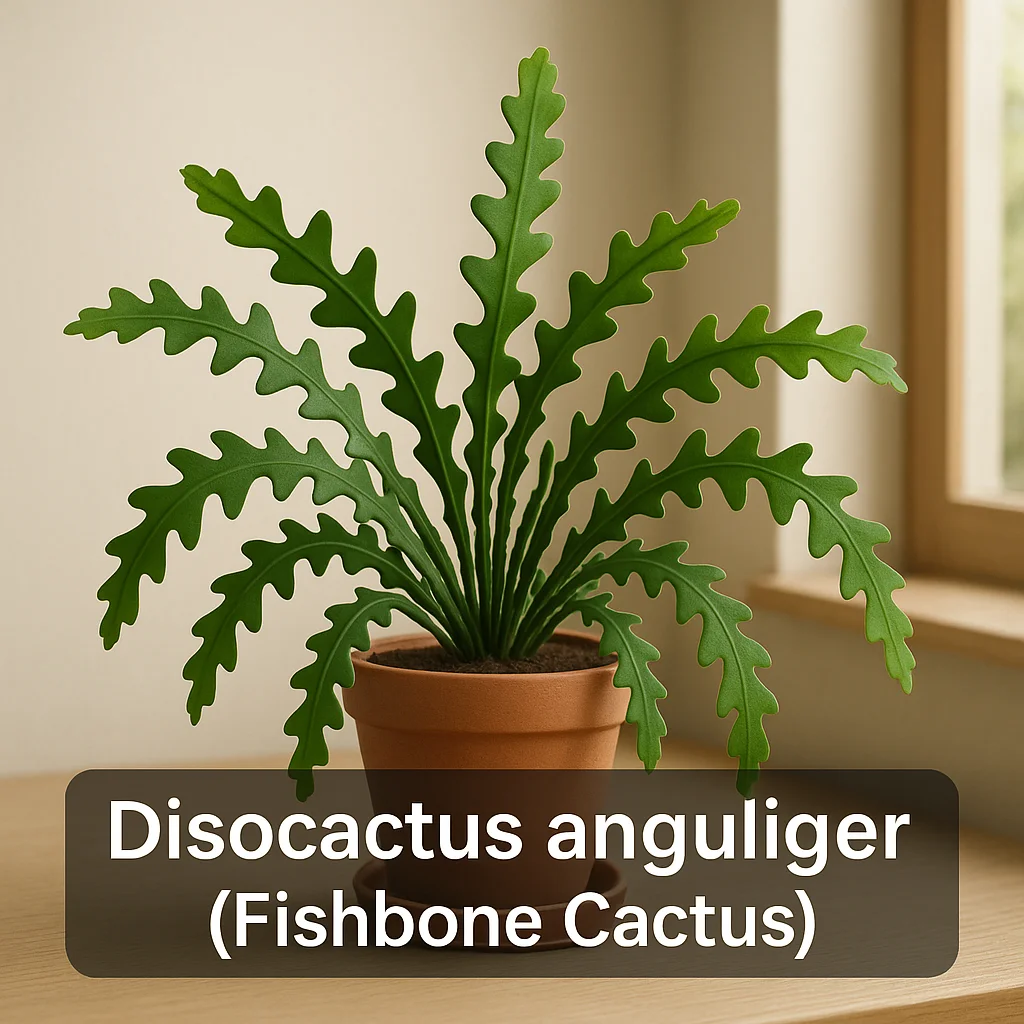
- Common names: Fishbone Cactus, Ric Rac Cactus, Zig Zag Cactus
- Scientific name: Disocactus anguliger
- Plant type: Cactus, Succulent
- Growth habit: Trailing
- Typical indoor size range: 12–24 inches tall, with a similar spread
- Growth speed: Moderate
- Lifespan: Can live many years with proper care
- Origin: Mexico; tropical forests
- Light preference: Bright indirect light; some direct morning sun is tolerated
- Water needs: Moderate; allow soil to dry between watering
- Temperature & humidity preference: Prefers warm conditions and moderate humidity
- Pet safety: Generally considered pet-friendlier, though not meant for ingestion
- Difficulty: Easy to Medium
🔍 Identification & Look-Alikes
The Fishbone Cactus is easily identified by its long, flat stems with deeply serrated edges that look like a fish skeleton or zig-zag pattern. The stems are typically green but can develop a reddish hue in bright light. Unlike many other cacti, the Disocactus anguliger doesn’t have spines. It's mainly grown for its distinctive foliage, but it can produce fragrant white or pink nocturnal flowers under optimal conditions.
Common look-alikes include the Epiphyllum anguliger, which has similar care needs but may differ slightly in bloom characteristics. Also, some Schlumbergera species may appear similar but generally have shorter, more segmented stem structures.
- Long, flat, zig-zag patterned stems
- Stems often hang or trail
- Typically spine-free
- Green leaves with potential reddish tinge
- Occasional white or pink flowers
- Distinguished from Epiphyllum by stem and bloom characteristics
- Grown mainly for its unique foliage
🌍 Origin & Natural Habitat
The Fishbone Cactus is native to the tropical rainforests of Mexico. It is an epiphytic cactus, meaning it naturally grows on other plants rather than in the soil. This habitat explains its need for well-draining soil and high humidity, as well as its tolerance for bright, filtered light. Understanding its natural epiphytic environment helps in providing the right care indoors, especially in selecting proper soil and light conditions.
☀️ Light Requirements
The Fishbone Cactus thrives in bright, indirect light, similar to the dappled sunlight it would receive in a tropical canopy. It can tolerate some direct morning sun but should be protected from harsh afternoon rays. Insufficient light may lead to slower growth and faded coloration, while too much direct sunlight can scorch the leaves.
- Place near an east-facing window for morning sun
- Avoid direct afternoon sunlight
- Bright indirect light is ideal
- Observe leaf coloration for light level adjustments
- Rotate plant periodically for even growth
- Supplement with grow lights in low-light settings
- Indoor placement near filtered windows works well
- Signs of too much light include leaf bleaching
- Signs of too little light include leggy growth
💧 Watering & Humidity
The Fishbone Cactus prefers a soak-and-drain watering method, where the soil is thoroughly moistened, then allowed to dry out before watering again. In its growing season, ensure that the soil doesn’t remain waterlogged, as this can lead to root rot. It's worth noting that during the winter months, the watering frequency should be reduced as the plant's growth may slow down. Moderate humidity is beneficial, and you can increase humidity levels by placing the planter on a pebble tray.
- Allow soil to dry between waterings
- Water more frequently during growing season
- Reduce watering in winter
- Watch for wilting or yellow leaves as overwatering signs
- Consider humidity trays if indoor air is dry
- Bright light increases water needs
- Chose pots with drainage holes
- Overwatering leads to root rot prevention
- Underwatering signs include leaf shriveling
- Ensure top several inches of soil are dry before watering
🐛 Soil, Pot & Repotting
For the Fishbone Cactus, choose a well-draining cactus or succulent mix. Adding perlite or orchid bark to regular potting soil can improve aeration. Ensure the pot has adequate drainage holes to prevent water from pooling. Repotting is generally needed every 1–2 years in spring or when the plant becomes rootbound, indicated by slowed growth or roots growing out of the drainage holes.
- Use a well-draining cactus/succulent mix
- Additives like perlite enhance soil aeration
- Repot every 1–2 years, or when rootbound
- Select a pot one size larger during repotting
- Ensure pots have drainage holes
- Repot during spring growth phase
- Handle roots gently to prevent damage when repotting
- Discard old soil during repotting to remove salts buildup
- Terracotta pots can help prevent overwatering
- Avoid pots too large for the plant
🌡️ Temperature, Airflow & Seasonal Care
The Fishbone Cactus prefers temperatures between 60°F to 80°F. It does not tolerate extreme cold or hot temperatures well. Avoid placement near drafty windows or heat/AC vents, as sudden temperature changes can stress the plant. In winter, this cactus can tolerate cooler temperatures but ensure it's above freezing, and adjust watering accordingly as growth slows.
- Optimal temperatures range from 60°F to 80°F
- Protect from extreme cold and heat
- Keep away from drafts or direct vent currents
- Reducing watering as temperature drops
- Growth slows during cooler seasons
- Potential dormancy in winter, reducing water needs
- Stable temperatures encourage better growth
- Sudden swings lead to stress and leaf drop
- Ventilate room for air circulation
🌸 Flowers, Fruit & Growth Cycle
While Disocactus anguliger is primarily grown for its ornamental foliage, it can produce flowers under ideal conditions. These flowers are often fragrant, white or pink, and bloom at night, typically in late summer or early fall. Fruiting indoors is uncommon. The plant grows in a trailing habit, and older specimens may require some pruning to maintain their shape and promote healthier growth.
🧬 Propagation & Reproduction
Propagation of the Fishbone Cactus is typically done through stem cuttings. To propagate, take a cutting from a healthy stem, let it callous over for a few days, and then plant it in a well-draining soil mix. Water sparingly until new growth starts to appear. Seeds are rarely used due to the plant's easy propagation through cuttings.
- Stem cuttings can be rooted easily
- Allow cuttings to callous before planting
- Use a clean knife or scissors for cutting
- Place in well-draining soil for propagation
- Water sparingly until new growth appears
- Best done during growing season for success
- Monitor soil moisture during propagation
🌿 Common Problems, Pests & Prevention
Common issues with Fishbone Cactus include yellowing leaves from overwatering, brown tips from underwatering, and droop due to insufficient light. Pests such as spider mites, mealybugs, and scale insects can be occasional problems. Regularly cleaning leaves and ensuring proper airflow can prevent these pests. Cultivating stability in watering and ensuring not to overwater are key preventive measures against root rot and other diseases.
- Allow soil to dry to prevent root rot
- Keep plant quarantined when bringing new plants home
- Regularly dust off leaves to maintain hygiene
- Ensure steady airflow around the plant
- Avoid sudden watering changes
- Inspect plant regularly for pests
- Brown leaf tips usually mean underwatering
- Avoid water stagnation by ensuring proper drainage
🐾 Pet & Home Safety Notes
The Fishbone Cactus is generally considered less toxic to pets compared to some other cacti; however, it is not intended for consumption by animals or humans. The sharp edges may cause minor irritation if ingested. Place it out of reach of curious pets or children and use barriers or high shelves to minimize risk. If ingestion is suspected, it's advisable to contact a veterinarian or poison control professional for guidance.
🏡 Styling Ideas & Best Room Placement
The trailing habit of the Fishbone Cactus makes it an excellent choice for hanging baskets or placing on high shelves where its stems can cascade down. It thrives in rooms with bright, indirect lighting such as kitchens or living rooms. Pair it with upright plants like snake plants for contrast, or use in decorative displays alongside other cacti and succulents for a cohesive, stylish look.
📌 Summary
- Recognized by unique zig-zag stems
- Originates from tropical forests of Mexico
- Thrives in bright, indirect sunlight
- Maintain moderate moisture; avoid overwatering
- Use well-draining soil; periodic repotting
- Prefers warm, stable temperatures
- Propagation is straightforward through cuttings
- Common pests: spider mites, mealybugs
- Generally pet-friendlier, but avoid ingestion
- Easy to medium care: ideal for varied collections