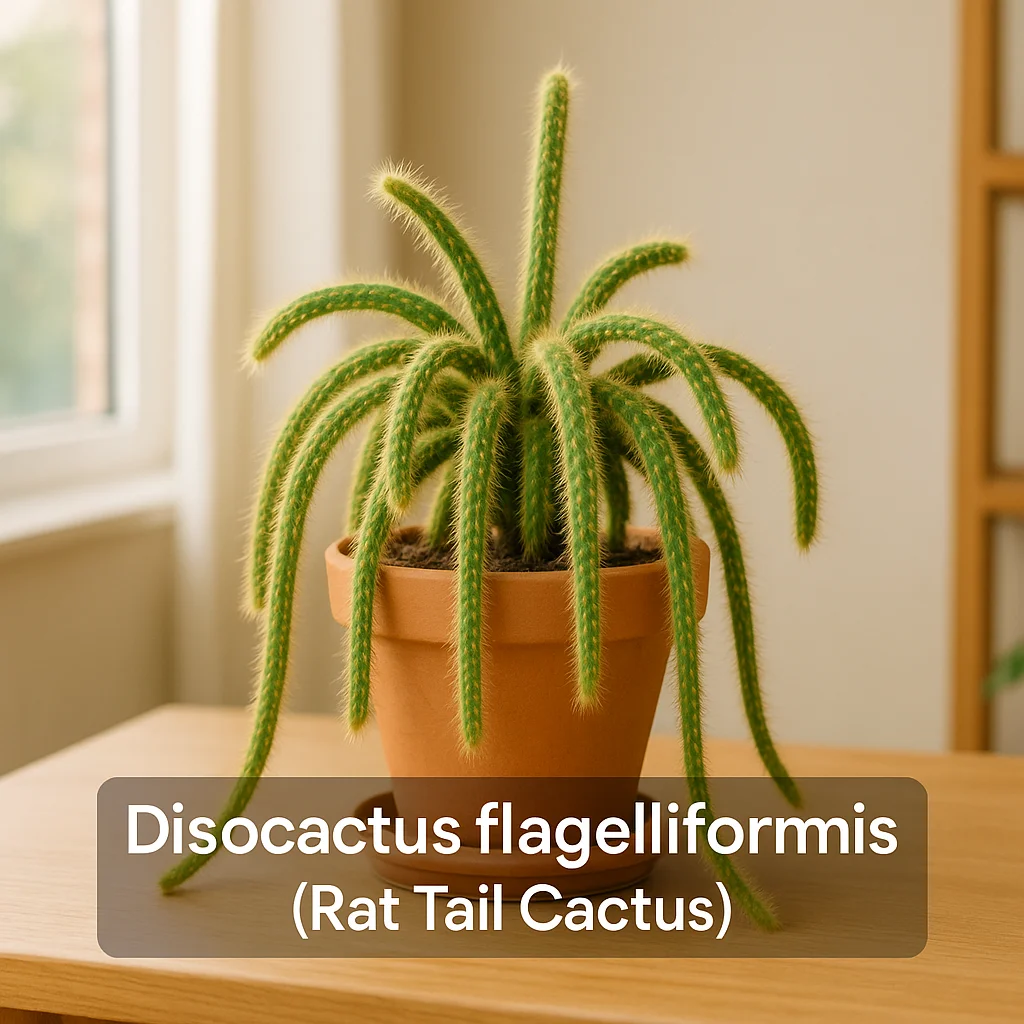
🌱 Disocactus flagelliformis (Rat Tail Cactus)
🧾 Quick Facts
The Disocactus flagelliformis, commonly known as the Rat Tail Cactus, is a captivating houseplant appreciated for its distinct trailing form and striking blooms. Here's a quick overview to guide your care for this unique cactus.
- Common names: Rat Tail Cactus, Red Rat Tail
- Scientific name: Disocactus flagelliformis
- Plant type: Cactus, Succulent
- Growth habit: Trailing
- Typical indoor size range: Can drape to 3 feet or more
- Growth speed: Moderate to fast
- Lifespan: Can live many years with proper care
- Origin: Central America; rocky desert cliffs
- Light preference: Bright indirect light to full sun
- Water needs: Low; prefer to dry out between waterings
- Temperature & humidity preference: Prefers warm, dry environments
- Pet safety: Some sources list it as slightly irritating
- Difficulty: Medium
🔍 Identification & Look-Alikes
The Rat Tail Cactus is recognized by its distinctive long, trailing stems that can drape elegantly from pots or hanging baskets. The stems are cylindrical, covered in short, bristly spines, and have a slightly hairy texture. They range in color from a grayish green to a vibrant green. In optimal conditions, this cactus can produce vivid pink to red tubular flowers, adding bursts of color to its otherwise understated appearance.
Common look-alikes include other trailing succulents such as the Aporocactus species, but true Disocactus flagelliformis can be identified by its specific spine arrangement and flower color.
- Long, trailing stems that can extend several feet
- Grayish green to vibrant green cylindrical stems
- Short, dense spines with a slightly hairy texture
- Produces vivid pink to red tubular flowers
- Grows in trailing clusters rather than upright
- Distinctive flower color and shape help distinguish it from look-alikes
- Preferably found in hanging containers or high shelves for cascading growth
🌍 Origin & Natural Habitat
Disocactus flagelliformis is native to Central America, particularly Mexico, where it thrives on rocky cliffs and arid environments. This cactus is adapted to desert climates where it experiences significant temperature variations between day and night, often surviving in conditions with intense sunlight and minimal water.
Understanding its native habitat helps in replicating similar conditions indoors, ensuring it receives bright light and is allowed to dry out between waterings. Its natural adaptation to rocky terrain underscores the need for well-draining soil in cultivation.
☀️ Light Requirements
The Rat Tail Cactus flourishes in bright, indirect light but can adapt to some direct sunlight. An ideal placement is near an east or west-facing window where it receives consistent, filtered sunlight. Too much intense direct sunlight may cause scorching, while insufficient light can result in leggy growth.
Monitor for signs of light stress such as yellowing or elongated stems, and adjust its position accordingly to maintain a healthy appearance.
- Place near east or west-facing windows
- Avoid intense midday sunlight to prevent burning
- Bright indirect light is ideal for health and flowering
- Reduced light may cause sparse, elongated growth
- Consistent lighting helps maintain vibrant stem color
- Rotate occasionally for even growth
💧 Watering & Humidity
Allow the Rat Tail Cactus to dry out between waterings to prevent root rot, a common issue with overwatered cacti. Utilize the soak-and-drain method, ensuring water properly drains and the soil dries adequately before the next watering session. Adjust the frequency based on pot size, light, and seasonal changes.
This cactus tolerates lower humidity but prefers a dry environment. Be cautious of overwatering during winter when growth slows, reducing frequency as necessary.
- Use the soak-and-drain method with well-draining soil
- Let the soil dry completely before watering again
- Water less frequently in winter as growth slows
- Monitor for soft, mushy stems as a sign of overwatering
- Avoid waterlogged conditions; suitable in arid environments
- Embrace dry atmosphere; no added humidity needed
🐛 Soil, Pot & Repotting
The Rat Tail Cactus thrives in a well-draining soil mix, typically composed of cactus mix or a blend of potting soil, sand, and perlite. The pot should have drainage holes to allow excess water to escape, with terracotta pots being preferable for their breathability.
Repotting is generally necessary every 2-3 years or when visible roots indicate it's rootbound. Gently transplant into a slightly larger pot in early spring when new growth starts, avoiding excessive root disturbance.
- Use a cactus potting mix for optimal drainage
- Ensure the pot has adequate drainage holes
- Repot every 2-3 years to refresh soil or when rootbound
- Choose slightly larger pots for transplanting with minimal root disturbance
- Prefer terracotta for its breathability over plastic
- Repot during active growth periods, typically in spring
🌡️ Temperature, Airflow & Seasonal Care
This cactus thrives in temperatures between 60°F and 77°F (16°C to 25°C) indoors, enjoying the warmth similar to its native conditions. Protect it from cold drafts, AC vents, and temperature fluctuations. Adjust care seasonally, recognizing slower growth in winter and reducing watering frequency during dormancy.
- Maintain temperatures between 60°F–77°F (16°C–25°C)
- Avoid cold drafts and sudden temperature changes
- Reduce watering as plant enters dormancy in colder months
- Keep away from direct heater or AC vents
- Encourage gentle airflow to prevent mold and pests
- Enhance care practices during active spring/summer growth
🌸 Flowers, Fruit & Growth Cycle
The Rat Tail Cactus can bloom indoors with vibrant pink to red tubular flowers, usually in late spring or early summer, depending on care. While it does not typically produce fruit indoors, the stunning blooms offer aesthetic appeal, enhancing its cascading habit.
Pruning is minimal and generally involves removing dead or damaged stems to maintain health without altering its natural form.
🧬 Propagation & Reproduction
Propagation is typically done through stem cuttings. Choose healthy segments, allow the cut end to callous for a few days, then plant in well-draining soil. The success of propagation depends on ensuring the cutting is kept at a warm temperature with minimal water until roots establish.
- Use healthy stem segments for cuttings
- Allow cut ends to callous before planting
- Plant in well-draining soil for rooting
- Maintain warm temperature and minimal moisture
- Avoid deep planting; let roots form at a shallow level
- Propagation best in late spring or early summer
🌿 Common Problems, Pests & Prevention
Common issues with the Rat Tail Cactus include overwatering-induced root rot and stem browning. Monitor for signs of drooping or yellowing, often due to improper light or moisture levels. Pests such as spider mites, mealybugs, and scale can appear; routine inspections and maintaining airflow can help prevent infestations.
- Watch for signs of overwatering like blackened or mushy stems
- Ensure adequate light to prevent yellowing and leggy growth
- Inspect regularly for pests; act promptly if found
- Maintain stable care to avoid stress and infections
- Quarantine new plants to check for pests
- Clean stems gently to remove potential infestations
🐾 Pet & Home Safety Notes
While the Rat Tail Cactus is generally considered non-toxic, its spines can cause irritation if touched or ingested. Place this cactus out of reach of pets and children, especially due to the spines. In case of accidental ingestion, contact a professional or local poison control resources for advice.
🏡 Styling Ideas & Best Room Placement
The Rat Tail Cactus thrives in bright, airy spaces and makes a striking statement in hanging baskets or atop tall shelves where its trailing stems can freely cascade. Its natural form complements minimalist interiors, while its stunning blooms add color to modern spaces.
Pair with other succulents like Jade Plants or similarly bright-light-loving houseplants in areas such as living rooms or offices where light is ample and visual impact is desired.
📌 Summary
- Identifiable by trailing stems, cylindrical with small spines
- Native to Central America; prefers bright, sunny spots indoors
- Allow the soil to dry between waterings; favors dry conditions
- Requires well-draining soil; prefer terracotta pots
- Best in warm temperatures; avoid drafts and fluctuations
- Propagate via stem cuttings; best in warm seasons
- Watch for common pests like spider mites and mealybugs
- Medium care difficulty; spines may irritate if touched