🌱 Echinocactus grusonii (Golden Barrel Cactus)
🧾 Quick Facts
The Echinocactus grusonii, commonly known as the Golden Barrel Cactus, is a popular choice among indoor plant enthusiasts due to its striking spherical shape and robust nature. Here's what you need to know:
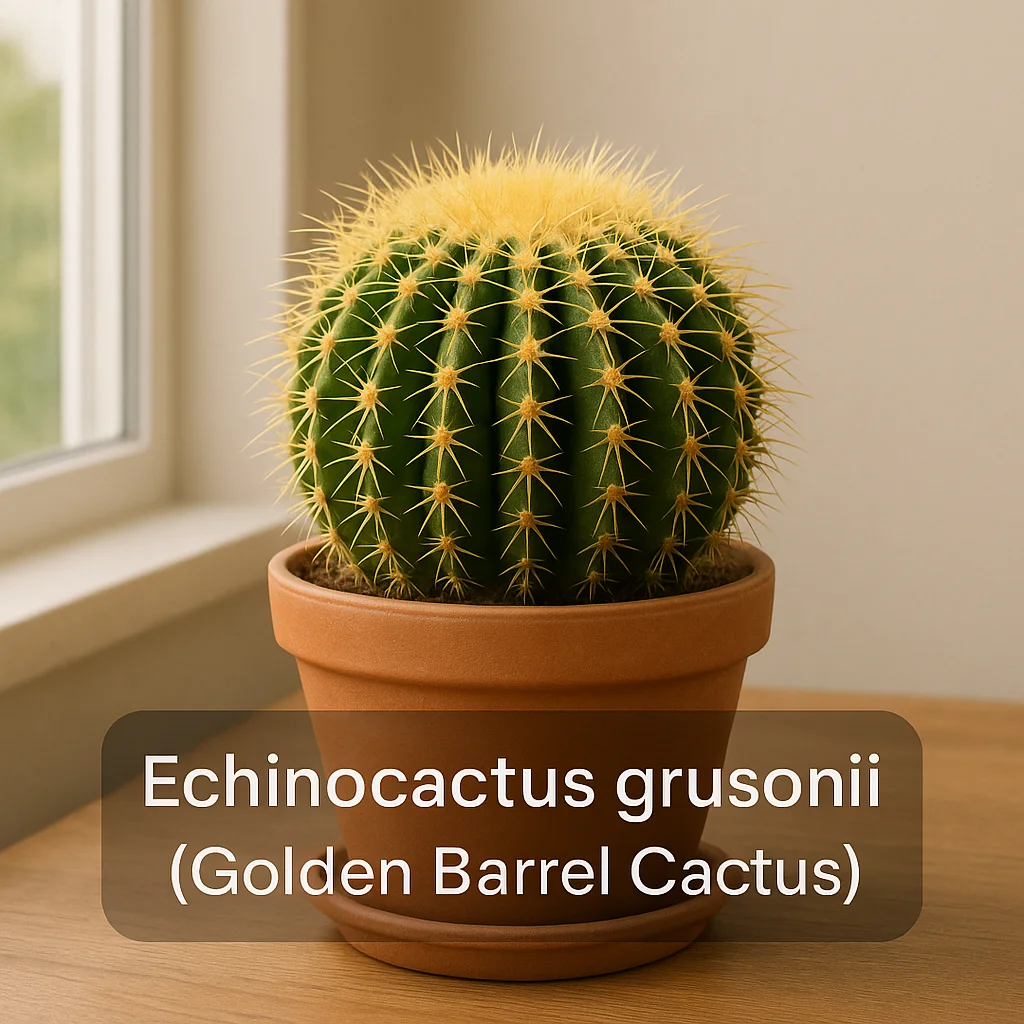
- Common names: Golden Barrel Cactus, Mother-in-law's Cushion
- Scientific name: Echinocactus grusonii
- Plant type: Cactus
- Growth habit: Upright
- Typical indoor size range: 1 to 2 feet tall and wide
- Growth speed: Slow
- Lifespan: Can live many years with proper care
- Origin: Central Mexico; arid deserts
- Light preference: Bright direct sunlight
- Water needs: Low; prefer periods of dryness
- Temperature & humidity preference: Warm, dry climates
- Pet safety: May be irritating to pets due to spines
- Difficulty: Easy for beginner cactus enthusiasts
🔍 Identification & Look-Alikes
The Golden Barrel Cactus is easily recognized by its geometric, round shape accented by prominent ribs lined with bright yellow spines. Its vibrant green body is sometimes partially hidden beneath a dense cushion of golden spines. Unlike many cacti that flower infrequently indoors, the Golden Barrel Cactus is grown mainly for its decorative form.
Although it is quite distinctive, you might confuse it with the Ferocactus genus or the closely related Echinocactus polycephalus. The easy way to distinguish them is by the spine arrangement and body coloration.
- Rounded, globe-like shape
- Prominent vertical ribs
- Bright yellow-gold spines
- Green body that varies with light exposure
- Rarely blooms indoors
- Similar cacti often have redder or denser spines
🌍 Origin & Natural Habitat
The Golden Barrel Cactus is native to the high deserts of Central Mexico, thriving best at elevations that offer plenty of sun and rapid dry-downs. These regions have distinct dry and wet seasons, influencing their care patterns indoors. This habitat knowledge helps us emulate similar conditions indoors, especially regarding light levels and watering schedules.
☀️ Light Requirements
Golden Barrel Cacti thrive in bright, direct sunlight. If your home lacks sufficiently sunny windows, supplementation with grow lights might be necessary to maintain their bright hue and compact form. Place them in south or west-facing windows for optimal exposure, but gradually acclimate them to indoor conditions to prevent sunburn.
Without adequate light, they may become elongated — a condition known as etiolation.
- Bright, direct light is crucial
- Best near south or west-facing windows
- Signs of too much light: sunburn or brown spots
- Signs of too little light: elongation or paler color
- Rotate regularly for even growth
- Supplement with grow lights if necessary
💧 Watering & Humidity
Golden Barrel Cacti prefer a soak-and-dry watering style. Allow the soil to dry completely between waterings, typically every 3-4 weeks in their active growth phase during the warmer months, less so in winter.
Avoid high humidity settings as they mimic dry desert conditions. Adjust your watering habits seasonally and based on the pot size and location.
Overwatering can lead to root rot while underwatering may show signs of shriveling.
- Water thoroughly, then let dry completely
- Increase water frequency in brighter, warmer seasons
- Avoid letting the plant sit in water
- Watch for signs of overwatering: limp or discolored bodies
- Underwatered cacti appear shriveled
- Generally low humidity required
🐛 Soil, Pot & Repotting
Golden Barrel Cactus requires a gritty, well-draining soil mix. Cactus or succulent soil blends are ideal, augmented with additional pumice or perlite for enhanced drainage.
Terra cotta pots are preferred, as these allow excess moisture to evaporate faster. Due to their slow growth, repotting is usually only necessary every 3-4 years, once signs of being rootbound are evident, such as slower growth or water pooling on the surface.
- Use well-draining cactus/succulent soil mix
- Terracotta pots with good drainage are ideal
- Repot when growth slows or roots become visible
- Handle gently to avoid spine damage
- Upsize pots conservatively
- Add more pumice for increased drainage
🌡️ Temperature, Airflow & Seasonal Care
The Golden Barrel Cactus prefers a stable, warm environment. While it handles average household temperatures well, it doesn't tolerate frost or cold drafts. Avoid placing them near air conditioning vents or drafty windows during winter.
In winter, reduce watering frequency as growth slows down significantly. When dormant, the cacti like it even drier, benefiting occasionally from a cooler ambient temperature similar to their natural habitat.
- Maintain warm, stable temperatures
- Avoid cold drafts or sudden temperature changes
- Less frequent watering in winter dormancy
- Monitor for deeply cooler rooms in winter
- Avoid placement near heaters
- Ensure consistent airflow without cold drafts
🌸 Flowers, Fruit & Growth Cycle
Golden Barrel Cacti rarely bloom indoors, as it requires specific conditions and maturity not typically met in household environments. In nature, blooms appear in spring but are often not witnessed indoors. They produce pale yellow blooms on their crown when exposed to sufficient sunlight and correct seasonal shifts.
Regular maintenance doesn’t involve much pruning beyond removing damaged spines to maintain health and aesthetics.
🧬 Propagation & Reproduction
Propagation of the Golden Barrel Cactus is possible through seed, although it is a slow process requiring patience and optimal conditions. Mature plants may occasionally produce offsets, which can be removed and potted separately after the mother plant reaches significant size.
This process is labor-intensive and typically not necessary for most indoor gardeners unless they aim to expand their personal collection significantly.
- Primarily propagated from seeds
- Offsets occasionally seen in mature plants
- Slow growth; patience is key
- Appropriate for experienced gardeners
- Monitor minimal seedlings before transplanting
🌿 Common Problems, Pests & Prevention
While hardy, the Golden Barrel Cactus can experience issues such as yellowing from overwatering or root rot. Pest issues mostly involve spider mites or mealybugs, more common in less ventilated spaces.
Promoting healthy plant practices such as dusting spines, ensuring good airflow, and avoiding waterlogged conditions will deter most common problems.
- Adequate airflow minimizes pest infestations
- Avoid compaction; check drainage & soil largesse
- Regularly inspect for signs of overwatering
- Quarantine new plants before introducing them
- Keep leaves free of dust to deter pests
- Ensure surface drying between waterings
🐾 Pet & Home Safety Notes
The Golden Barrel Cactus, due to its sharp spines, can be irritating or harmful to both pets and children. It is wise to place this cactus out of reach or in a location that naturally limits interaction, like high shelves or fenced-off plant areas.
If ingestion or contact with spines occurs, consult a professional or local poison control center. The cactus is otherwise non-toxic if simply admired without physical contact.
🏡 Styling Ideas & Best Room Placement
Owing to its striking form, the Golden Barrel Cactus makes a bold statement in minimalistic setups. Ideal placements include bright kitchen windowsills or spacious living area corners getting ample light.
Pair with taller or trailing plants like Snake Plants or String of Pearls to add differing heights and textures. Stand-alone in spaces with ample natural light, like offices, to emphasize its unique formality.
📌 Summary
- The Golden Barrel Cactus is distinctive with its bright spines and spherical shape
- Native to Central Mexico's deserts, appreciate dry conditions
- Requires bright light, preferably direct for consistent growth
- Water infrequently, allowing soil to dry completely
- Use a gritty, well-draining soil mix, and terracotta pots
- Maintain warm and dry temperatures, careful of drafts
- Propagation mainly from seed or occasional offsets
- Monitor for pests like spider mites or mealybugs
- Non-toxic but handle spines carefully
- Pairs well with other succulents or standalone in sunny positions