🌱 Gymnocalycium mihanovichii (Moon Cactus)
🧾 Quick Facts
The Moon Cactus, scientifically known as Gymnocalycium mihanovichii, is a popular choice among houseplant enthusiasts due to its unique appearance and relatively easy care requirements. Here is a quick overview:
- Common names: Moon Cactus, Hibotan, Red Cap Cactus
- Scientific name: Gymnocalycium mihanovichii
- Plant type: Cactus
- Growth habit: Typically grafted onto another cactus species
- Typical indoor size range: 2 to 3 inches tall
- Growth speed: Slow
- Lifespan: Can live many years with proper care
- Origin: South America (Argentina, Paraguay, Brazil)
- Light preference: Bright indirect light
- Water needs: Low, prefer drying out between waterings
- Temperature & humidity preference: Prefers warm, dry conditions
- Pet safety: Generally considered pet-friendlier
- Difficulty: Easy
🔍 Identification & Look-Alikes
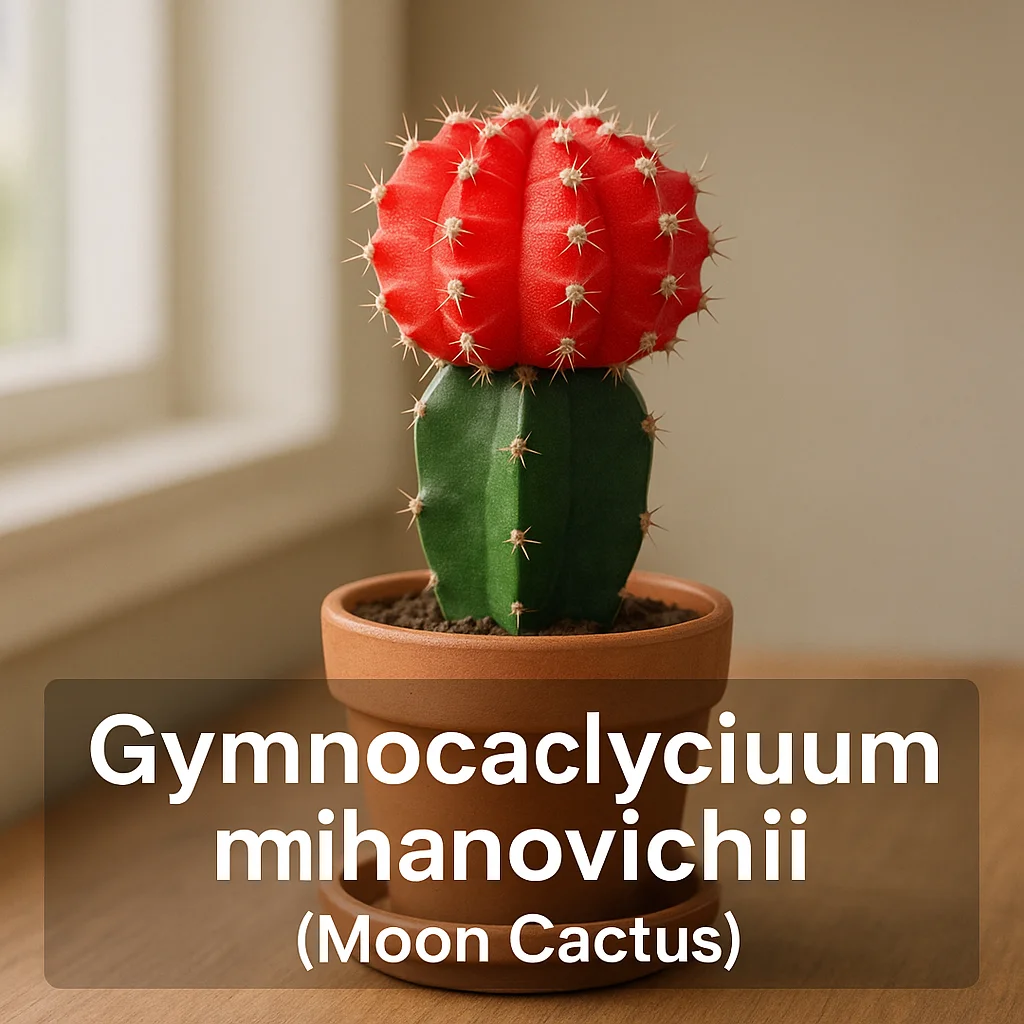
The Moon Cactus is easily recognizable by its vibrant, colorful top, often red, pink, or yellow, grafted onto a green host cactus. This grafting is necessary as the top part cannot produce chlorophyll on its own. The top's globe-like shape is adorned with small spines typical of cacti.
Common look-alikes include other types of grafted cacti and small succulents. However, the Moon Cactus's brightly colored top is a distinct feature that sets it apart.
- Round, ball-like top (often colorful) on a green base
- Small, thin spines covering the top
- Grafted onto another cactus, usually Hylocereus
- Variety of colors: red, pink, orange, yellow
- Compact size, typically 2-3 inches
- Smooth texture apart from spines
- Green, ribbed base cactus
- Non-flowering indoors
- Distinct from non-grafted cacti due to vivid colors
🌍 Origin & Natural Habitat
Gymnocalycium mihanovichii is native to parts of South America, specifically Argentina, Paraguay, and Brazil. These regions are characterized by warm, well-drained soil environments where the cacti grow naturally under the subtropical sun.
Understanding its natural habitat helps in replicating a suitable indoor environment, emphasizing the need for bright light and low humidity to mimic its dry, sunny origins.
☀️ Light Requirements
The Moon Cactus thrives best in bright indirect light. A north or east-facing window is ideal to provide sufficient light without the risk of sunburn, common in direct sunlight conditions.
Signs of insufficient light include faded colors or slow growth, while too much light might cause bleaching or crispy edges on the top. Adjust placement accordingly to maintain vibrant colors.
- Bright indirect light is ideal
- Avoid direct harsh sunlight
- North or east-facing windows work best
- Watch for fading colors or pale growth
- Check for browning on edges (too much sun)
- Rotate regularly for even growth
- Artificial lights can supplement natural light
- Monitor seasonal light variation
💧 Watering & Humidity
Water the Moon Cactus using the soak-and-drain method, allowing the soil to dry out completely before the next watering. This usually means watering about every few weeks, more frequently in warmer months and less during winter.
Low humidity is sufficient, typical of indoor environments. Overwatering can lead to root rot, while underwatering may cause shriveling.
- Water every 2-4 weeks, depending on environment
- Ensure soil is dry before rewatering
- Avoid waterlogged soil to prevent root rot
- Humidity: They prefer a dry atmosphere
- Watch for shriveling (underwatering sign)
- Consider season and indoor temperature changes
- Adapt watering frequency seasonally
- Pot size impacts water retention—larger pots may require less frequent watering
- Use well-draining, gritty soil
🐛 Soil, Pot & Repotting
A gritty, well-draining cactus mix is ideal for the Moon Cactus. Ensure the pot has adequate drainage holes to prevent water accumulation. The Moon Cactus is not fast-growing, meaning it rarely needs to be repotted.
Repotting is necessary only when the base plant becomes rootbound or shows signs of distress. Repot gently to avoid disturbing the root system, and consider only a slight increase in pot size.
- Use cactus or succulent-specific soil mix
- Ensure pots have excellent drainage
- Terracotta pots can help wick away moisture
- Repot only when rootbound, usually every few years
- Choose a pot size only slightly larger when repotting
- Avoid compacting the soil when potting
- After repotting, wait a week before watering
- Signs for repotting include roots through drainage holes
- Repot carefully to preserve the fragile grafted top
🌡️ Temperature, Airflow & Seasonal Care
The Moon Cactus prefers temperatures between 65°F to 80°F (18°C to 27°C). Protect it from drafts, sudden temperature changes, and cold conditions below 50°F (10°C). The plant naturally enters a slower growth phase during cooler months which requires less frequent watering.
- Maintain stable temperatures between 65-80°F
- Avoid exposure to sudden temperature changes
- Keep away from cold drafts or heat vents
- During winter, reduce watering frequency significantly
- Avoid temperatures below 50°F to prevent damage
- Consider using a fan for gentle air circulation
- Minimize handling during the dormant season
- Be attentive to seasonal light changes
🌸 Flowers, Fruit & Growth Cycle
The Moon Cactus rarely flowers indoors. Its main decorative feature is the colorful, grafted top rather than blooms. The growth pattern is consistent, focusing on maintaining the vivid hue of the top part. Prune any withered or damaged parts and keep the base clean to prevent pests and decay.
🧬 Propagation & Reproduction
Propagation is typically not done by home growers due to the delicate and specific grafting process required to produce the Moon Cactus. Generally, young plants are commercially grafted onto rootstocks like Hylocereus as the top lacks chlorophyll.
- Primarily propagated through commercial grafting
- Not recommended for home propagation due to complexity
- The colorful top cannot survive without a graft
- Specialized knowledge needed for successful grafting
- Most home propagation attempts lead to failure
🌿 Common Problems, Pests & Prevention
Common issues include yellowing due to overwatering, while pests like spider mites and mealybugs may occasionally infest the plant. Prevent these with regular maintenance, including cleaning and checking the plant, maintaining good airflow, and practicing proper watering techniques.
- Avoid yellowing from overwatering
- Pests include spider mites and mealybugs
- Check the plant regularly for signs of infestations
- Maintain cleanliness and stable watering practices
- Encourage good airflow around the plant
- Quarantine new plants to prevent pest spread
- Avoid stressing the plant with rapid changes
- Remove pests manually or with non-toxic solutions
- Preventive care is the best defense against issues
🐾 Pet & Home Safety Notes
The Moon Cactus is generally considered a safe houseplant around pets. However, curious pets might be pricked by the spines. It is advisable to place the cactus out of reach or in a location where pets are less likely to disturb it. In case of ingestion or irritation, contact a professional or local poison control resources.
🏡 Styling Ideas & Best Room Placement
The compact and colorful nature of the Moon Cactus makes it ideal for bright areas in kitchens, living rooms, or offices where space is limited. It pairs well with other succulents and small decorative low-maintenance plants. Consider placing it on windowsills, shelves, or as part of a succulent display.
The Moon Cactus adds a vibrant pop of color regardless of room style, and its minimal care needs make it an excellent option for beginners or busy plant owners.
📌 Summary
- Recognizable by its colorful, grafted top and green base
- Originated from South America, prefers warm, dry environments
- Thrives in bright indirect light, avoid direct sunlight
- Water infrequently, ensuring soil is dry between waterings
- Grows well in gritty, well-draining cactus soil
- Maintain a temperature range of 65°F to 80°F
- Propagation by grafting is complex and not suitable for home gardeners
- Pests like spider mites possible, maintain regular care and checks
- Considered pet-friendly, minimal handling required
- Suits small spaces and adds a bright accent to any room