🌱 Mammillaria elongata (Ladyfinger Cactus)
🧾 Quick Facts
The Mammillaria elongata, commonly known as the Ladyfinger Cactus, is a distinctive and popular species of cactus admired for its elegance and ease of care. Below are some quick facts to familiarize you with this charming houseplant.
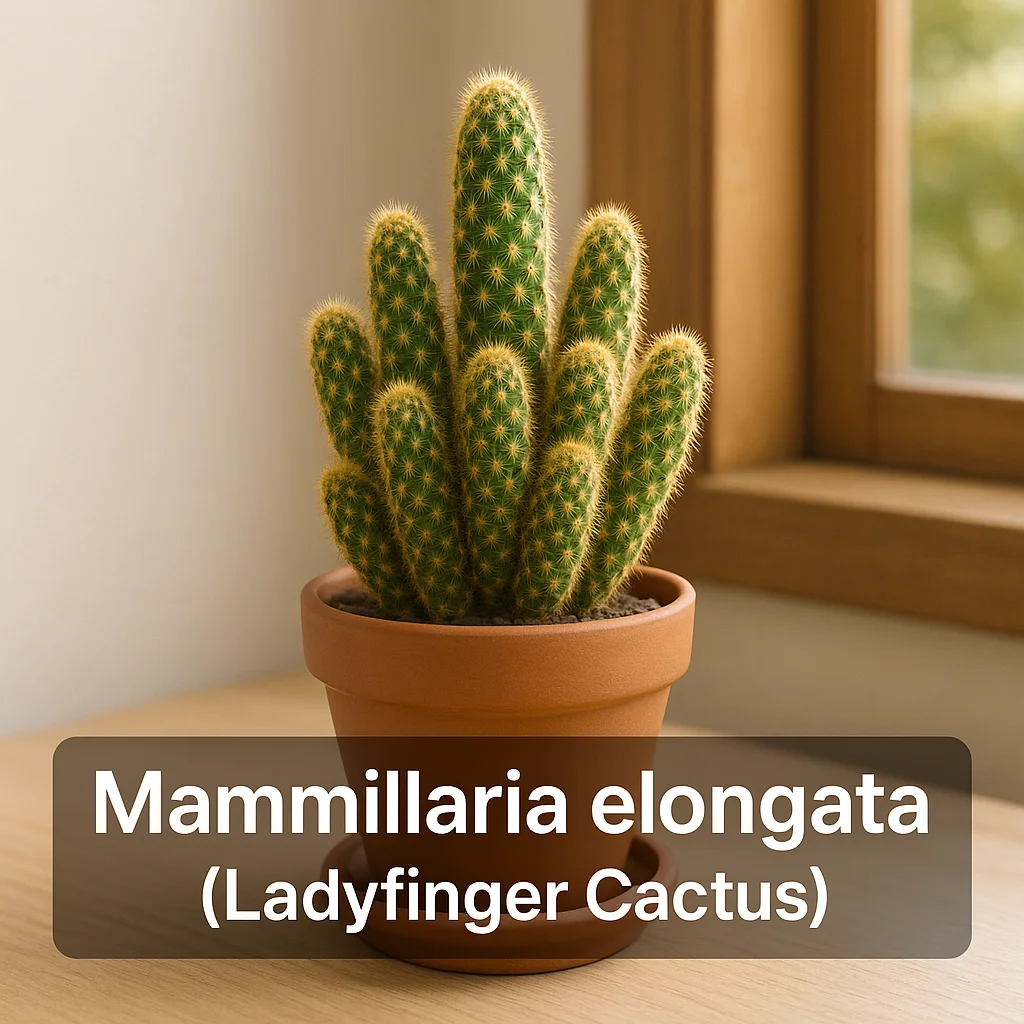
- Common names: Ladyfinger Cactus, Gold Lace Cactus
- Scientific name: Mammillaria elongata
- Plant type: Cactus
- Growth habit: Upright with clustering stems
- Typical indoor size: 4–12 inches tall, clusters spread up to 12 inches
- Growth speed: Slow
- Lifespan: Can live many years with proper care
- Origin: Central Mexico; arid regions
- Light preference: Bright indirect to direct sun
- Water needs: Low; prefers to dry out between waterings
- Temperature & humidity preference: Prefers warm, arid environments
- Pet safety: May be irritating to pets
- Difficulty: Easy
🔍 Identification & Look-Alikes
The Mammillaria elongata is known for its distinctive clustering of cylindrical stems covered in golden or white spines. Often, these clusters resemble fingers, contributing to its common name. The spines are dense and give an illusion of a soft texture, though they are quite sharp. The overall color can range from green to a rusty hue, heavily influenced by sunlight exposure.
While it can produce small pink or yellow flowers in ideal conditions, it is primarily grown for its unique and attractive stem structure.
Look-alikes include other members of the Mammillaria genus and small cacti like the Golden Barrel Cactus (Echinocactus grusonii), but the Ladyfinger Cactus is easily distinguished by its clustering, finger-like growth habit.
- Top ID Tips:
- Look for clustered cylindrical stems
- Golden or white spines
- Dense spine coverage gives a "fuzzy" appearance
- Green to rusty stem color
- Produces small flowers under ideal conditions
- Grows in a more upright, cylindrical pattern
- Resembles fingers or cylinders in a bundle
- Often found in small groups of "fingers"
🌍 Origin & Natural Habitat
Native to the central regions of Mexico, the Mammillaria elongata thrives in rocky, arid environments. These areas are characterized by their dry climate and well-draining soils. In the wild, the cactus grows on rocky outcrops, often exposed to full sun and periodic drought conditions.
Understanding the natural habitat of the Ladyfinger Cactus can enhance indoor care, suggesting a preference for sunny, dry locations and a well-draining potting medium.
☀️ Light Requirements
The Ladyfinger Cactus thrives in bright indirect light and can tolerate some direct sunlight. Ideally, it should be placed near a south-facing window where it can receive ample light throughout the day. In low-light conditions, the cactus may experience slowed growth and elongated stems as it stretches toward the light.
Ensure that the cactus is not exposed to harsh midday sun without gradual acclimation, to prevent sunburn.
- Place near a bright window, south-facing if possible
- Bright indirect light is optimal
- Acclimate slowly to direct sun exposure
- Watch out for signs of sunburn (bleaching spots)
- If growth slows or elongates, it may need more light
- Rotate occasionally to promote even growth
- Avoid prolonged periods of low light
💧 Watering & Humidity
Water the Mammillaria elongata using a soak-and-drain method, ensuring the soil dries out completely between waterings. During the growing season (spring to early fall), water when the top inch of soil feels dry. In winter, water sparingly, as the plant enters dormancy and requires less moisture.
Humidity is generally not a concern for this cactus, as it is well adapted to arid environments. In overly humid conditions, ensure good airflow to prevent fungal issues.
- Use soak-and-drain watering technique
- Allow soil to dry out between waterings
- Reduce watering frequency in winter dormancy
- Avoid letting the plant sit in water
- Low humidity is preferable
- Signs of overwatering include mushy stems
- Underwatering signs include shriveling stems
- Increase airflow in humid rooms
🐛 Soil, Pot & Repotting
The ideal soil for Mammillaria elongata is a well-draining cactus or succulent mix. Add additional perlite or pumice to improve drainage if needed. Containers with drainage holes are essential to prevent water accumulation.
Repot the cactus every 2-3 years or when signs of being rootbound appear, such as slow growth or water quickly draining through. Choose a pot slightly larger than the current one.
Repotting is best done in spring, gently removing the plant from its pot and shaking off excess soil, then replenishing soil with a fresh mix.
- Use a cactus or succulent soil mix
- Enhance drainage with added perlite or pumice
- Choose pots with drainage holes
- Repot every 2-3 years or when rootbound
- Aim to repot in early spring
- Gently remove old soil from roots
- Be cautious with spines when handling
- Monitor for signs of root rot
🌡️ Temperature, Airflow & Seasonal Care
The Ladyfinger Cactus prefers temperatures between 70-80°F (21-27°C) but can tolerate cooler environments down to 50°F (10°C). Avoid cold drafts and sudden temperature fluctuations. During winter months, growth naturally slows, and the cactus requires less water and no feeding.
- Maintain temperatures of 70–80°F (21–27°C)
- Protect from drafts and sudden temperature changes
- In winter, reduce water and feeding
- Provide steady airflow to prevent mold
- Avoid placing near heat vents or ac units
- Watch for cold damage in cooler months
- Adjust care routines seasonally
🌸 Flowers, Fruit & Growth Cycle
Although the Ladyfinger Cactus can flower indoors, it requires optimal conditions such as enough sunlight and a proper temperature range to do so. The flowers, when they appear, are small, pink to pale yellow, and bloom in spring. Fruiting is uncommon indoors.
This cactus grows by slowly producing new stem segments and can form tight clusters over time. It doesn’t require pruning, but spent flowers can be gently removed to maintain appearance.
🧬 Propagation & Reproduction
Mammillaria elongata propagates easily by separating offsets or "pups" which cluster around the base of the plant. To propagate, carefully twist or cut the offset close to the main stem and allow the cut to dry for several days before planting in a separate pot with a well-draining mix.
- Propagate using offsets or pups
- Separate offsets with minimal disturbance
- Allow cut ends to callous before planting
- Use a cactus soil mix for planting offsets
- Propagation is best done in spring or early summer
- Avoid cutting the main stems
- Healthy offsets are signs of good plant health
🌿 Common Problems, Pests & Prevention
The Ladyfinger Cactus is susceptible to typical pests such as spider mites, mealybugs, and scale. Regular inspection and cleaning of the plant can help minimize infestations. Common problems include yellowing or mushy stems from overwatering and etiolation due to insufficient light.
Preventing these issues involves ensuring proper watering techniques, providing enough light, and maintaining good airflow. If pests are detected, they can often be managed with non-toxic methods like manual removal and regular cleaning.
- Check regularly for pests like spider mites
- Keep leaves clean and free of debris
- Ensure proper light levels to prevent stretching
- Avoid overwatering to prevent root rot
- Promote good airflow around the plant
- Address signs of stress early to prevent escalation
- Practice general plant hygiene
- Isolate new plants briefly to prevent pest spread
🐾 Pet & Home Safety Notes
While the Mammillaria elongata is not highly toxic, the spines can cause irritation if touched or ingested by pets or children. It is best placed out of reach to avoid accidental contact. If the plant is ingested, monitor for any signs of discomfort and consult a professional or local poison control resources if needed.
🏡 Styling Ideas & Best Room Placement
Owing to its attractive form, the Ladyfinger Cactus can be placed as a focal point in a bright living room or kitchen. It also fits well on sunny windowsills or combined with other succulents in a display. Hanging baskets or elevated stands help display its form elegantly.
- Bright living rooms and kitchens are ideal
- A great addition to sunny windowsills
- Pairs well with other succulents in a display
- Consider elevated stands for visual interest
- Can add a focal point to bright rooms
- Suitable for offices with ample light
- Complement with similar care-level plants
📌 Summary
- Distinctive finger-like clusters, covered in spines
- Originates from arid regions of central Mexico
- Thrives in bright indirect to direct sunlight
- Low water needs; allow soil to dry between watering
- Prefers well-draining cactus soil mix
- Can tolerate overwatering if provided drainage
- Propagates easily through offsets
- Tolerates a variety of indoor temperatures
- Keep away from cold drafts and extreme temperature changes
- Easy care plant; watch for common pests
- Consider pet and child safety, keeping it out of reach
- Ideal for bright and airy spaces