🌱 Myrtillocactus geometrizans (Blue Myrtle Cactus)
🧾 Quick Facts
The Myrtillocactus geometrizans, commonly known as the Blue Myrtle Cactus, is a striking cactus species cherished by indoor plant enthusiasts for its unique columnar structure and blue-green hue. Below are some quick facts about this captivating plant.
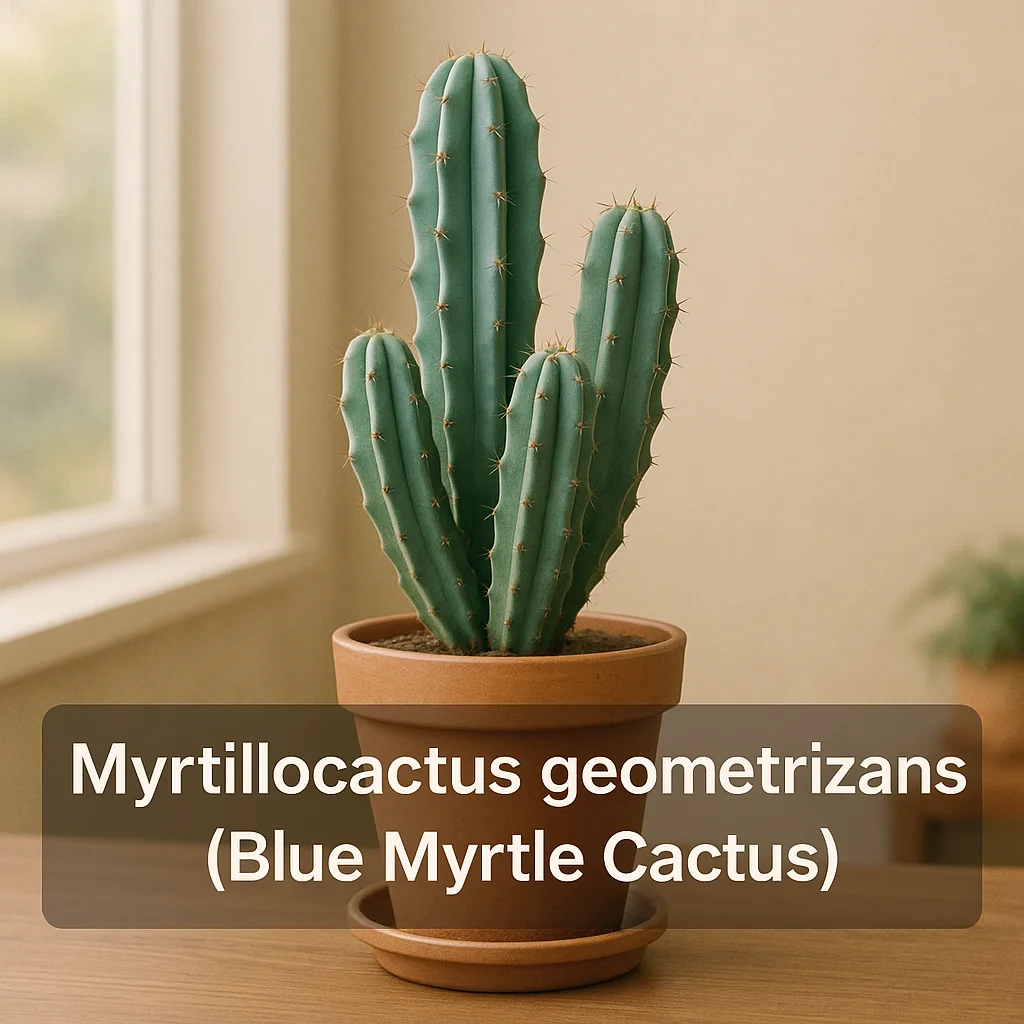
- Common names: Blue Myrtle Cactus, Bilberry Cactus
- Scientific name: Myrtillocactus geometrizans
- Plant type: Cactus
- Growth habit: Upright, columnar
- Typical indoor size range: 2 to 6 feet tall
- Growth speed: Moderate
- Lifespan: Can live many years with proper care
- Origin: Mexico, deserts
- Light preference: Bright indirect to direct sunlight
- Water needs: Low; prefers to dry out between waterings
- Temperature & humidity preference: Warm temperatures; low to average humidity
- Pet safety: May be mildly irritating to pets if ingested
- Difficulty: Easy to medium
🔍 Identification & Look-Alikes
The Blue Myrtle Cactus is easily recognizable by its unique columnar shape and striking blue-green color. Its stems have a slightly ribbed texture and are adorned with small, evenly spaced areoles from which spines may emerge. Typically, the plant does not bloom indoors, and it's primarily cultivated for its foliage and architectural appeal.
Common look-alikes include other columnar cacti such as the Cereus Peruvianus (Peruvian Apple Cactus). However, the Myrtillocactus geometrizans usually has a distinctly blue-green hue, setting it apart from other greener columnar cacti.
- Look for the distinctive blue-green coloration.
- Notice the upright, columnar growth habit.
- Check for ribbed stem textures with small areoles.
- Distinguish based on spine length and distribution.
- Observe the overall architectural shape, lacking dense foliage or branches.
- Note the thick, waxy stem coating that may appear during drought conditions.
- Does not flower often indoors.
- Differentiate by absence of visible branches in youth.
- Check the base diameter, which typically remains consistent along the column.
🌍 Origin & Natural Habitat
The Myrtillocactus geometrizans is native to the arid regions of central and northern Mexico. It thrives in desert climates, where it grows on rocky, well-draining terrain. Understanding its natural habitat underscores the cactus's preference for bright light and well-draining soils, making it ideal for sunny indoor spaces.
In its native environment, the cactus undergoes seasonal changes, adjusting to wet and dry periods. Mimicking these conditions indoors can help maintain the plant’s health and growth.
☀️ Light Requirements
The Blue Myrtle Cactus thrives in bright light, making it well-suited for windowsills that receive plenty of sunlight. Ideally, a south- or west-facing window can provide sufficient light, but it should be protected from intense midday sun to prevent scorching.
Bright indirect light is akin to placing the plant several feet away from a sunny window, ensuring it receives ample but not harsh light. Signs of inadequate lighting include pale coloration and sluggish growth, while too much light may cause browning or burns on the stems.
- Position near a south or west-facing window.
- Avoid direct midday sun to prevent scorching.
- Rotate periodically for even growth.
- Supplement with grow lights if necessary.
- Watch for signs of light deficiency like stretching.
- Ensure consistent lighting patterns year-round.
- Adjust positioning seasonally as light availability changes.
- Filter strong light with sheer curtains if needed.
💧 Watering & Humidity
The Blue Myrtle Cactus has low water requirements and should be watered using the "soak and dry" method. Allow the soil to dry out completely between waterings, which will vary based on season and pot size. Overwatering is a common mistake and can lead to root rot, while underwatering is less frequent but may cause shriveling.
This cactus tolerates low humidity environments typical of indoor conditions, and there's generally no need to increase humidity beyond normal household levels.
- Use the soak-and-dry method consistently.
- Avoid watering if soil remains damp.
- Adjust frequency in winter dormancy (reduce watering).
- Check for shriveling, indicating underwatering.
- Ensure pots have drainage holes.
- Avoid letting plants sit in excess water.
- Consider pot material; terracotta can facilitate drying.
- Use caution in adjusting humidity; not typically necessary.
- Monitor the weight of the pot for moisture clues.
🐛 Soil, Pot & Repotting
For optimum growth, plant the Myrtillocactus geometrizans in a cactus or succulent soil mix that is well-aerated and well-draining. A pot with good drainage is essential. Consider using terracotta pots as they allow for moisture evaporation, which is beneficial for this plant type.
Repotting is only necessary when the plant becomes root-bound or when growth appears significantly slowed. Typically, a conservative size increase is sufficient, and repotting should ideally occur during spring or early summer.
- Choose a well-draining cactus mix.
- Ensure pots have ample drainage holes.
- Repot every 2-3 years or when root-bound.
- Repot during the active growth period (spring/summer).
- Opt for terracotta over plastic for better airflow.
- Check for roots growing through drainage holes as a cue to repot.
- Handle roots gently to avoid damage.
- Use fresh soil with each repotting to ensure nutrient availability.
- Consider a pot size 1-2 inches larger with each repot.
🌡️ Temperature, Airflow & Seasonal Care
The Blue Myrtle Cactus prefers indoor temperatures ranging from 65°F to 85°F (18°C to 29°C). Sudden temperature shifts, such as direct drafts from air conditioning or heating vents, should be avoided. This cactus can endure brief drops in temperature but thrives best in stable conditions.
Expect slower growth during the winter months; adjust watering and light exposure accordingly, as plants enter a dormant phase and conserve energy and resources.
- Maintain temperature above 50°F (10°C).
- Avoid placing in direct pathways of drafts.
- Be mindful of heaters and AC units impacting nearby plants.
- Reduce water in winter dormancy.
- Adjust exposure if light intensity changes seasonally.
- Ensure good airflow but avoid cold drafts.
- Keep away from frequently opened exterior doors.
🌸 Flowers, Fruit & Growth Cycle
While the Myrtillocactus geometrizans may bloom indoors rarely, it can produce dense clusters of small, white flowers in its natural environment, usually during the late spring and summer months. These blooms give way to small, edible berries known as “garambullos.” Indoor fruiting is uncommon, and the primary focus remains its pleasing structural form.
The cactus generally follows a seasonal growth cycle, with new growth emerging in the spring and summer. Pruning is minimal and focuses on removing any damaged areas or encouraging a particular shape, with clean cutting tools to mitigate plant distress.
🧬 Propagation & Reproduction
The Blue Myrtle Cactus can be propagated through stem cuttings. Carefully remove a section of the cactus and allow the cut end to callous over for a few days before planting in a well-draining soil mix. Propagation by seed is possible but takes more time and patience.
- Use a sharp, sterilized knife for cuttings.
- Allow cut ends to dry completely before planting.
- Plant cuttings in shallow depths for stability.
- Water sparingly until roots develop.
- Avoid high humidity during initial propagation.
- Seed propagation requires warm temperatures and consistent light.
- Monitor for root establishment by gentle tugs.
- Consider propagation during the active growth period.
- Protect young plants from intense light.
🌿 Common Problems, Pests & Prevention
The Blue Myrtle Cactus is generally hardy but can encounter problems such as yellowing stems, which may indicate overwatering, or pests like spider mites and mealybugs. Regular maintenance, such as inspecting for pests and ensuring stable care, is crucial.
Prevent issues by quarantining new plants, regularly wiping dust off the stems, and maintaining a consistent environment. If faced with pest infestations, seek non-chemical solutions or consult professionals for safe guidance.
- Regularly check for pest activity.
- Maintain consistent watering schedules.
- Ensure proper drainage to prevent root rot.
- Use physical barriers to keep pests at bay.
- Avoid abrupt changes in environmental conditions.
- Keep stems clean and free of dust.
- Use non-toxic preventative measures where appropriate.
- Consider bi-weekly inspections for signs of distress.
🐾 Pet & Home Safety Notes
While the Myrtillocactus geometrizans is not considered highly toxic, its sap can be irritating if ingested by pets or children. Place the plant out of reach, add barriers, or train pets to avoid it. In case of ingestion, consulting a professional or poison control is advised.
The cactus's spiny exterior also poses a mild physical hazard, and caution should be taken to ensure it is situated safely in homes with active children or pets.
🏡 Styling Ideas & Best Room Placement
The Blue Myrtle Cactus can complement modern decor with its striking silhouette and unique coloration. It thrives in areas where it can receive ample sunlight, such as living rooms or home offices with large windows. Consider placing it in a decorative pot to accent its vibrant color.
The cactus can pair beautifully with other succulents in an arrangement, or as a standalone architectural feature in a minimalistic space. It is also ideal for entryways where it can bask in full light and contribute to a welcoming environment.
📌 Summary
- The Blue Myrtle Cactus is defined by its blue-green columnar form.
- Native to the arid regions of Mexico, it thrives in bright, direct light.
- Use the soak-and-dry method for watering, allowing the soil to dry thoroughly between applications.
- Plant in well-draining cactus mixes and opt for terracotta for enhanced airflow.
- Maintain temperatures above 50°F (10°C) and reduce watering in winter.
- Propagation is effective through stem cuttings, allowing callous formation.
- Pests like spider mites and mealybugs should be monitored and prevented.
- Its spines can pose a mild hazard, warranting careful placement in homes with pets or children.
- Considered easy to medium in terms of care difficulty, it excels when basic cactus care requirements are met.