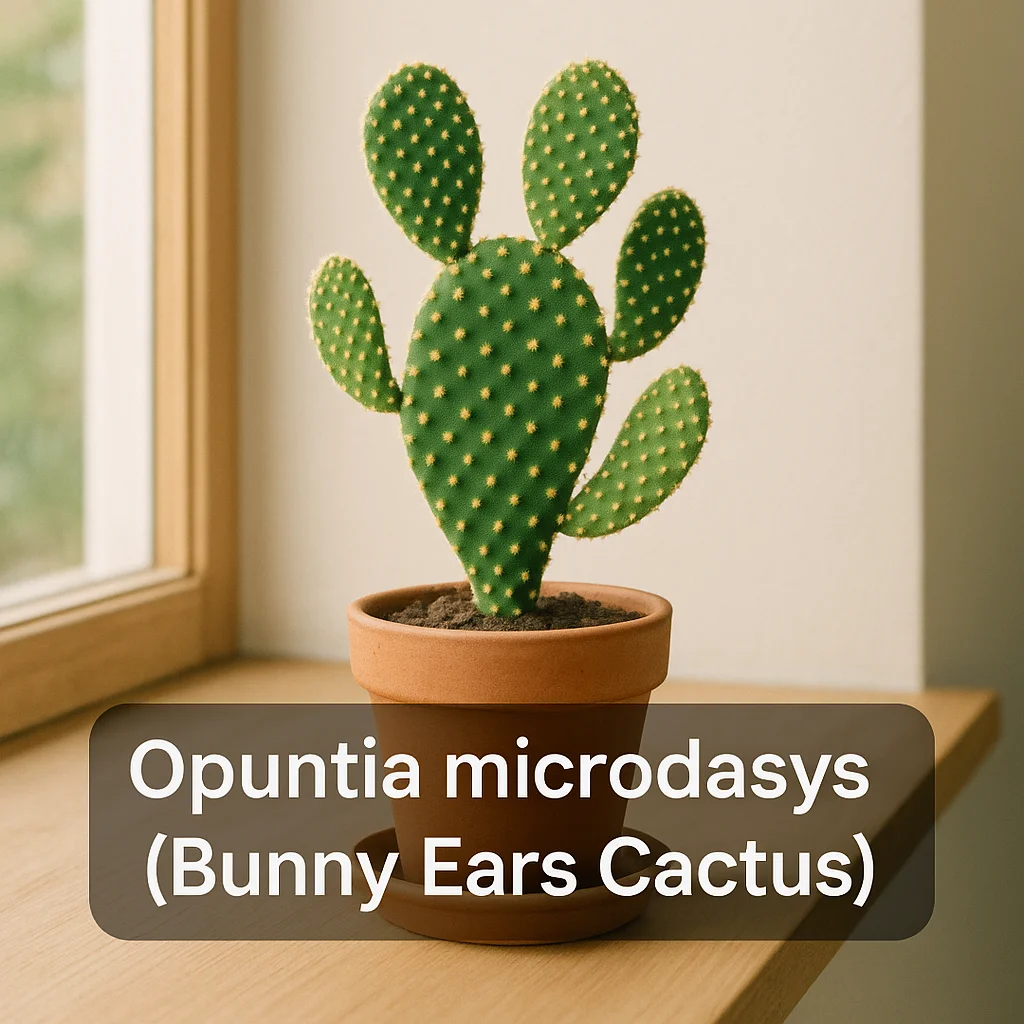
🌱 Opuntia microdasys (Bunny Ears Cactus)
🧾 Quick Facts
The Opuntia microdasys, commonly known as the Bunny Ears Cactus, is a delightful addition to any indoor plant collection. Known for its unique appearance and easy care, this cactus can provide a touch of desert charm to your home.
- Common names: Bunny Ears Cactus, Polka Dot Cactus
- Scientific name: Opuntia microdasys
- Plant type: Cactus
- Growth habit: Upright, pad-like structures
- Typical indoor size range: 12–24 inches in height and spread
- Growth speed: Moderate
- Lifespan: Can live many years with proper care
- Origin: Central Mexico
- Light preference: Bright indirect light; tolerates direct sun
- Water needs: Low; prefer to dry out completely between watering
- Temperature & humidity preference: Warm, dry conditions
- Pet safety: May be irritating to pets due to glochids
- Difficulty: Easy
🔍 Identification & Look-Alikes
The Bunny Ears Cactus is easily recognized by its pad-like segments, which resemble rabbit ears. Each pad is covered with small, tufty glochids instead of spines, which can cause irritation. Typically, the pads are bright green, and some specimens may have a slight reddish tint when exposed to strong sunlight. This is a non-flowering cactus when grown indoors.
While the Opuntia microdasys might be confused with other prickly pears, it lacks the long spines and prominent flowers found on other species.
- Bright green pads with no central stem
- Tufty yellowish-white glochids instead of spines
- Usually remains with two to three pairs of 'ears'
- Compact, spreading habit
- Slight reddish tint on pads with high sun exposure
- Non-flowering indoors
🌍 Origin & Natural Habitat
The Bunny Ears Cactus is native to the desert regions of Central Mexico. It thrives in arid environments with sandy, well-drained soils. Its natural habitat consists of rocky landscapes and open plains, where it can receive ample sunlight and occasional rainfall.
Understanding its origin helps indoor gardeners replicate the dry, bright conditions it thrives in, enhancing its growth as a houseplant.
☀️ Light Requirements
Place your Bunny Ears Cactus in a location with bright indirect light. South or west-facing windows are ideal, but ensure it's not exposed to harsh midday sunlight directly through glass, which could scorch the pads. If the cactus is stretching or losing color, it may indicate inadequate light.
- Position near a south or west-facing window
- Bright indirect light preferred; tolerates morning direct sun
- Avoid prolonged exposure to intense afternoon sun
- Look for reddish tints as a sign of too much light
- If pads fade or stretch, increase light exposure
- Rotate plant regularly for even light distribution
💧 Watering & Humidity
The Bunny Ears Cactus thrives on the soak-and-dry method. Allow the soil to dry out completely between waterings, which may mean watering every 2–4 weeks depending on the indoor climate. Use a pot with drainage to prevent water from accumulating. The dry indoor air typical of homes suits this cactus, so additional humidity is not needed.
- Water deeply, then allow soil to dry completely
- Less frequent watering in winter
- Use pots with drainage holes
- Signs of underwatering: shriveled pads
- Signs of overwatering: mushy pads and root rot
- No additional humidity required; prefers dry air
🐛 Soil, Pot & Repotting
A well-draining cactus or succulent soil is essential for the Bunny Ears Cactus. Use a pot with ample drainage holes to prevent waterlogged roots. Repotting every two years or when the cactus appears rootbound is advisable. Gently remove old soil from roots and replace it with fresh mix, using a slightly larger pot if necessary.
- Use cactus or succulent potting mix
- Ensure pot has several drainage holes
- Repot every 2 years or if rootbound
- Gently remove soil without damaging roots during repotting
- Choose pots that are slightly larger than previous
- Avoid burying pads too deeply during repotting
🌡️ Temperature, Airflow & Seasonal Care
The Bunny Ears Cactus prefers warm conditions, enjoying temperatures between 70°F and 100°F. It can tolerate cooler temperatures down to about 50°F, but avoid sudden drafts and cold exposure. During winter months, reduce watering frequency as growth slows.
- Ideal temperature range: 70°F to 100°F
- Keep away from cold drafts and vents
- Slow growth in winter; reduce watering
- Protect from frost; it's not frost-tolerant
- Ensure good airflow to prevent moisture accumulation
🌸 Flowers, Fruit & Growth Cycle
Indoors, the Bunny Ears Cactus typically does not flower, focusing its efforts on producing new pads. These pads grow in succession, giving the plant an adorable ear-like appearance. In its natural environment, it may produce small yellow flowers followed by fig-like fruits.
- Flowers rarely indoors
- New growth emerges as pad-like segments
- Pruning not typically required
- Remove damaged pads with clean cuts to prevent pests
🧬 Propagation & Reproduction
Propagation of the Bunny Ears Cactus is best done through pad cuttings. Carefully remove a healthy pad, let it callous over for a few days, then plant it in well-draining soil. Water sparingly until new growth appears. This cactus does not proliferate through seeds or divisions indoors.
- Propagation by pad cuttings
- Allow cut pads to callous before planting
- Use a well-draining mix for new cuttings
- Sparingly water after planting
- Observe new growth as a sign of successful rooting
🌿 Common Problems, Pests & Prevention
While generally hardy, the Bunny Ears Cactus can suffer from yellowing due to overwatering or inadequate sun. Common pests include spider mites and mealybugs, which can be managed by keeping the plant in optimal health and cleaning pads with a soft, slightly damp cloth.
- Prevent yellowing by moderating water and increasing light
- Watch for spider mites and mealybugs
- Quarantine new plants to prevent pest introduction
- Regularly clean pads to maintain surface health
- Avoid excessive handling to prevent glochid irritation
- Maintain stable care routines
🐾 Pet & Home Safety Notes
The glochids of the Bunny Ears Cactus may cause skin irritation upon contact. While not highly toxic, it's best to keep this cactus out of reach of small children and pets who might be tempted to touch or ingest its parts. If ingestion or significant irritation occurs, seek professional advice or contact local poison control resources for guidance.
Consider placing the cactus on high shelves or using barriers to deter curious pets.
🏡 Styling Ideas & Best Room Placement
Ideal for sunlit areas, the Bunny Ears Cactus brings a touch of the desert to living rooms or offices. It pairs well with other low-water plants such as jade plants and snake plants. Avoid placing it in places of high traffic due to its irritant glochids. A minimalistic pot on a sturdy shelf provides an appealing contrast to its whimsical form.
📌 Summary
- Recognized by bright green, tufted pads
- Native to arid regions of Central Mexico
- Prefers bright indirect light, tolerates some direct sun
- Water infrequently, allowing a full dry-out between
- Thrives in well-draining cactus soil with proper airflow
- Grows best in warm, dry indoor environments
- Propagated by pad cuttings; easy for home growers
- Common pests include spider mites and mealybugs
- Generally considered easy to care for
- Keep out of reach of pets and children due to glochids