🌱 Schlumbergera bridgesii (Christmas Cactus)
🧾 Quick Facts
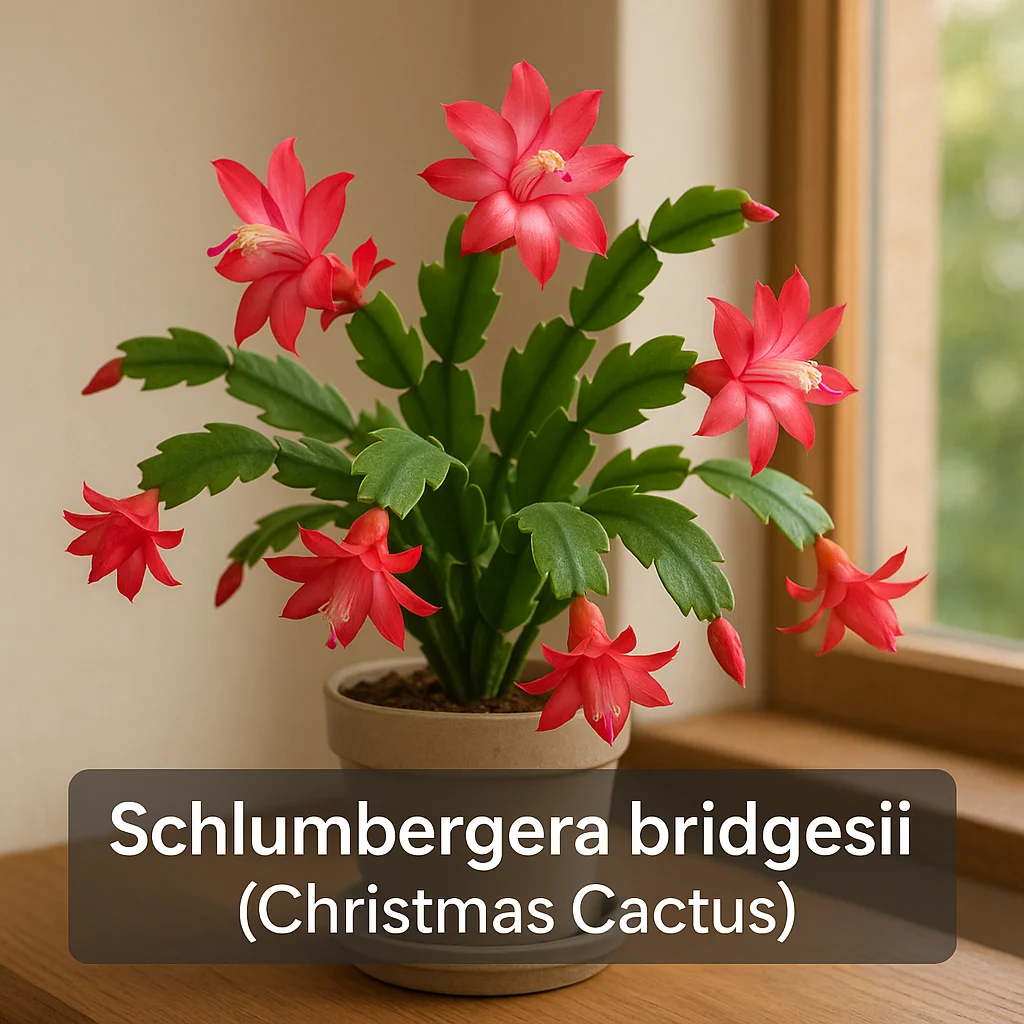
The Schlumbergera bridgesii, commonly known as the Christmas Cactus, is a favorite among houseplant enthusiasts for its vibrant flowers and unique leaf structure. Known for its moderate care demands and captivating blooms, it is a fantastic addition to any indoor space, especially during the holiday season.
- Common names: Christmas Cactus, Holiday Cactus
- Scientific name: Often sold as Schlumbergera bridgesii
- Plant type: Flowering cactus
- Growth habit: Trailing
- Typical indoor size: 1–2 feet height, 1–2 feet spread
- Growth speed: Moderate
- Lifespan: Can live many years with proper care
- Origin: Brazil, found in cloud forests
- Light preference: Bright indirect light
- Water needs: Moderate, prefers to dry out slightly between waterings
- Temperature & humidity preference: Prefers warm temperatures and high humidity
- Pet safety: Generally considered pet-safe, but avoid ingestion
- Difficulty: Medium
🔍 Identification & Look-Alikes
Recognizing the Christmas Cactus involves observing its distinctive leaf structure and blooms. The leaves are flattened, with a smooth texture and crenellated edges. They drape over the pot, forming a cascading habit. During the blooming period, it produces vibrant tubular flowers in shades of pink, red, and white. While it might resemble the Thanksgiving Cactus (Schlumbergera truncata), you can tell them apart by the Christmas Cactus's rounded leaf edges versus the pointed edges of the Thanksgiving variety.
- Flat, segmented leaves with smooth, scalloped margins
- Typically drapes over the pot in a cascade
- Bears bright tubular flowers, usually pink or red
- Leaves are generally more rounded compared to the Thanksgiving Cactus
- Stems are green, with no thorns as seen in traditional cacti
- Flowers typically appear at the tips of segments
- Most common during the holiday season, complementing festive decor
- Keep an eye for leaf texture—smooth and glossy
🌍 Origin & Natural Habitat
The Christmas Cactus hails from the Brazilian cloud forests where it grows as an epiphyte, attached to trees and rocks in humid, shaded environments. This natural habitat is characterized by warm temperatures and consistent moisture, with indirect light filtering through the forest canopy. Understanding this helps replicate ideal indoor conditions—providing bright, indirect light and maintaining higher humidity recreate its native environment and support healthy growth.
☀️ Light Requirements
To maintain vibrant growth and encourage blooming, position the Christmas Cactus in a spot with strong indirect light. North or east-facing windows are ideal. Direct sunlight, especially in summer, can scorch the plant, while too little light may inhibit blooming. Signs of inadequate light include pale, elongated stems, whereas too much light can cause leaf burn and faded color.
- Place near a north or east-facing window
- Avoid direct midday sun to prevent leaf burn
- Bright indirect light promotes vibrant blooms
- Check for pale or stretched growth as a sign of low light
- Protect from harsh afternoon light
- Rotate plant regularly to ensure even light exposure
- Use sheer curtains if necessary to filter direct sunlight
- Consider supplemental lighting in dark rooms
💧 Watering & Humidity
The Christmas Cactus appreciates a soak-and-drain watering method, followed by allowing the top inch of soil to dry out. Overwatering is more damaging than underwatering, so paying attention to the soil moisture level is crucial. Humidity should be around 50% or higher. In drier climates, misting or using a humidifier helps maintain required moisture. Indications of overwatering include yellowing and limp leaves, while underwatering often leads to shriveling stems.
- Water thoroughly, then allow topsoil to dry out before rewatering
- Signs of overwatering: yellow, mushy leaves
- Signs of underwatering: wrinkled, shriveled segments
- Increased humidity aids in maintaining vibrant growth
- Ensure pots have drainage holes to prevent waterlogging
- Mist regularly in dry environments
- Reduce watering frequency in the dormant winter period
- Avoid leaving the plant standing in water
- Use distilled or rainwater if tap water is hard
- Adjust watering frequency with seasonal changes
🐛 Soil, Pot & Repotting
A well-draining, airy potting mix, such as a cactus or succulent blend, suits the Christmas Cactus. Emphasis should be on good drainage to prevent root rot. When selecting pots, those with drainage holes are essential. Opt for terracotta for better moisture evaporation if overwatering is a concern. Repotting is only necessary when the plant becomes rootbound or growth is noticeably slow. Generally, this is once every 2–3 years, and repotting in spring is ideal.
- Use a well-draining cactus/succulent mix
- Terracotta pots can help manage moisture levels
- Repot every 2–3 years or when rootbound
- Choose pots with drainage holes to prevent waterlogging
- Signs it's time to repot: roots growing through drainage holes
- When repotting, gently loosen roots and trim damaged sections
- Repot during the growing season (spring) for best results
- Move up only one pot size to avoid soil too damp
- After repotting, water sparingly until new growth appears
- Use fresh potting mix to replenish nutrients
🌡️ Temperature, Airflow & Seasonal Care
The Christmas Cactus thrives in temperatures ranging from 60°F to 70°F (15°C to 21°C), making it perfect for indoor environments. Sudden temperature changes and drafts should be avoided, as they may stress the plant. Growth tends to slow down during cooler months, and as such, watering frequency can be reduced. Maintaining adequate airflow around the plant can help prevent fungal issues, especially in humid conditions.
- Ideal temperature range: 60°F to 70°F (15°C to 21°C)
- Avoid cold drafts and sudden temperature changes
- In winter, reduce watering as growth slows
- Position away from direct airflow of heaters or air conditioners
- Good air circulation helps prevent pest infestations
- Protect from frost by keeping indoors during cold spells
- Watch for stress signs if temperatures fall below 50°F (10°C)
- Allow plant to rest during cooler months for better bloom next season
🌸 Flowers, Fruit & Growth Cycle
The Christmas Cactus is renowned for its vibrant blooms, typically emerging around late November through January. Flowers emerge from the segments' tips and can last for several weeks. Although primarily grown for its flowers, its segmented leaf structure remains attractive year-round. No significant fruit production occurs indoors. Pruning is minimal but can involve removing spent flowers or leggy growth to maintain shape.
🧬 Propagation & Reproduction
The most common method of propagating the Christmas Cactus is via stem cuttings. Simply break off a segment consisting of 2–3 joined leaves, allow it to callous for a day or two, then place it in slightly damp potting mix. Though propagation by seed is possible, it is not typically practiced by home growers due to lengthy germination times.
- Best propagated through stem cuttings
- Choose healthy segments with 2–3 joints for cuttings
- Allow cuttings to callous before planting
- Plant in well-draining, slightly moist soil
- Keep newly propagated cuttings in bright, indirect light
- Avoid direct sunlight on new cuttings to prevent drying
- Propagation works well in spring or early summer
- Do not water overzealously—moist but not wet
🌿 Common Problems, Pests & Prevention
While fairly resilient, the Christmas Cactus may suffer from some common issues, such as yellowing leaves (indicating overwatering) or browning leaf tips (usually due to underwatering). Common pests include spider mites, mealybugs, and scale insects. Prevention focuses on maintaining steady care, such as regular cleaning of leaves, providing sufficient airflow, and avoiding overwatering. As part of hospitable care, quarantining new plants before introducing them to the existing collection is wise.
- Inspect leaves regularly for pests and remove promptly
- Avoid stagnant air—ensure good airflow around plants
- Wipe leaves gently to remove dust and discourage pests
- Maintain consistent watering—neither too wet nor too dry
- Use running water gently to remove minor pest infestations
- Quarantine new plants to reduce risk of pest introduction
- Avoid stressing the plant with sudden environmental changes
- Balance humidity; too low can attract spider mites
- Consistent sunlight can deter some fungal issues
🐾 Pet & Home Safety Notes
While the Christmas Cactus is generally considered safe for pets, ingestion of any plant material can cause mild irritation. To minimize risks, placing the plant out of reach from curious pets and children or using physical barriers can be beneficial. If accidental ingestion occurs, it's best to contact a veterinarian or local poison control center for advice.
🏡 Styling Ideas & Best Room Placement
Owing to its trailing nature and burst of color, the Christmas Cactus fits well in hanging baskets or raised planters, allowing its segments to cascade. Ideal locations include moderately humid spaces like bathrooms or kitchens, provided there's ample indirect light. Shelf placement also works, especially paired with leafy, green houseplants for visual contrast.
- Add to hanging baskets to highlight trailing growth
- Place on kitchen shelves with bright, indirect light
- Pair with contrasting foliage plants for visual excitement
- Consider grouping with other holiday plants for festive displays
- Perfect for tabletops or as a centerpiece during the holiday season
📌 Summary
- Distinctive flat, rounded leaves forming a cascading habit
- Thrives in bright indirect light, away from harsh sun
- Prefers a cactus mix in a well-draining pot with holes
- Moderate watering needs, maintain high humidity
- Ideal temperatures range between 60°F to 70°F (15°C to 21°C)
- Easy to propagate via stem cuttings
- Sensitive to overwatering; ensure well-draining medium
- Common issues include yellowing leaves, pests like spider mites
- Generally safe around pets, though care should be taken
- Medium care level; thrives with observant, attentive care