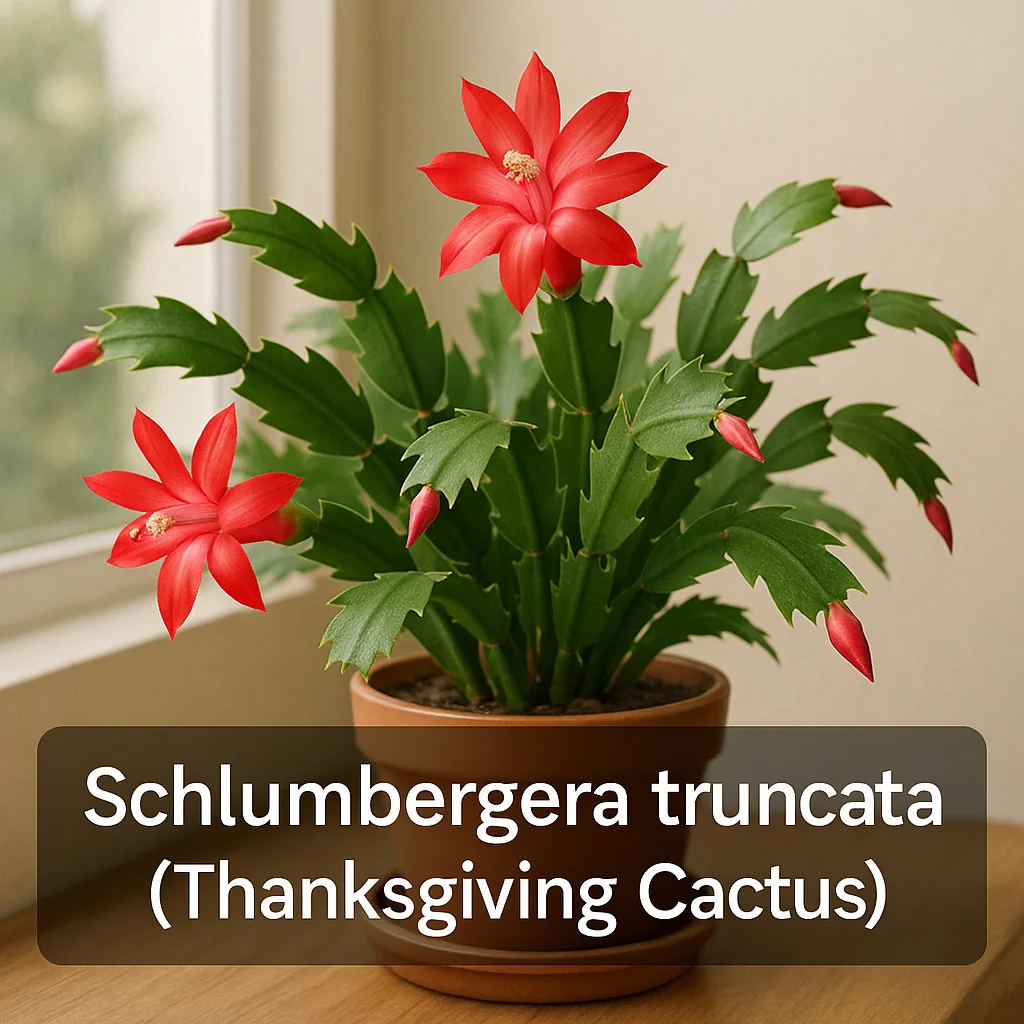
🌱 Schlumbergera truncata (Thanksgiving Cactus)
The Thanksgiving Cactus, scientifically known as Schlumbergera truncata, is a popular houseplant, appreciated for its beautiful blooms and ease of care. Often confused with other holiday cacti, the Thanksgiving Cactus is distinguished by certain unique characteristics. It’s a favorite among indoor plant enthusiasts due to its vibrant flowers and ability to thrive in home environments with basic care.
🧾 Quick Facts
Here's a quick overview of Schlumbergera truncata:
- Common Names: Thanksgiving Cactus, Crab Cactus
- Scientific Name: Schlumbergera truncata
- Plant Type: Flowering Cactus
- Growth Habit: Upright, slightly trailing
- Typical Indoor Size: 12–24 inches in height and spread
- Growth Speed: Moderate
- Lifespan: Can live many years with proper care
- Origin: Brazil; tropical forests
- Light Preference: Bright indirect light
- Water Needs: Moderate; prefers to dry out slightly between waterings
- Temperature & Humidity: Prefers warm temperatures and moderate humidity
- Pet Safety: May be irritating to pets if ingested
- Difficulty: Easy to medium
🔍 Identification & Look-Alikes
The Thanksgiving Cactus is often recognized by its segmented leaves with pointed tips and serrated edges. The leaves are typically dark green with a glossy finish, which can vary based on light exposure. Unlike the Christmas Cactus (Schlumbergera x buckleyi), the Thanksgiving Cactus has harder segments.
Blooming primarily in late fall, its tubular flowers can range in color from pink and red to white and yellow, contributing to its festive appeal.
Common look-alikes include the Christmas Cactus and the Easter Cactus, which differ in leaf shape and bloom time.
- Leaf segments are pointed and serrated.
- Typically blooms around Thanksgiving.
- Flowers are tubular and bright.
- Leaves are dark green and glossy.
- Growth habit is somewhat upright with slight trailing.
- Prefers indirect light, which gives optimal leaf coloration.
🌍 Origin & Natural Habitat
Native to the tropical rainforests of Brazil, Schlumbergera truncata is an epiphyte. It typically grows on trees rather than in the soil, thriving in the high humidity and dappled light of a forest understory. Understanding its origins helps you mimic these conditions: providing bright indirect light and occasional increased humidity will help it thrive indoors.
☀️ Light Requirements
The Thanksgiving Cactus prefers bright indirect light, which helps it maintain its vivid leaf color and encourages blooming. Ideal placements include east or north-facing windows, where it receives ample light without direct sun exposure that can scorch the leaves. If you notice the growth slowing or leaves fading, it might be getting too little light.
- Place near an east-facing window for morning sun.
- Avoid harsh midday sun; it can scorch leaves.
- Browning or leaf burn indicates too much light.
- Pale or soft growth signifies insufficient light.
- Rotate the plant periodically for even light exposure.
- Artificial grow lights can supplement during winter.
💧 Watering & Humidity
The Schlumbergera truncata prefers a soak-and-dry watering approach. Water thoroughly until it drains from the pot’s bottom, then allow the top inch of soil to dry out before watering again. Pot size, light, and temperature dictate how frequently it needs watering. During blooming, it may require more moisture.
While it enjoys moderate humidity, it is crucial not to overwater. Signs of overwatering include yellowing leaves and a soggy pot, whereas wilting or shriveled leaves can mean it's underwatered.
- Water when the top inch of soil feels dry.
- Reduce watering frequency during dormancy.
- Increase humidity with pebble trays or humidifiers.
- Yellow leaves can indicate overwatering.
- Wilted leaves may need more water.
- Rainwater or distilled water assists in reducing mineral buildup.
🐛 Soil, Pot & Repotting
Use a loose, well-draining soil mix akin to cactus or succulent mixes, often with added components like sand, perlite, or orchid bark. Choose pots with drainage holes to prevent waterlogging.
Repot every two to three years or when the plant becomes rootbound. A sign of this is slowed growth or water draining entirely too quickly. Move gently to a pot no more than one size up to encourage healthy root development.
- Choose pots with good drainage.
- Airy, well-draining soil is essential.
- Repot when roots are crowded or growth slows.
- Increase pot size gradually to maintain vigor.
- Repot before new growth in spring for best results.
- Remove loose soil and dead roots gently during repotting.
🌡️ Temperature, Airflow & Seasonal Care
The Thanksgiving Cactus thrives in temperatures between 65°F and 75°F (18°C to 24°C) with a slight drop at night. It dislikes cold drafts and sudden temperature changes, common near vents and doorways.
In winter, reduce watering as growth slows. This is not a full dormancy but a period of rest. Resume regular care in spring as temperatures and light increase.
- Optimal growth temperature: 65°F to 75°F (18°C to 24°C).
- Avoid cold drafts from windows and doors.
- Decrease watering during winter rest phase.
- Keep away from heater vents that cause dry air.
- Resume full care as days lengthen in spring.
- Use circulated air to prevent stagnant conditions.
🌸 Flowers, Fruit & Growth Cycle
The Schlumbergera truncata often blooms around Thanksgiving, hence its name, in colors ranging from pink, red, white, and yellow. These plants don’t usually bear fruit indoors and are mainly appreciated for their blooms and greenery.
Pruning isn’t necessary but removing spend blooms and any damaged segments can improve appearance. Regular light cleaning removes dust for optimal health and helps prevent pests.
🧬 Propagation & Reproduction
Thanksgiving Cacti are commonly propagated via cuttings. Take short segments of about two to three leaf segments, allow them to callous over, and then plant in a suitable soil mix. Keep the mix slightly moist until roots develop.
Propagation from seed is possible but not commonly practiced by home growers due to the long germination process and care required.
- Use healthy, disease-free cuttings.
- Let cuttings callous before planting.
- Keep soil lightly moist during rooting.
- Place in bright, indirect light for growth.
- Adequate humidity improves propagation success.
🌿 Common Problems, Pests & Prevention
Yellow leaves, brown tips, and droopiness are common problems and can usually be traced back to improper watering or light. Spider mites, mealybugs, and scale are the most common pests, often appearing when humidity is low or airflow is restricted. Fungus gnats may appear in overly damp conditions.
Maintaining stable care with good light and airflow, regular cleaning, and not overwatering helps keep these issues at bay.
- Inspect for pests regularly, especially underside of leaves.
- Wipe leaves to remove dust and prevent pests.
- Ensure pots have good drainage to avoid root rot.
- Adjust care with changes in seasons.
- Place in stable environmental conditions.
- Rinse leaves occasionally to remove pests.
🐾 Pet & Home Safety Notes
While not highly toxic, the Thanksgiving Cactus may cause mild irritation if ingested by pets. As a precaution, keep plants out of reach from small children and curious pets. If ingestion is suspected, it’s advisable to contact a professional or local poison control resources.
Pots can be elevated or surrounded by other safer plants to limit access.
🏡 Styling Ideas & Best Room Placement
The Thanksgiving Cactus can be a striking houseplant in various settings. Its preference for bright, humid environments makes it suitable for kitchens and bathrooms. Hanging baskets can highlight its slightly trailing habit, while tabletop arrangements fit larger spaces.
Consider pairing with other humidity-loving plants like ferns or peace lilies for a cohesive plant corner. Use varied pot textures and colors to complement the cactus’s vibrant flowers.
📌 Summary
- Identify by pointed, serrated segments and tubular flowers.
- Originating from Brazilian rainforests, it’s an epiphyte.
- Thrives in bright indirect light conditions.
- Employ a soak-and-dry watering routine.
- Use light, well-draining soil with drainage-equipped pots.
- Ideal temperature range is 65°F to 75°F (18°C to 24°C).
- Easy propagation through stem cuttings.
- Common challenges include improper watering and pest infestations.
- While mildly irritating to pets, it’s not highly toxic; caution advised.
- Stylistically versatile, fitting various indoor spaces.