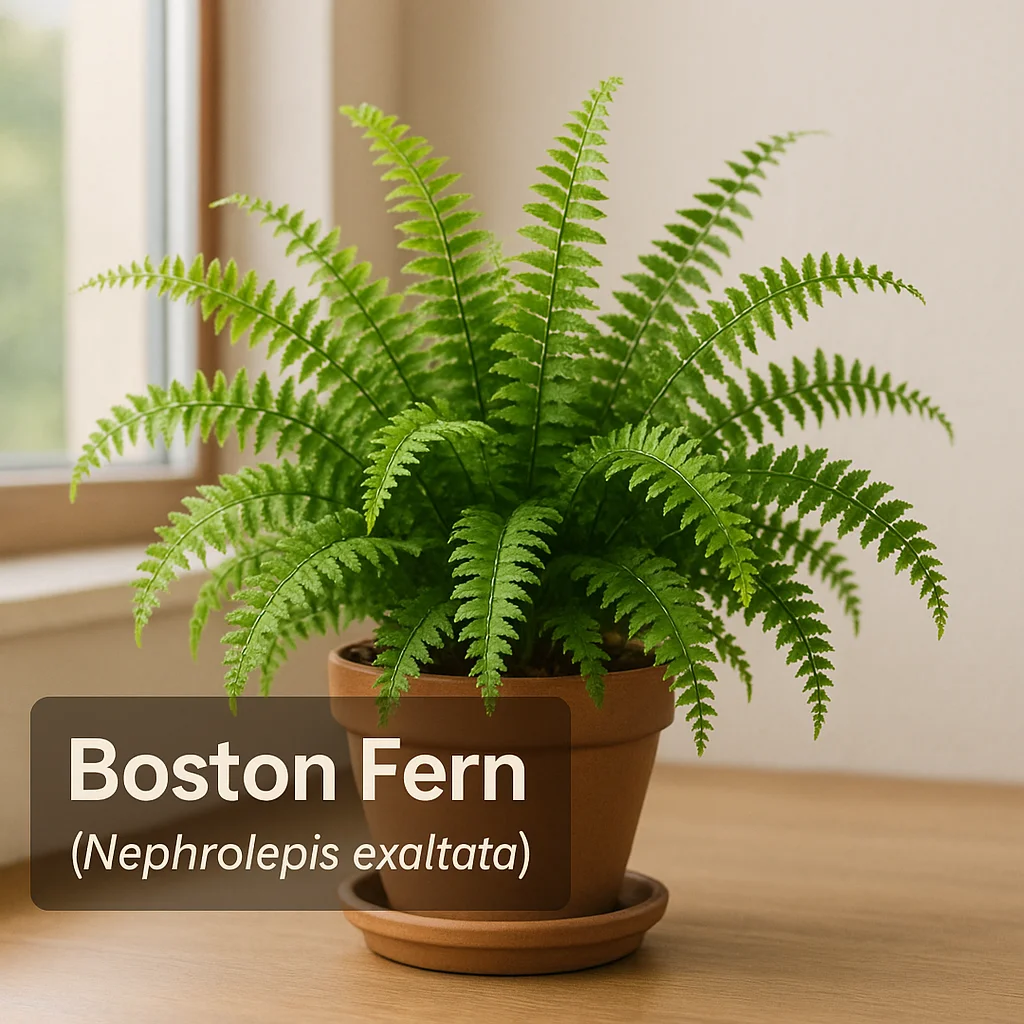
🌱 Boston Fern (Nephrolepis exaltata)
🧾 Quick Facts
The Boston Fern, scientifically known as Nephrolepis exaltata, is a popular houseplant often chosen for its lush foliage and graceful trailing fronds. It adds a touch of the tropics to any indoor setting and is appreciated for its air-purifying qualities.
- Common Names: Boston Fern, Sword Fern
- Scientific Name: Nephrolepis exaltata
- Plant Type: Fern
- Growth Habit: Trailing
- Typical Indoor Size: 1-3 feet tall and wide
- Growth Speed: Moderate
- Lifespan: Can live many years with proper care
- Origin: Tropical regions worldwide; commonly in swamps and tropics
- Light Preference: Medium to bright indirect light
- Water Needs: High; keep soil lightly moist
- Temperature & Humidity Preference: Prefers warm, humid conditions
- Pet Safety: Generally considered pet-friendly
- Difficulty: Medium
🔍 Identification & Look-Alikes
The Boston Fern is recognized by its arching fronds composed of numerous small leaflets that give it a feather-like appearance. The fronds can grow up to several feet long and emanate from a central crown. The texture is notably frondy and soft, typically of a deep green color, which can vary slightly with light conditions. It is primarily grown for its foliage as it rarely flowers indoors.
Look-alikes include other ferns such as the Kimberley Queen Fern and the Sword Fern, but the Boston Fern is distinguished by its drooping fronds and its specific leaflet structure.
- Dense, tufted arching fronds
- Small, uniform leaflets on each frond
- Double-sword leaflet arrangement along stems
- Deep green color
- Loose, trailing growth habit
- Soft, feathery frond texture
- No prominent flower feature indoors
- Smaller and softer leaflets compared to other ferns
🌍 Origin & Natural Habitat
Boston Fern originates from tropical regions and often thrives in swamps and humid forests. This plant is accustomed to the shady forest understory where indirect light predominates. In the wild, its growth accompanies moist conditions, thriving in warm and high-humidity environments. Understanding its native habitat helps in providing similar indoor conditions to mimic its natural environment and ensure its health and vitality.
☀️ Light Requirements
The Boston Fern thrives in medium to bright indirect light, similar to the dappled sunlight it would receive in its native forest habitat. Place it near east or north-facing windows, avoiding direct sunlight which can scorch the delicate fronds. Bright indirect light helps maintain the deep green color of the fronds, while too little light can result in sluggish growth and paler leaves. If positioned in low light, gradual adjustment to brighter conditions can aid adaptation.
- Prefers bright indirect sunlight
- North or east-facing windows ideal
- Avoid direct afternoon sun
- Signs of too little light: pale, weak fronds
- Signs of too much light: scorched, brown-tipped leaves
- Adjust positions gradually to prevent stress
- Can adapt to lower light but growth will slow
- Use sheers to diffuse direct light, if needed
💧 Watering & Humidity
Boston Ferns require consistently moist soil, but not waterlogged conditions. Allow the top inch of soil to slightly dry out between waterings. Adjust frequency based on season, with more frequent watering during active growth periods in spring and summer, and reduced frequency during dormancy phases in winter. This fern favors high humidity, typical of bathroom environments, or by situating it near a humidifier or pebble tray to increase humidity levels. Be watchful for symptoms of overwatering, like yellowing fronds, or underwatering such as dry, brown tips.
- Keep soil evenly moist, but not soggy
- Water when the top inch of soil is dry
- Increase watering in warm weather
- Reduce watering in cooler months
- High humidity preferred; consider a humidifier
- Misting can help raise ambient humidity
- Signs of overwatering: yellow, droopy fronds
- Signs of underwatering: brown, crispy leaf tips
🐛 Soil, Pot & Repotting
Boston Ferns thrive best in a well-draining, organic-rich potting mix—such as one that combines peat with perlite and a bit of sand. Choose a pot with proper drainage holes to prevent root rot. Repotting is typically about every two years or when the plant becomes rootbound, showing signs like slowed growth or excessive soil drying. During repotting, gently remove the plant, shake off old soil, and replant with fresh mix, allowing for an increase of 1 to 2 inches in pot diameter if needed.
- Use light, well-draining potting soil
- Mix of peat, perlite, and sand recommended
- Pots should have drainage holes
- Repot every 2-3 years or when rootbound
- Increase pot size by an inch
- Gently clean roots and replace with new soil
- Water thoroughly after repotting
- Monitor for signs of stress post-repotting
🌡️ Temperature, Airflow & Seasonal Care
Boston Ferns prefer a temperature range of 60-75°F, mirroring tropical warmth. They are sensitive to both cold drafts and overly dry heat from vents or heaters. Seasonal changes affect their growth cycle; growth slows down in winter, necessitating a reduction in water and feed. During cooler months, ensure consistent environment conditions without significant temperature swings to prevent stress or damage.
- Ideal temperature: 60-75°F (15-24°C)
- Avoid cold drafts and heating vents
- Slower growth in winter months
- Reduce watering and feeding in winter
- Use pebble trays or humidifiers in dry seasons
- Watch for sudden temperature changes
- Place away from direct cold exposure
🌸 Flowers, Fruit & Growth Cycle
The Boston Fern is primarily grown for its decorative foliage and does not typically produce flowers or fruit indoors. Growth occurs mainly from the center, where new fronds unfurl in a dramatic upwards and outwards flourish. Regular pruning of old, dead fronds can be done to maintain its health and aesthetic appeal, ensuring a clean and vibrant appearance.
🧬 Propagation & Reproduction
Boston Ferns are typically propagated through division. This involves separating a healthy plant into smaller sections, each with its roots and fronds, during repotting. Although somewhat challenging for beginners, propagation by division is the most effective way to perpetuate these ferns as seed propagation is not commonly practiced for home gardeners.
- Best propagated by division
- Separate root ball into sections
- Plant divisions in fresh potting mix
- Water newly propagated plants well
- Division is best during spring
- Handle with care to not damage roots
- Ensure each section has healthy roots and fronds
🌿 Common Problems, Pests & Prevention
While generally robust, Boston Ferns can encounter issues such as yellowing leaves, browning tips, and drooping if not properly cared for. Common pests include spider mites, mealybugs, and scale. Proper care includes maintaining consistent watering, cleaning leaves, and quarantining new plants to prevent pest infestations.
- Watch for yellowing and drooping fronds
- Check for pests like spider mites and mealybugs
- Quarantine new plants before introduction
- Clean fronds to prevent dust buildup
- Keep stable watering and light conditions
- Avoid letting the plant become rootbound
- Provide adequate airflow to prevent mold
- Regularly check under fronds for pests
🐾 Pet & Home Safety Notes
The Boston Fern is considered generally safe and pet-friendly. However, ingestion of fronds may still cause minor digestive upset in sensitive pets. Ensure placement out of reach of curious pets and children, using elevated stands or hanging baskets. If ingestion occurs, it's best to contact a professional or local poison control for guidance.
🏡 Styling Ideas & Best Room Placement
Boston Ferns thrive in areas with higher humidity, making them ideal for bathrooms or kitchens. They can also enhance living rooms or offices where they can trail from a hanging basket or be placed on a decorative stand to allow full visibility of their cascading fronds. Pair them with other humidity-loving plants like peace lilies or spider plants to create a vibrant indoor jungle setting.
📌 Summary
- Boston Ferns are lush, elegant ferns with trailing foliage
- Originates from tropical and subtropical regions
- Thrives in medium to bright, indirect light
- Requires consistent moisture and high humidity
- Motivates repotting every 2-3 years as needed
- Prefers warmth, avoiding cold drafts and heat vent drafts
- Multiplication mainly through plant division
- No typical flowering indoors, focus on ornamental foliage
- Common issues include low humidity browning tips and pests
- Considered generally non-toxic to pets but keep it out of reach