🌱 Chinese Money Plant (Pilea peperomioides)
🧾 Quick Facts
The Chinese Money Plant, also known as Pilea peperomioides, is a popular and easy-to-care-for houseplant noted for its unique and attractive foliage. Often celebrated for its coin-shaped leaves, this plant brings a touch of charm to any indoor space. Below are some key facts about this beloved plant:
- Common Names: Chinese Money Plant, Pancake Plant, UFO Plant
- Scientific Name: Pilea peperomioides
- Plant Type: Foliage
- Growth Habit: Upright
- Typical Indoor Size Range: Up to 12 inches tall and wide
- Growth Speed: Moderate
- Lifespan: Can live many years with care
- Origin: Southern China, specifically the Yunnan Province
- Light Preference: Bright indirect light
- Water Needs: Moderate; prefers soil to dry out slightly between waterings
- Temperature & Humidity Preference: Prefers temperatures of 60-75°F (15-24°C) with moderate humidity
- Pet Safety: Generally considered pet-friendlier
- Difficulty: Easy
🔍 Identification & Look-Alikes
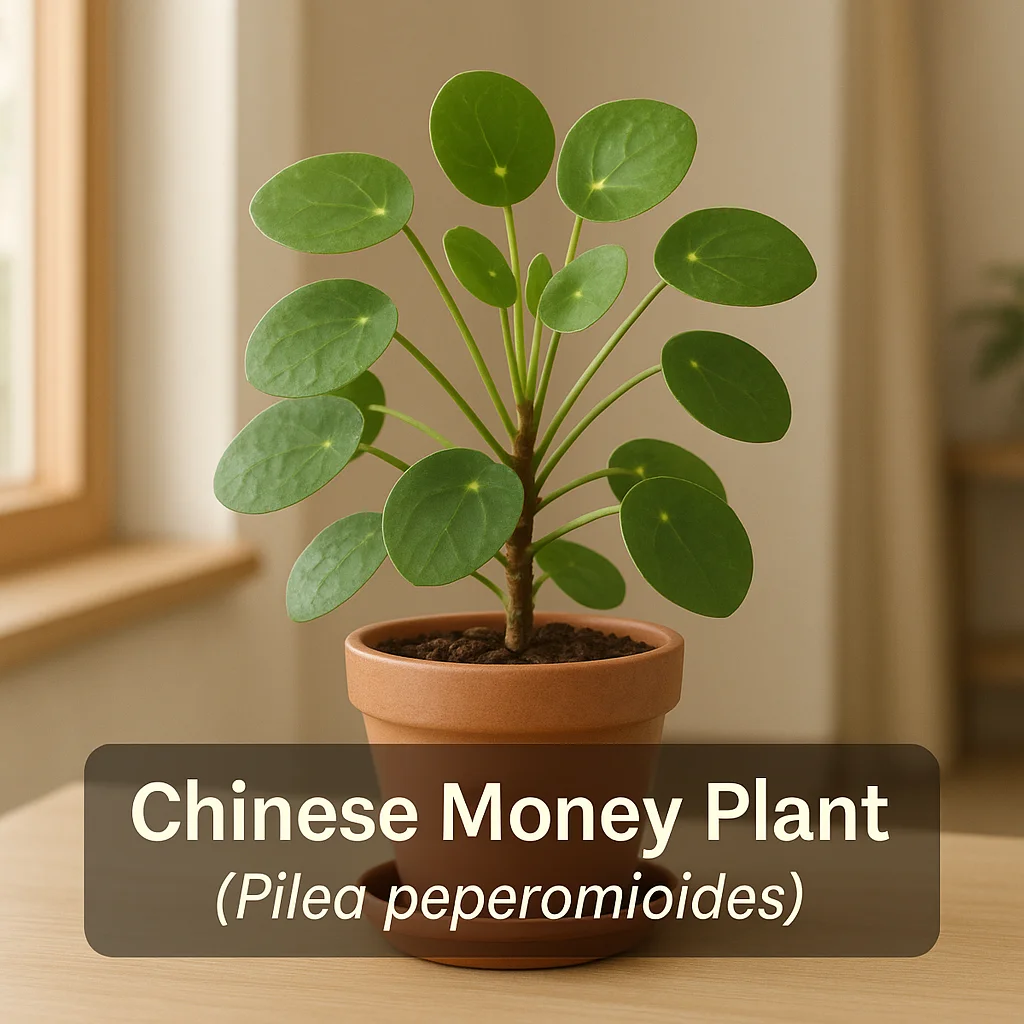
The Chinese Money Plant is easily recognized by its distinctive, round, pancake-like leaves that are dark green and often glossy with a slightly leathery texture. Its leaves are attached to long, slim petioles that radiate outward, giving the plant its unique appearance. The stems are slender and flexible, allowing the plant to create a rosette-like formation as it grows upright.
The foliage rarely blooms indoors, and when it does, the flowers are insignificant. Because it is primarily grown for its foliage, the focus remains on leaf shape and structure.
Common look-alikes include Peperomia species and other Pilea species. To differentiate, note that Peperomia often have thicker stems and different leaf textures, while other Pilea species might differ in leaf size and growth habit.
- Top ID Tips:
- Coin-shaped, shiny dark green leaves
- Long, slender petioles
- Upright growth with compact rosette formation
- Round leaves, typically around 4 inches in diameter
- Light green new foliage
- Primarily foliage plant, rarely flowers indoors
- Leaves emerge centrally and radiate outward
- Thin, smooth stems supporting leaves
- Commonly found in decorative pots and as part of mixed plant displays
🌍 Origin & Natural Habitat
The Chinese Money Plant is indigenous to the mountainous regions of Southern China, particularly in Yunnan Province. It naturally grows in forest understories where it benefits from dappled sunlight. The climate in these regions can be described as mild with distinct wet and dry seasons. This habitat knowledge helps indoor care, as it suggests the plant prefers bright, indirect light and a watering routine that allows the soil to dry slightly between sessions, mimicking natural seasonal patterns.
☀️ Light Requirements
For optimal growth indoors, place the Chinese Money Plant in a location that receives bright, indirect light. A north or east-facing windowsill works well, as does a spot some feet away from a south or west-facing window. Bright indirect light can be exemplified by the kind you find in a well-lit room where sunlight doesn't hit the plant directly. Insufficient light can lead to leggy and weak growth, while too much direct sunlight might scorch the delicate leaves.
- Light Checklist:
- Place near north or east-facing windows
- Avoid direct, harsh sunlight
- Check for elongated stems as a sign of low light
- Look for leaf burn as a sign of too much light
- Rotate plant regularly for even growth
- Consider supplemental lighting during winter
- Check for balanced light by noticing even, lush growth
- Adjust location with season changes
💧 Watering & Humidity
The Chinese Money Plant requires a moderate watering regimen. It thrives when the soil is allowed to dry down partially between waterings. A good method is to feel the top inch of soil; if it's dry to the touch, then it's time to water again. The pot size, season, and light change how quickly the soil dries, so observation is key. During winter, the plant's growth slows, extending the intervals between waterings. It does well in typical home humidity but appreciates slight increases, which can be achieved using pebble trays or humidifiers.
- Watering Tips:
- Allow topsoil to dry out before rewatering
- Check soil moisture regularly
- Use a pot with drainage to prevent waterlogging
- Reduce watering during cooler months
- Monitor leaf color and texture
- Increase humidity slightly, as needed
- Avoid using cold water
- Look for wilting or browning as signs of water stress
- Avoid letting the plant sit in water
🐛 Soil, Pot & Repotting
An airy, well-draining soil mix suits the Chinese Money Plant best. The mix should retain some moisture without becoming waterlogged, so consider using a standard potting mix with added perlite. When selecting a pot, ensure it has drainage holes to prevent root rot. A terracotta pot can further help by wicking away excess moisture.
Repotting should be done every year or so, or when the plant shows signs of being rootbound, such as slowed growth or roots emerging from the drainage holes. When repotting, gently remove the plant, loosen the roots, and place it in a slightly larger pot, filling it with fresh soil.
- Repotting Checklist:
- Use a well-draining soil mix
- Select a pot with adequate drainage
- Repot when growth slows or roots appear at the bottom
- Choose terracotta for better moisture control
- Handle roots gently during repotting
- Increase pot size modestly
- Ensure fresh soil for nutrient replenishment
- Repot during the growing season for best results
- Inspect roots for health during repotting
🌡️ Temperature, Airflow & Seasonal Care
This species thrives in average home temperatures ranging from 60-75°F (15-24°C). It's important to protect it from chilly drafts or sudden temperature fluctuations, which may stress the plant. Place your Pilea away from heater vents or air conditioners.
As growth slows significantly during winter, adapt your care routine—reduce watering and refrain from fertilization. The plant doesn't require a true dormancy period, but being aware of seasonal changes can guide adjustments in care.
- Seasonal Notes:
- Maintain temperature within comfortable indoor range
- Avoid sudden changes with heating/cooling systems
- Reduce water as temperatures drop
- Position away from cold drafts or direct hot air
- Anticipate slower growth in winter
- No fertilizing required in dormant periods
- Behaviors normal for hibernate-mode plants: less activity
- Regularly check on acclimatization in changing seasons
🌸 Flowers, Fruit & Growth Cycle
Pilea peperomioides is not typically grown for its flowers, as indoor blooms are rare and not particularly showy. The plant is primarily prized for its unique foliage.
The growth cycle includes the development of new leaves from the center of the plant, expanding and filling out the form. The plant can produce offsets or "pups" around the base. Regular pruning isn't necessary, but removing dead or yellowed leaves helps maintain its aesthetic appeal and plant health.
🧬 Propagation & Reproduction
Propagation of Chinese Money Plant is straightforward and commonly done via its offsets. When small plants or pups appear at the base, they can be gently removed using a clean knife and replanted to grow independently. Propagation via stem cuttings can also be attempted, but offsets are the most hassle-free method.
- Propagation Tips:
- Look for pups at the base for easiest propagation
- Use a clean tool to separate offsets
- Replant offsets in small pots with fresh soil
- Ensure new plants have adequate light and warmth
- Water gently after planting but avoid over-soaking
- Stem cuttings may root in water or soil
- Monitor new growth for healthy development
- Patience required for root establishment
🌿 Common Problems, Pests & Prevention
Common issues with the Chinese Money Plant include yellow leaves, often due to improper watering. Brown tips can result from low humidity or inconsistent care. Drooping and leaf drop may indicate stress, potentially from overwatering or environmental changes.
Pests like spider mites, mealybugs, and scale can occasionally infest the plant. To prevent such issues, regularly clean leaves gently with a damp cloth, maintain stable care routines, and ensure adequate airflow without draughts, which discourages mildew and pests.
- Prevention Basics:
- Maintain regular watering habits to prevent yellowing
- Check for pest presence during routine care
- Remove dusty build-up on leaves for better health
- Inspect new plants to avoid spreading pests
- Place in well-ventilated area for air circulation
- Adapt water and light levels with seasonal changes
- Deal with pests promptly using non-chemical means
- Ensure moderate, not extreme, humidity levels
- Consistency is key to stable plant health
🐾 Pet & Home Safety Notes
While the Chinese Money Plant is generally considered pet-friendly, some sources list it as potentially irritating if ingested. To ensure safety, consider placing it out of reach of pets and children. If ingestion is suspected, it's advised to contact a professional veterinarian or local poison control resources for guidance.
🏡 Styling Ideas & Best Room Placement
The Chinese Money Plant is a flexible addition to various rooms thanks to its size and adaptability. Its need for bright indirect light makes it suitable for living rooms, offices, and kitchens when placed near a well-lit window.
It can also be displayed in hanging baskets for a unique look or placed on shelves where light can reach evenly. Pairing it with plants that like similar conditions, such as other easy-care houseplants, enhances its aesthetic presence.
📌 Summary
- Recognizable by its coin-shaped leaves and upright growth
- Originates from Southern China, adapted to the understory environment
- Needs bright, indirect light; protect from direct sun
- Water moderately; let soil dry slightly between watering sessions
- Prefers a well-draining soil; repot annually
- Optimal temperature is within average home ranges
- Offset propagation is common and easy
- Common issues: yellowing leaves, pest infestations
- Considered pet-friendlier, but care in placement is recommended
- Low difficulty care level, ideal for indoor plant enthusiasts