🌱 Lucky Bamboo (Dracaena sanderiana)
🧾 Quick Facts
Often mistaken for a true bamboo, Lucky Bamboo is a popular indoor plant known for its ease of care and believed good fortune. Despite its name, this plant belongs to the Dracaena genus and is not a bamboo at all. Its straightforward care requirements and intriguing appearance make it a beloved choice for homes and offices alike.
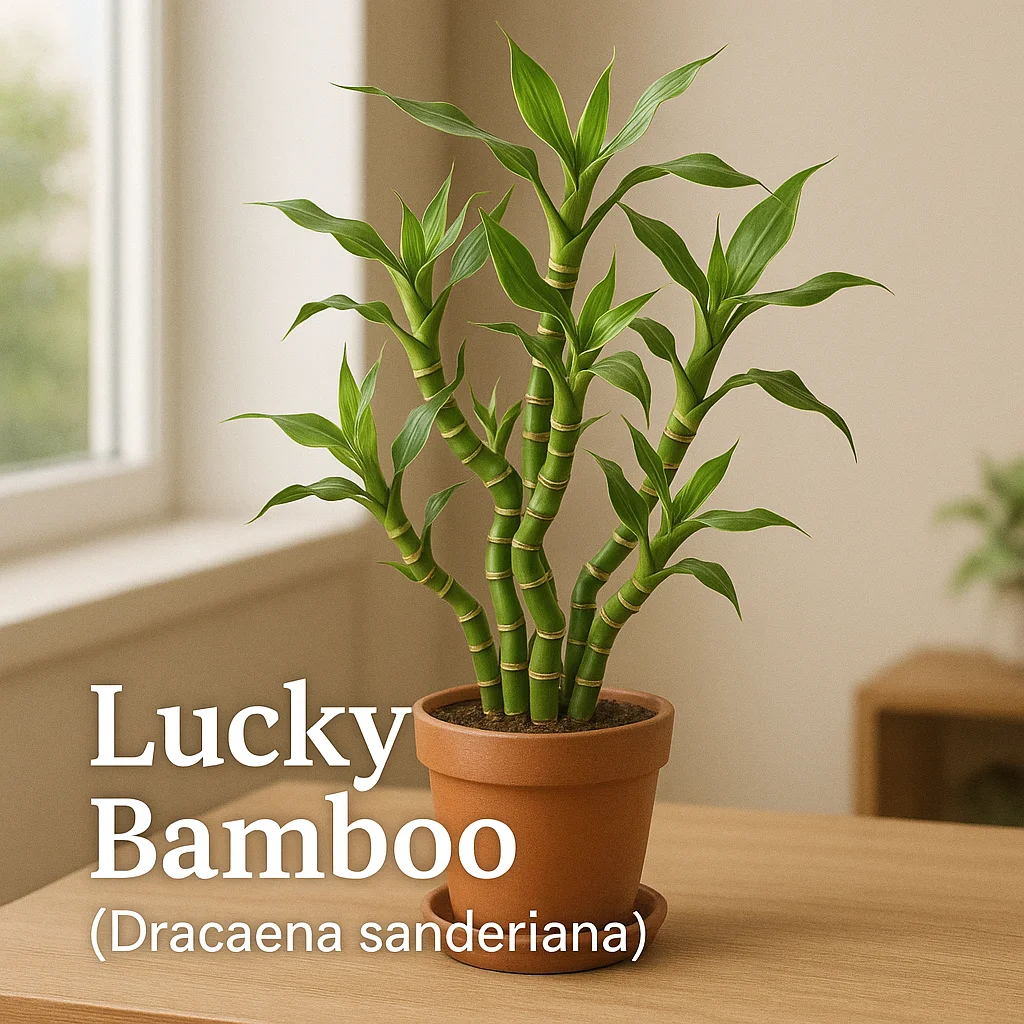
- Common names: Lucky Bamboo, Ribbon Plant
- Scientific name: Dracaena sanderiana
- Plant type: Foliage
- Growth habit: Upright
- Typical indoor size range: 1 to 3 feet in height
- Growth speed: Slow to moderate
- Lifespan: Can live many years with proper care
- Origin: Central Africa, typically found in wetlands
- Light preference: Low to medium indirect light
- Water needs: Moderate; prefers evenly moist soil or water-based growing
- Temperature & humidity preference: Prefers warm and humid conditions
- Pet safety: May be irritating/toxic to pets
- Difficulty: Easy
🔍 Identification & Look-Alikes
Lucky Bamboo is easily recognized by its slender, green canes, and lush leaves that sprout from the tops in a rosette formation. The leaves are long, narrow, and typically a vibrant green, sometimes edged with yellow or light green variegation. Unlike true bamboo, the canes of Dracaena sanderiana are not hollow.
It is grown mainly for its foliage as it rarely blooms indoors. Some species like the Corn Plant (Dracaena fragrans) and the Snake Plant (Sansevieria) might be mistaken for Lucky Bamboo, but they differ in leaf texture and arrangement.
- Top ID Tips:
- Long, slender, green canes
- Rosette-like leaf arrangement at cane tops
- Leaves may have yellow/light green edges
- Non-hollow stems
- Grown mainly for foliage, flowers rare
- Commonly confused with Dracaena fragrans
🌍 Origin & Natural Habitat
Lucky Bamboo originates from the Central African region where it thrives in the low light undergrowth of forests and wetlands. Here, it benefits from warm temperatures and high humidity, growing more vigorously with water availability. Understanding its natural habitat helps inform indoor care, emphasizing the need for warmth, humidity, and indirect lighting.
☀️ Light Requirements
Lucky Bamboo is best suited for low to medium indirect light. It can survive in low light conditions, making it ideal for placement in north or east-facing windows where light is diffused. Avoid direct sunlight, which may scorch the leaves and fade their color. Insufficient light can cause slow growth and pale leaves.
- Bright indirect light explained: filtered sunlight not directly touching the plant
- Place near north/east-facing windows
- Indirect sunlight prevents leaf burn
- Signs of too much light: scorched leaf tips, fading color
- Signs of too little light: slow growth, weak leaves
- Adjust placement based on plant response
💧 Watering & Humidity
Dracaena sanderiana appreciates a consistently moist environment. It can be grown in water or well-draining soil. If potted, allow the top inch of soil to dry before rewatering. For those grown in water, change the water every two weeks to prevent stagnation. This plant enjoys high humidity, and a pebble tray or humidifier can help boost moisture levels.
- Water when the top inch of soil is dry
- Change water every two weeks if grown in water
- Use filtered or distilled water to avoid leaf browning
- Increase humidity with a pebble tray
- Overwatering signs: root rot, wilting
- Underwatering signs: dry, brown leaf edges
🐛 Soil, Pot & Repotting
For soil-based growing, choose a well-draining potting mix with peat content. Ensure pots have drainage holes to prevent waterlogging. Terracotta pots are excellent as they enhance soil breathing. Repot every 2 to 3 years or when the plant becomes rootbound. Choose a slightly larger pot and be gentle during the transition.
- Use well-draining potting mix with peat
- Choose pots with drainage holes
- Use terracotta for better aeration
- Repot every 2 to 3 years
- Look for roots peeking from drainage holes
- Be gentle; avoid damaging roots during repotting
🌡️ Temperature, Airflow & Seasonal Care
Lucky Bamboo thrives at temperatures between 65°F and 95°F, making it ideal for typical indoor conditions. Avoid placing near drafts or vents which may dry it out. In the winter, growth may slow, necessitating reduced watering. Maintain a consistent environment to avoid stress.
- Maintain temperatures of 65°F to 95°F
- Avoid placing near AC/heater vents
- Reduce watering in winter as growth slows
- Avoid sudden temperature fluctuations
- Check humidity levels, especially in winter
🌸 Flowers, Fruit & Growth Cycle
Lucky Bamboo is grown primarily for its foliage, and indoor flowering is rare. Its typical growth cycle involves new leaves sprouting from the cane tops. Regular pruning of brown or discolored leaves encourages healthier growth. Shaping is often achieved by carefully trimming the stems.
🧬 Propagation & Reproduction
Propagation is commonly done via stem cuttings. Select a healthy cane and cut just above a node for the best results. Place cuttings in water or soil to root. Patience is key as rooting can take a few weeks. Due to its slow growth, propagation isn’t frequent.
- Cut stems just above a node
- Place cuttings in water or soil to root
- Use sharp, clean scissors or shears
- Change water regularly for water-based cuttings
- Propagate in spring or early summer for best chances
🌿 Common Problems, Pests & Prevention
Lucky Bamboo is relatively resistant but can suffer from yellow leaves, brown tips, and drooping due to over-/under-watering. Common pests include spider mites and mealybugs. Prevention is key, involving leaf cleaning and maintaining stable conditions.
- Prevent pests with regular leaf cleaning
- Stable care prevents leaf discoloration
- Spider mites and mealybugs are common pests
- Tackle drooping with balanced watering
- Avoid over-fertilizing to prevent damage
🐾 Pet & Home Safety Notes
All parts of the Lucky Bamboo can potentially irritate pets and children if ingested. To avoid contact issues, place the plant out of reach or use barriers. If ingestion is suspected, it's crucial to contact a professional or local poison control resources promptly.
🏡 Styling Ideas & Best Room Placement
Lucky Bamboo is a versatile styling piece for homes and offices. It thrives in bathrooms or kitchens due to higher humidity. Position in living rooms or offices depending on light availability. Pair with ferns or peace lilies for a lush display.
📌 Summary
- Recognizable by tall, slender green canes
- Prefers low to medium indirect light
- Grows best in warm, humid conditions
- Thrives with moderate and consistent watering
- Recognized for potential longevity with care
- Commonly propagated via stem cuttings
- Best placed in humidity-friendly rooms
- Watch for pests like mealybugs and spider mites
- Can be toxic to pets; handle with care
- Easy-to-care-for, making it popular for beginners