🌱 Money Tree (Pachira aquatica)
🧾 Quick Facts
The Money Tree, commonly known as Pachira aquatica, is a popular houseplant often recognized for its braided trunk and lush foliage. This tropical plant, native to Central and South America, is favored for its adaptability to indoor environments and its symbolic association with prosperity.
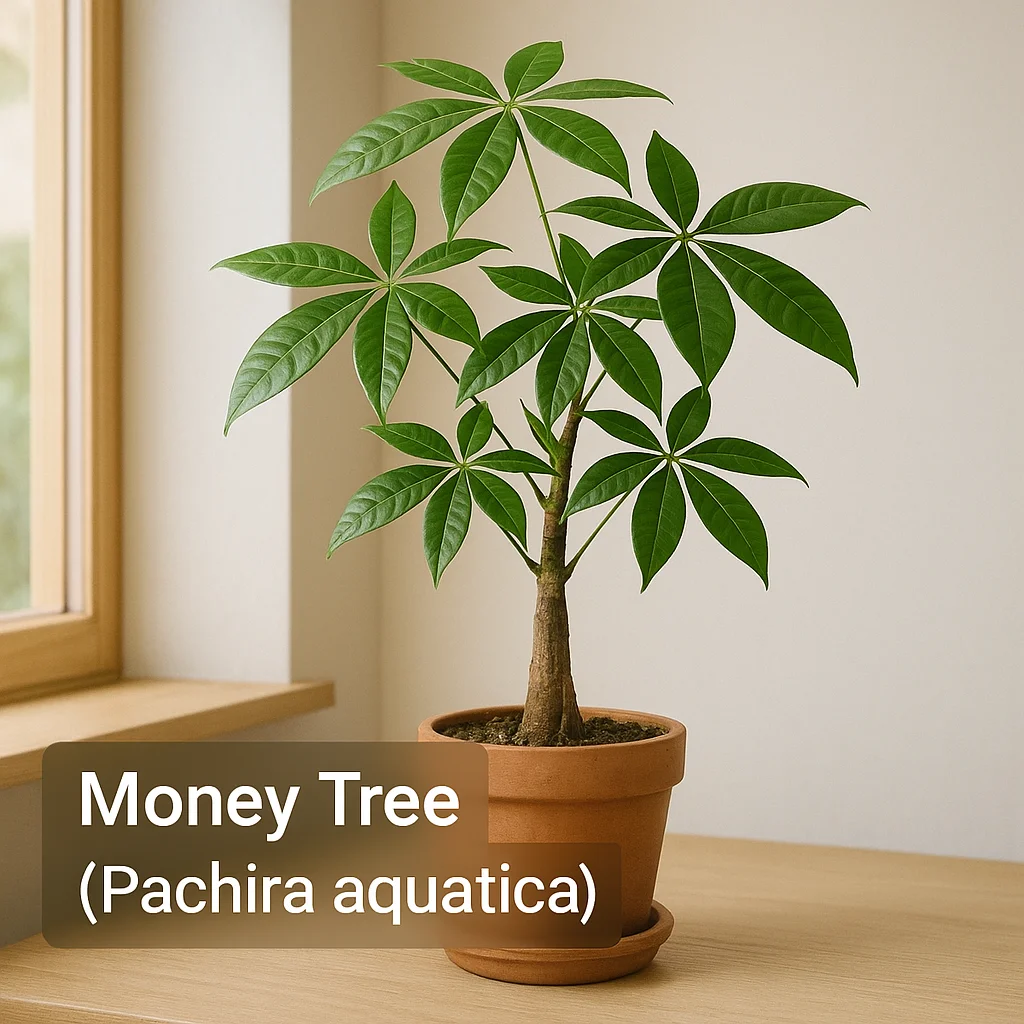
- Common names: Money Tree, Malabar Chestnut, Guiana Chestnut
- Scientific name: Pachira aquatica
- Plant type: Foliage
- Growth habit: Upright, often with braided trunk
- Typical indoor size range: 3 to 6 feet tall, 1 to 3 feet wide
- Growth speed: Moderate
- Lifespan: Can live many years with care
- Origin: Central and South America; tropical wetlands
- Light preference: Medium to bright indirect light
- Water needs: Moderate; prefers soil to dry between waterings
- Temperature & humidity preference: Warm, humid environments
- Pet safety: Generally considered pet-friendlier; seek professional advice if ingestion occurs
- Difficulty: Easy to medium
🔍 Identification & Look-Alikes
The Money Tree is identifiable by its glossy, bright green leaves grouped in clusters of five, although variations occasionally occur. Its unique braided trunk adds to its decorative appeal. Though typically grown for its foliage, the plant can bloom with large, showy flowers in the wild; however, it's rare indoors.
Common look-alikes include the Rubber Plant (Ficus elastica) and Jade Plant (Crassula ovata), which have similar leaf arrangements but differ in stem structure and trunk formation.
- Top ID Tips:
- Look for a braided trunk, a common aesthetic choice for Pachira aquatica.
- Leaves consist of 5–7 leaflets, with a glossy texture.
- The pot should display a balanced full-plant appearance.
- The plant's overall form should be upright with radiating canopies.
- Leaf color may vary from deep green in high light to lighter shades in low light.
- Inspect for non-flowering indoor specimens; flowers typically do not occur indoors.
🌍 Origin & Natural Habitat
The Money Tree originates from the tropical wetlands of Central and South America, especially in swampy and riverbank areas. In its native setting, it thrives in humid conditions and is accustomed to periodic flooding followed by dry spells.
Understanding its natural habitat is beneficial for recreating similar indoor conditions: ensure adequate humidity and provide opportunities for the soil to dry out between waterings, mimicking the plant's adaptive strategies to wet and dry cycles.
☀️ Light Requirements
For optimal growth, place your Money Tree in a location that receives medium to bright indirect light. Direct sunlight may scorch its leaves, while insufficient light can stunt growth and cause leaf drop. Ideal locations are near a north or east-facing window, where light is ample and non-direct.
Observe leaf color and growth patterns to adjust placement as needed: pale leaves indicate excess light, while dark, elongated stems suggest insufficient light.
- Light Checklist:
- Avoid prolonged direct sunlight to prevent leaf burn.
- Position near bright windows with filtered light.
- Adjust to a south or west-facing window in winter, if necessary.
- Monitor leaf orientation toward light sources and rotate the plant for even growth.
- Watch for signs of leggy growth in low light scenarios.
- Maintain steady light exposure by keeping windows clean from obstructions.
💧 Watering & Humidity
The Money Tree prefers a soak-and-drain watering approach. Allow the top third of the soil to dry before watering again. Considering factors like pot size, light level, and season is vital: larger pots and lower light require less frequent watering.
Humidity is beneficial for optimal growth. Aim for a room humidity level of 50% or higher, using humidifiers or pebble trays as practical solutions. Overwatering can lead to root rot, recognizable by yellowing leaves and limpness, while underwatering causes leaf drop and brown edges.
- Watering Tips:
- Ensure pot drainage to reduce waterlogged roots.
- Adjust watering frequency based on seasonal shifts; less in winter.
- Use room-temperature water to minimize plant shock.
- Consider misting leaves in dry, heated indoor spaces.
- Inspect leaf color and texture for your watering cues.
- Always check soil dryness before watering.
🐛 Soil, Pot & Repotting
Pachira aquatica thrives in a well-draining soil mix composed of peat, perlite, and sand, simulating its natural habitat. A pot with drainage holes is crucial to avoid water retention. Clay or terracotta pots can help regulate moisture but may need more monitoring due to increased evaporation.
Repot every 2-3 years or as the plant becomes rootbound, indicated by roots protruding from drainage holes or slowed growth. Carefully transfer to a slightly larger pot, maintaining the soil level and root system intact.
- Repotting Checklist:
- Choose pots 1–2 inches larger in diameter than the current pot.
- Confirm pot drainage to prevent water buildup.
- Gently loosen roots during repotting to stimulate new growth.
- Allow plant acclimatization a few weeks post-repotting.
- Ensure even distribution of the soil mix around the root ball.
- Avoid repotting during extreme weather conditions.
🌡️ Temperature, Airflow & Seasonal Care
Money Trees prefer temperatures between 65°F to 80°F (18°C to 27°C). Avoid cold drafts or extreme temperature changes to maintain optimal health. Consistent airflow aids in preventing diseases like mildew and keeps pests at bay.
Seasonal care includes reducing watering frequency in colder months, as plant growth naturally slows. Avoid placing your plant near heated vents during winter to prevent leaf dehydration.
- Seasonal Notes:
- Avoid rooms with temperatures below 50°F (10°C).
- Reduce watering during winter dormancy.
- Provide extra humidity if heating dries the air.
- Monitor and regulate the plant’s proximity to heating and cooling vents.
- Consider relocating to warmer spots in colder months.
🌸 Flowers, Fruit & Growth Cycle
While it is rare for a Money Tree to flower indoors, outdoor specimens may exhibit large, dramatic flowers with long, brush-like stamen. Fruiting is also uncommon indoors. Growth typically involves the development of new leaves and, if braided, maintains structured trunk growth. Pruning, while generally minimal, helps maintain shape and remove any damaged leaves.
🧬 Propagation & Reproduction
Propagation of the Money Tree is commonly achieved through stem cuttings. Select a healthy stem section with multiple nodes, and root it in water or moist soil. High humidity levels enhance propagation success, so consider covering cuttings with a plastic dome or bag to create a mini greenhouse effect. Seed propagation is possible but more challenging indoors due to specific germination requirements.
- Propagation Tips:
- Take cuttings in the spring or early summer for best results.
- Use sterilized tools to minimize infection risks.
- Maintain consistent moisture for rooted cuttings.
- Avoid direct sun until new growth stabilizes.
- Label propagation attempts by date to track growth progress.
🌿 Common Problems, Pests & Prevention
The Money Tree can experience issues like yellow leaves, brown tips, or drooping, typically linked to watering errors or low humidity. Check for pests like spider mites, mealybugs, and scale insects, which can be prevented by frequent inspections, cleaning leaves gently with a damp cloth, and maintaining stable care routines.
- Prevention Basics:
- Inspect new plants before introducing them to others.
- Regularly clean leaves to deter pests.
- Avoid waterlogging to keep roots healthy.
- Encourage gentle airflow around the plant to prevent mildew.
- Establish a consistent care routine for optimal health.
- Quarantine affected plants to prevent the spread of pests.
🐾 Pet & Home Safety Notes
The Money Tree is generally regarded as a pet-friendly choice, but some sources note it may cause mild irritation if ingested by pets. To ensure safety, place out of reach or utilize barriers and training strategies. If ingestion is suspected, contacting a professional or seeking out local poison control resources is prudent.
🏡 Styling Ideas & Best Room Placement
The Money Tree's adaptability makes it suitable for various indoor environments, including living rooms and offices, where its lush greenery enhances decor. Avoid bathrooms due to lower light levels. Consider decorative pots matching its elegant appearance. Pair with other humidity-loving plants like ferns or peace lilies for more impact.
- Best Placement Ideas:
- Stand alone to feature its unique braided trunk.
- Group with smaller foliage plants for a jungle effect.
- Use as a centerpiece on low furniture like coffee tables.
- Match pots to general color schemes for decor cohesion.
📌 Summary
- Identify by braided trunk and cluster of five glossy green leaves.
- Native to tropical wetlands in Central and South America.
- Thrives in medium to bright indirect light environments.
- Requires moderate watering with dry-down between.
- Prefers airy soil with proper drainage and periodic repotting.
- Maintain moderate temperatures; avoid close heater placement.
- Propagation mostly through stem cuttings in high humidity.
- Common issues include watering errors and pest infestations.
- Generally pet-friendlier but monitor pet interactions.
- Best suited for brightly lit rooms and living spaces.