🌱 Monstera deliciosa
Monstera deliciosa, often known as the "Swiss Cheese Plant" or "Split-leaf Philodendron," is a popular houseplant prized for its distinctive foliage and tropical appeal. This guide delves into its characteristics, care requirements, and tips for cultivation, making it easier for plant enthusiasts to nurture this striking species within their home.
🧾 Quick Facts
Here are some quick facts about Monstera deliciosa:
- Common Names: Swiss Cheese Plant, Split-leaf Philodendron
- Scientific Name: Monstera deliciosa
- Plant Type: Foliage, climbing vine
- Growth Habit: Climbing or sprawling
- Typical Indoor Size Range: 3-10 feet high and wide
- Growth Speed: Moderate to fast
- Lifespan: Can live many years with proper care
- Origin: Central America, tropical forests
- Light Preference: Medium to bright indirect light
- Water Needs: Moderate; prefers topsoil to dry out slightly between watering
- Temperature & Humidity Preference: Warm temperatures and high humidity
- Pet Safety: May be irritating/toxic to pets
- Difficulty: Medium
🔍 Identification & Look-Alikes
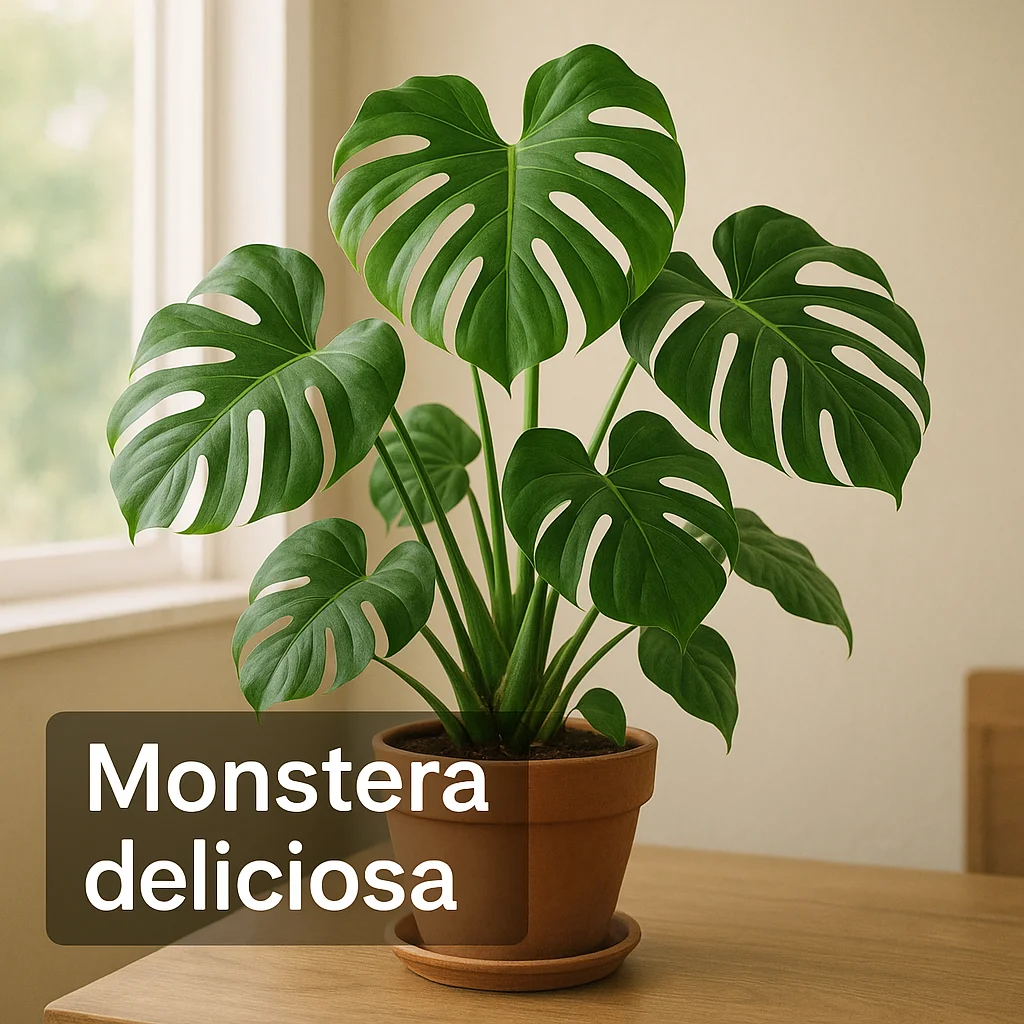
Monstera deliciosa is primarily recognized for its large, glossy, heart-shaped leaves with distinctive perforations and splits that develop as the plant matures. The leaves have a leathery texture and can reach up to 3 feet in length in optimal conditions. It possesses a vine-like growth habit, often requiring support from a stake or moss pole as it climbs upwards. Monstera's stems are thick and robust, giving rise to aerial roots that can attach to surfaces.
The leaf color ranges from a deep green in lower light levels to a lighter, brighter hue with more sun exposure. The plant is primarily grown for its foliage, as it rarely flowers indoors. Look-alikes include the Philodendron bipinnatifidum and Epipremnum aureum (Pothos); however, these species lack the signature leaf perforations seen in mature Monstera plants.
- Top ID Tips:
- Look for large, deeply cut leaves with characteristic holes.
- Check for thick, sturdy stems with aerial roots.
- Note the heart shape of juvenile leaves before they develop perforations.
- Observe the plant’s climbing habit and robust growth.
- Identify unique variegation patterns in light-exposed leaves.
- Spot the lack of flower presence indoors.
- Distinguish from similar species by leaf texture and size.
- Recognize state and color changes depending on light conditions.
🌍 Origin & Natural Habitat
Native to the tropical forests of Central America, Monstera deliciosa is typically found in regions such as southern Mexico and Panama. It thrives in the understory of jungles, adapting to the filtered light and high humidity found there.
Understanding its habitat aids in replicating the conditions indoors, such as providing ample indirect light and maintaining a humid environment. The plant's natural growth as a climber guides the use of support structures indoors.
☀️ Light Requirements
Monstera deliciosa prospers in bright, indirect light. It is best placed near east or west-facing windows where it can receive ample illumination without the risk of scorching from direct sunlight. Bright, indirect light promotes healthy growth and vibrant leaf color, enhancing the perforations typical of this species.
Insufficient light results in fewer perforations and leggy growth, while excessive direct sun may cause leaf scorch. Adjust placement if such signs appear.
- Light Checklist:
- Select a spot with bright, filtered light.
- Avoid direct midday sunlight to prevent leaf damage.
- Use sheer curtains to diffuse light if needed.
- Position near windows, like east or west exposures.
- Monitor leaf coloration to adjust light as needed.
- Consider supplemental lighting in darker rooms.
- Rotate the plant occasionally for even growth.
- Watch for elongating stems as a sign to increase light.
💧 Watering & Humidity
The Monstera requires a balanced watering regime. Water thoroughly until drainage is visible from the pot's base, and allow the top inch of soil to dry before the next watering session. During active growth (spring and summer), it may require more frequent watering.
Humidity should be moderate to high, emulating tropical settings. A humidity tray or a humidifier can improve conditions, especially in dry seasons. Monitor for signs of overwatering, like yellowing leaves, or underwatering, such as wilting.
- Watering Tips:
- Allow the soil to dry slightly between waterings.
- Increase watering frequency during warmer months.
- Reduce water in cooler seasons as growth slows.
- Use rainwater or distilled water to prevent mineral buildup.
- Maintain average humidity of 60% or higher if possible.
- Incorporate humidity measures, like trays or misting.
- Check soil moisture regularly to avoid extremes.
- Recognize drooping leaves as a hydration signal.
🐛 Soil, Pot & Repotting
A well-aerated, well-draining potting mix is ideal for Monstera deliciosa. Consider a mix of peat, perlite, and orchid bark for optimal balance. Ensure the pot has good drainage to prevent waterlogging, with terracotta pots aiding in moisture regulation.
Repotting should occur every 1-2 years or when roots become cramped. Look for cues like reduced growth or roots protruding from drainage holes. Upsize the pot by 1-2 inches in diameter, ensuring minimal disturbance to the root ball during repotting.
- Repotting Checklist:
- Choose a container with adequate drainage holes.
- Select a potting mix that retains moisture yet drains well.
- Consider terracotta for improved moisture control.
- Repot during the growing season for least stress.
- Handle the root ball carefully to prevent damage.
- Increase pot size gradually to avoid shock.
- Press soil gently to eliminate air pockets post-repotting.
- Water lightly after repotting, resuming normal care after a week.
🌡️ Temperature, Airflow & Seasonal Care
Optimal temperature for Monstera ranges from 65°F to 85°F (18°C to 29°C). It is essential to shield the plant from drafts, such as those from open windows, vents, or air conditioning units.
Growth may slow in winter; adjust watering and humidity accordingly to prevent stress. During this period, provide stable temperatures and consistent light to facilitate a healthy dormancy.
- Seasonal Notes:
- Keep temperatures steady, avoiding sudden drops.
- Watch for drafts from windows or doors in colder months.
- Maintain humidity during heating season indoors.
- Adapt care through winter with reduced watering.
- Recognize slowed growth as part of the winter cycle.
- Tidy leaves and stems to encourage spring revival.
- Avoid re-potting during inactive winter months.
🌸 Flowers, Fruit & Growth Cycle
Monstera deliciosa rarely blooms indoors. When it does flower in its native habitat, it produces a white spadix surrounded by a cream-colored spathe, leading to edible fruit termed "Monstera fruit."
Indoors, focus should be on the lush leaf growth and propagation efforts. Regular removal of damaged leaves and minor pruning can assist in shaping and encourage bushier growth by redirecting energy and ensuring healthy air circulation.
🧬 Propagation & Reproduction
Propagation of Monstera deliciosa is often achieved through stem or node cuttings. Select a healthy section with roots or a node, and place it in water or moist soil until roots develop. Propagation through division is also viable for established plants with multiple stems.
- Propagation Tips:
- Select cuttings with a node for propagation.
- Use clean tools to prevent disease transfer.
- Root cuttings in water or moist, sterile soil.
- Ensure cuttings receive bright, indirect light.
- Change water regularly when rooting in a water medium.
- Transplant rooted cuttings carefully to avoid shock.
🌿 Common Problems, Pests & Prevention
Common issues include yellowing leaves due to overwatering, brown tips from underwatering, and drooping from irregular care. Monstera is prone to pests like spider mites, mealybugs, and scale. Address infestations through regular inspection and gentle cleaning of leaves.
Prevent issues by maintaining stable conditions and avoiding over-watering.
- Prevention Basics:
- Quarantine new plants before integrating them.
- Regularly inspect leaves for pest evidence.
- Ensure consistent light and watering cycles.
- Wipe leaves to remove dust and reduce pest habitat.
- Avoid water excess in the pot to deter root rot.
- Use airflow to prevent mold or mildew in humid spaces.
- Rotate plant occasionally for uniform growth.
- Adapt care quickly if signs of plant distress arise.
🐾 Pet & Home Safety Notes
Monstera deliciosa can be irritating or toxic to pets and should be kept away from children and animals who may chew on plant parts. For safety, consider placing the plant out of reach or using barriers. In case of suspected ingestion, contact a professional or local poison control resources immediately.
🏡 Styling Ideas & Best Room Placement
Due to their beauty and size, Monstera deliciosa complements living rooms, patios, or offices with sufficient light. Their humidity preference makes them ideal for bathrooms or kitchens as well. Use moss poles or trellises for vertical climbing displays or position them in floor pots as a statement piece.
Pair with compact houseplants like ferns or pothos for contrast and interesting textures.
📌 Summary
- Distinguishable by large, cut leaves with openings.
- Thrives in Central America's understory with ample indirect light.
- Prefers moderate watering, higher humidity.
- Requires airy, well-draining soil, with repotting every 1-2 years.
- Grows best in temperatures of 65-85°F.
- Propagated typically via stem cuttings with nodal placement.
- Susceptible to overwatering, pests like spider mites.
- Medium care difficulty with attention to environment.
- Keep away from pets; parts may irritate or be toxic.