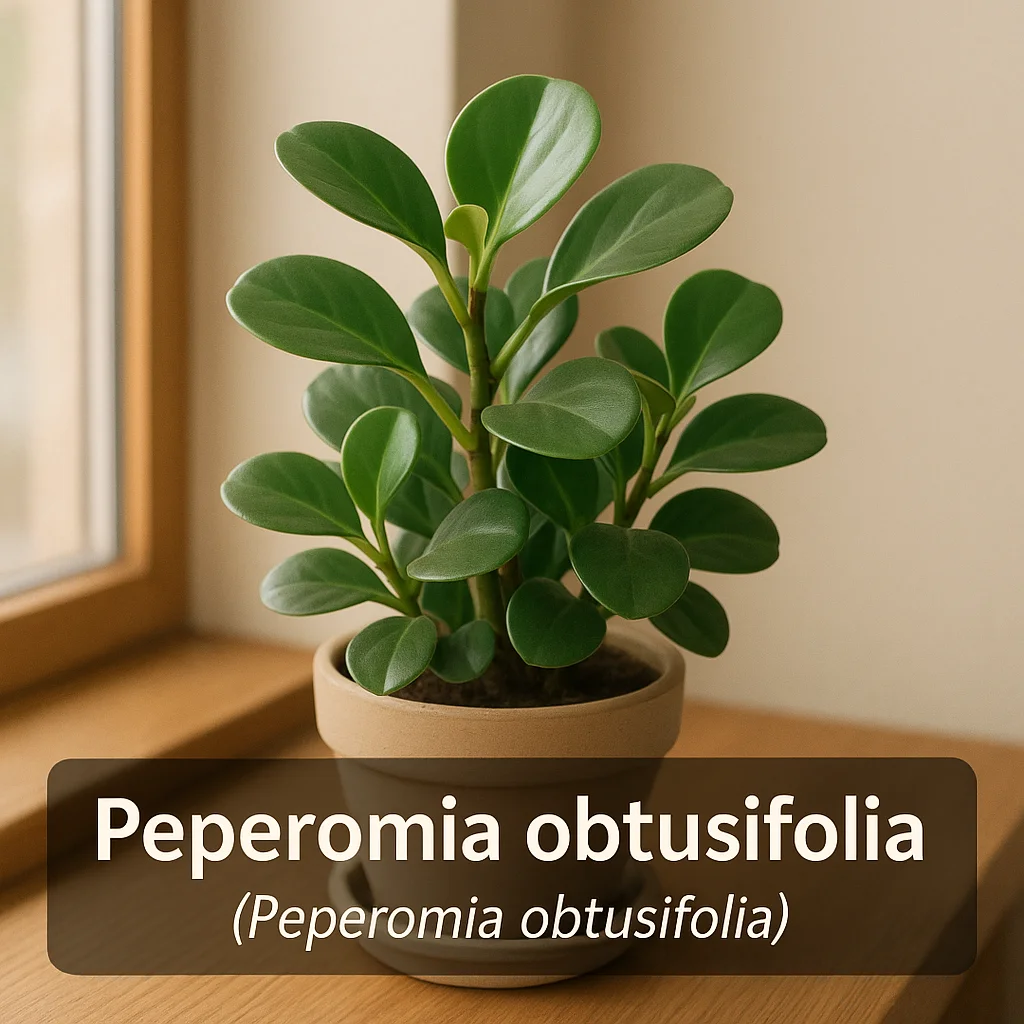
🌱 Peperomia obtusifolia (Peperomia obtusifolia)
🧾 Quick Facts
The Peperomia obtusifolia, commonly known as the baby rubber plant or pepper face, is a popular houseplant known for its lush, glossy leaves and easy care requirements. Perfect for beginners and plant enthusiasts alike, it adds a touch of greenery to any space without demanding too much attention.
- Common names: Baby rubber plant, pepper face
- Scientific name: Peperomia obtusifolia
- Plant type: Foliage
- Growth habit: Upright, bushy
- Typical indoor size range: 10-12 inches in height and width
- Growth speed: Moderate
- Lifespan: Can live many years with proper care
- Origin: South America; rainforest understory
- Light preference: Bright indirect light; tolerates medium light
- Water needs: Moderate; prefers drying out slightly between waterings
- Temperature & humidity preference: Warm, humid environments
- Pet safety: Generally considered pet-friendlier
- Difficulty: Easy
🔍 Identification & Look-Alikes
The Peperomia obtusifolia is easily recognizable by its thick, oval-shaped leaves that have a soft, leathery texture. The leaves are usually a deep green but can exhibit variegation with creamy white or yellow streaks. This plant grows in a bushy, upright form with sturdy stems that can hold water, making them somewhat succulent. Although it rarely flowers indoors, when it does, the inflorescences are small, non-showy white spikes. It is often confused with the Peperomia clusiifolia but can be distinguished by its distinctly rounded, fleshy leaves.
- Top ID Tips:
- Look for oval, glossy leaves
- Observe bushy, upright growth pattern
- Note any creamy white or yellow variegation
- Feel for thick, succulent-like leaves
- Check for small, white flower spikes (rare indoors)
- Compare leaf thickness for differentiation from look-alikes
🌍 Origin & Natural Habitat
Native to the tropical rainforests of South America, Peperomia obtusifolia thrives in the understory, enjoying filtered light and high humidity. In its natural habitat, this plant grows in the crevices of trees or rocky areas where it can access moisture from the surrounding environment. Understanding its origin helps indoor growers simulate these conditions by providing bright, indirect light, sufficient humidity, and periodic watering to mimic its natural wet-dry cycles.
☀️ Light Requirements
For optimal growth, place your Peperomia obtusifolia in bright, indirect light. East or west-facing windows protected by sheer curtains are ideal spots. Too much direct sunlight can lead to leaf scorch, while low light may cause leggy growth and reduced variegation. Signs of too little light include lackluster leaf color, while too much light can result in faded, washed-out foliage.
- Light Checklist:
- Best in bright, indirect light
- Avoid prolonged direct sunlight
- Monitor leaf color for light adjustment
- Use curtains to filter harsh rays
- Place near east or west windows
- Watch for leggy growth as a sign of low light
💧 Watering & Humidity
The Peperomia obtusifolia benefits from a soak-and-drain watering method, ensuring the soil dries out slightly between waterings. The frequency of watering depends on the pot size, light exposure, and season. In winter, the watering frequency may decrease due to slower growth. This plant thrives in humid conditions, and increasing humidity can be achieved by placing it on a pebble tray or using a humidifier. Overwatering can lead to root rot, indicated by wilting and yellowing leaves, while underwatering may result in crispy leaf edges.
- Watering Tips:
- Water thoroughly, then allow to dry slightly
- Adjust frequency by season
- Use well-draining soil and pots with drainage holes
- Address humidity with pebble trays or humidifiers
- Check for wilting/yellowing to indicate overwatering
- Underwatering signs include crispy edges
🐛 Soil, Pot & Repotting
Use a well-draining potting mix with peat and perlite to keep roots healthy. Choose pots with drainage holes to prevent waterlogging; terracotta pots can be beneficial for moisture regulation. Repotting is typically required every two or three years or when the plant becomes rootbound—when you see roots at the pot's base. Gently remove the plant, shake off old soil, and transfer to a slightly larger pot to encourage healthy root growth.
- Repotting Checklist:
- Select a well-draining soil mix
- Use pots with drainage holes
- Consider terracotta for moisture control
- Repot every 2–3 years or when rootbound
- Remove old soil before repotting
- Only move to a slightly larger pot
🌡️ Temperature, Airflow & Seasonal Care
The ideal temperature range for Peperomia obtusifolia is between 65–75°F (18-24°C). Avoid placing it near drafts, air conditioning, or heating vents that could cause temperature fluctuations. In winter, the plant’s growth slows down, so reduce watering accordingly to prevent root issues. Steady airflow helps discourage pests and can aid in managing humidity.
- Seasonal Notes:
- Maintain 65-75°F (18-24°C) range
- Avoid drafts and abrupt temperature changes
- Reduce watering during slower winter growth
- Ensure steady airflow to prevent pests
- Adjust humidity with seasonal changes
- Monitor plant’s response to environmental shifts
🌸 Flowers, Fruit & Growth Cycle
While Peperomia obtusifolia is primarily grown for its attractive foliage, it occasionally produces small, white, non-showy flower spikes when conditions are right. Indoors, it may rarely fruit. This plant exhibits a bushy growth pattern with frequent production of new leaves. Light pruning can help maintain its overall shape and encourages fuller growth by removing leggy or damaged areas.
🧬 Propagation & Reproduction
The Peperomia obtusifolia is relatively easy to propagate through stem cuttings. Look for healthy stems with at least a few leaves, cut below a node, and place them in water or directly in soil to root. Leaf-cutting propagation is also possible. Division is another method, especially for more established plants. While seed propagation is possible, it is uncommon for home growers due to the plant's slow flowering and fruiting indoors.
- Propagation Tips:
- Use stem cuttings for propagation
- Include a node when cutting stems
- Place cuttings in water or soil
- Consider leaf cuttings as an option
- Divide larger plants for more propagation
🌿 Common Problems, Pests & Prevention
The Peperomia obtusifolia can experience issues such as yellowing leaves, brown leaf tips, and droopiness, often due to improper watering or light conditions. Common pests include spider mites, mealybugs, and scale. Prevention strategies include quarantining new plants, regularly cleaning the leaves, maintaining stable care routines, ensuring proper airflow, and avoiding overwatering.
- Prevention Basics:
- Quarantine new plants
- Clean leaves regularly to reduce dust/pests
- Maintain consistent light and water routines
- Ensure good airflow to manage conditions
- Check for pests like spider mites early
- Avoid overwatering to prevent root rot
🐾 Pet & Home Safety Notes
The Peperomia obtusifolia is generally considered non-toxic and pet-friendly, though some sources suggest it may be irritating if ingested in large quantities. It is always wise to keep houseplants out of reach of pets and small children. Should ingestion occur, contacting a professional or local poison control resources is recommended for guidance.
🏡 Styling Ideas & Best Room Placement
The versatile Peperomia obtusifolia can flourish in various indoor spaces. Its humidity preference makes it an excellent choice for bathrooms and kitchens. It also adds vibrancy to living rooms and offices. Consider placing it in hanging baskets or on shelves to utilize vertical space. Pairing with other humidity-loving plants like ferns or peace lilies can create a lush, cohesive display.
📌 Summary
- Recognizable by thick, glossy, oval leaves
- Originates from South American rainforests
- Thrives in bright, indirect light conditions
- Prefers moderate water with slight drying out between
- Needs well-draining soil in pots with drainage holes
- Ideal temperatures range from 65-75°F (18-24°C)
- Propagate via stem cuttings or division
- Common pests include spider mites and mealybugs
- Generally pet-friendly but keep out of reach
- Easy care makes it suitable for various room placements