🌱 Ponytail Palm (Beaucarnea recurvata)
🧾 Quick Facts
The Ponytail Palm, despite its name, is not a true palm but a succulent thriving indoors due to its unique adaptation. Its bulbous trunk stores water, making it a resilience champion in home settings.
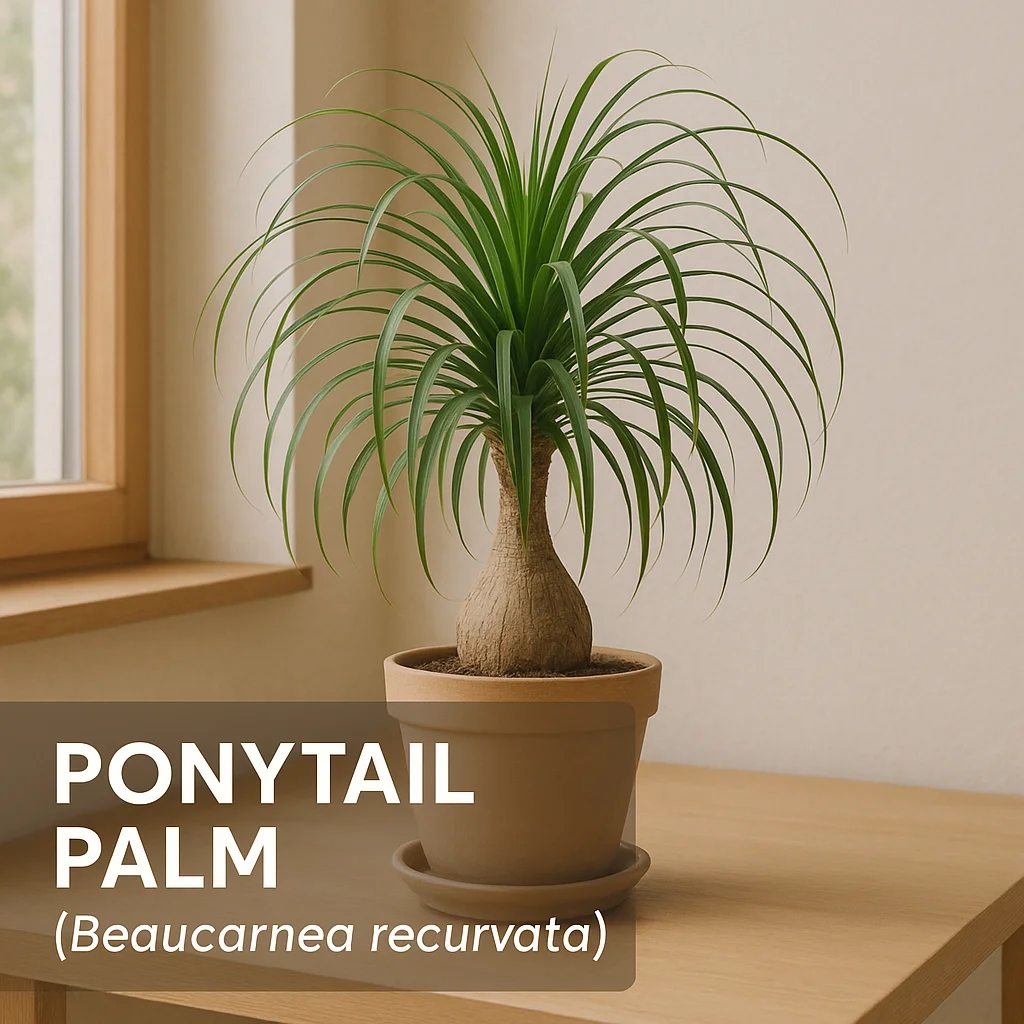
- Common names: Ponytail Palm, Elephant Foot Tree
- Scientific name: Beaucarnea recurvata
- Plant type: Succulent
- Growth habit: Upright with a swollen base
- Typical indoor size range: 2-4 feet high
- Growth speed: Slow
- Lifespan: Can live many years with care
- Origin: Southeastern Mexico; semi-desert climate
- Light preference: Bright indirect, tolerates some direct sun
- Water needs: Low; prefers soil to dry out between watering
- Temperature & humidity preference: Warm and dry conditions
- Pet safety: Generally considered pet-friendlier, but caution advised
- Difficulty: Easy
🔍 Identification & Look-Alikes
The Ponytail Palm is instantly recognizable with its large bulbous base and long, narrow, strap-like leaves that resemble a fountain of hair. The leaves are leathery and curly, cascading in all directions from the top. The trunk is the defining feature, resembling an elephant's foot, hence one of its common names.
- The leaves are long, thin, and recurved, forming a ponytail effect.
- The trunk is swollen and textured with characteristic ring markings.
- Color remains a consistent deep green under proper lighting conditions.
- It does not usually produce flowers indoors, thus primarily grown for its unique foliage.
- Distinguished from sago or true palms by its thickened trunk base.
- Top ID Tips
- Look for the swollen elephant-foot-like base.
- Observe the fountain-like arrangement of long, thin leaves.
- Check for leathery, dark green foliage.
- Notice the absence of flowers in typical indoor settings.
- Spot the distinctive bark texture with ring markings.
🌍 Origin & Natural Habitat
Native to southeastern Mexico, the Ponytail Palm is used to arid, semi-desert conditions. In its natural habitat, it endures dry seasons comfortably thanks to its water-storing trunk and thickened base, flourishing on rocky, sandy soils.
Understanding its origin helps recreate conditions conducive to indoor success: warmth, light, low humidity, and well-draining soil align with its desert origins.
☀️ Light Requirements
Position your Ponytail Palm in a spot with abundant bright indirect light, such as a south or west-facing window. It can tolerate some direct sunlight, especially in the morning or late afternoon, which can enhance leaf coloration.
When lighting is insufficient, growth may slow, and the plant may become leggy. Too much harsh sunlight can scorch foliage, leading to dry, brown leaf tips.
- Light Checklist
- Place near a bright window but shield from harsh midday sun.
- Rotate periodically to ensure balanced growth.
- In low light, supplement with a grow light if feasible.
- Watch for leaf scorch or browning from excessive sunlight exposure.
- Healthy green leaves indicate suitable lighting conditions.
💧 Watering & Humidity
Water your Ponytail Palm using the soak-and-dry method. Allow the soil to dry completely between waterings. In larger pots or lower light, less frequent watering may be necessary as the plant can store water in its trunk.
Humidity is not a major concern for this plant because it thrives in dryer conditions. Overwatering is a common mistake; signs include a soft, mushy trunk and yellowing leaves, whereas underwatering leads to browning tips.
- Watering Tips
- Water thoroughly and let excess drain completely.
- Check soil moisture deep, not just surface level.
- Cut back on watering during slower growth periods.
- Ensure the pot has good drainage.
- Watch for leaf tips browning from underwatering.
- Mushy trunk suggests overwatering—reduce frequency.
🐛 Soil, Pot & Repotting
A well-draining potting mix, often a cactus or succulent blend, suits the Ponytail Palm perfectly. The soil should retain minimal water and have good aeration. Use pots with drainage holes to prevent waterlogging.
Repot only every 2-4 years or when rootbound, indicated by roots emerging from the pot's holes. When repotting, choose a pot just one size larger to avoid over-potting. Handle the bulb carefully to avoid damage.
- Repotting Checklist
- Use a cactus or succulent mix for optimal drainage.
- Select a pot with drainage holes.
- Repot when roots fill the container or poke through.
- Choose a slightly larger pot when needed.
- Avoid damaging the bulb during the process.
🌡️ Temperature, Airflow & Seasonal Care
The Ponytail Palm favors typical room temperatures (60-80°F or 16-27°C) and is sensitive to cold drafts. Avoid placing it near cold or hot air vents that can cause fluctuations. During winter, reduce watering frequency as growth naturally slows.
Elevate humidity needs minimally, as the plant tolerates ordinary indoor levels well. Ensure that airflow is sufficient, as stagnant conditions could promote mold or fungus.
- Seasonal Notes
- Keep away from cold drafts and extreme temperature changes.
- Natural light variation may slow growth in winter.
- Reduce watering during colder months.
- Watch for leaf drop in extreme conditions.
🌸 Flowers, Fruit & Growth Cycle
Indoors, the Ponytail Palm is unlikely to bloom, focusing energy on its impressive foliage. Outdoors, in suitable climates, it may produce flower spikes with white or cream-colored blooms. Its growth cycle is slow, with new leaves emerging gradually.
Prune any brown or damaged leaves with clean, sharp shears to maintain aesthetics and health. Generally, pruning is minimal as the clean leaf structure of the plant is self-maintained.
🧬 Propagation & Reproduction
Propagating the Ponytail Palm is not commonly practiced by hobbyists, as it involves separating offsets or "pups" from the base—a skillful task due to its dense, woody structure. Ensure offsets have roots before separating to give them a good start.
- Propagation Tips
- Look for naturally occurring offsets for propagation.
- Only separate offsets with visible root systems.
- Provide additional humidity for new plants if needed.
- Patience is essential, as offset growth is slow.
- Keep new plants in bright, indirect light for best results.
🌿 Common Problems, Pests & Prevention
The Ponytail Palm is resistant to most pests but may fall victim to spider mites or mealybugs. Yellowing leaves, brown leaf tips, or drooping can signal environmental stress or improper watering. Prevention includes routine inspections, cleaning leaves, and ensuring good air circulation.
- Prevention Basics
- Regularly inspect and clean leaves to prevent pest buildup.
- Quarantine new plants before introducing them into the home environment.
- Avoid overwatering, which can lead to root rot.
- Maintain stable, consistent care routines.
- Check for signs of fungal issues if humidity unexpectedly increases.
- Isolate affected plants and treat appropriately in case of pest invasion.
🐾 Pet & Home Safety Notes
Ponytail Palms are generally considered not harmful to pets or children. However, ingestion of any plant material could potentially cause mild GI upset. To prevent mishaps, it's best to position the plant out of reach or use deterrents for pets prone to nibbling.
If accidental ingestion is suspected, contacting a professional or local poison control resources is recommended.
🏡 Styling Ideas & Best Room Placement
The architectural structure of the Ponytail Palm makes it suitable for minimalistic or contemporary spaces. Position it prominently in living rooms or offices where bright light is available. Its height suits floor pots, drawing eyes upward.
Pair it with other sun-loving succulents or place it on a stand for added visual height and impact. Bathroom and kitchen placements are less ideal due to humidity, though moderating moisture conditions can adapt it to these spaces if desired.
📌 Summary
- Distinctive bulbous base and fountain-like leaves for easy identification.
- Native to Mexico's semi-deserts, thriving in low-water environments.
- Prefers bright indirect light but tolerates some direct sun.
- Low water needs—let soil dry between watering.
- Well-draining cactus/succulent mix ideal for potting.
- General temperature tolerance aligns with average home conditions.
- Propagation primarily through naturally occurring offsets.
- Resilient to pests but check for spider mites and mealybugs.
- Generally pet-friendly, yet best kept out of reach.
- Great for modern decors; position in well-lit, prominent areas.