🌱 Rubber Plant (Ficus elastica)
🧾 Quick Facts
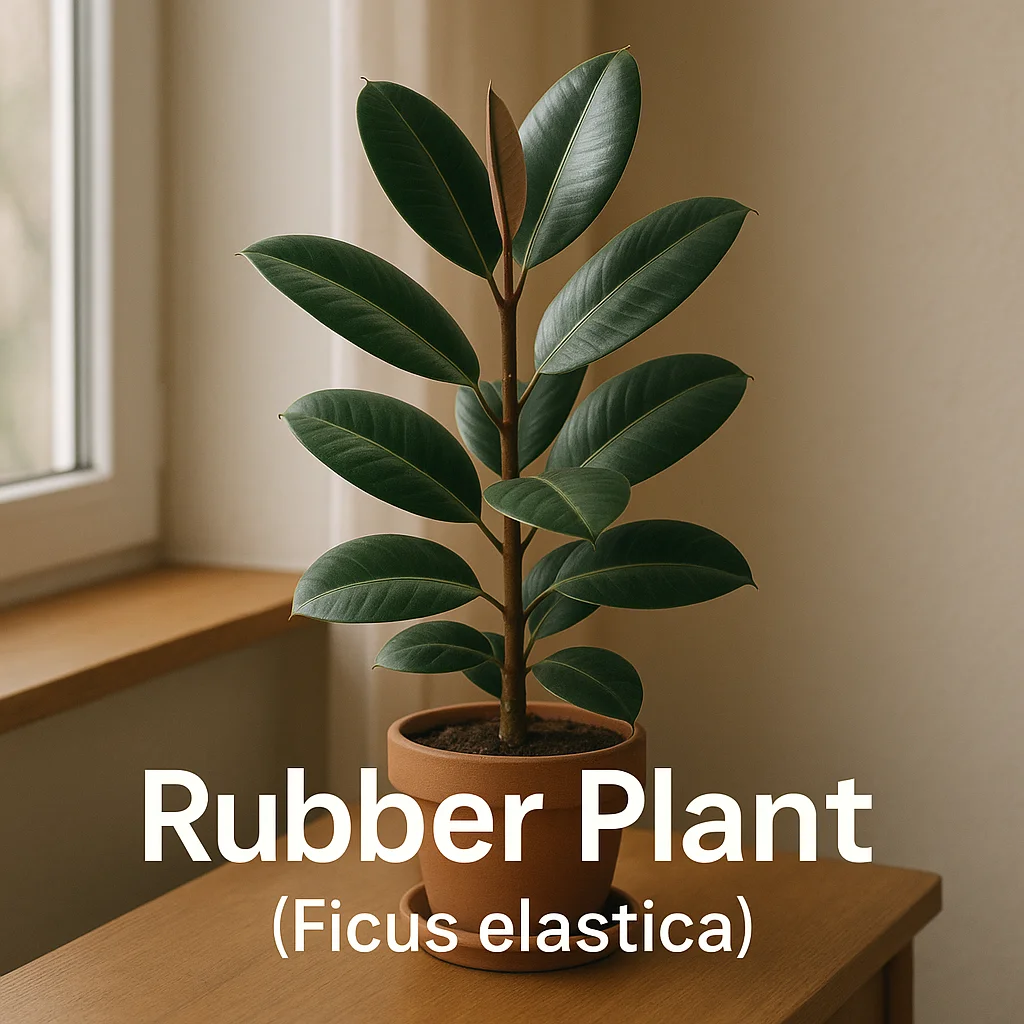
The Rubber Plant, known scientifically as Ficus elastica, is a popular indoor plant recognized for its glossy leaves and robust growth. It is appreciated for being an easy-care plant suitable for various indoor environments.
- Common names: Rubber Plant, Rubber Tree, Indian Rubber Tree
- Scientific name: Ficus elastica
- Plant type: Foliage
- Growth habit: Upright
- Typical indoor size: 2 to 10 feet tall
- Growth speed: Moderate
- Lifespan: Can live many years with proper care
- Origin: Southeast Asia
- Light preference: Bright indirect light
- Water needs: Moderate; prefers to dry out slightly between waterings
- Temperature & humidity preference: Warm temperatures and moderate humidity
- Pet safety: May be irritating/toxic to pets
- Difficulty: Easy
🔍 Identification & Look-Alikes
The Rubber Plant is characterized by its large, glossy, and ovate leaves that can appear in various shades of green, often with a touch of red or purple in the new growth. The leaves are arranged alternately along thick stems, which can grow upright with a woody, tree-like structure. Unlike many other houseplants, the Rubber Plant is mainly grown for its foliage, not flowers, as it rarely blooms indoors. It can be confused with other Ficus species, but the Rubber Plant's distinct leaf sheen and arrangement help set it apart.
- Large, glossy, broad leaves
- Alternating leaf arrangement
- Upright and tree-like growth habit
- Variegation can occur depending on light
- Thicker, more woody stems
- Does not commonly flower indoors
- Look-alikes include Fiddle Leaf Fig and Indian Banyan
- Generally grows vertically with support from central stems
- New growth displays a reddish hue in younger leaves
- Recognizable by its signature latex sap when cut
🌍 Origin & Natural Habitat
Native to Southeast Asia, the Rubber Plant thrives in warm, tropical climates. In the wild, it often grows as part of the forest understory, enjoying filtered light and high humidity. This environmental background explains its preference for bright, indirect light and moderate humidity levels when cultivated indoors. Understanding its natural habitat helps in recreating suitable conditions in the home to keep the plant healthy and vibrant.
☀️ Light Requirements
The Rubber Plant thrives in bright, indirect light but can tolerate lower light conditions if necessary. Ideally, place it near a window with filtered sunlight, such as a spot set back a bit from a south or east-facing window. Direct sunlight may scorch its leaves, while too little light can cause leggy growth and loss of variegation. Observing the plant's response to light will often guide necessary adjustments.
- Best in bright, indirect light
- East or north-facing windows are ideal
- Avoid direct sun to prevent leaf burn
- Watch for leaf drop in low light conditions
- Variegated varieties require more light
- Keep rotating the pot to promote even growth
- Check for fading colors as a sign of too little light
- Consider supplemental lighting in poorly lit areas
- Use sheer curtains to filter harsh light
- Yellowing leaves can indicate light issues
💧 Watering & Humidity
The Rubber Plant enjoys a balance of moisture and drying out. Allow the top few inches of the soil to dry out between waterings. Overwatering can lead to root rot, while underwatering may cause leaf drop. Adjust watering frequency based on pot size, season, and light exposure. The plant prefers moderate humidity levels, and if indoor air is dry, using a humidifier or placing a pebble tray nearby can help maintain adequate moisture.
- Allow soil to dry slightly before watering
- Water thoroughly, then let excess drain
- Increase watering during active growth periods
- Reduce watering in cooler, low-light months
- Observe leaf droop as a sign of underwatering
- Root rot may occur if left in stagnant water
- Maintain moderate indoor humidity
- Misting can help but avoid soggy leaves
- Overwatering signs: yellow leaves and root odor
- Underwatering signs: dry, brown leaf edges
🐛 Soil, Pot & Repotting
The Rubber Plant prefers a well-draining, nutrient-rich potting mix. A typical houseplant soil mix with added perlite or sand works well. When choosing a pot, ensure it has drainage holes; terracotta pots are recommended for their breathability. Repotting is usually required every couple of years or when the plant becomes rootbound. Signs include slowed growth or roots emerging from drainage holes. When repotting, gently loosen the roots and opt for a slightly larger pot.
- Use a well-draining soil mix
- Ensure pots have drainage holes
- Terracotta pots are breathable and good for Ficus
- Repot when growth slows or roots are visible
- Select a pot 1-2 inches larger for repotting
- Handle root ball gently during repotting
- Refresh soil mix when repotting
- Consider repotting every 1-2 years
- Water well after repotting to settle soil
- Avoid fertilizing immediately after repotting
🌡️ Temperature, Airflow & Seasonal Care
Rubber Plants prefer a consistent temperature range between 60°F and 77°F, avoiding both cold drafts and extreme heat. It's essential to position them away from drafts, air conditioning, or heating vents, which can stress the plant. During winter, their growth slows, requiring adjustments in watering and care. Recognizing these seasonal changes ensures they'll remain healthy even through cooler months.
- Keep between 60°F–77°F indoors
- Avoid places with drafty conditions
- Stable temperature helps maintain growth
- Reduce watering during winter dormancy
- Rotate plant to promote even light exposure
- Check for signs of stress during seasonal shifts
- Monitor humidity during heating season
- Protect from cold windows and frost
- Avoid direct exposure to fans and vents
🌸 Flowers, Fruit & Growth Cycle
While the Rubber Plant is primarily grown for its attractive foliage, it can produce small, inconspicuous flowers when in its natural habitat, though flowering is rare indoors. Its growth consists mainly of new leaf production and becoming bushier with age. Pruning can shape the plant by encouraging a bushier appearance, removing damaged leaves, and maintaining its form.
🧬 Propagation & Reproduction
Propagation of the Rubber Plant is commonly achieved through stem cuttings, which root well in water or soil. Division of larger plants can also be successful if offsets have formed. While leaf propagation isn't typical for Ficus elastica, focusing on healthy stem cuttings will usually yield good results.
- Use stem cuttings with nodes for propagation
- Root in water or directly in soil
- Take cuttings during active growth periods
- Division of large plants is possible
- Leaf propagation is not recommended
- Keep propagation environment warm
- Ensure humidity for rooting cuttings
- Patience is key, as rooting may take weeks
- Maintain cutting hygiene to prevent rot
🌿 Common Problems, Pests & Prevention
Common issues for the Rubber Plant include yellowing leaves from overwatering, brown tips from underwatering, and leaf drop due to stress. Pests like spider mites, mealybugs, and scale may infest if conditions aren’t stable. Regular cleaning of leaves and ensuring consistent care can help prevent these problems.
- Yellow leaves often indicate excess water
- Brown tips suggest underwatering
- Inspect for spider mites in dry conditions
- Scale and mealybugs can be removed manually
- Stable conditions reduce stress-related leaf drop
- Quarantine new plants to prevent pest spread
- Maintain plant hygiene with regular dusting
- Avoid overcrowded humid conditions
- Consistent care prevents most issues
- Act quickly if pests are detected
🐾 Pet & Home Safety Notes
The Rubber Plant may pose a risk if ingested, as its sap can be mildly irritating or toxic to pets and children. Care should be taken to place the plant out of reach or create barriers to prevent accidental ingestion. If ingestion is suspected, contacting a professional or local poison control resources is advised.
🏡 Styling Ideas & Best Room Placement
The Rubber Plant adapts well to a variety of indoor spaces, making it a versatile styling option for homes. Ideal placements include living rooms and offices where they receive ample light. They work well as floor-standing features or on plant stands that complement their height. Combine with other tropical plants for a cohesive look.
📌 Summary
- A popular indoor plant with glossy, upright leaves
- Originates from Southeast Asia, preferring warm climates
- Thrives in bright, indirect light conditions
- Moderate watering needs, allowing soil to dry between sessions
- Best in well-draining soil with a sturdy pot
- Maintain temperature between 60°F and 77°F
- Simple stem cuttings can propagate new plants
- Common pest issues include spider mites and mealybugs
- Easy maintenance makes it a suitable choice for beginners
- Can be mildly toxic; keep clear of pets and young children