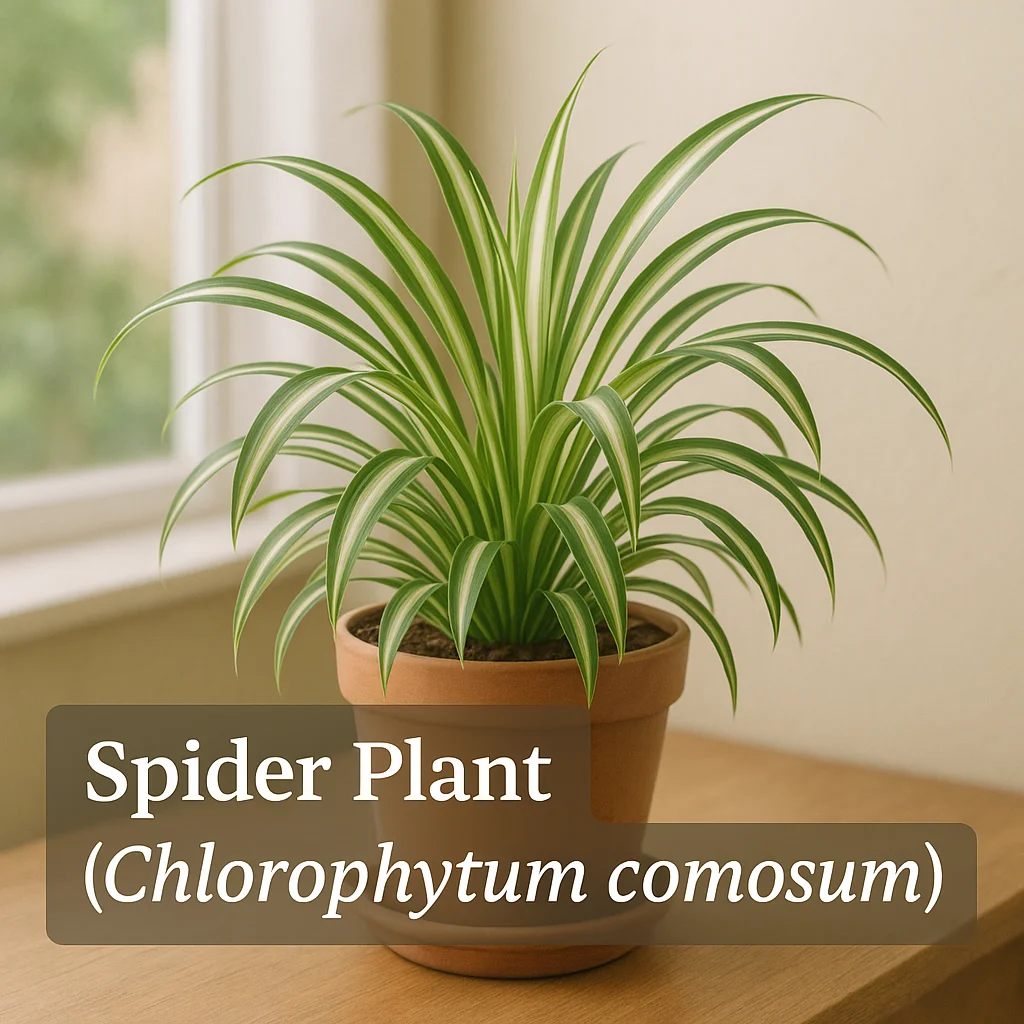
🌱 Spider Plant (Chlorophytum comosum)
🧾 Quick Facts
The Spider Plant, known scientifically as Chlorophytum comosum, is a popular houseplant that is cherished for its easy care and aesthetic appeal. Often enjoyed for its decorative, arching foliage, the Spider Plant is a fantastic choice for both novice and experienced plant enthusiasts.
- Common names: Spider Plant, Airplane Plant, St. Bernard's Lily
- Scientific name: Chlorophytum comosum
- Plant type: Foliage
- Growth habit: Trailing / Rosette
- Typical indoor size range: 1–2 feet tall and wide
- Growth speed: Fast
- Lifespan: Can live many years with care
- Origin: Native to South Africa; forest understory
- Light preference: Bright indirect light
- Water needs: Moderate; prefers to dry out slightly between waterings
- Temperature & humidity preference: Prefers warm temperatures, but lower humidity conditions
- Pet safety: Generally considered pet-friendlier
- Difficulty: Easy
🔍 Identification & Look-Alikes
Recognizing a Spider Plant is straightforward due to its distinct long, slender leaves that arch gracefully. These leaves are typically green with a white or yellow variegation strip running down the center. The plant grows from a central rosette, and its foliage can cascade, making it ideal for hanging baskets.
While Spider Plants are commonly grown for their attractive foliage, they may occasionally produce small white flowers. These blossoms typically grow from long stalks and can give rise to "pups" or small plantlets.
Differentiating Spider Plants from look-alikes involves observing leaf texture and growth patterns. Despite some superficial similarities, plants like the Dracaena may have tougher leaves.
- Leaves are long, narrow, and often arching.
- Typically have a central variegated stripe.
- Produces small white flowers occasionally.
- Forms plantlets on long runners.
- Foliage grows from a central rosette.
- Common look-alikes include Dracaena and other Chlorophytum species.
- Leaves are firm but flexible.
- Usually grown in hanging displays for cascading effect.
🌍 Origin & Natural Habitat
Spider Plants are native to the lush forest understories of South Africa, where they thrive in warm, bright environments shielded from harsh direct sunlight. They naturally grow in a manner that accommodates partial shade, favoring locations under tree canopies.
Understanding their origin helps in recreating similar conditions indoors. The key is to provide bright, indirect light and manage watering to mimic the natural, sporadic rainfall that nourishes them in the wild. This knowledge is invaluable for optimal indoor care.
☀️ Light Requirements
Spider Plants thrive in bright, indirect light. They do well in east or west-facing windows, where they receive bright yet filtered light, avoiding the intense direct sun of south-facing windows, which can scorch their leaves.
While adaptable to lower light, insufficient lighting may cause loss of variegation or slower growth. Conversely, direct sunlight can lead to sunburns, evident as brown leaf tips or faded color.
- Ideal placement: Near east or west-facing windows.
- Avoid direct midday sun to prevent leaf burn.
- Bright indirect light helps maintain variegation.
- Signs of too little light: Slow growth, loss of color.
- Signs of too much light: Scorched leaf tips.
- Adaptable, but prefers as much light as conditions allow without direct sunburn risk.
- Can acclimate to a range of indoor lighting with adjustment periods.
💧 Watering & Humidity
The Spider Plant appreciates a soak-and-drain watering technique. Allow the soil to dry out slightly between waterings, as excessive moisture can lead to root rot. The plant benefits from letting the top inch of soil dry before watering again.
Though the Spider Plant prefers moderate humidity, it is forgiving of typical indoor conditions. To safely increase humidity, consider occasional misting or placing the pot on a pebble tray.
Signs of overwatering include yellowing leaves and root rot, while underwatering is evidenced by drooping leaves and brown tips.
- Allow topsoil to dry out slightly between waterings.
- Water thoroughly, allowing excess to drain out.
- Avoid letting water sit in the saucer to prevent root rot.
- Signs of overwatering: Yellowing, limp leaves.
- Signs of underwatering: Brown tips, drooping foliage.
- Grows well in average household humidity.
- Use pebble trays or misting for added humidity if necessary.
🐛 Soil, Pot & Repotting
An ideal soil mix for the Spider Plant is light and well-draining, typically a general-purpose houseplant or African violet mix. The use of pots with good drainage is crucial, as excess water should be able to escape easily.
Repotting is typically needed every one to two years. Look for signs such as roots growing out of the drainage holes, visible slowed or stunted growth, and when water runs straight through the pot. During repotting, gently remove the plant, loosen the roots, and place it into a slightly larger pot, filling with fresh soil.
- Use well-draining potting soil.
- Choose pots with ample drainage holes.
- Repot every 1-2 years or when rootbound.
- Signs to repot: Roots through drainage holes, rapid drying of soil.
- Go up in pot size by no more than 2 inches each time.
- Ensure firm, even soil around roots during repotting.
- Repot in spring or early summer for best results.
🌡️ Temperature, Airflow & Seasonal Care
Spider Plants are comfortable in typical household temperatures between 65°F and 75°F (18°C to 24°C). While they can tolerate cooler conditions, protect them from drafts or sudden temperature changes as these can cause damage.
In winter, growth may slow down, reducing water needs. Pay attention to soil dryness during colder months and adjust watering accordingly. Ensure good airflow around the plant to prevent stagnation and potential pest issues.
- Comfortable temps: 65°F-75°F (18°C-24°C).
- Avoid drafts and direct exposure to AC vents.
- Slower growth in winter—reduce watering frequency.
- Ensure sufficient airflow: prevents mold and pests.
- Watch for temperature fluctuations near windows during cold seasons.
- Consider relocating during winter for stable temperature.
- Observe reduced water needs in colder months.
🌸 Flowers, Fruit & Growth Cycle
Spider Plants may bloom indoors under optimal conditions, producing small, white star-shaped flowers. These are followed by the growth of "pups" or plantlets on long stems, which can be left for a fuller look or removed for propagation.
Growth cycles vary with new leaves typically sprouting from the center of the plant. Regular pruning of brown tips or dead leaves promotes a healthy appearance.
- Flowers: Small, white, star-shaped; not the primary attraction.
- Runners: Produce daughter plants (pups).
- Growth: Cascade from a central rosette.
- No typical indoor fruiting.
- Trim brown tips to maintain aesthetics.
🧬 Propagation & Reproduction
Spider Plants are extremely easy to propagate through division and by replanting the small plantlets or "pups" that form on runners. Simply detach a pup with roots from the parent plant and pot it separately. Allow new plants to become established with similar care as mature ones.
If propagation via seeds is attempted, it can be less common for home growers due to the ease of propagation via pups.
- Best propagated using plantlets or pups.
- Detach pup with some roots for best success.
- Repot pups in small pots with a similar soil mix.
- Keep new propagations lightly watered initially.
- Propagation by seed is possible but uncommon.
- Easy for beginners to propagate.
🌿 Common Problems, Pests & Prevention
Spider Plants may experience a few common problems such as yellow leaves, brown tips, or drooping. These often stem from improper watering or nutrient deficiencies. Pests such as spider mites, mealybugs, and scale can occasionally be issues but are manageable with regular inspection and care.
Prevention includes stable care routines, good airflow, avoiding overwatering, and regularly wiping leaves to remove dust and check for pests.
- Yellow leaves: Possible overwatering or nutrient shortage.
- Brown leaf tips: Insufficient watering or excess salts.
- Drooping: Often due to underwatering.
- Regularly check for common pests.
- Implement a consistent care routine to lower stress on the plant.
- Very responsive to healthy grow-light conditions.
- Inspect for pests routinely, particularly in warm weather.
🐾 Pet & Home Safety Notes
Spider Plants are generally considered non-toxic to pets and children, although some sources list them as mildly irritating if ingested in large quantities. It is recommended to place the plant out of reach of curious pets and small children or use barriers.
If ingestion is suspected, contact local professionals or poison control for guidance, although serious effects are uncommon.
🏡 Styling Ideas & Best Room Placement
Spider Plants are versatile in home styling and make excellent additions to kitchens, bathrooms, and living rooms. They thrive in light-filled rooms but need to be shielded from direct sunlight, making them perfect for hanging baskets or high shelves.
Pairing them with other foliage plants like Pothos or ferns can create a lush, layered look. Their arching leaf form suits bohemian and eclectic interiors and their ease of care fits busy households.
📌 Summary
- Identification: Long, arching variegated leaves.
- Origin: South Africa; thrives in bright indirect light.
- Watering: Moderate; let topsoil dry between waterings.
- Soil: Light, well-draining; repot every 1-2 years.
- Temperature: 65°F-75°F; avoid drafts.
- Propagation: Easy via offsets (pups).
- Common issues: Brown tips, pests manageable.
- Placement: Hanging baskets, shelves, bright rooms.
- Care level: Easy, great for beginner plant lovers.
- Key caution: Generally non-toxic, but placement out of easy access advised.