🌱 Swedish Ivy (Plectranthus verticillatus)
🧾 Quick Facts
Swedish Ivy, commonly referred to by its scientific name Plectranthus verticillatus, is a popular and easy-to-grow houseplant known for its lush green foliage and trailing habit. Despite its name, it is not a true ivy. This versatile plant is often chosen for indoor spaces due to its adaptability and attractive appearance.
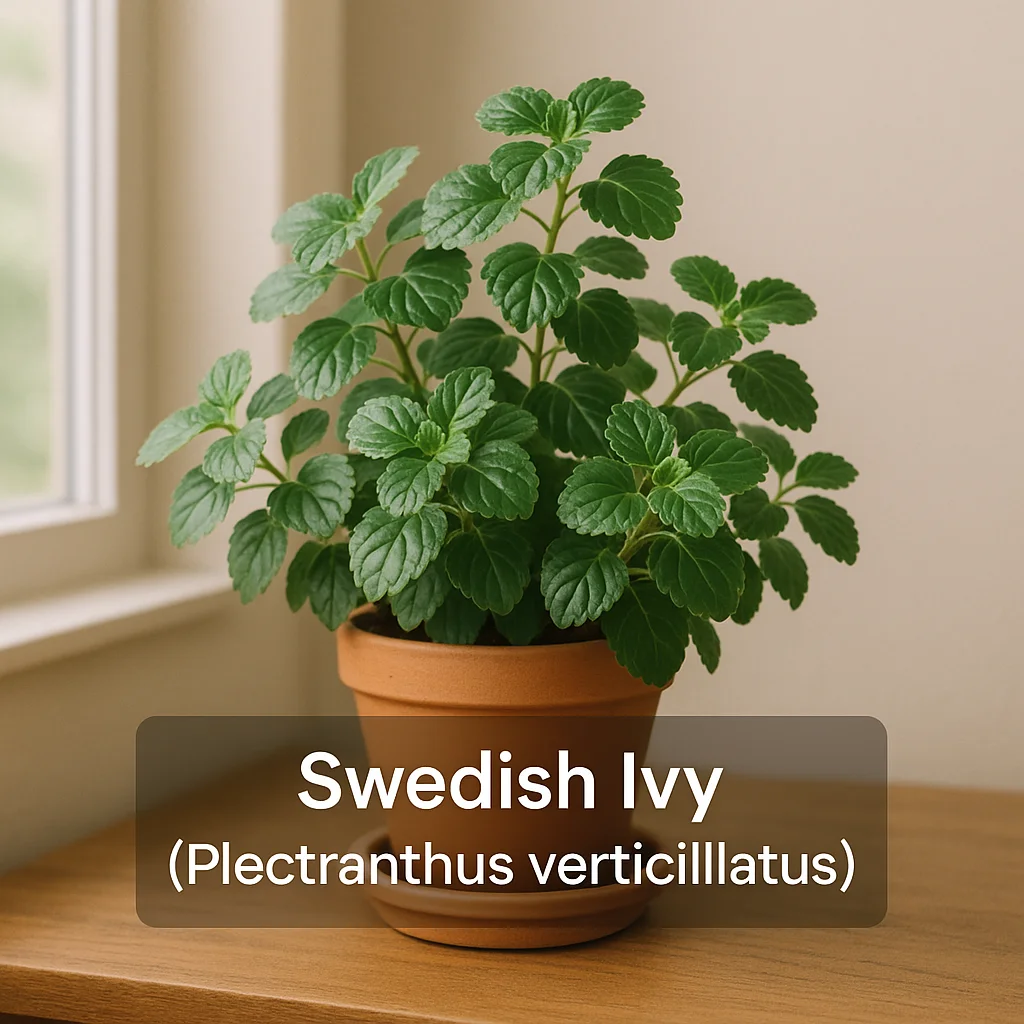
- Common names: Swedish Ivy, Creeping Charlie, Whorled Plectranthus
- Scientific name: Plectranthus verticillatus
- Plant type: Foliage
- Growth habit: Trailing
- Typical indoor size range: 6-12 inches high, 12-24 inches spread
- Growth speed: Fast
- Lifespan: Can live many years with care
- Origin: Southern Africa
- Light preference: Bright indirect
- Water needs: Moderate; allow soil to dry slightly between watering
- Temperature & humidity preference: Prefers moderate temperatures and humidity
- Pet safety: May be irritating/toxic to pets
- Difficulty: Easy
🔍 Identification & Look-Alikes
Swedish Ivy is characterized by its shiny, scalloped-edged leaves that are a vibrant green, often with a slightly wavy margin. The plant features a trailing stem structure, making it suitable for hanging baskets. While it can produce small white to pale lavender flowers, Swedish Ivy is primarily grown for its foliage.
Several other plant species might resemble Swedish Ivy. However, distinguishing features include the plant's glossy foliage and the distinct whorled arrangement of the leaves. In contrast, true ivies have a more pronounced lobed leaf pattern.
- Leaves are shiny with scalloped edges
- Trailing stems
- Primarily green, with little to no variegation
- Blooms are small and not very showy
- Not a true ivy, despite the common name
- Glossy foliage is a key identifying feature
- May resemble some types of mint plants
- Whorled leaf arrangement along the stems
- Trailing growth habit
🌍 Origin & Natural Habitat
Swedish Ivy originates from the subtropical regions of Southern Africa, where it naturally grows in the understory of forests. This environment provides it with filtered sunlight and a humid atmosphere, which contributes to its care preferences in indoor settings. Understanding its natural habitat helps in providing similar conditions at home, ensuring a healthy plant.
In its native habitat, it thrives under the canopy of larger trees, benefiting from their protection against direct sunlight and harsh weather conditions. During periods of rain, the plant flourishes, while it can also withstand relatively drier phases due to its adaptable, hardy nature.
☀️ Light Requirements
Swedish Ivy prefers bright indirect light, making it suitable for placement near east or north-facing windows. Direct sunlight should be avoided as it can scorch the leaves, especially when filtered through glass. Bright, indirect light ensures vibrant foliage and optimal growth.
In lower light conditions, Swedish Ivy may exhibit slower growth and its lush green color might fade. Conversely, too much direct sun can result in leaf burn and browning.
- Prefers bright, indirect sunlight
- East or north-facing windows are ideal
- Avoid direct sunlight to prevent leaf scorch
- Signs of too little light include leggy growth
- Fading leaf color may indicate inadequate light
- Adjust location if growth appears stunted
- Consider artificial lighting in darker rooms
- Rotate plant for even growth
💧 Watering & Humidity
Swedish Ivy thrives with moderate watering. The soil should be allowed to dry slightly between watering sessions, following a soak-and-drain method to ensure proper hydration without waterlogging the roots. Overwatering can lead to root rot, so it's crucial to gauge the moisture level regularly.
Humidity is also an essential factor. While Swedish Ivy can cope with average household humidity levels, it prefers slightly more humid environments. Increasing humidity can be as simple as placing a tray of water and pebbles near the plant or using a room humidifier.
Signs of underwatering include wilting leaves and drooping stems, whereas overwatering may cause yellowing leaves and root rot.
- Water when the top inch of soil feels dry
- Use a soak-and-drain method
- Avoid letting the plant sit in water
- Adjust watering frequency based on season
- Increase humidity with a pebble tray
- Misting can help raise humidity
- Check for wilted leaves indicating underwatering
- Yellow leaves may indicate overwatering
🐛 Soil, Pot & Repotting
A well-draining soil mix is vital for Swedish Ivy, as it prevents waterlogged conditions that can cause root damage. A mix containing peat, perlite, or sand will typically provide adequate drainage.
When choosing a pot, ensure it has drainage holes to allow excess water to escape. Terracotta pots are a good option as they are breathable, although plastic pots retain moisture longer.
Repotting is recommended every couple of years or when the plant becomes rootbound, as evidenced by slowed growth or roots emerging from the drainage holes. When repotting, choose a pot that is only slightly larger than the current one to prevent excessive soil moisture.
- Use a well-draining soil mix
- Ensure pots have drainage holes
- Consider using terracotta for better aeration
- Repot every 2-3 years or when rootbound
- Select a pot only slightly larger when repotting
- Avoid damaging roots during repotting
- Check soil moisture before watering post-repot
- Handle gently to prevent stem damage
🌡️ Temperature, Airflow & Seasonal Care
Swedish Ivy prefers standard indoor temperatures ranging from 65-75°F (18-24°C). It should be kept away from drafts, air conditioning vents or heaters, as sudden temperature changes can stress the plant.
During winter, growth naturally slows, so the watering frequency should be reduced. Ensure the plant is not exposed to cold drafts or temperatures below 50°F (10°C), which can cause damage or even dormancy.
Good airflow is necessary to prevent fungal issues, especially in overly humid conditions. Proper placement can mitigate these problems, as can occasional pruning to improve circulation.
- Prefers temperatures between 65-75°F (18-24°C)
- Avoid exposure to temperatures below 50°F (10°C)
- Keep away from drafts and vents
- Reduce watering frequency in winter
- Prune regularly to maintain airflow
- Ensure good air circulation around the plant
- Expect slower growth during cooler months
🌸 Flowers, Fruit & Growth Cycle
While Swedish Ivy can produce small white flowers under optimal conditions, it's generally grown for its foliage rather than its blossoms. Indoor flowering may not occur frequently and is highly dependent on light and nutrition levels.
The growth cycle is predominantly focused on leaf development. The plant has a trailing habit, producing new growth from the nodes along its stems. Regular pruning can help maintain a compact shape and promote bushier growth.
- Flowers are small and white
- Primarily a foliage plant
- Growth is rapid with adequate light
- Regular pruning encourages density
- Most growth occurs during warmer months
- Minimal indoor fruit production, if any
🧬 Propagation & Reproduction
Swedish Ivy is easily propagated through stem cuttings. Select a healthy stem and cut a 3-4 inch segment just below a node. Remove the lower leaves and place the cutting in water or a moist soil mix. Roots should form within a couple of weeks, after which the new plant can be potted.
Division is another method, although less common, particularly when repotting mature plants. This involves gently separating sections of the mother plant and placing them in new pots.
- Use stem cuttings for easy propagation
- Cut just below a node for best results
- Root cuttings in water or soil
- Expect rooting within 2-3 weeks
- Transplant rooted cuttings to pots
- Division is possible during repotting
🌿 Common Problems, Pests & Prevention
Common issues with Swedish Ivy include yellow leaves from overwatering, brown leaf tips due to low humidity, and drooping stems from underwatering. Air flow problems can lead to diseases, so ensure good ventilation.
Pests such as spider mites, mealybugs, and aphids occasionally infest Swedish Ivy. Regularly inspecting the plant and gently wiping leaves can help prevent infestations. If pests do appear, isolating the plant and manually removing pests is often effective.
- Yellow leaves usually mean overwatering
- Brown tips indicate low humidity
- Keep airflow consistent to prevent disease
- Inspect regularly for pests
- Wipe leaves to remove dust and pests
- Isolate affected plants from healthy ones
🐾 Pet & Home Safety Notes
Swedish Ivy leaves and stems can be irritating to pets if ingested. Symptoms are usually mild but consult a veterinarian or poison control if ingestion is suspected. Given this, it’s wise to place the plant out of reach of pets and children.
Secure the plant in a way that prevents accidental tipping, especially when using hanging baskets or higher shelves. Providing a dedicated plant area can deter curious pets.
🏡 Styling Ideas & Best Room Placement
Swedish Ivy’s trailing habit makes it perfect for hanging baskets, allowing the stems to cascade elegantly. It is a charming addition to kitchens, bathrooms, and living rooms due to its humidity preference.
Place it on shelves accompanied by taller plants or pair it with complementary greens such as ferns for lush indoor decor. Swedish Ivy thrives in well-lit kitchens or sunrooms, where its vibrant foliage can catch the light.
📌 Summary
- Swedish Ivy is a trailing plant suitable for hanging baskets
- Originates from Southern Africa, preferring bright indirect light
- Water moderately; let soil slightly dry between waterings
- Well-draining soil and regular repotting promote health
- Crucial to avoid cold drafts and maintain consistent temperatures
- Propagation is simple with stem cuttings
- Watch for common pests and maintain plant hygiene
- May be mildly toxic to pets—keep out of reach
- Great for added greenery in kitchens, bathrooms, and living areas