🌱 Yucca Cane (Yucca elephantipes)
🧾 Quick Facts
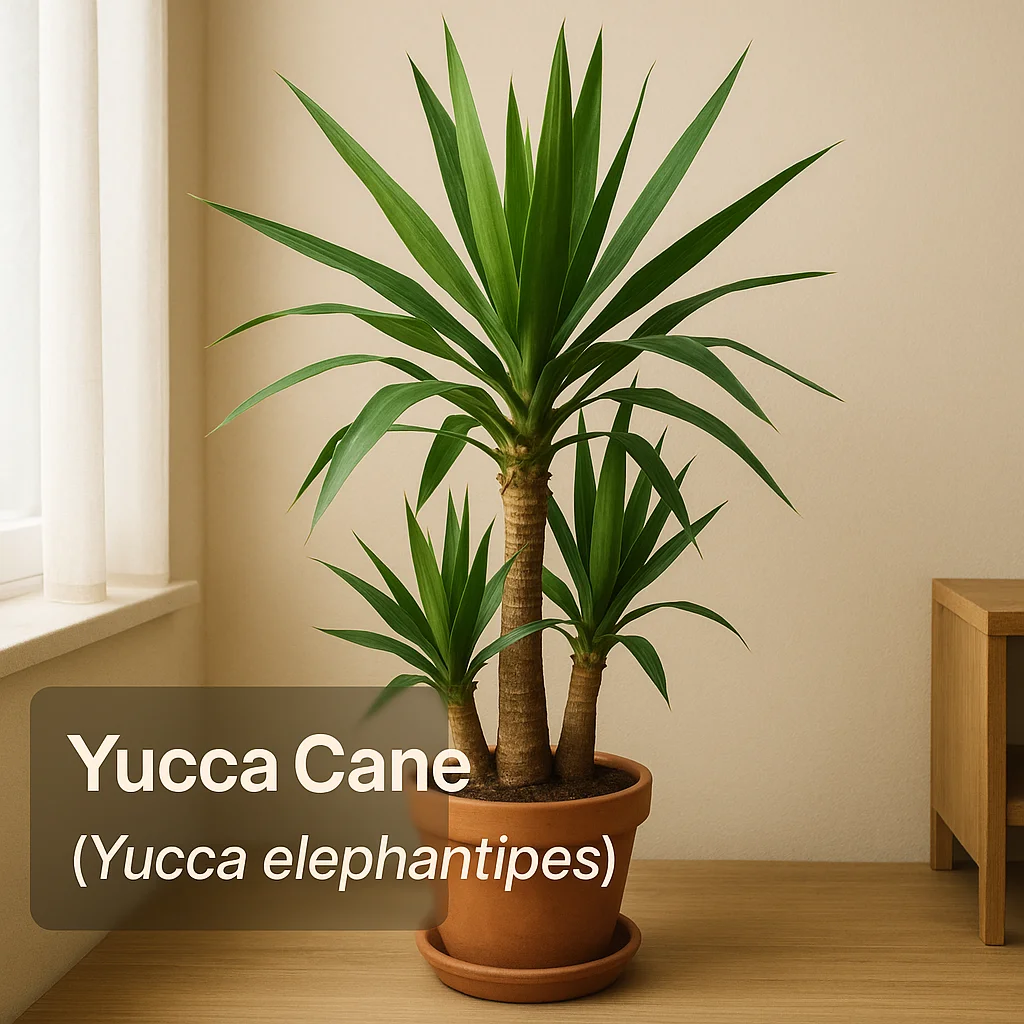
The Yucca Cane, scientifically known as Yucca elephantipes, is a popular houseplant cherished for its architectural appeal and hardy nature. This plant is known for its towering canes and sword-like leaves, making it a striking addition to any indoor environment.
- Common names: Yucca Cane, Spineless Yucca, Giant Yucca
- Scientific name: Yucca elephantipes
- Plant type: Succulent
- Growth habit: Upright, cane-like
- Typical indoor size range: 3 to 8 feet in height
- Growth speed: Moderate
- Lifespan: Can live many years with care
- Origin: Central America (Mexico to Guatemala)
- Light preference: Bright indirect light; tolerates some direct sun
- Water needs: Low; prefers to dry out between waterings
- Temperature & humidity preference: Enjoys average indoor temperatures; tolerates low humidity
- Pet safety: May be irritating/toxic to pets
- Difficulty: Easy
🔍 Identification & Look-Alikes
The Yucca Cane is easily recognized by its thick, woody stems, or "canes," which support a crown of long, sword-shaped leaves. These leaves are typically green, though variegated varieties exist, and the texture is usually smooth with a waxy finish. The leaf arrangement is rosettes, sprouting in clusters at the top of the canes.
While the Yucca Cane is predominantly grown for its foliage, it can occasionally produce clusters of white flowers under ideal conditions, although this is rare indoors.
Common confusions can occur between the Yucca Cane and other spiky-leaved plants such as the Dracaena or the Agave. The Yucca's distinctively woody canes and generally wider leaves help differentiate it.
- Top ID Tips:
- Upright growth with noticeable canes
- Sword-shaped leaves, usually green
- Clusters of leaves at cane tops
- Leaves smooth to the touch
- Occasionally produces white flowers indoors
- Sturdy, architectural profile
- Can be confused with Dracaena due to similar leaf structure
- Use cane texture and leaf width to differentiate
🌍 Origin & Natural Habitat
Yucca elephantipes is native to Central America, extending from southern Mexico to Guatemala. In its native habitat, it often grows in arid climates, flourishing on sandy soils and sometimes rocky terrains. This plant typically thrives in areas with full sun exposure and has adapted to withstand drought conditions. Understanding its preference for dry and sunny environments helps in replicating optimal growing conditions indoors by ensuring bright light and allowing soil to dry between waterings.
☀️ Light Requirements
Yucca Cane thrives in bright, indirect light but is also tolerant of a few hours of direct sun each day. West or south-facing windows are excellent choices for placement. While it can adapt to lower light levels, growth may be slower and leaves less robust.
Signs of insufficient light include elongated leaves that reach towards the light source and a general lack of vigor. Too much direct sunlight, however, can result in leaf burn, depicted as browning on leaf edges.
- Light Checklist:
- Position near a bright window for best growth
- Can tolerate some direct sunlight daily
- Adjust positioning if leaf scorch appears (move further from window)
- Avoid placement in purely low-light corners
- Observe growth patterns to refine light positioning
- Rotate the plant occasionally to encourage even growth
- Supplement with grow lights if necessary, especially in winter
- Ensure light is consistent year-round
💧 Watering & Humidity
Adopting a soak-and-drain watering method suits the Yucca Cane best. Allow the top 1-2 inches of soil to dry out between waterings. The plant is drought-tolerant, so erring on the side of underwatering is safer than overwatering, which can lead to root rot.
Larger pots or slower seasons like winter may require less frequent watering. Although the Yucca Cane isn't fussy about humidity, avoid overly damp conditions to prevent fungal issues.
Visible signs of too much water include yellowing leaves or a mushy base, while underwatering might be signaled by browning leaf tips or crispy leaves.
- Watering Tips:
- Allow soil to fully dry between waterings
- Reduce watering frequency in winter months
- Increase humidity slightly using a pebble tray, if desired
- Use well-drained pots to prevent waterlogging
- Check pot drainage: water should flow out quickly
- Avoid leaving plant sitting in standing water
- Adopt a reliable watering rhythm fitting your environmental conditions
- Modify watering if tips turn brown (underwatering) or yellow (overwatering)
🐛 Soil, Pot & Repotting
A well-draining soil mix typical for succulents works well for the Yucca Cane. Aim for a blend that retains some moisture but drains sufficiently to avoid waterlogging. Commonly, a mix of sand, perlite, and peat ensures these qualities.
Choose pots with good drainage capabilities. Terracotta is favorable because it allows moisture to evaporate through the walls, but plastic pots can also work with vigilant watering management.
Repot every two to three years or when roots visibly protrude from drainage holes. Growth stagnation can also signal the need for repotting. Gently upgrade pot size each time by one size.
- Repotting Checklist:
- Use gritty, well-draining soil
- Opt for pots with excellent drainage
- Repot when roots outgrow their current space
- Handle canes and roots carefully during transfer
- Choose slightly larger pots incrementally
- Repot in spring for optimal growth integration
- Ensure repotted plant is maintained in similar light conditions for minimal stress
- Replace soil completely if pests or pathogens are detected
🌡️ Temperature, Airflow & Seasonal Care
The Yucca Cane enjoys typical indoor temperatures ranging from 65°F to 80°F (18°C to 27°C). Avoid placing it near cold drafts or heating vents, as these can cause sudden temperature fluctuations detrimental to the plant.
While significant seasonal changes aren't necessary, growth may be slower in winter, necessitating reduced watering. Ensure good air circulation around the plant year-round to prevent mold and pest issues.
- Seasonal Notes:
- Maintain stable indoor temperatures (65°F-80°F)
- Avoid drafts from windows and doors
- Keep away from heat sources and air conditioning
- Expect and plan for slowed growth in winter
- Monitor and adjust watering according to growth rate
- Ensure consistent air flow around the plant
- Protect from sudden temperature shifts
🌸 Flowers, Fruit & Growth Cycle
While the Yucca Cane does have the ability to produce flowers, this is uncommon indoors, with blooms being more likely under optimal outdoor conditions during summer. If flowering occurs, expect white, bell-shaped blooms.
This plant follows a pattern of new leaf growth, mostly occurring at the top of canes. The base may occasionally sprout offsets, which can be used for propagation.
Pruning is straightforward: remove any dead or damaged leaves as necessary with clean tools to maintain the plant's aesthetic and health.
🧬 Propagation & Reproduction
Propagation of the Yucca Cane can be done through cane cuttings or division of offsets, though it's usually more successful in spring. To propagate from cane, cut a section and allow it to dry before planting in soil. Rooting hormones can expedite the process but aren’t necessary.
Alternatively, offsets at the base of the plant can be separated when they have grown sufficiently large.
Seeding is possible, though it's an uncommon method due to time and complexity.
- Propagation Tips:
- Stick to healthy cane sections for cuttings
- Ensure cut sections dry slightly before planting
- Use well-drained soil for any new planting
- Start in spring for best success rates
- Monitor moisture carefully in newly planted cuttings
- Consider rooting hormone for quicker results
- Avoid propagating during winter dormancy
🌿 Common Problems, Pests & Prevention
Common issues observed with the Yucca Cane include yellowing leaves from overwatering or root rot, brown leaf tips from underwatering or low humidity, and leggy growth from insufficient light.
Ocassional pests may include spider mites, mealybugs, and scale. Fungus gnats may arise from overly moist soil conditions.
To prevent such problems, maintain stable care practices, ensure airflow, and clean leaves periodically. Quarantine new plants before introducing them to established collections.
- Prevention Basics:
- Maintain proper watering routine
- Provide adequate light to prevent legginess
- Regularly check for pest signs
- Isolate new plants before inclusion into household
- Clean leaves to remove dust and potential pest eggs
- Ventilation reduces pathogen risk
- Avoid over-fertilization which causes root burn
🐾 Pet & Home Safety Notes
Some sources list parts of the Yucca Cane as potentially irritating or toxic to pets and children if ingested, usually causing mild discomfort. Keeping plants out of reach or using plant barriers can help mitigate risks. In the case of suspected ingestion, contact a professional or local poison control resources.
🏡 Styling Ideas & Best Room Placement
The Yucca Cane's dramatic form makes it a striking feature in living rooms or offices. Its resilience in less humid environments also makes it suitable for most rooms, excluding areas of extreme moisture like unventilated bathrooms.
Pairing with other architecturally interesting plants enhances its visual appeal, while broader baskets highlight its sculptural form. Its vertical growth suits corner placements where floor space is limited.
📌 Summary
- ID highlights: Sword-shaped leaves on woody canes
- Origin: Central America (arid climates)
- Light: Prefers bright, indirect light
- Watering: Allow soil to dry completely between waterings
- Soil/Repotting: Use well-draining succulent mix; repot infrequently
- Temperature: 65°F-80°F with stable airflow
- Propagation: Cane cuttings or offsets
- Common issues: Yellowing, browning tips, pest susceptibility
- Difficulty: Easy to care for
- Key cautions: Irritation if ingested; keep out of reach of pets/children