🌱 Clivia miniata (Clivia)
🧾 Quick Facts
The Clivia miniata, commonly known as Clivia, is a cherished houseplant admired for its vibrant blooms and resilient foliage. It's a versatile plant that can add a splash of color to indoor settings, especially with its striking flowers that flourish under the right conditions.
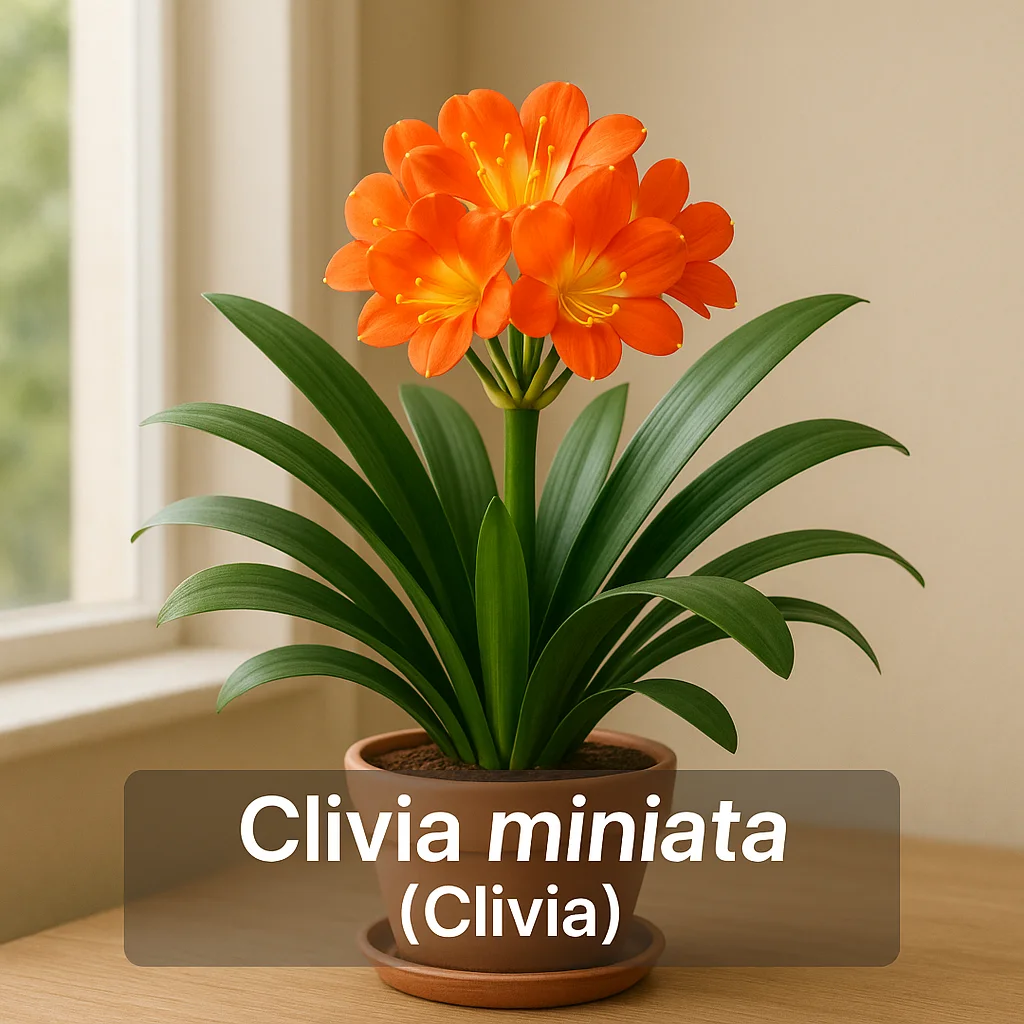
- Common names: Clivia, Bush Lily, Kaffir Lily
- Scientific name: Clivia miniata
- Plant type: Flowering
- Growth habit: Upright, rosette
- Typical indoor size range: 12-24 inches tall and wide
- Growth speed: Moderate
- Lifespan: Can live many years with care
- Origin: Southern Africa; forest understory
- Light preference: Bright indirect light
- Water needs: Moderate; prefers drying out slightly between waterings
- Temperature & humidity preference: Moderate temperatures, prefers humidity
- Pet safety: May be irritating/toxic to pets
- Difficulty: Easy to medium
🔍 Identification & Look-Alikes
Clivia miniata is easily recognized by its robust, dark green, strap-like leaves arranged in a fan shape. These leaves are smooth with a glossy finish and grow from a thickened, non-woody base, reaching up to 24 inches long. During its blooming period, Clivia produces umbel-like clusters of trumpet-shaped flowers that range from pale orange to deep red, occasionally yellow, lasting several weeks.
Clivia is often confused with plants like Agapanthus due to similar leaf structures but can be distinguished by its thicker, fleshier leaves and vibrant orange flowers.
- Top ID Tips:
- Robust, strap-like, dark green leaves
- Leaves arranged in a fan shape
- Non-woody base from which leaves emerge
- Umbel clusters of trumpet-shaped flowers
- Flowers range from orange to red, sometimes yellow
- Glossy leaf surface
- Generally thicker leaves than look-alikes
🌍 Origin & Natural Habitat
The Clivia miniata originates from the forest undergrowth of southern Africa, thriving in well-shaded, humid environments. Being native to regions with a relatively stable climate, Clivia is accustomed to environments that do not experience frost. It often grows beneath the canopy of trees, which provides it with filtered light and high humidity.
Understanding Clivia's natural habitat helps indoor growers replicate similar conditions by ensuring appropriate levels of light and humidity, thus supporting its health and bloom indoors.
☀️ Light Requirements
Clivia thrives in bright, indirect light, similar to the dappled sunlight it receives in its native understory habitat. A north or east-facing window works well, providing ample but indirect light. Direct, harsh sunlight can scorch the leaves, while too little light may inhibit blooming and lead to a leggy appearance.
- Light Checklist:
- Place near a north or east-facing window
- Avoid harsh afternoon sun
- Ensure bright, indirect light for flowering
- Signs of low light: Leggy growth, reduced flowering
- Signs of too much light: Leaf scorch
- Rotate plant every few weeks for even light exposure
💧 Watering & Humidity
Water Clivia thoroughly, allowing the top inch of soil to dry out between waterings. This soak-and-drain method prevents root rot while providing necessary hydration. The watering frequency will vary with the season and pot size—more frequent in summer and less in winter when growth slows. Clivia appreciates higher humidity, which can be supported by placing it on a pebble tray or using a humidifier.
Overwatering can lead to root rot, while underwatering results in dry, brown leaf tips.
- Watering Tips:
- Water when top inch of soil feels dry
- Adjust frequency seasonally (more in summer)
- Support humidity with pebble trays
- Signs of overwatering: Yellowing leaves
- Signs of underwatering: Brown leaf tips
- Ensure pot provides good drainage
🐛 Soil, Pot & Repotting
Clivia benefits from a well-draining potting mix, such as one formulated for cacti or succulents combined with organic matter to retain some moisture. Use pots with adequate drainage holes to prevent waterlogging. Repot Clivia every 2-3 years or when it becomes rootbound—this is typically when roots appear on the soil surface or escape through drainage holes.
When repotting, handle the roots gently and avoid damaging them. Opt for a slightly larger pot to allow room for growth.
- Repotting Checklist:
- Use well-draining potting mix
- Select pots with drainage holes
- Repot every 2-3 years or if rootbound
- Gently loosen root ball when repotting
- Avoid pots significantly larger than current size
- Water thoroughly post-repotting
🌡️ Temperature, Airflow & Seasonal Care
Clivia prefers temperate conditions, thriving between 60-75°F. It should be kept away from cold drafts and extreme temperatures, as fluctuations can stress the plant. During winter, Clivia enters a dormancy period with a reduction in watering and cooler temperatures favoring blooming in spring.
Provide good airflow to avoid stagnation, but avoid placing Clivia directly in the path of fans or vents, which can dry out leaves.
- Seasonal Notes:
- Maintain temperatures between 60-75°F
- Avoid cold drafts and temperature spikes
- Reduce watering during dormancy
- Increase light levels slightly in winter
- Facilitate gentle airflow in room
- Move out of heat sources' direct path
🌸 Flowers, Fruit & Growth Cycle
Clivia is known for its stunning blooms that emerge typically in early spring to summer. The flowers form as clusters atop tall stalks rising above the foliage. Despite being primarily grown for its showy flowers, it does not commonly produce fruit indoors. The plant participates in seasonal cycles, with sentiment growth during active periods and a visible dormancy period in the winter.
Pruning Clivia is minimal—remove spent flowers and yellowing leaves to maintain plant health.
🧬 Propagation & Reproduction
Clivia is most commonly propagated through division or offsets, which appear beside the main plant as it matures. Remove and pot them up when roots form and they are several inches tall. Although Clivia can also be grown from seeds, this method is lengthy and not common among home growers.
- Propagation Tips:
- Divide clumps during repotting
- Wait for offsets to develop roots
- Use sterilized tools to prevent infection
- Maintain high humidity for new divisions
- Allow divisions time to establish in new pots
🌿 Common Problems, Pests & Prevention
While Clivia is relatively hardy, common issues include yellowing leaves due to excessive watering and brown tips from insufficient humidity. Common pests are spider mites and mealybugs, which must be addressed promptly to prevent spread.
Prevent problems by maintaining consistent care, regularly cleaning leaves free of dust, ensuring pots have good drainage, and observing your plant’s health regularly.
- Prevention Basics:
- Quarantine new plants before introducing
- Inspect regularly for pests
- Keep leaves clean to prevent mites
- Monitor watering closely
- Ensure appropriate light levels
- Allow air circulation around plants
🐾 Pet & Home Safety Notes
Clivia miniata is considered to have moderate toxicity to pets and children if ingested, with potential to cause stomach upset. It's wise to position it out of reach of curious pets and children, and should ingestion be suspected, contacting a professional or local poison control resources is advised.
Ensure Clivia is placed in taller spaces or behind barriers to prevent accidental contact.
🏡 Styling Ideas & Best Room Placement
Clivia’s vibrant flowers and structured leaves make it suitable for a variety of indoor settings. Its preference for humidity makes it suitable for bathrooms and kitchens. Consider placing Clivia on a shelf or in floor pots where its long leaves can elegantly cascade.
Pairings with other humidity-loving plants like ferns or peace lilies can create cohesive and aesthetically pleasing arrangements.
📌 Summary
- Attractive blooms with trumpet-shaped orange flowers
- Originates from forest understory of southern Africa
- Thrives in bright, indirect lighting conditions
- Moderate watering, let soil dry slightly between waterings
- Prefers well-draining soil in pots with drainage holes
- Best kept between 60-75°F, avoid drafts
- Propagated through offsets/division; seeds are more challenging
- Susceptible to spider mites, mealybugs; requires preventive care
- Moderately toxic; place out of reach of pets/children
- Ideal for bathrooms/kitchens; pairs well with humidity-loving plants