🌱 Cyclamen persicum (Cyclamen)
🧾 Quick Facts
The Cyclamen persicum, commonly known simply as Cyclamen, is a beloved houseplant renowned for its vibrant flowers and attractive foliage. Native to the Mediterranean region, it has become a popular indoor plant, especially in cooler climates.
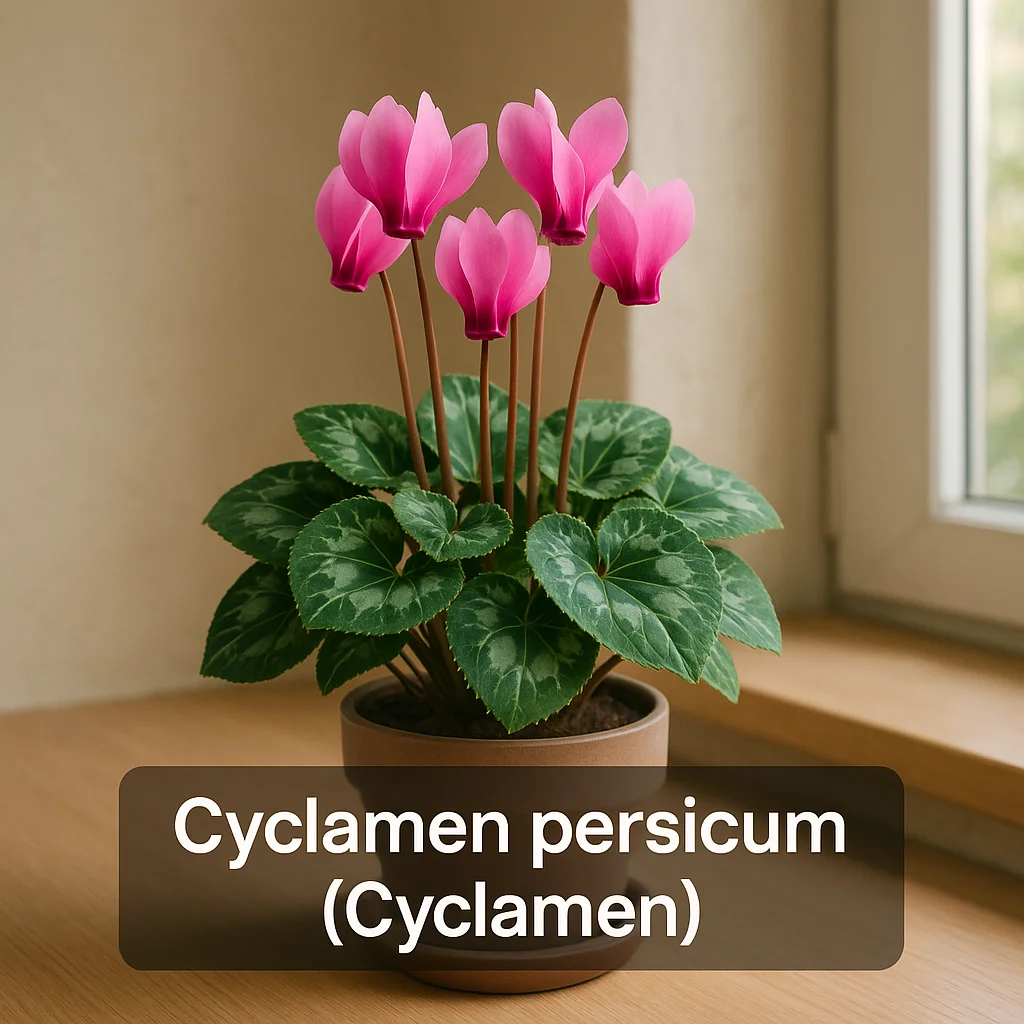
- Common names: Cyclamen, Persian Cyclamen
- Scientific name: Cyclamen persicum
- Plant type: Flowering
- Growth habit: Rosette
- Typical indoor size range: 6–10 inches in height and spread
- Growth speed: Moderate
- Lifespan: Perennial; can live for several years with proper care
- Origin: Mediterranean region
- Light preference: Bright indirect light
- Water needs: Moderate; allow the soil to dry slightly between waterings
- Temperature & humidity preference: Cool temperatures; low to moderate humidity
- Pet safety: May be irritating/toxic to pets
- Difficulty: Medium
🔍 Identification & Look-Alikes
Cyclamen persicum is recognized by its heart-shaped leaves which are often marked with silver patterns. The flowers are the main attraction, coming in shades of pink, red, white, and purple, with petals that flare backward. The plant grows in a compact rosette form, with short stems emerging from a tuberous base.
While enjoying the charm of Cyclamen, it's important to discern it from look-alike species like the Primula or similar small flowering plants. Primula leaves are generally less variegated and more rounded.
- Veined, heart-shaped leaves with silver patterns
- Flowers with reflexed petals in bright colors
- Tuberous base with no upward growth stems
- Compact rosette formation
- Flowers rise above the foliage
- Short bloom stalks
- Pungent fragrance during flowering
- Seasonal dormancy phase identifiable
🌍 Origin & Natural Habitat
The Cyclamen persicum is native to the Mediterranean basin, flourishing naturally in areas such as southern Turkey, Israel, Jordan, and the Greek islands. It typically grows in shaded forest understories or rocky crevices where it receives protection from harsh sunlight. Its natural habitat experiences cool seasons and mild, moist conditions with a distinct dry period in summer which informs its indoor care, emphasizing the need for dormancy.
☀️ Light Requirements
For best results, place Cyclamen in bright indirect light. This could be near an east or north-facing window. Bright indirect light means your plant receives plenty of ambient light, but not direct sunlight which might scorch its leaves. If the light is insufficient, you may notice a lack of flowering or elongated leaves. Conversely, too much sunlight can cause leaf scorch.
- Place near east or north-facing windows
- Avoid direct sunlight; filtered light is ideal
- Ensure light balance; too little impacts flowering
- Monitor for leaf scorch signs
- Rotate periodically for even growth
- Avoid proximity to harsh artificial lighting
- Position away from deep shade areas
- Consider artificial grow light support in dim settings
💧 Watering & Humidity
Cyclamen prefers a soak-and-dry watering routine where the soil is allowed to dry out a bit between waterings. During active growth and flowering, water until it drains from the pot's base and let the top inch of soil dry before the next soak. Adjust watering according to the pot size, light exposure, and season. Lower humidity is tolerable, but avoid excessively dry environments. Signs of overwatering include yellowing leaves and root rot, whereas wilting may indicate underwatering.
- Use soak-and-drain watering method
- Allow topsoil to dry slightly between waterings
- Reduce watering during dormancy
- Adjust watering frequency by light and pot size
- Monitor root health; avoid waterlogging
- Lower humidity requirements
- Avoid wetting the plant’s crown directly
- Dry season watering decrease
- Monitor leaf color for watering cues
🐛 Soil, Pot & Repotting
Use a well-draining soil mix, ideally peat-based with added perlite or sand to enhance drainage for Cyclamen. Opt for pots with adequate drainage holes; terracotta pots are preferable as they help with moisture evaporation. Repotting is typically needed every couple of years or when the pot becomes cramped with new tuber growth visible. When repotting, choose a pot only slightly larger than the current one and handle the plant gently.
- Use peat-based, well-draining soil mix
- Add perlite or sand for drainage
- Choose pots with ample drainage holes
- Repot every 1-2 years or when rootbound
- Select terracotta for better moisture regulation
- Gently remove old soil during repotting
- Avoid damaging the tuber when repotting
- Only repot during the active growth phase
- Topsoil refresh between repots
🌡️ Temperature, Airflow & Seasonal Care
Ensure your Cyclamen remains in a cool environment, ideally between 50-65°F. Avoid placing near drafts or heating vents since sudden temperature changes can stress the plant. Cyclamen undergoes a dormant period post-flowering; lesser water is required during this time while reducing ambient temperature if possible. Avoid excessive airflow directly onto the plant as it may dry the delicate leaves.
- Comfortable in 50-65°F range
- Avoid drafts from windows or doors
- Monitor seasonal watering adjustment
- Behaves dormant in warmer, dry months
- Reduce watering significantly during dormancy
- Protection from direct airflow
- AC/heater vent drafts to be avoided
- Stable temperature promotes steady growth
🌸 Flowers, Fruit & Growth Cycle
Cyclamen is mainly grown for its flowers, which can bloom indoors during the winter months when most plants are dormant. Its vibrant blooms rise above the foliage and add a splash of color to your interior. The plant does not typically produce fruit indoors. Regular removal of spent blooms and dead leaves can help maintain plant health and appearance.
🧬 Propagation & Reproduction
Propagation of Cyclamen is generally done through seed, though it can be a painstaking process best suited to experienced growers. Cyclamen plants are also propagated via division, detailed by splitting tubers during repotting. Care must be taken to ensure each divided portion has substantial roots attached.
- Seed propagation yields genetic variation
- Best propagated by division
- Handle tubers gently during division
- Divide in the dormant season for minimal stress
- Observe tuber size before division suitability
- Avoid hurried propagation without readiness
- Optimal patience for seed method growers
🌿 Common Problems, Pests & Prevention
The most common issues with Cyclamen include yellowing leaves from improper watering and signs of root rot. Pests such as spider mites and mealybugs can occasionally attack Cyclamen, especially in overly humid conditions. Physical removal and quarantine can help prevent serious infestations. Regular inspections of leaves and surrounding soil, coupled with consistent care, minimize pest issues.
- Inspect leaves for yellowing or browning
- Monitor soil moisture to prevent root rot
- Quarantine new plants before adding to the collection
- Check undersides of leaves for pests
- Remove pests manually when noticed
- Ensure good airflow without drying out
- Stable watering and light reduce stress indications
- Discourage weed growth in the soil
🐾 Pet & Home Safety Notes
Cyclamen contains compounds in its tubers that can be irritating and possibly toxic if ingested by pets. Placing the plant out of reach of pets and young children, who may be inclined to chew on foliage, is advisable. In the event of suspected ingestion, contact a professional or local poison control center promptly.
🏡 Styling Ideas & Best Room Placement
The vivid flowers of Cyclamen make it an excellent decorative piece for cooler rooms like the kitchen or bathroom, where its light and temperature preferences can be well managed. It can also be styled on a cool windowsill, complemented by complementary houseplants like ferns which offer a contrasting foliage effect. Avoid placing Cyclamen too close to heat sources or high traffic areas where it may be disturbed.
📌 Summary
- Heart-shaped, silver-patterned leaves
- Native to the Mediterranean; enjoys cool, bright settings
- Avoid direct sunlight to prevent leaf scorch
- Water with a soak-and-dry routine; keep root zone well-drained
- Pot with drainage; terracotta preferred to control moisture
- Cool temperature and stable light ensure optimal growth
- Propagation via division of tubers is common
- Frequent checks deter common pests effectively
- Can irritate pets; ensure out of reach placement
- Medium difficulty; requires attention to watering and light
- Recommended for dynamic room styling