🌱 Hibiscus rosa-sinensis (Tropical Hibiscus)
🧾 Quick Facts
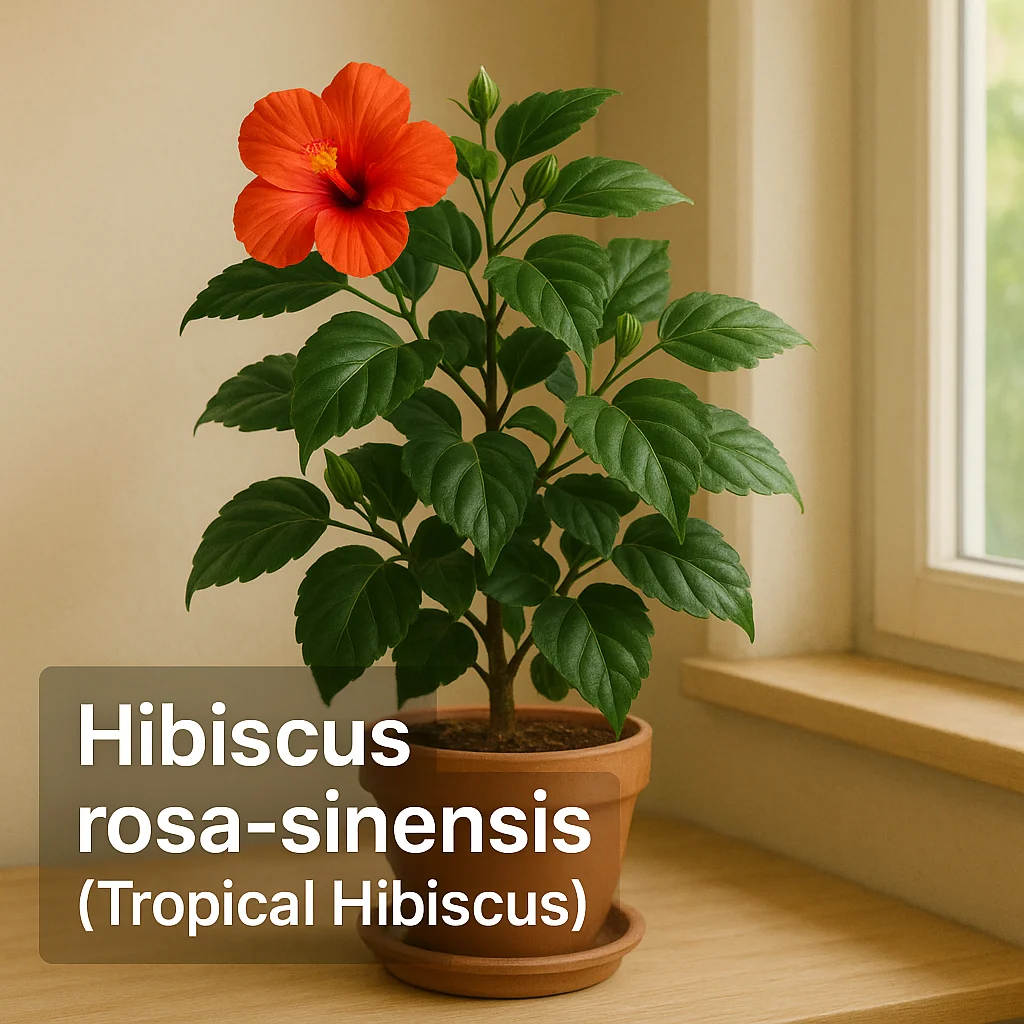
The Hibiscus rosa-sinensis, commonly known as Tropical Hibiscus, is a vibrant flowering plant cherished for its large, decorative blooms. Native to warm climates, it can be an eye-catching addition to indoor gardens when proper conditions are provided.
- Common names: Tropical Hibiscus, Chinese Hibiscus, Hawaiian Hibiscus
- Scientific name: Hibiscus rosa-sinensis
- Plant type: Flowering shrub
- Growth habit: Upright and bushy
- Typical indoor size range: 3 to 5 feet in height, spread varies
- Growth speed: Moderate
- Lifespan: Can live many years with care
- Origin: East Asia, tropical and subtropical regions
- Light preference: Bright indirect light; tolerates some direct sunlight
- Water needs: Moderate; prefers to stay lightly moist
- Temperature & humidity preference: Warm, 60-85°F; prefers higher humidity
- Pet safety: May be mildly irritating to pets
- Difficulty: Medium
🔍 Identification & Look-Alikes
The Tropical Hibiscus is easily identified by its lush, glossy green leaves and striking flowers, which may range in color from red, yellow, pink, to orange. The leaves are often oval with serrated edges and are arranged alternately on the stem. The tubular flowers are typically large, with a protruding pistil and stamen, adding to their distinctive appearance.
Common look-alike plants include other hibiscus species and flowering shrubs like oleander. Differences can be distinguished by flower size, leaf texture, and growth form.
- Large, often bright-colored flowers with a protruding stamen
- Glossy, serrated-edge leaves
- Upright, bushy growth habit
- Flowers borne singly or in clusters
- Often blooms year-round in the right conditions
- Look for alternate leaf arrangement along stem
- Distinctive, prominent flower parts (stigma and stamens)
- Stem may be woody in appearance, especially older plants
🌍 Origin & Natural Habitat
The Tropical Hibiscus is native to East Asia and warm tropical and subtropical regions, commonly found in environments like forest margins and mountain slopes. Understanding its natural habitat helps gardeners mimic these conditions indoors by ensuring warm temperatures and sufficient light.
In the wild, it typically grows as an understory shrub that thrives in warm, humid conditions with a distinct wet and dry season cycle. Maintaining consistent warmth alongside good air circulation and humidity levels is key to thriving hibiscus growth indoors.
☀️ Light Requirements
For optimal flowering, Hibiscus rosa-sinensis prefer bright, indirect light. A south or west-facing window can offer enough light, while occasional direct sunlight can promote blooming. However, too much direct sunlight might scorch leaves, so filtered sunlight or sheer curtains are recommended.
Growth and flowering may slow with inadequate light, signaling the need for brighter placement.
- Best with bright, indirect sunlight
- Can tolerate some direct morning or late afternoon sun
- Consider rotating the plant for even growth
- Move if leaves pale or growth is leggy (seek more light)
- If leaves scorch or curl, reduce direct sunlight exposure
- Bright grows better; dim light sacrifices flowers
- Avoid placing in deep shade
- Use grow lights in darker seasons/regions
💧 Watering & Humidity
Water your Tropical Hibiscus when the top inch of soil feels dry. Ensure the potting mix is well-draining to prevent waterlogging. Increase watering frequency slightly during active growth periods and decrease in cooler months. Pot size, light, and season affect watering needs, with larger pots retaining moisture longer.
Higher humidity levels are preferable. Increase humidity with pebble trays or humidifiers if air is dry, particularly during winter heating.
- Water once top inch of soil dries out
- Ensure pot drains freely to avoid root rot
- Reduce watering in low-light conditions
- Increase watering frequency in warmer months
- Moderate to high humidity support healthier growth
- Wilting or dull leaves often indicate water deficiency
- Yellow leaves might point to overwatering
- Avoid leaving plant in standing water
🐛 Soil, Pot & Repotting
Well-draining potting soil is crucial for Hibiscus rosa-sinensis, often achieved with a mix containing peat, pine bark, and coarse sand. Pots with drainage holes are necessary to prevent water accumulation.
Repot every 1-2 years, preferably in spring, when roots fill the pot. Increase pot size conservatively to prevent shifting moisture dynamics. Signs for repotting include roots circling the pot and slowed growth.
- Use a rich, airy, well-draining soil mix
- Ensure pots have suitable drainage holes
- Consider terracotta pots for increased airflow
- Repot in spring for optimal root establishment
- When repotting, gently loosen root ball
- Repot into slightly larger vessel (1-2 inches wider)
- Monitor root system for health (no rot or crowding)
- Add organic matter to improve soil nutrition
🌡️ Temperature, Airflow & Seasonal Care
The Tropical Hibiscus thrives between 60-85°F. Protect from cold drafts, air conditioning vents, or sudden temperature changes. Growth slows in winter; adjust care by reducing water and fertilization.
Provide good airflow to reduce fungal issues, but avoid placing the plant in drafty areas.
- Keep temperature between 60-85°F
- Reduce draft exposure (e.g., windows, doors)
- Maintain steady indoor temperatures
- Space out watering during cooler months
- Expect and plan for slowed growth in winter
- Avoid sudden temperature swings
- Winter dormancy might require less light and water
- Locate away from heat sources or cold windows
🌸 Flowers, Fruit & Growth Cycle
The Tropical Hibiscus is prized for its lush blooms that commonly appear year-round under good conditions. It doesn’t typically set fruit indoors. Expect new leaf and shoot growth during spring, and prune as needed to maintain shape and remove dead or crowded branches.
Regular pruning encourages a bushier form and tidier appearance without affecting blooming potential.
🧬 Propagation & Reproduction
Propagation is commonly achieved via stem cuttings, which root well under warm, humid conditions. Cuttings can be taken in spring or early summer. Leaf propagation is not viable for hibiscus, and seed propagation, while possible, is often more challenging for home growers.
- Use healthy, non-flowering stems for cuttings
- Ensure cuttings have a few nodes for optimal rooting
- Root in a warm, humid environment
- Consider rooting hormone to aid success
- Water cuttings to maintain consistent moisture
- Monitor for new growth as a success sign
- Spring/summer are best seasons for propagation
- Propagated plants may take time to flower
🌿 Common Problems, Pests & Prevention
Common challenges include yellowing leaves, indicative of overwatering or nutrient imbalances, and drooping from water stress. Pests like spider mites and mealybugs can visit, remedied by gently washing the plant and improving airflow.
Prevent problems by maintaining plant health through stable care, routine observation, and ensuring cleanliness.
- Check soil moisture to diagnose yellow leaves
- Regularly inspect for pests like mites
- Gently wash leaves to remove dust and pests
- Protect from drafts and rapid temperature changes
- Avoid excessive fertilization (can lead to root burn)
- Ensure good air circulation
- Quarantine new plants to prevent pest spread
- Whitefly and aphid issues can be managed with natural solutions
🐾 Pet & Home Safety Notes
Some sources list hibiscus as mildly irritating to pets if ingested. To prevent issues, place the plant out of pets' reach and consider training them to avoid nibbling on greenery.
If ingestion is suspected, contact a professional or local poison control resources promptly.
🏡 Styling Ideas & Best Room Placement
The Tropical Hibiscus can brighten living spaces like sunny living rooms or kitchens. It thrives best with abundant natural light, so avoid dim rooms. Consider placing it on plant stands or in decorative pots for added aesthetic appeal. Pair with other tropical or flowering plants for a vibrant, lush visual.
Hibiscus plants bring color and are striking in clusters or as focal points, ideally suited to warmer, humid rooms without drafts.
📌 Summary
- Identified by its large colorful flowers and glossy leaves
- Native to tropical Asia, loves warm and humid conditions
- Prefers bright indirect light; tolerates some direct sun
- Water when topsoil dries out; prefers consistent moisture
- Thrives in rich, well-draining soil; repot annually
- Temperature between 60-85°F is ideal
- Easily propagated from stem cuttings
- Moderate difficulty; watch for overwatering and pests
- May be mildly irritating to pets if ingested
- Style in bright rooms with ample humidity and no drafts