🌱 Phalaenopsis (Moth Orchid)
🧾 Quick Facts
Phalaenopsis, commonly known as Moth Orchids, are popular houseplants celebrated for their long-lasting flowers and ease of care. They are often the choice for novice orchid enthusiasts due to their forgiving nature and adaptability to indoor conditions.
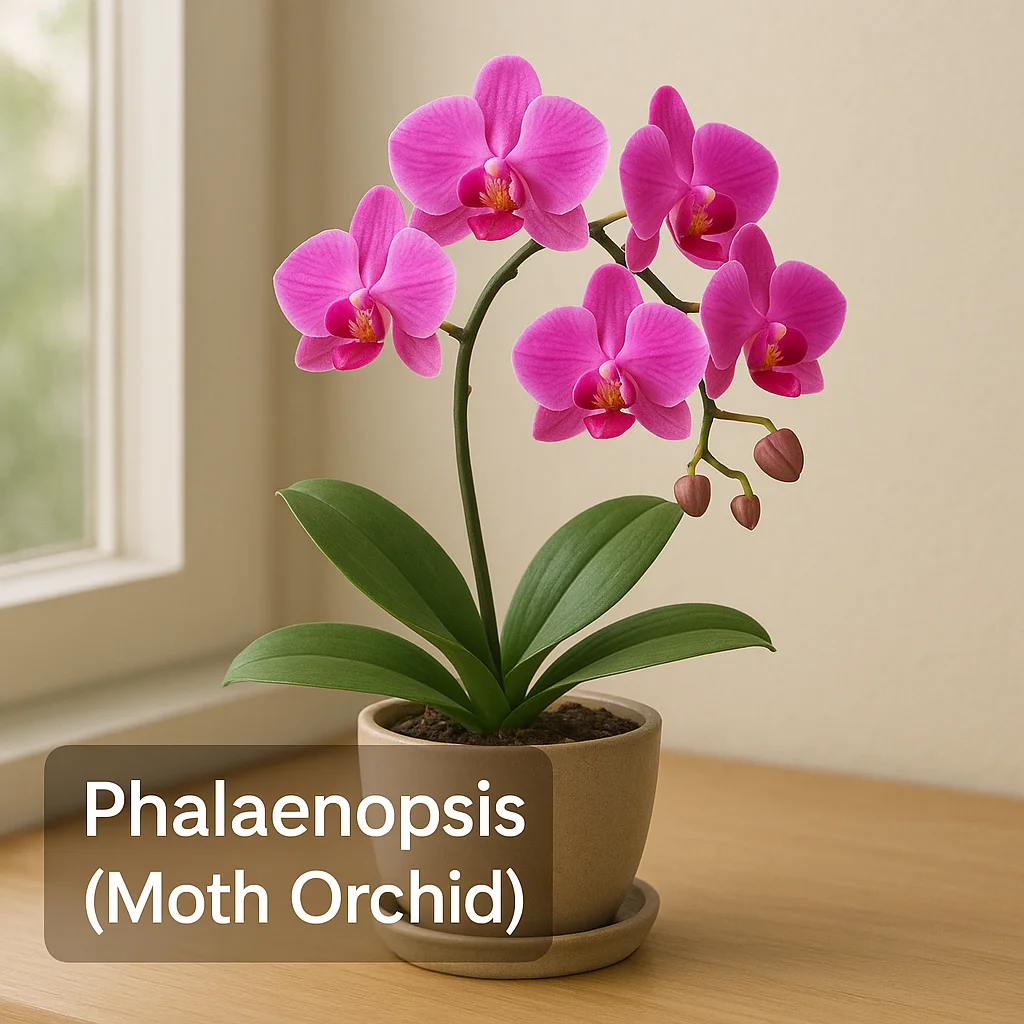
- Common names: Moth Orchid
- Scientific name: Phalaenopsis (varies by species and hybrid)
- Plant type: Flowering
- Growth habit: Upright
- Typical indoor size range: 8–36 inches in height
- Growth speed: Slow to moderate
- Lifespan: Can live many years with proper care
- Origin: Southeast Asia, tropical forests
- Light preference: Bright indirect light
- Water needs: Low to moderate; prefer drying out between waterings
- Temperature & humidity preference: Warm temperatures and moderate humidity
- Pet safety: Generally considered pet-friendlier
- Difficulty: Easy to medium
🔍 Identification & Look-Alikes
Phalaenopsis orchids are easily recognized by their broad, leathery leaves and long, arching flower spikes adorned with large, flat blooms that resemble moths in flight. The leaves are typically dark green and smooth, growing in a rosette pattern from the base of the plant. The flower spikes rise from the center, bearing flowers in various colors including white, pink, yellow, and spotted patterns.
While they are unique in appearance, look-alikes such as Dendrobium orchids can be distinguished by their more slender canes and a tendency to have smaller blossoms.
- Top ID Tips:
- Long flower spikes with multiple large blooms
- Broad, fleshy leaves in a rosette pattern
- Variegated flower colors and patterns
- Smooth leaf texture
- Thick aerial roots emerging from the base
- Moth-like appearance of blooms
- Commonly found in orchid mixes and arrangements
- Thick leaves compared to more delicate orchid types
🌍 Origin & Natural Habitat
Phalaenopsis orchids are native to Southeast Asia, including regions such as the Philippines, northern Australia, and the Malaysian archipelago. They thrive in warm, humid climates, often found growing as epiphytes on trees in lowland forests. Understanding their natural epiphytic habits helps inform appropriate indoor care, emphasizing the need for well-draining mediums and higher humidity.
☀️ Light Requirements
Moth Orchids prefer bright, indirect light, similar to the dappled sunlight they receive in forest canopies. Windows facing east or west are typically suitable, providing gentle morning or afternoon light. Excessive direct sunlight can scorch the leaves, while too little light may inhibit blooming.
- Light Checklist:
- East or west-facing windows are ideal
- Avoid direct midday sun which can be too harsh
- Bright indirect light promotes blooming
- Use sheer curtains to diffuse direct sunlight
- Watch for yellowing leaves as a sign of too much light
- Pale, elongated leaves indicate insufficient light
- Rotate the plant periodically for even growth
- Consider supplemental grow lights in low-light environments
💧 Watering & Humidity
Phalaenopsis orchids thrive on a soak-and-dry watering schedule. Water thoroughly, allowing the water to completely drain away, and then let the medium dry out before watering again. This mimics the natural, periodic rainfalls of their native habitats. Adequate humidity is beneficial, typically ranging around 50%–70%.
- Watering Tips:
- Ensure pots have drainage holes
- Water when the medium feels dry to the touch
- Avoid letting roots sit in water
- Use lukewarm, distilled, or rainwater for best results
- Increase humidity with trays of water or humidifiers
- Overwatering leads to root rot; ensure roots are light green and plump
- Wrinkled leaves can indicate underwatering
🐛 Soil, Pot & Repotting
Being epiphytes, Moth Orchids require a chunky orchid mix that allows for ample airflow around the roots, such as bark or sphagnum moss mixtures. Choose pots with good drainage, preferring plastic or terracotta based on water retention needs. Repotting every 1–2 years is beneficial, ideally right after blooming to refresh the medium and accommodate growth.
- Repotting Checklist:
- Repot when medium breaks down or roots outgrow pot
- Select a slightly larger pot to avoid over-potting
- Gently remove old medium from roots before repotting
- Avoid damaging the delicate root system
- Soak roots before repotting for flexibility
- Use fresh orchid mix for improved drainage
- Trim unhealthy roots, retaining healthy, firm roots
🌡️ Temperature, Airflow & Seasonal Care
Phalaenopsis orchids do well in temperatures ranging from 65°F to 85°F. They are sensitive to cold drafts and sudden temperature changes, so it's important to avoid placing them near heating or cooling vents. During cooler months, light levels and watering should be reduced, aligning with their natural seasonal dormancy.
- Seasonal Notes:
- Maintain stable temperatures within the comfortable range
- Avoid cold drafts and direct airflow from appliances
- Adapt watering schedule in winter to prevent oversaturation
- Reduce fertilization in cooler months
- Monitor plant for dormancy signs, such as reduced growth
🌸 Flowers, Fruit & Growth Cycle
Phalaenopsis orchids are known for their stunning blooms, typically flowering once a year in ideal conditions. Blooms can last for several weeks up to a few months, varying by cultivar and care. These orchids do not produce edible fruit indoors and are mainly cultivated for their decorative flowers. Between flowering, the plant may focus on leaf and root development.
Basic pruning involves cutting spent flower spikes back to a node to encourage reblooming.
🧬 Propagation & Reproduction
Phalaenopsis orchids can be propagated through division during repotting, especially if the plant has produced offsets. Propagation by seed is uncommon for home growers due to the specific laboratory conditions required for germination.
- Propagation Tips:
- Look for offsets or keikis along flower spikes
- Cut flower spikes just above nodes after blooming for more spikes
- Sterilize tools to prevent disease transfer during cutting
- Allow propagation areas to callous over before planting
- Use fresh orchid mix with good air flow for new divisions
🌿 Common Problems, Pests & Prevention
Common issues with Moth Orchids include yellowing leaves, root rot, and lack of blooming, often due to improper lighting or watering. Pests like spider mites, mealybugs, and scale can also target these plants. Prevention hinges on good hygiene, maintaining stable environmental conditions, and monitoring plant health regularly.
- Prevention Basics:
- Inspect new plants before introducing them to the home
- Regularly clean leaves to remove dust and pests
- Adjust watering to prevent root issues
- Ensure good air circulation in the growing area
- Quarantine affected plants to curb pest spread
- Prune dead or unhealthy tissue promptly
🐾 Pet & Home Safety Notes
Moth Orchids are generally considered to be pet-friendly and non-toxic. However, ingestion of plant parts should be avoided. Place orchids out of reach to prevent curious pets from chewing on them. If ingestion is suspected, contact a veterinarian or poison control for advice.
🏡 Styling Ideas & Best Room Placement
Phalaenopsis orchids suit a variety of indoor environments. They thrive in bathrooms and kitchens where humidity levels naturally tend to be higher. Their elegant form makes them perfect for display on living room mantles or office desks. Pairing them with plants like ferns and peperomias can create a lush, tropical vibe.
📌 Summary
- Moth Orchids have striking blooms and are easily recognizable by their broad leaves and arching flower spikes.
- Native to Southeast Asia, thriving in warm, humid environments.
- Prefer bright indirect light, with protection from harsh sun.
- Use a soak-and-dry watering approach, adjusting for seasonal changes.
- Plant in a well-draining, airy orchid mix; repot every 1–2 years.
- Sensitive to temperature fluctuations; keep away from drafts.
- Propagate mainly through division of offsets and encourage flowering by trimming spent spikes.
- Common issues include root rot and yellow leaves; practice preventative care to minimize pests.
- Generally pet-friendly but should be kept out of reach.
- Ideal for rooms with higher humidity; can complement a variety of indoor settings.