🌱 Saintpaulia ionantha (African Violet)
🧾 Quick Facts
Saintpaulia ionantha, commonly known as the African Violet, is a popular houseplant cherished for its beautiful flowers and ease of care. Native to tropical eastern Africa, this plant thrives in indoor environments when provided with proper light, water, and humidity. Known for its vibrant blooms and attractive foliage, Saintpaulia ionantha makes a delightful addition to any home.
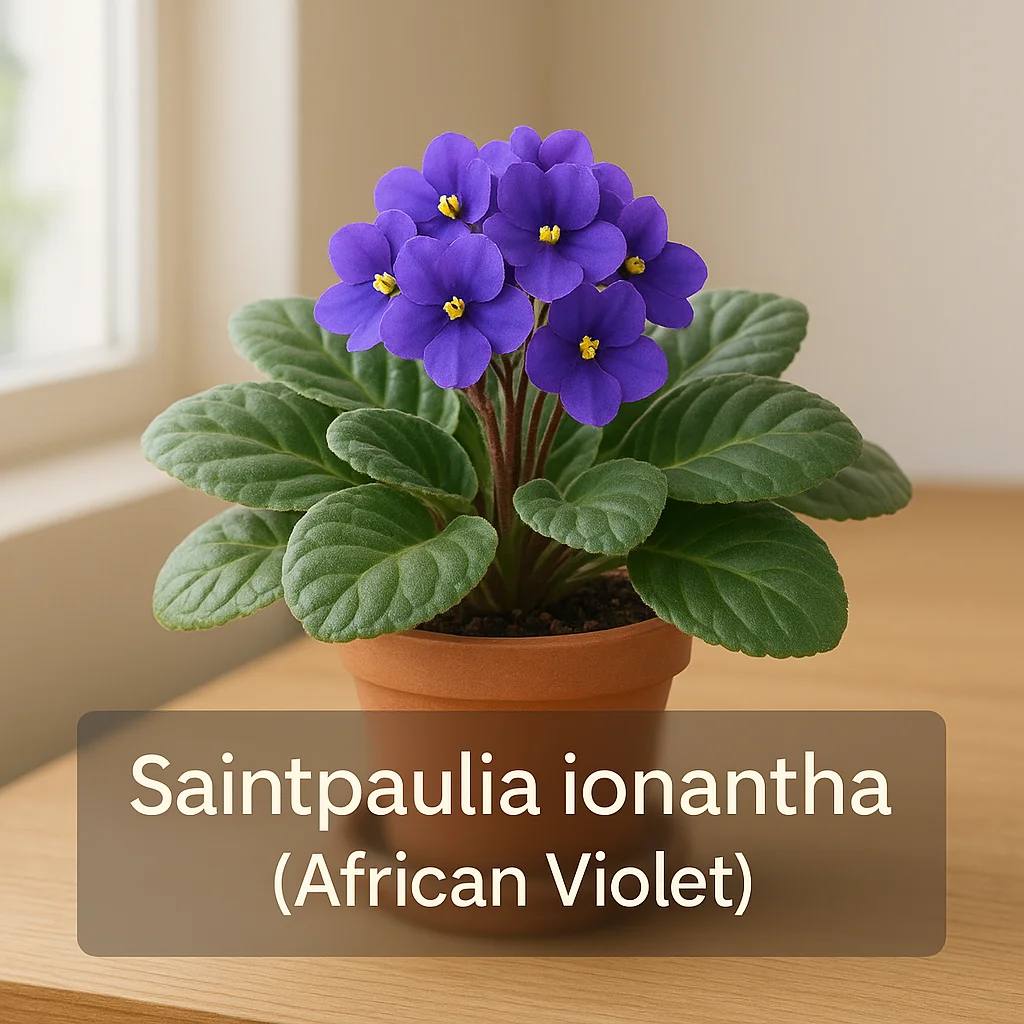
- Common names: African Violet
- Scientific name: Saintpaulia ionantha
- Plant type: Flowering
- Growth habit: Rosette
- Typical indoor size range: 6–12 inches height & spread
- Growth speed: Moderate
- Lifespan: Can live many years with care
- Origin: Eastern Africa; forest understory
- Light preference: Bright indirect light
- Water needs: Moderate; allow topsoil to dry between waterings
- Temperature & humidity preference: Warm temperatures, moderate humidity
- Pet safety: Generally considered pet-friendlier
- Difficulty: Easy
🔍 Identification & Look-Alikes
African Violets are recognized by their round, slightly hairy leaves that form a rosette pattern. The foliage is typically a deep green, sometimes displaying variegation depending on the variety. The flowers are small but vibrant, ranging in hues such as purple, blue, pink, or white. Flowering occurs year-round under ideal conditions.
They can sometimes be mistaken for other rosette-forming plants; however, the texture of their leaves, coupled with their distinct flowers, helps differentiate them.
- Leaf shape: Rounded, velvety, with a rosette arrangement
- Stem structure: Short, non-noticeable stems as leaves form directly from the plant base
- Flower traits: Five-lobed, colorful; blooms in clusters
- Common look-alikes: Gloxinia, other Gesneriads
- Color: Deep green foliage; various flower shades
- Lighting effects: Bright indirect light intensifies bloom colors
🌍 Origin & Natural Habitat
Native to the tropical regions of Eastern Africa, such as Tanzania and Kenya, Saintpaulia ionantha naturally grows in the forest understory. Its habitat is characterized by high humidity and dappled sunlight filtered through the forest canopy. Understanding this natural environment can help growers mimic these conditions indoors for optimal growth.
In the wild, these plants appreciate stable temperatures and consistent moisture, factors that translate into the basic indoor care requirements for a healthy African Violet.
☀️ Light Requirements
For African Violets, finding the right balance of light is key. They thrive best in bright, indirect sunlight, such as a north or east-facing window. Direct light can scorch the leaves, while too little light results in reduced blooming and leggy growth.
- Place near north/east windows for best results
- Bright indirect light is vital for flowering
- Rotate regularly to ensure even growth
- Insufficient light causes poor blooming
- Leaves may yellow if overexposed
- Consider supplemental lighting in low-light rooms
- Monitor plant for light-related stress signs
💧 Watering & Humidity
African Violets prefer a consistent watering routine where the soil surface dries slightly before re-watering. Use room-temperature water to avoid shocking the roots. Increase humidity by grouping plants or utilizing a humidity tray. Avoid getting water on the leaves to prevent spotting.
- Let topsoil dry slightly between waterings
- Bottom watering can reduce leaf spotting
- Avoid cold water; use room temperature
- Humidity trays or room humidifiers can help
- Signs of overwatering: mushy stems, root rot
- Signs of underwatering: wilting, droopy leaves
🐛 Soil, Pot & Repotting
A well-draining, slightly acidic potting mix is ideal for African Violets; a specifically formulated mix available on the market is often beneficial. Choose pots with good drainage, and consider terracotta for its breathability. Repotting should occur annually or when the plant becomes root-bound.
Be careful with repotting; opt for pots only slightly larger than the current size to prevent excess soil and water retention issues.
- Use specialized African Violet potting mix
- Ensure pots have good drainage
- Repot in spring or when overcrowded
- Increase pot size by 1–2 inches only
- Gently handle roots during transplantation
- Water lightly post-repotting to minimize shock
🌡️ Temperature, Airflow & Seasonal Care
Maintaining a consistent temperature range of 65-75°F (18-24°C) is optimal for African Violets. Avoid placing them near drafts, heaters, or air conditioners. In winter, growth may slow, so adjust water and light as needed.
- Stable temperatures benefit growth
- Avoid drafts and temperature swings
- Reduced water needs in winter
- Monitor for slowed growth in cold months
- Position away from direct heat sources
- Airflow ensures healthy growth
🌸 Flowers, Fruit & Growth Cycle
African Violets are prized for their continuous indoor blooming. With the right care, they can flower year-round, particularly under consistent light and humidity. They do not typically produce fruit indoors. Encourage bloom production by removing spent flowers and maintaining optimal conditions.
- Continuous flowering is possible indoors
- Remove spent blooms for freshness
- Consistent care encourages flowering
🧬 Propagation & Reproduction
African Violets are primarily propagated through leaf cuttings. Choose a healthy leaf, cut it with a short stem, and place it in water or soil to root. While seeds are a propagation method, they are less commonly used by home growers due to time and care requirements.
- Use healthy leaf cuttings for propagation
- Root leaves in water or soil
- Division or offshoots can propagate mature plants
- Cuttings root in 3–4 weeks generally
🌿 Common Problems, Pests & Prevention
African Violets are susceptible to problems like yellowing leaves, brown tips due to improper watering, and pests like spider mites or mealybugs. Clean leaves regularly to prevent dust and pest buildup, and ensure stable care to avoid stress-related issues.
- Watch for yellowing from overwatering
- Prevent brown tips with regular humidity
- Spider mites can be an occasional problem
- Fungus gnats can appear with damp soil
- Regularly clean leaves to deter pests
🐾 Pet & Home Safety Notes
African Violets are generally considered non-toxic to pets, making them safer choices for homes with curious animals. However, keep plants out of reach to prevent accidental damage.
If ingestion is suspected, contact a professional for guidance, though severe reactions are uncommon with African Violets.
🏡 Styling Ideas & Best Room Placement
With their compact size and vibrant flowers, African Violets can add color to any well-lit area. They're great for kitchens or offices where indirect sunlight is available. Consider using decorative pots for added style and pair with other humidity-loving plants for a lush look.
- Perfect for kitchens or office spaces
- Works well in groupings of plants
- Accentuates shelves or small tables
📌 Summary
- ID: Rosette-form, velvety leaves, vibrant blooms
- Origin: Eastern Africa; thrives in indirect, bright light
- Water sparingly; let soil surface dry slightly
- Use airy, well-draining potting mix
- Favors temperatures between 65-75°F
- Propagated easily via leaf cuttings
- Susceptible to spider mites and mealybugs
- Easy-care for bright, consistent blooms
- Pet-friendliness: Generally safe