🌱 Streptocarpus (Cape Primrose)
🧾 Quick Facts
Streptocarpus, commonly known as Cape Primrose, is a delightful group of flowering plants that thrive indoors, offering vibrant blooms and charming foliage. Here's a quick overview of their core attributes:
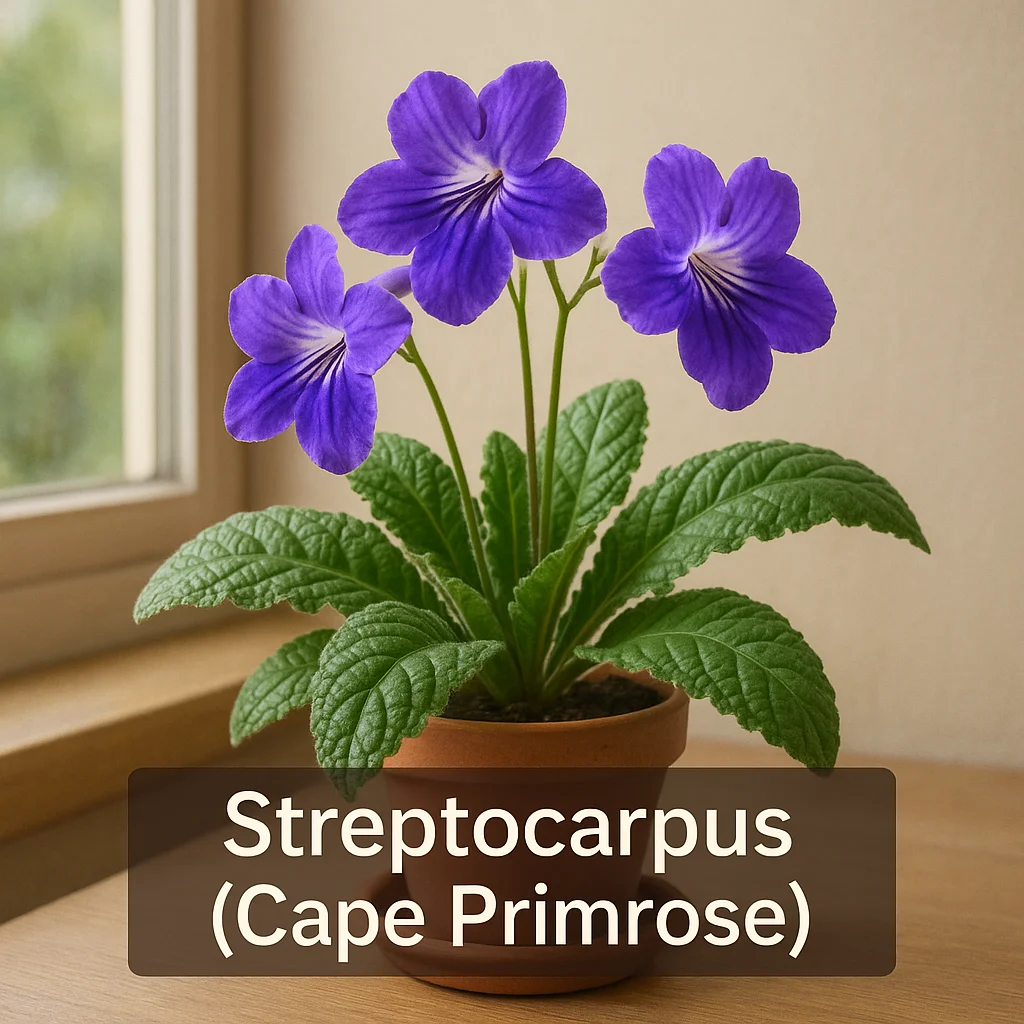
- Common names: Cape Primrose, Streptocarpus
- Scientific name: Streptocarpus spp.
- Plant type: Flowering
- Growth habit: Rosette-forming
- Typical indoor size range: 6-12 inches tall, 12-18 inches spread
- Growth speed: Moderate
- Lifespan: Can live many years with care
- Origin: South Africa, forest understory
- Light preference: Bright indirect light
- Water needs: Moderate; prefers to dry slightly between waterings
- Temperature & humidity preference: Warm temperatures, moderate humidity
- Pet safety: May be irritating to pets; generally considered safer but not harmless
- Difficulty: Medium
🔍 Identification & Look-Alikes
Streptocarpus are recognizable by their soft, slightly hairy leaves that form a rosette shape. The leaves are typically long and somewhat fleshy with a rich green hue. Flowers are a prominent feature, showcasing a wide range of colors including purple, pink, and white, often with intricate patterns or variegation.
Unlike other flowering houseplants, their blooms are tube-shaped with flared lips, resembling orchids. Streptocarpus can sometimes be confused with African Violets due to similar cultural origins and care requirements, but their larger leaves and flower structure help differentiate them.
- Leaves: Long, slightly hairy, green, rosette arrangement
- Flowers: Tube-shaped, variety of colors, flared lips
- Variegation: Some cultivars exhibit variegated leaves
- Stem Structure: Rosette-like foliage, rather than upright stems
- Look-alikes: African Violet, Gloxinia
- Top ID Tips: Flower shape, leaf texture, rosette growth pattern
🌍 Origin & Natural Habitat
Streptocarpus, originating from South Africa, are primarily found in the forest margins and sometimes mountainous regions where they experience a mix of dappled sunlight and shade. This adaptation makes them well-suited for environments with bright indirect light.
Understanding their habitat is crucial to replicate similar indoor conditions. They prefer warm, humid climates yet are resilient enough to manage occasional fluctuations in natural settings, thereby informing their tolerance to a range of indoor climates.
☀️ Light Requirements
These plants thrive in bright, indirect light. A north or east-facing window is ideal as it provides the gentle lighting conditions Streptocarpus are accustomed to in their native habitat. Direct sunlight can scorch the leaves, while too little light may result in reduced flowering and leggy growth.
- Place near north or east-facing windows
- Bright indirect light is key to healthy growth
- Variegated types need more light for maintaining leaf patterns
- Signs of inadequate light: Legginess, reduced blooms
- Signs of excessive light: Leaf scorch or wilting during the day
- Rotate the pot periodically for even growth
💧 Watering & Humidity
Streptocarpus prefer a soak-and-dry watering method, allowing the soil to dry slightly between waterings. Overwatering should be avoided as it can lead to root rot. During winter, when growth slows, reduce watering frequency accordingly.
Humidity levels around 50-60% are ideal. Increasing humidity can be as simple as grouping plants or using a pebble tray. Avoid misting directly on the foliage as it can lead to rot.
- Soak and allow to dry slightly between waterings
- Avoid watering directly on the leaves
- Use room-temperature water
- Increase humidity with a pebble tray or plant grouping
- Overwatering signs: Yellowing leaves, root rot
- Underwatering signs: Wilting, dry leaf edges
🐛 Soil, Pot & Repotting
Use a light, airy potting mix with good drainage. A mix designed for African Violets typically works well. Ensure pots have drainage holes to prevent waterlogging.
Repotting is usually needed every 1-2 years. Signs include becoming root-bound or reduced growth. Choose the next pot size up, and gently loosen roots before placing them in the new soil.
- Light, well-draining soil mix
- Pots with drainage holes are essential
- Repot every 1-2 years for optimal growth
- Look for soil-raising around roots as repotting cue
- Use terracotta for better breathability, plastic to retain moisture
- Always check root health during repotting
🌡️ Temperature, Airflow & Seasonal Care
Streptocarpus thrive in moderate to warm temperatures ranging from 65-75°F (18-24°C). They are sensitive to cold drafts and drastic temperature changes, which should be avoided.
During the winter, growth typically slows, and watering needs decrease. Ensure adequate air circulation to prevent mold and mildew, but be conscious of drafts from vents or windows.
- Maintain temperatures between 65-75°F
- Avoid cold drafts from windows or air conditioners
- Reduce watering during winter dormancy
- Good airflow helps prevent diseases
- Avoid sudden temperature swings
- Watch for slowed growth during cooler months
🌸 Flowers, Fruit & Growth Cycle
Indoors, Streptocarpus can flower prolifically under ideal conditions, typically blooming during spring and summer when daylight increases. They do not produce notable fruits indoors.
New growth arises from the base in the form of leaves and flower stalks, ensuring the plant maintains its compact rosette form. Prune spent blooms to encourage further flowering and ensure cleanliness.
🧬 Propagation & Reproduction
Streptocarpus can be propagated through leaf cuttings, often cutting a healthy leaf into segments and planting them in a suitable propagation mix. Division of mature plants during repotting is another effective method.
- Leaf cutting is a common propagation method
- Propagation best in spring or early summer
- Use a sterile tool for cutting leaves
- Ensure leaf cuttings are in contact with moist, well-draining soil
- Patience is key: Rooting can take several weeks
🌿 Common Problems, Pests & Prevention
Common issues with Streptocarpus include yellowing leaves, often due to overwatering, or brown leaf tips, which might indicate underwatering or overly dry air. Watch for pests like spider mites, mealybugs, and fungus gnats, especially if humidity is too low or the soil stays too wet.
Preventatively, quarantine new plants before adding them to your collection and clean leaves regularly to prevent dust buildup that can attract pests.
- Inspect for spider mites on the underside of leaves
- Mealybugs may cluster on stems and leaf joints
- Keep the soil slightly dry to prevent fungus gnats
- Regularly remove dead leaves to deter pests
- Maintain stable care conditions for resilience
- Use neem oil or insecticidal soap for non-toxic pest management
🐾 Pet & Home Safety Notes
While Streptocarpus are generally deemed safer around pets, ingestion might cause mild irritation. It's best to keep them out of reach from curious pets and children. If ingestion occurs, contact a professional or your local poison control resources immediately.
Position plants in elevated areas or use barriers to prevent access while maintaining the aesthetic and safety of your home.
🏡 Styling Ideas & Best Room Placement
Streptocarpus fit beautifully in spaces that can provide bright, indirect light, such as living rooms or offices. Their striking blooms add charm to any room, and they pair well with foliage plants to create a harmonious balance of color and texture.
Use them as focal points on shelves, desks, or window sills and consider combining them with other humidity-loving plants like ferns or calatheas in a grouping to create a lush, vibrant display.
📌 Summary
- ID highlights: Rosette growth, soft, hairy leaves, tube-shaped flowers
- Origin: South Africa, forest understory plant
- Light: Prefers bright indirect light; avoid direct sun
- Water Needs: Moderate, allow to dry slightly between watering
- Soil & Repotting: Light, airy mix; repot regularly for growth
- Temperature: Warm, 65-75°F; avoid drafts
- Propagation: Leaf cuttings, division
- Common Issues: Yellow leaves from overwatering, pests like spider mites
- Pet Safety: Generally considered safer, but keep out of reach
- Difficulty: Medium care level