🌱 Basil (Ocimum basilicum)
🧾 Quick Facts
Basil, known for its aromatic leaves and culinary uses, is a beloved herb that can also be cultivated indoors as a houseplant. Its vibrant foliage and compact size make it an appealing choice for indoor gardens.
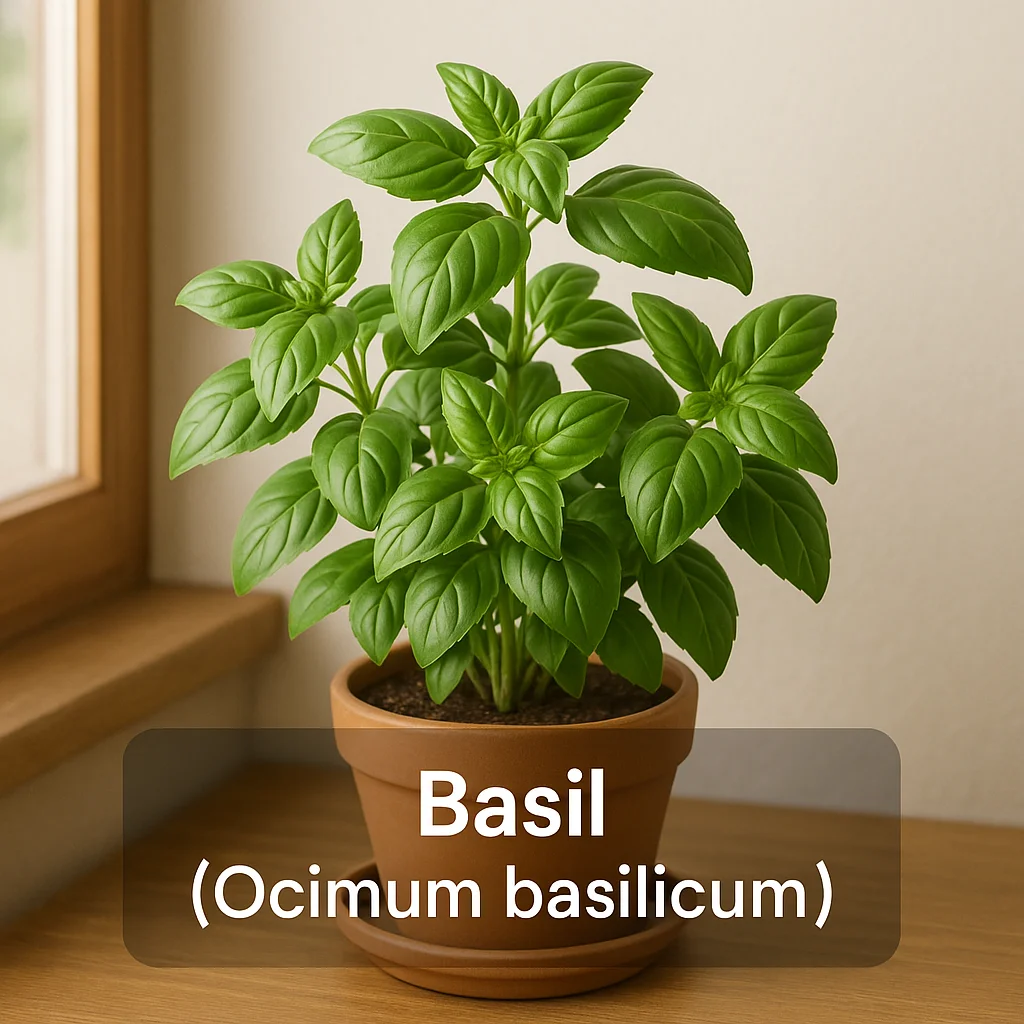
- Common names: Sweet basil, Thai basil, Genovese basil
- Scientific name: Ocimum basilicum
- Plant type: Herb
- Growth habit: Upright
- Typical indoor size range: 1-2 feet tall
- Growth speed: Fast
- Lifespan: Annual, but can be extended with proper care
- Origin: Africa to Southeast Asia, thriving in warm climates
- Light preference: Bright indirect; tolerates some direct sun
- Water needs: Moderate; prefers to dry out slightly between watering
- Temperature & humidity preference: Warm temperatures; moderate humidity
- Pet safety: Generally considered pet-friendlier
- Difficulty: Easy
🔍 Identification & Look-Alikes
Basil is recognized by its oval, slightly cupped leaves with a smooth texture and a strong aromatic scent. The stem is square and can become woody as the plant matures. The leaves are typically a vibrant green, though some cultivars may have purple or variegated leaves.
- Leaves are arranged in opposite pairs.
- Square-shaped stems are a key identifier.
- Common look-alikes might include other herbs like mint or oregano, but basil's fragrance and leaf shape are distinctive.
- Basil plants may produce small, white or purple flowers if allowed to bloom, though they're usually grown for their foliage indoors.
- Variegation may fade if the plant receives too little light.
- Top ID Tips:
- Aromatic leaves
- Opposite leaf arrangement
- Square stem
- Typically bright green color
- Distinctive fragrance
- Flowers are uncommon indoors
🌍 Origin & Natural Habitat
Native to regions ranging from Africa to Southeast Asia, basil thrives in sunny, warm climates often found in tropical and subtropical areas. It naturally occurs in open spaces and sunny patches within forests. Understanding its preference for warm, sunny environments helps inform optimal indoor placement to mimic its native habitat for best growth results.
☀️ Light Requirements
Basil requires bright indirect light for optimal growth but can handle some direct sunlight, especially in the morning or late afternoon. Aim to place basil near a south or west-facing window if possible. In lower light, the plant may become leggy and lose some vibrancy.
- Best near a south or west-facing window
- Bright indirect light sustains leaf color and growth
- Avoid extended periods of harsh midday sun
- If leaves appear pale or leggy, increase light exposure
- Light Checklist:
- Adequate distance from window to prevent sun scorch
- Pale leaves signal too little light
- Leggy growth indicates inadequate light
- Regularly adjust placement to seasonal light changes
- Rotate plant for even light exposure
💧 Watering & Humidity
Basil likes to be watered thoroughly but should dry out slightly between waterings. The soil should be moist but not soggy. Increase watering frequency in warmer, brighter conditions. Basil prefers moderate humidity levels, around 40-60%, but be cautious of overwatering, which can lead to root rot.
- Allow topsoil to dry between waterings
- Avoid letting basil sit in water
- Adjust watering based on pot size and season
- Signs of underwatering: wilting, dry leaves
- Signs of overwatering: yellowing leaves, mushy stems
- Watering Tips:
- Check soil moisture regularly
- Use pots with drainage holes
- Mist occasionally during dry periods
- Increase humidity if leaf edges brown
- Reduce watering in winter
🐛 Soil, Pot & Repotting
Use a light, well-draining potting mix. A mix with peat and perlite or coconut coir works well. Pots should have good drainage to prevent waterlogging. Repot when it becomes rootbound or when growth slows, usually every 1-2 years. Gently tease roots when repotting and choose a pot that is a couple of inches larger than the current one.
- Choose airy, well-draining soil
- Ensure pot has drainage holes
- Repot every 1-2 years or if rootbound
- Opt for slightly larger pots when repotting
- Repotting Checklist:
- Monitor for rootbound conditions
- Choose a pot with ample drainage
- Use fresh, appropriate potting mix
- Avoid excessive root disturbance
- Consider seasonal repotting (spring)
🌡️ Temperature, Airflow & Seasonal Care
Basil prefers temperatures around 70-80°F (21-27°C) and should be kept away from drafts and cold air. In winter, growth slows, and the plant will require less water. Ensure good airflow around the plant to reduce disease risk.
- Maintain temperatures of 70-80°F
- Avoid cold drafts and sudden temperature changes
- Reduce watering frequency in winter
- Ensure good air circulation
- Seasonal Notes:
- Monitor for reduced winter growth
- Keep away from cold windowsills
- Adjust watering postseason
- Observe for winter dormancy signs
🌸 Flowers, Fruit & Growth Cycle
Basil may bloom indoors under ideal conditions, producing small white or purple flowers. However, it is usually grown for its leaves. Pinching off flower buds encourages more leaf production and prolongs the harvest season.
- Basil typically flowers indoors
- Remove flower buds to promote leaf growth
- Plant has distinct stages: new leaves, flowering, seed setting
- Basil grows new leaves continuously if well-maintained
- Pruning encourages bushier growth
- Pinching back stems prevents legginess
🧬 Propagation & Reproduction
Basil is easy to propagate from stem cuttings or seeds. For stem cuttings, ensure at least a pair of leaves are above water and roots will form along the submerged stem. Seed propagation is also common, planting seeds just below the soil surface.
- Stem cuttings can root in water
- Use fresh seeds for higher germination rates
- Plant seeds just below the soil surface
- Propagation Tips:
- Use fresh cutting tools
- Keep cuttings in a well-lit area
- Transplant cuttings once rooted
- Maintain consistent moisture for seedlings
- Trim regularly for full growth
🌿 Common Problems, Pests & Prevention
Basil can suffer from issues such as yellowing leaves, leaf spots, or drooping due to poor care. Common pests include aphids, spider mites, and whiteflies. Prevent infestations by keeping the foliage clean, providing proper light and airflow, and avoiding overwatering.
- Clean leaves to prevent pests
- Compact growth helps avoid leggy appearance
- Ensure proper watering practices
- Quickly remove any pest infestations
- Prevention Basics:
- Avoid waterlogged soil
- Regularly inspect for pest activity
- Manage humidity to prevent mildew
- Quarantine new plants before integrating
- Maintain consistent care and monitoring
🐾 Pet & Home Safety Notes
Basil is generally considered safe for pets and humans; however, as with any plant, it's wise to keep it out of reach of curious pets or children. If ingestion occurs, monitor closely and contact a professional if there are concerns.
🏡 Styling Ideas & Best Room Placement
Basil thrives in kitchens where it can be easily accessed for cooking and enjoys the often higher humidity levels. Consider placing it on sunny windowsills, countertops, or in containers on a balcony. Pair basil with other culinary herbs for an indoor herb garden.
📌 Summary
- Identify basil by its aromatic, oval leaves and square stem
- Native to warm climates from Africa to Southeast Asia
- Requires bright, indirect light for best growth
- Water thoroughly but allow to dry between waterings
- Use well-draining soil and repot every 1-2 years
- Prefers temperatures between 70-80°F
- Easily propagated from cuttings or seeds
- Avoid overwatering and provide good airflow
- Generally considered easy to grow
- Monitor for pests like aphids and spider mites