🌱 Chives (Allium schoenoprasum)
🧾 Quick Facts
Chives, belonging to the species Allium schoenoprasum, are versatile perennial herbs that are often cultivated for their culinary uses as well as their decorative appeal in indoor settings. These easy-to-grow plants thrive with minimal care, making them a favorite among houseplant enthusiasts and budding home cooks.
- Common Names: Chives, Garden Chives
- Scientific Name: Allium schoenoprasum
- Plant Type: Herb
- Growth Habit: Upright
- Typical Indoor Size Range: 12-18 inches in height
- Growth Speed: Moderate
- Lifespan: Perennial; can live many years with proper care
- Origin: Northern Europe, Asia, North America; commonly found in temperate regions
- Light Preference: Bright indirect light; can tolerate some direct sun
- Water Needs: Moderate; prefer to dry slightly between waterings
- Temperature & Humidity Preference: Thrive in cool to moderate temperatures; average indoor humidity
- Pet Safety: May be irritating/toxic to pets if ingested in large quantities
- Difficulty: Easy
🔍 Identification & Look-Alikes
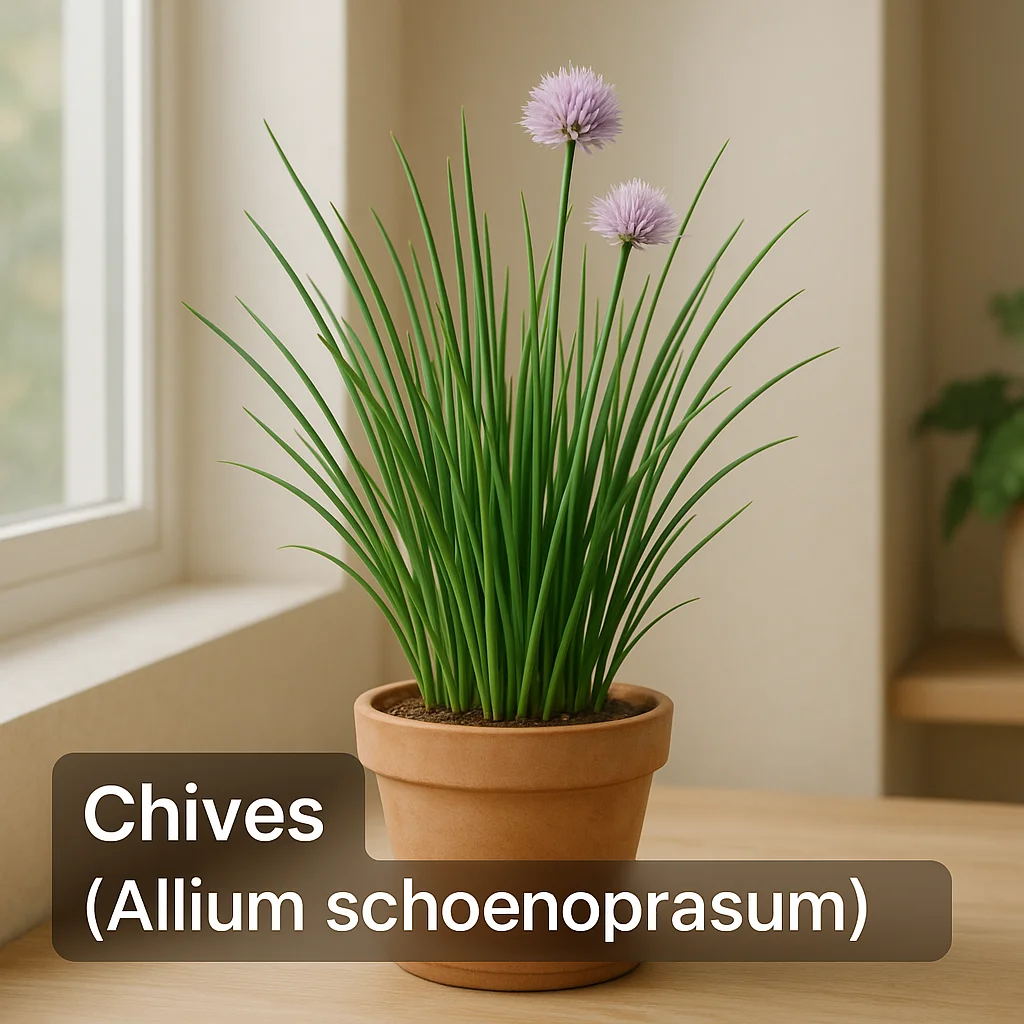
Chives are easily recognized by their slender, hollow leaves that resemble grass blades. The leaves grow from a bulb underground, forming dense clumps. Typically, the leaves are a vivid green color, providing a fresh look that enhances indoor spaces. When the light conditions are optimal, chives may produce pale purple flowers, adding a decorative touch.
Chives may sometimes be confused with their close relatives, such as garlic chives and green onions. However, garlic chives (Allium tuberosum) have flatter leaves and a mild garlic aroma, while green onions are larger and have a distinct onion bulb.
- Narrow, hollow, grass-like leaves
- Bright green color
- Pale purple, spherical flowers under ideal conditions
- Grows in dense clumps from bulbs
- Distinctive onion odor when leaves are crushed
- Often confused with garlic chives and green onions
🌍 Origin & Natural Habitat
Chives originate from the temperate regions of Northern Europe, Asia, and North America, thriving in open meadows and grasslands. In the wild, they are typically found growing in well-drained soils with plenty of sunlight. The climate in these regions is characterized by cold winters and mild to warm summers, with chives emerging in spring as temperatures rise.
Understanding the natural habitat of chives can help in providing suitable indoor growing conditions. Simulating bright sunlight and allowing for good air circulation can help chives thrive indoors. Their hardiness also means they often adapt well to varying indoor environments.
☀️ Light Requirements
Chives prefer bright indirect light but can tolerate some direct sunlight, especially in the morning or late afternoon. Ideally, place them near a south or east-facing window where they can get sufficient light throughout the day. Avoid placing them in direct afternoon sun to prevent leaf scorch and dehydration.
If your chives are not receiving enough light, the leaves may become leggy and lose their vibrant hue, whereas too much light might cause yellowing or browning of the tips. Adjusting the position to optimize lighting can maintain their health and color.
- Place near bright windows with indirect light
- Avoid harsh midday sunlight
- Use grow lights if natural light is insufficient
- Monitor leaf color for light adequacy
- Signs of too little light: leggy growth, dull leaves
- Signs of too much light: browning leaf tips, dry leaves
💧 Watering & Humidity
Chives require a watering routine that allows the soil to dry slightly between waterings. They appreciate a soak-and-drain method, ensuring that excess water drains away, preventing root rot. Adjust watering frequency based on the season; chives may need more frequent watering during warmer months when growth is active.
While chives do not have strict humidity requirements, they perform best in standard indoor humidity levels. Overwatering is usually a greater risk than underwatering, so it's crucial to let the soil dry out somewhat between watering sessions. Signs of overwatering include yellowing leaves and a wilting appearance, whereas underwatered leaves will become dry and brittle.
- Water when the top inch of soil is dry
- Adjust watering based on indoor temperature
- Ensure pots have good drainage to prevent standing water
- Use room-temperature water to avoid shocking the roots
- Beware of yellowing leaves as a sign of overwatering
- Increased watering during active growth phase
🐛 Soil, Pot & Repotting
Chives thrive in well-draining soil with good aeration. A typical potting mix with added perlite or sand suits their needs by preventing compacted soil. It is essential to choose pots with drainage holes to ensure water can escape after watering.
Repotting chives should typically occur every 1-2 years, or when they become rootbound. Look for roots coming out of the drainage holes as an indicator. When repotting, gently loosen the root mass and choose a pot slightly larger than the current one, refreshing the soil to provide new nutrients.
- Use a well-draining potting mix
- Add perlite or sand to improve aeration
- Ensure pots have proper drainage holes
- Repot every 1-2 years or when rootbound
- Choose only slightly larger pots when repotting
- Refresh soil to provide new nutrients during repotting
🌡️ Temperature, Airflow & Seasonal Care
Chives prefer cool to moderate temperatures, generally thriving between 55 °F and 75 °F indoors. They can tolerate occasional drops in temperature, yet sudden fluctuations should be avoided. Position them away from drafts, vents, or doors that may rapidly change their climate.
During the winter months, their growth tends to slow, allowing for reduced watering frequency. Providing stable conditions in winter can ensure successful regrowth when the growing season resumes in spring.
- Maintain a temperature range of 55 °F to 75 °F
- Keep away from drafts and temperature extremes
- Reduce watering frequency in cooler months
- Position to allow good air circulation
- Monitor for signs of stress during seasonal changes
🌸 Flowers, Fruit & Growth Cycle
Chives often produce lavender-purple flowers atop long stems under favorable conditions, typically in late spring to early summer. Indoor flowering might vary, requiring sufficient light and nutrition to encourage blooms. These flowers are not only beautiful but also edible, making a delightful addition to culinary dishes. Inside, fruiting is uncommon.
The growth of chives includes the emergence of new shoots from the base, accompanied by occasional flowering. Regularly harvesting leaves ensures continuous growth and helps maintain a full, robust plant. Pruning should focus on removing any yellow or dead leaves, which can help promote healthy regrowth.
🧬 Propagation & Reproduction
Chives are most commonly propagated through division, which involves separating the clumps of bulbs and replanting them. This method is straightforward and has a high success rate, ensuring the propagation of healthy new plants that continue to grow vigorously.
Propagation through seeds is also possible, though it is typically slower. When choosing to start from seeds, ensure they are fresh and provide adequate light and warmth to promote germination. Note that chives grown from seeds can take several months to establish.
- Commonly propagated through clump division
- Best to divide plants in early spring or fall
- Division allows for vigorous growth and renewal
- Propagate by seeds for a slower but fruitful effort
- Ensure fresh seeds for best germination rates
🌿 Common Problems, Pests & Prevention
Chives are relatively hardy but can be susceptible to certain issues such as yellow leaves due to overwatering or drooping caused by underwatering. Ensure that watering practices allow the soil to dry slightly between sessions to mitigate these problems.
Common pests affecting chives include aphids, spider mites, and thrips. Regularly inspect them for pests and take preventive measures by keeping the planting area clean and ensuring good airflow. Regularly cleaning the leaves can help deter pests naturally without chemical use.
- Prevent overwatering to avoid root rot and yellow leaves
- Regularly inspect plants for signs of pests
- Ensure good airflow to reduce pest risks
- Promote plant health with stable care practices
- Clean leaves to deter common pests
🐾 Pet & Home Safety Notes
Chives are generally considered safe for humans but contain compounds that may irritate or be toxic to pets, particularly when consumed in large quantities. It is wise to keep chives out of reach from pets to avoid any potential issues. If ingestion occurs, seeking professional advice or contacting local poison control resources is advisable.
In homes with pets or small children, consider using barriers or placing chives in elevated pots or hanging baskets as a precautionary measure.
🏡 Styling Ideas & Best Room Placement
Chives are versatile and can enhance various areas in a home due to their compact size and appealing green foliage. A perfect addition to a sunny kitchen windowsill, they can offer both decoration and fresh herbs for culinary use. Pairing them with other herbs like basil or parsley can create an indoor herb garden theme.
Consider placing chives in living rooms or offices where they can bask in bright indirect sunlight, adding a fresh touch of greenery. Their adaptability allows for use in container gardening or spaces that allow natural light.
📌 Summary
- Chives are easily identified by their slender, hollow leaves and potential to bloom purple flowers.
- Originating from temperate regions, they are hardy and versatile for indoor cultivation.
- Bright indirect light is preferred, but some direct sunlight is tolerated.
- Moderate watering is needed, with soil drying slightly between sessions.
- A well-draining soil mix and periodic repotting ensure healthy growth.
- Keep temperatures between 55 °F and 75 °F for optimal growth.
- Division is the most reliable propagation method, with seeds a slower alternative.
- Watch for yellowing or pests, using preventive care like airflow and cleaning.
- Chives may be irritating to pets, so place them out of reach as needed.
- Use in kitchens or sunny living spaces for both decoration and culinary benefits.