🌱 Cilantro / Coriander (Coriandrum sativum)
🧾 Quick Facts
Cilantro or Coriander (Coriandrum sativum) is a popular culinary herb valued for its fresh taste and aromatic flavor. When grown indoors, it serves both as a flavorful addition to dishes and a decorative plant.
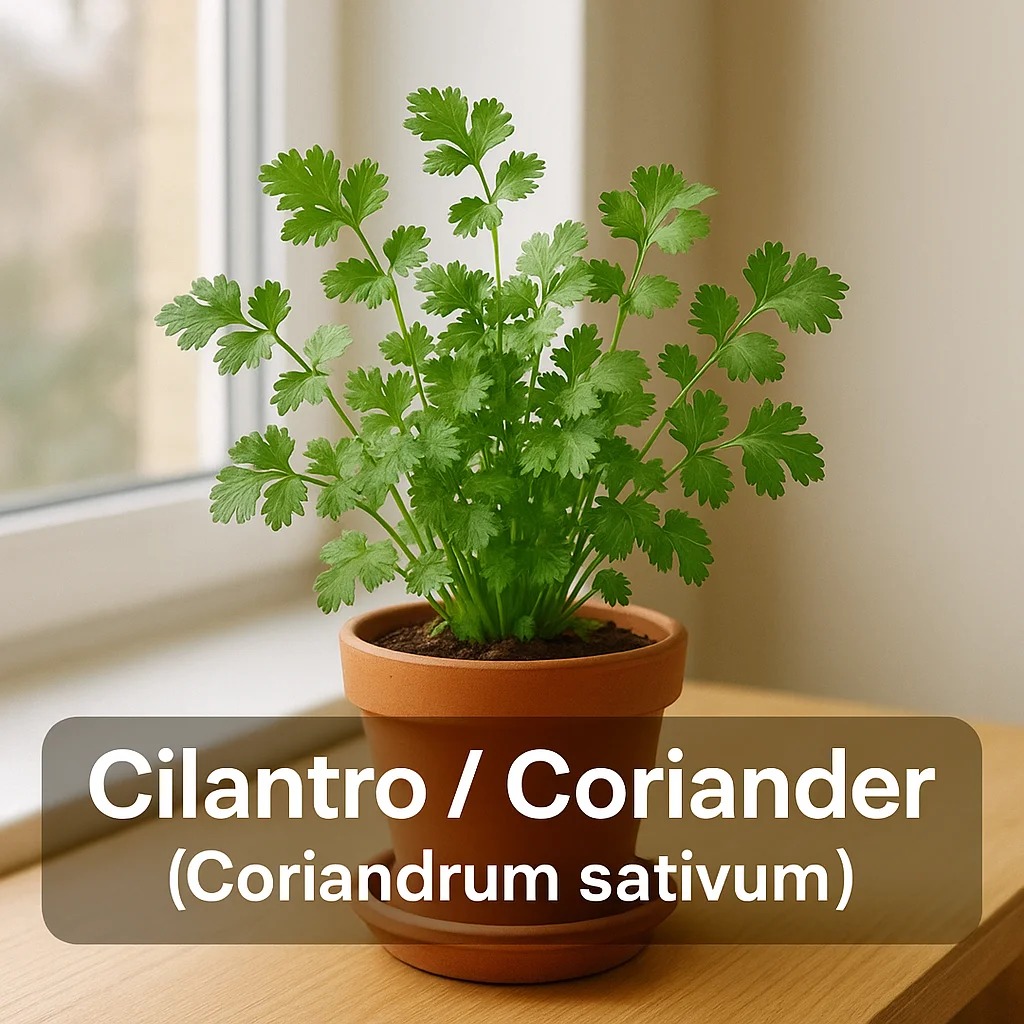
- Common names: Cilantro, Coriander, Chinese Parsley
- Scientific name: Coriandrum sativum
- Plant type: Herb
- Growth habit: Upright
- Typical indoor size range: 12–24 inches height
- Growth speed: Fast
- Lifespan: Annual, self-seeding for continuous growth
- Origin: Southern Europe, Northern Africa, Southwestern Asia
- Light preference: Bright indirect light
- Water needs: Moderate, prefers slightly dry soil between waterings
- Temperature & humidity preference: Prefers cooler temperatures and average humidity
- Pet safety: Generally considered non-toxic to pets
- Difficulty: Easy
🔍 Identification & Look-Alikes
Cilantro is easily identified by its delicate, bright green, finely divided leaves, which give off a distinctive aroma when crushed. Its stems are fairly thin and tend to grow upright. It is commonly grown for its foliage, although it can produce small white or pale pink flowers under the right conditions. Look-alikes include parsley, but cilantro leaves are more finely lobed and release a stronger scent when touched.
- Leaves are bright green and finely divided.
- Upright, slender stems.
- Strong, characteristic aroma.
- Small, umbel-shaped flowers appear in mature plants.
- Commonly misidentified with parsley.
- Distinguish by smelling or tasting a leaf.
- Uniform leaf color, unaffected by variegation.
- Flowers are not usually desired for culinary growth; grown mainly for foliage.
- Look-alikes may include parsley and chervil.
- Cilantro’s stronger aroma helps differentiate it from look-alikes.
🌍 Origin & Natural Habitat
Native to the Mediterranean and parts of Western Asia, Cilantro thrives in regions with mild, wet winters and hot, dry summers. In the wild, it typically grows in open fields and grasslands where it can receive ample sunlight while adapting to varying moisture levels. Understanding its natural habitat helps indoor growers adjust humidity and light levels to keep the plant healthy.
In adapting these conditions indoors, aim for environments that mimic its origin—lots of light and well-drained soil to accommodate the annual growth cycle. Seasonal changes such as cool winter temperatures can help prolong the plant's life cycle indoors.
☀️ Light Requirements
For optimal indoor growth, Cilantro requires bright indirect light. A south- or west-facing window is ideal, where it can receive adequate sunlight without direct exposure that may scorch the leaves. Light influences not only the growth rate but also the flavor potency of the leaves. Insufficient light causes the plant to become leggy and weak.
- Place near south or west-facing windows for best results.
- Too little light causes leggy, weaker growth.
- Dense, compact leaf growth signals adequate light.
- Cilantro can handle some direct morning sun.
- Pale leaves indicate too much direct sunlight.
- Rotate pots for even growth.
- Artificial grow lights can supplement natural light.
- Avoid very low light environments.
- Check leaf color for light level balance.
💧 Watering & Humidity
Cilantro prefers a consistent moisture level but does not like to be waterlogged. Utilize a soak-and-drain method, allowing the top inch of soil to dry out between waterings. Be cautious in adjusting watering frequency based on pot size and seasonal changes. While average household humidity is generally sufficient, extremely dry conditions may necessitate a humidity tray.
- Water thoroughly and allow to drain; avoid waterlogging.
- Let top inch of soil dry between waterings.
- In winter, reduce watering frequency.
- Avoid extremely dry or soggy soil; balance is key.
- Humidity trays can prevent drying out in arid environments.
- Signs of overwatering include yellowing, droopy leaves.
- Underwatered plants have dry, crispy leaf edges.
- Smaller pots may require more frequent watering.
- Ensure pots have drainage holes.
- Observe leaf behavior for signs of watering needs.
🐛 Soil, Pot & Repotting
An airy, well-draining soil mix is ideal for Cilantro, often enriched with compost or organic matter to support its fast growth. Containers should have drainage holes to prevent root rot. Repot only when the plant becomes rootbound or growth slows, choosing a pot just one size larger. Gently remove and examine roots for crowding or rot when repotting, trimming any damaged areas.
- Choose a potting mix rich in organic material.
- Ensure containers have adequate drainage.
- Avoid overly dense or clay-heavy soils.
- Repot annually or when rootbound.
- Prefer terracotta pots for natural breathability.
- Observe for slowed growth as a repotting cue.
- Avoid large pots; use conservative upsizing.
- Prune back rot during repotting.
- Check root health before transferring.
- Support upright stems in new soil beds.
🌡️ Temperature, Airflow & Seasonal Care
Maintain indoor temperatures between 60-75°F (15-24°C) for Cilantro, as it thrives in these cooler conditions. Avoid exposing the plant to cold drafts or extreme temperature changes. During winter, growth may slow, so adjust watering and consider supplemental lighting if natural light decreases significantly.
- Prime temperature: 60-75°F (15-24°C).
- Avoid exposure to cold drafts.
- Productive growth in cooler temperatures.
- Adjust watering in winter months.
- Provide stable airflow to reduce mold risk.
- Protect from AC/heat vents for even growth.
- Seasonal changes can trigger blooming indoors.
- Keep leaves dry as possible; maintain airflow.
🌸 Flowers, Fruit & Growth Cycle
Cilantro may flower indoors under prolonged light conditions or when stressed, producing white or pale pink blooms. These flowers are generally undesirable if growing for leaves, as they mark the end of the leaf production phase. Propagation from flowers leads to the production of coriander seeds. Regularly harvest leaves to encourage continued growth.
Cilantro grows rapidly, producing fresh leaves at a consistent rate before eventually bolting and producing flowers. To extend leaf production, early pruning of flower buds is advised.
🧬 Propagation & Reproduction
Cilantro is primarily propagated through seeds, which easily germinate in suitable soil. Directly sow seeds indoors for continuous supply, and ensure consistent moisture until germination. Divide plants that have grown dense clusters, but propagation via cuttings is not common nor often successful. Seed propagation remains the most practical and effective method.
- Sow seeds directly in potting medium.
- Maintain moist soil for seed germination.
- Separation of dense clusters encourages more robust growth.
- Repot parts gently to new soils if needed.
- Seed propagation is the preferred method.
- Utility of cuttings for propagation is limited.
- Strategically sow for regular harvests.
- Regular harvesting prevents early bolting.
- Avoid mature seed setting for continuous leaf growth.
🌿 Common Problems, Pests & Prevention
Common issues with Cilantro include yellowing leaves, often from overwatering, and brown tips indicating either dryness or nutrient imbalance. Leggy growth suggests insufficient lighting. Pests such as aphids, spider mites, and whiteflies might infest cilantro if the environment is too humid or lacks air circulation. To prevent these issues, maintain stable conditions, inspect regularly, and encourage airflow around plants.
- Ensure adequate light to reduce legginess.
- Check plants regularly for pest activity.
- Use gentle water sprays to dislodge small pests.
- Maintain balanced watering to avoid yellowing.
- Prune and clean leaves to avoid pest infestations.
- Practice good garden hygiene with tools and plants.
- Stable conditions prevent stress and bolting.
- Regularly inspect for early signs of disease.
- Keep airflow consistent to discourage mold.
🐾 Pet & Home Safety Notes
Cilantro is considered pet-friendly and non-toxic to both cats and dogs. However, it is always advised to keep plants out of reach of pets and children to avoid any potential irritation or accidental ingestion. In cases of suspected consumption, consulting a professional or local poison control is recommended. To ensure safety, position plants on higher shelves or counters.
🏡 Styling Ideas & Best Room Placement
Cilantro thrives in well-lit spaces, making it a suitable candidate for kitchen countertops and sunny windowsills where its culinary uses are most practical. Consider placing it in living rooms with good natural light or hanging baskets, as its feathery foliage adds a pleasant touch to indoor aesthetics. It pairs well with other kitchen herbs like basil and parsley.
📌 Summary
- Easy to identify by its bright green, aromatic leaves.
- Originates from the Mediterranean region.
- Thrives in bright, indirect light environments.
- Prefers moderate watering with slight drying out between cycles.
- Propagates best through direct seed sowing.
- Prefers airy, well-draining soil with organic material.
- Comfortable in a 60–75°F (15–24°C) temperature range.
- Avoid overwatering to prevent yellowing leaves.
- Potential pest: aphids, spider mites, whiteflies.
- Generally easy to grow and manage indoors.
- Non-toxic; safe for homes with pets and small children.
- Versatile in placement; ideal for kitchens and sunny spots.