🌱 Lavender (Lavandula angustifolia)
🧾 Quick Facts
Lavender, known for its soothing fragrance and elegant purple blooms, is a popular indoor and outdoor plant. Here are some quick facts about this charming herb:
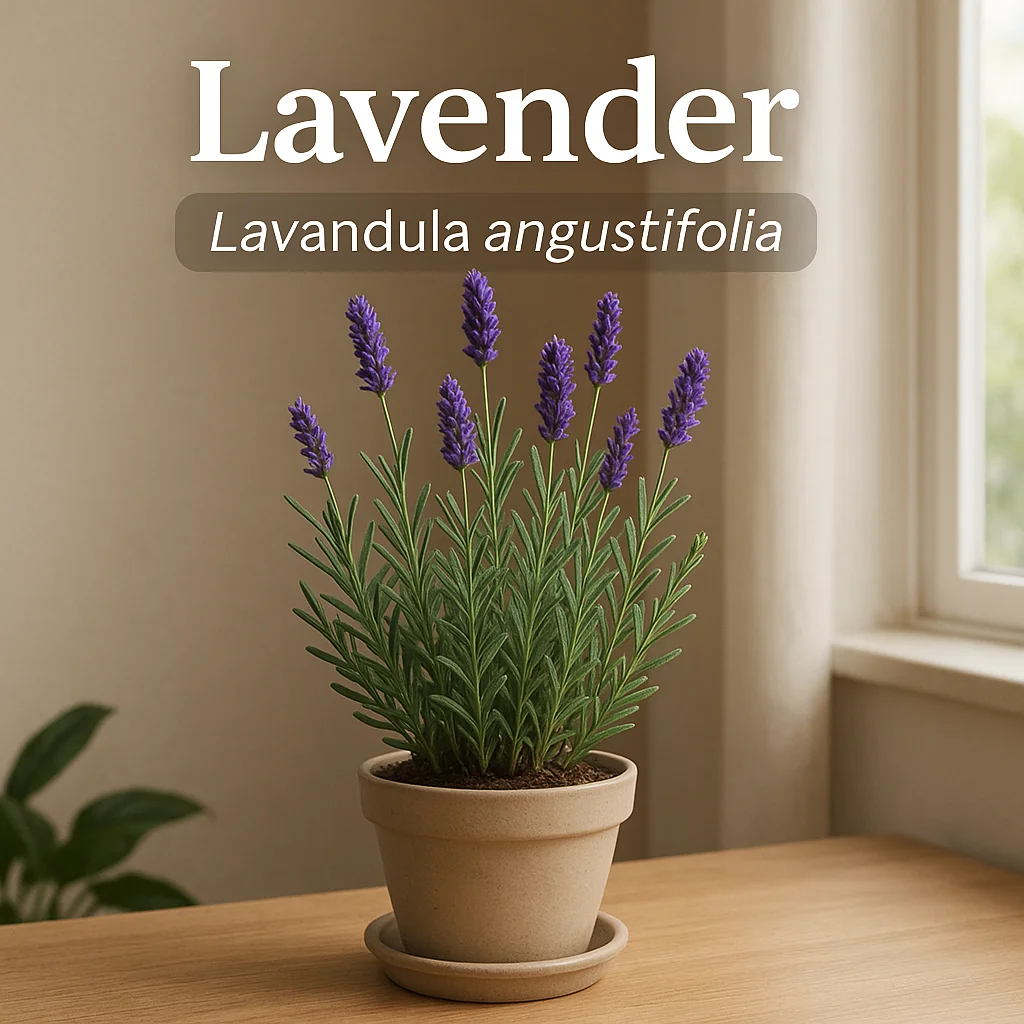
- Common Names: Lavender, English Lavender, True Lavender
- Scientific Name: Lavandula angustifolia
- Plant Type: Flowering herb
- Growth Habit: Shrub-like
- Typical Indoor Size: 1-3 feet tall and wide
- Growth Speed: Moderate
- Lifespan: Can live many years with proper care
- Origin: Mediterranean region
- Light Preference: Bright, direct sunlight is ideal
- Water Needs: Moderate; prefers dry-down cycles
- Temperature & Humidity Preference: Prefers cooler temperatures and low humidity
- Pet Safety: May cause mild irritation if ingested; seek professional advice if severe
- Difficulty: Medium
🔍 Identification & Look-Alikes
Lavender is recognized for its delicate silver-green foliage and spikes of purple-blue flowers. Its leaves are narrow, elongated, and covered with fine hairs, giving them a soft texture. Stems are upright and woody with a distinctive fragrance.
Lavender may resemble Russian sage or other aromatic herbs, but it can be identified by its fragrance, leaf texture, and classic flower spikes.
- Leaves: Narrow, elongated with silvery hairs
- Stems: Upright, woody, fragrant
- Color: Silver-green foliage with purple-blue flowers
- Common Look-Alikes: Russian sage, rosemary
- Top ID Tips:
- Distinctive fragrance when leaves or flowers are crushed
- Narrow, silvery-green leaves
- Woody stems
- Traditional purple-blue flower spikes
- Flowers are densely packed on the spike
- Fine, soft hairs cover the leaves
- Herbal scent distinguishes from non-aromatic look-alikes
- Commonly sold as perennial in nurseries
🌍 Origin & Natural Habitat
Lavandula angustifolia is native to the Mediterranean region, thriving in well-drained soils and sunny, dry conditions. It is often found in open, rocky terrains and is accustomed to cooler, low humidity environments typical of its native habitat.
Understanding its origin helps in replicating its preferred indoor conditions—ensuring adequate light, moderate watering with good drainage, and a cooler environment for optimal growth.
☀️ Light Requirements
Lavender flourishes in bright, direct sunlight. Aim to place it near a south-facing window where it receives ample light. Bright indirect light is also supportive but prolonged low light can hinder growth and flowering.
- Light Checklist:
- Place near a sunny window for best results
- Bright indirect light works but may reduce flowering
- Avoid dark, low-light areas
- Watch for leggy growth indicating too little light
- Supplement with artificial grow lights if necessary
- Morning sunlight is optimal; afternoon can be too intense
- Rotate plant periodically for even light exposure
- Monitor leaf color to assess light adequacy
💧 Watering & Humidity
Lavender prefers a soak-and-drain method: water thoroughly, then allow the soil to dry out between waterings. During warmer months, water more frequently; in cooler months, reduce frequency. Pots must permit drainage to avoid overwatering.
This plant thrives in lower humidity, making it suitable for a range of indoor environments. Avoid misting as it prefers dry air.
- Watering Tips:
- Water until it drains out of the bottom
- Allow soil to dry 1-2 inches in depth before re-watering
- Decrease frequency in cooler months
- Use pots with good drainage
- Observe plant for signs of water stress: wilting can indicate underwatering, yellowing leaves signal overwatering
- Avoid water on foliage; it prefers dryness
- Adjust based on light exposure and pot size
- Use a moisture meter if unsure about soil dryness
🐛 Soil, Pot & Repotting
This plant requires well-draining, sandy or gritty soil mixes. Use pots with ample drainage holes, and opt for terracotta to assist in moisture management. Repot every 1-2 years or when root-bound, carefully choosing a new pot only slightly larger than the current one.
- Repotting Checklist:
- Use a sandy or gritty soil mix
- Choose pots with drainage holes
- Repot every 1-2 years
- Move up one pot size only
- Gently shake off old soil during repotting
- Watch for roots growing out drainage holes as a sign to repot
- Ensure good soil-to-root contact during repotting
- Avoid compacted soils; maintain soil aeration
🌡️ Temperature, Airflow & Seasonal Care
Lavender prefers cooler indoor temperatures, around 60-70°F (15-24°C), with good airflow to prevent mold or mildew on leaves. It can tolerate brief temperature drops but protect from drafts and heaters. In winter, growth slows; adjust watering accordingly.
- Seasonal Notes:
- Optimal range: 60-70°F (15-24°C)
- Protect from cold drafts and sudden temperature swings
- Ensure good air circulation around leaves
- Reduce watering in winter to prevent root rot
- Keep away from heat sources like radiators
- Observe plant for dormancy cues and adjust care accordingly
- Consider moving outside in summer if conditions allow
- Use fans occasionally for healthier airflow
🌸 Flowers, Fruit & Growth Cycle
Lavender often blooms indoors with the right conditions, producing fragrant spikes of purple-blue flowers from late spring to early summer. Prune lightly after flowering to maintain shape and encourage bushier growth. New growth typically appears in spring.
Fruiting is uncommon indoors as conditions rarely replicate optimal outdoor pollination.
🧬 Propagation & Reproduction
Propagation is commonly done through stem cuttings taken in spring or summer. Cut a healthy non-flowering stem just below a node, remove leaves from the lower half, and pot in a sandy potting mix. Rooting may take a few weeks.
- Propagation Tips:
- Start with healthy, non-flowering shoots
- Cut just below a leaf node
- Use a well-draining propagation mix
- Keep soil slightly moist during rooting
- Use small pots for initial rooting
- Placing under bright indirect light enhances success rate
- Avoid fertilizing until rooted
- Mist occasionally to prevent desiccation
🌿 Common Problems, Pests & Prevention
Common issues include yellow leaves (often overwatering) and leggy growth from insufficient light. Pests such as spider mites and mealybugs can be problematic; address by quarantining new plants and maintaining clean foliage.
- Prevention Basics:
- Quarantine new plants to prevent pest introduction
- Maintain consistent watering and lighting
- Clean leaves with a damp cloth to remove dust
- Ensure good airflow to prevent mildew
- Regularly inspect for pests
- Avoid excess watering to prevent root rot
- Address signs of pests promptly
- Prune regularly to maintain shape and health
🐾 Pet & Home Safety Notes
While lavender is often considered non-toxic, it may cause mild stomach upset if ingested by pets or children. Keep plants out of reach by placing them on higher shelves or trained barriers. If ingestion is suspected, consult a professional or local poison control resources.
🏡 Styling Ideas & Best Room Placement
Lavender adds charm to any room with its fragrance and color. Position in living areas with plenty of sunlight, like a sunny kitchen windowsill or well-lit living room. Pair with other Mediterranean plants such as rosemary or thyme for a harmonious look.
Consider using a tray or pot with a neutral or rustic style to complement its elegance. Avoid areas with high humidity such as bathrooms.
📌 Summary
- Lavender, known for fragrant blooms, prefers direct sunlight
- Originates from the Mediterranean, requiring well-draining soil
- Allow soil to dry out between waterings for best health
- Cooler temperatures and low humidity mirror natural conditions
- Propagation successful via stem cuttings during growing season
- Watch for overwatering and keep a lookout for common pests
- May irritate pets if ingested; place out of reach when possible
- Moderately difficult; best for those with some plant experience